Connect with us

Latest News

Williams’ 142 fashions tight victory for Zimbabwe

Published

on

Sean Williams made his third hundred of the World Cup Qualifier
A valiant Oman fell achingly short of the finish line, as Sean Williams’  142 trumped Kashvan Prajapati’s  103 – the first ton by an Oman batter against an ICC full member – to help Zimbabwe secure a narrow yet crucial 14-run win to kick off the Super Six stage.
Williams’ masterful innings was aided by cameos from Sikandar Raza and Luke Jongwe,  along with several other useful contributions right throughout the order. Then with the ball,Tendai Chatra and Blessing Muzarabani picked up three apiece, and Richard Ngarava grabbed a pair to stall Oman’s charge.
The result means Zimbabwe have one foot in the World Cup proper, with another win from their next two games securing qualification – though they can qualify even with two losses, provided other results go their way.
For Oman, while their chances of qualifying are now virtually non-existent by virtue of their inferior net run rate, their performance was yet another reminder of the closing gap between Associate nations and their full-member counterparts.
Oman will rue missed opportunities with each of Williams, Raza and Craig Ervine dropped, while there were also several easy runs given away and run-out chances missed. By contrast, Zimbabwe grabbed every inch, most notably when Raza completed an awe-inspiring over-the-shoulder grab to dismiss the set Prajapati.
In the twilight of his career, Williams is currently at the peak of his powers, putting up scarcely believable numbers. In Bulawayo, a ground where he has played countless hours of club cricket, he struck a 103-ball 142 – nearly becoming the second man after Sanath Jayasuriya to score back-to-back scores of 150 or more in ODIs. His average is vying with his strike rate, and he is now on 532 runs for the tournament with three more games potentially left to play.
On Thursday, he arrived in the middle overs and shifted gears effortlessly. The surface in Bulawayo was not completely to the batters’ liking but in Williams, Zimbabwe had a man for all occasions.
He was part of key partnerships throughout – 64 with Wessley Madhevere,  103 with Raza, 41 with Ryan Burl for 41 and finally 21 with Jongwe. In each of those, Williams was the more dominant partner, finding boundaries all around the ground when needed. Only the excellent Kaleemullah managed to keep him to a strike rate of less than 100 (90).
When Williams fell with still five overs left, Oman might have had hopes of getting in a few miserly overs but Zimbabwe’s tail wagged significantly – through a combination of excellent running, streaky boundaries and fielding lapses – to take 55 off the final five.
At that stage, with a target of 333 set, on a track that wasn’t exactly straightforward to bat on, Oman went about their chase with the nous of more seasoned campaigners – never letting the required rate get out of hand, finding boundaries when necessary and limiting dot balls.
But where Oman had provided the Zimbabwean batters with breathing room, Zimbabwe kept the pressure on, and when the chances came they didn’t flinch. Though no one was surprised; they’ve only been doing it all tournament.
Brief scores:
Zimbabwe 332 for 7 (Williams 142, Jongwe 43*, Raza 42, Butt 4-79) beat Oman 318 for 9 (Prajapati 103, Ayaan 47, Ilyas 45, Muzarabani 3-57, Chatara 3-73) by 14 runs
(Cricinfo)


Continue Reading
Click to comment

Leave a Reply

Your email address will not be published. Required fields are marked *

Latest News

Sparkling Aaron George ton seals record chase, powers India into U19 WC final

Published

on

By

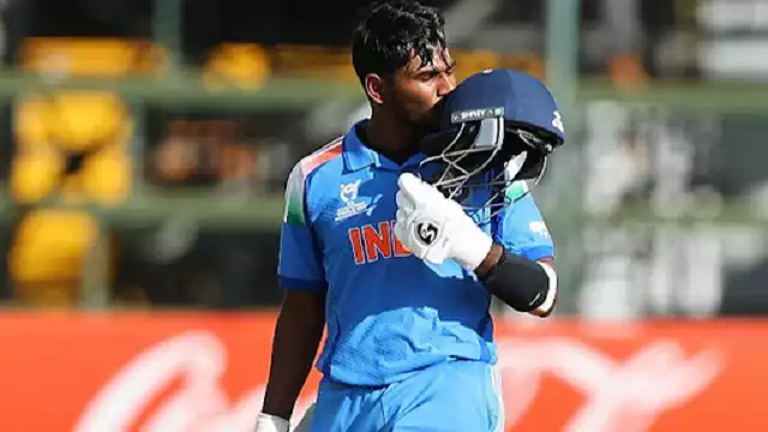
Aaron George produced a special innings on the big stage to set up India's title clash with England [Cricbuzz]

On a batting beauty at the Harare Sports Club, India’s assembly line of batting talent was out in full splendour in the Under-19 World Cup semifinal. There were two centurions in a statement innings from Afghanistan, but Uzairullah Niazai and Faisal Shinozada’s knocks – glorious as they were – were rendered footnotes by a superb century from Aaron George, who led India’s record chase of 311 with the kind of composure that belied his low scores from earlier in the tournament.

George hit 115 off 104, ably supported by half-centuries from Vaibhav Sooryavanshi and Ayush Mhatre, as India recorded the highest ever chase in U19 World Cup history. A sixth straight final beckoned, and with it, a Friday date with England for the title – a repeat of the 2022 final, history rhyming if not quite repeating.
There was something quietly poetic about George’s century, about this particular redemption. Here was a batter who had managed a best of just 23 runs leading up to this knockout game, existing in the shadows while all around him teammates made the right noises and brandished snazzy IPL contracts. But the selectors stuck with him. And on this day, under the Harare sun, George repaid that faith with interest – 15 fours, 2 sixes, batting on until only 11 runs were required. The chase, in the end, was polished off with 53 balls to spare, the margin of victory rendering Afghanistan’s brilliance a beautiful but ultimately futile exercise.
Afghanistan had a couple of clear chances in the second innings. Vaibhav Sooryavanshi was put down in the fifth over and George was reprieved when a dolly was put down by Wahidullah Zadran at mid-on. The drops proved very costly as India’s openers plundered 90 in 9.3 overs before Sooryavanshi fell to a short ball from Nooristani Omarzai for a 33-ball 68. Ayush Mhatre walked out, with a bunch of low scores under his belt, and opted to deal in either boundaries or dots for the first 12 balls before he hunkered down to build a 114-run stand with George.
George, at the other end, was barely troubled by spin or pace. A highlight of his innings was his ability to punch the ball on the up with a high elbow. There was also a delectable inside-out shot over extra cover to a ball headed down legside. George got to his century with a flick past mid-on for four, bringing the Indian dressing room to its collective feet. He hit two more boundaries in the next over before cutting Zadran to backward point in the 40th over. Vihaan Malhotra stayed unbeaten on 38 to take India home by seven wickets.
Earlier in the day, Afghanistan, having won the toss, did well to push India into chasing a record total. Shinozada and Niazai played central roles in the highest score against India in Youth ODIs, but the foundation for the same was laid by openers Khalid Ahmadzai and Osman Sadat, who put together a steady 53-run partnership.
Ahmadzai looked assured during his 31 off 39 balls before Deepesh Devendran broke through. Sadat continued the good work with a composed 39 from 70 deliveries, but his dismissal by Kanishk Chouhan left Afghanistan at 119 for 2 at the halfway stage, needing acceleration.
What followed was a batting exhibition that will have been remembered for a lot longer had the second innings not happened. Shinozada tore into the Indian attack with a magnificent 110 from just 93 balls. He reached his century in 86 deliveries and celebrated with Cristiano Ronaldo’s iconic “Siu” celebration, his second consecutive hundred in the tournament showcasing his remarkable form and temperament on the big stage.
But Shinozada wasn’t alone in the glory. Niazai played the perfect partner, remaining unbeaten on 101 from 86 balls. The pair stitched together a match-defining stand that not only revived the innings but propelled Afghanistan well past the 300-mark. Niazai’s maiden tournament century came in dramatic fashion, brought up with a pull shot while scampering for a sharp second run. The late flourish saw Afghanistan plunder 111 runs in the final 10 overs of the game, but as it turned out the slow-burn approach to the innings proved counterproductive against the latest bunch of India’s batting talents.
Brief scores:
Afghanistan 310/4 in 50 overs (Faisal Shinozada 110, Uzairullah Niazai 101; Kanishk Chouhan 2-55, Deepesh Devendran 2-64) lost to India 311/3  in 41.1 overs (Aaron George 115, Vaibhav Sooryavanshi 68, Ayush Mhatre 62; Nooristani Omarzai 2-64) by 7 wickets.
Continue Reading

Latest News

Pakistan PM Sharif on India boycott: ‘A very considered stance, and we should completely stand by Bangladesh’
Published

on

By

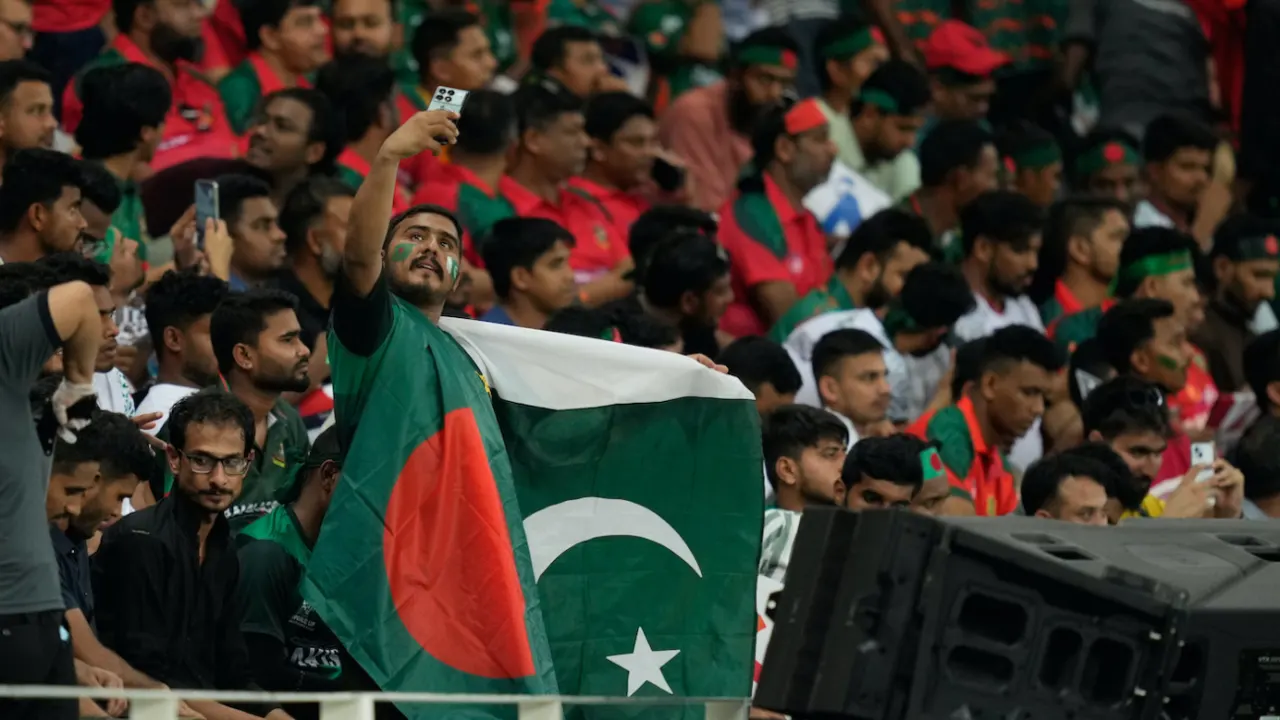
Pakistan PM has said that the team's decision to boycott the game is linked to Bangladesh's ouster from the T20 World Cup [Cricinfo]

Shehbaz Sharif, the Pakistani Prime Minister, has said Pakistan’s decision to boycott the game against India at the men’s T20 World Cup 2026 was a show of solidarity with Bangladesh, after their removal from the tournament.. It is the first time any official from either the Pakistan state or the PCB has publicly touched upon the reasons for the boycott.

“We have taken a very clear stand on the T20 World Cup that we won’t play the match against India because there should be no politics on the sports field,” Sharif told members of his cabinet on Wednesday. “We have taken a very considered stance, and we should completely stand by Bangladesh, and I think this is a very appropriate decision.”

The Pakistan government put out a post on Sunday saying that while the team would participate in the T20 World Cup, it would not take the field in the February 15 group game against India. The post, which came after a week in which Pakistan’s participation in the tournament had become uncertain, did not give any reason for the decision.

The PCB has not spoken publicly on the matter, but the ICC issued a response a few hours after the X post, in which it said it hoped “that the PCB will consider the significant and long-term implications for cricket in its own country as this is likely to impact the global cricket ecosystem, which it is itself a member and beneficiary of.”

It is not known whether the PCB has officially notified the ICC, or whether there has been any contact between the two bodies. The ICC had said that it “expects the PCB to explore a mutually acceptable resolution, which protects the interests of all stakeholders.”

The Prime Minister’s comments confirm, however, that the boycott decision is linked to what the PCB chief Mohsin Naqvi – the interior minister in Sharif’s government – called the ICC’s double standards in excluding Bangladesh from the T20 World Cup.

Bangladesh were replaced in the world event after their government refused to let the team travel to India, where they were based for their games. The government, citing security concerns, wanted Bangladesh to play their games instead in Sri Lanka, the co-hosts for the event, and where Pakistan will play all their games.
The ICC Board voted 14-2 in favour of replacing Bangladesh with Scotland rather than rescheduling their games in Sri Lanka – the PCB were one of the two votes against the decision, along with the BCB.
“You can’t have double standards,” Naqvi said after the decision and cited India’s refusal to travel to Pakistan for the Champions Trophy in 2025. “You can’t say for one country [India] they can do whatever they want and for the others to have to do the complete opposite. That’s why we’ve taken this stand, and made clear Bangladesh have had an injustice done to them. They should play in the World Cup, they are a major stakeholder in cricket.”
[Cricinfo]
Continue Reading

Latest News

BCB receives investigation report on sexual misconduct allegation

Published

on

By

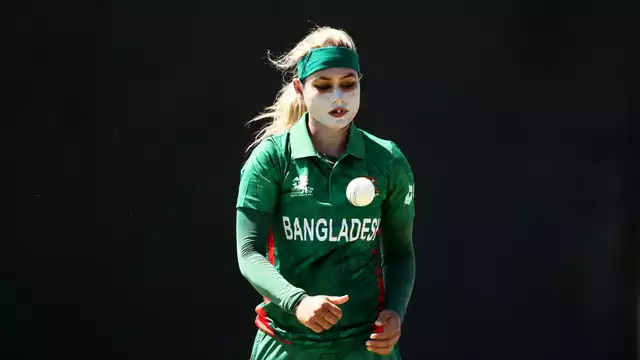
Jahanara Alam had alleged being sexually assaulted by a member of the team management [Cricbuzz]
The Bangladesh Cricket Board received the investigation report into allegations of misconduct in women’s cricket raised by former national captain Jahanara Alam, a member of the five-member inquiry committee confirmed to Cricbuzz on Monday.

Jahanara had alleged being sexually assaulted by a member of the team management which forced BCB to form an investigation committee to probe into the matter.

Initially BCB announced that that the investigation committee will be chaired by Justice Tariq ul Hakim, former judge of the Appellate Division of the Supreme Court of Bangladesh while its other members were BCB Director Rubaba Dowla and senior Supreme Court lawyer and President of the Women’s Sports Association Barrister Sarwat Siraj Shukla.

Later, BCB expanded the committee by adding two more members- Professor Dr Naima Huq, former Chair of the Department of Law at the University of Dhaka and current Member of the Law Commission, Bangladesh and Barrister Muhammed Mustafizur Rahman Khan, Senior Advocate of the Supreme Court.

When contacted, Barrister Sarwat Siraj Shukla told Cricbuzz on Monday that they have submitted the report to the board. The BCB has extended the deadline for this incident several times despite forming an investigation committee.

Deciding to extend the time for the first time on December 2, BCB said that Jahanara had asked the committee for some time to submit a written complaint and had been given another 15 days to submit the report. Then on December 21, the BCB again said that the independent investigation committee would submit the investigation report by January 31.

The announcement came hours after High Court issued rule over BCB’s silent role in probe into cricketer Jahanara’s allegations. On February 2, the High Court issued a rule asking why the silent role of the BCB should not be declared illegal in the probe based on the allegations of misconduct in women’s cricket raised by former national captain Jahanara Alam.

The HC bench of Justice Ahmed Sohel and Justice Fatema Anwar delivered the order on Monday (2 February) following a writ petition. Senior lawyer of Bangladesh Supreme Court Barrister Nasir Uddin Ahmed Asim, along with some other lawyers, took part in the hearing for writ petition in the court.

The lawyers said that the HC bench asked the BCB to show cause as to why its indifference and inaction in the Jahanara issue should not be declared illegal. The BCB has also been directed to inform the court about the steps it has taken or will take in this regard.

The writ petition states that if the authorities concerned remain silent in the case of any complaint, then not only one victim but many other potential victims would not dare to come forward due to fear or distrust, which hinders justice.

The court said that ensuring transparency and accountability is the responsibility of every institution – be it an educational institution, workplace, factory, hospital or sports ground. Such allegations should be considered with great seriousness in all cases.

Continue Reading

Trending