
Features
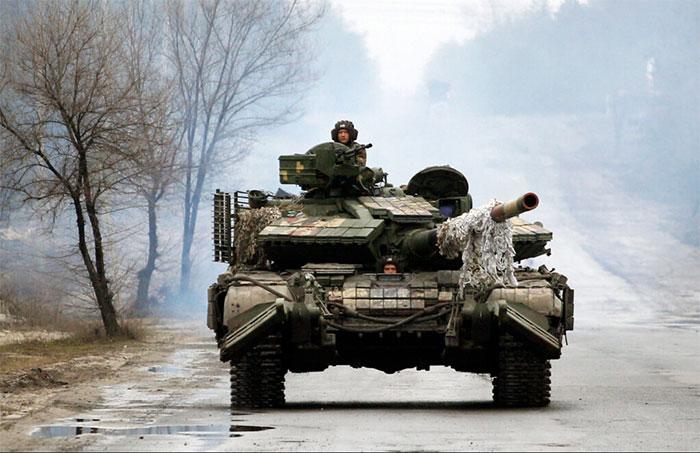
Will Ukraine adventure challenge USA’s global hegemony and trigger World War III?

by Chintaka Batawala and Mohamed Inthi Sameem
President Valdimir Putin’s adventure into Ukraine was supposed to be quick, lethal, and with clear objectives. Send Zelensky into oblivion, and install a pro-Moscow regime that won’t be clamoring for the moon such as a NATO alliance membership. In fact, President Putin was so confident about the competencies of his military machine and achieving his objectives in good time, that he even went on to highlight, perhaps out of tune with time, that it was the Soviet Red Army that overpowered the Germans during World War 2, and not the French or the British. (Reuters.com, May 2022)
But after 200 plus days of fighting, shelling, thousands of refugees, a new dimension in drone warfare, in conjunction with the largest military buildup witnessed in Europe since world war 2, there are more questions than answers as to where this is all headed. However, if there is fair bit of ambiguity as to military aspects of this conflict, then the geo – political facets are definitely clearer.
For starters, the traditional alliances that have been the norm for decades have been strengthened. Beijing and Tehran are backing Moscow without much ado. Moreover, the Iranian cooperation with Moscow in terms of the supply of Iranian drones to Russia and the reciprocal supply of advanced SU 35 jets to Iran have garnered much international press attention.
This conflict however, has put New Delhi in a precarious situation. On one side India has to play along as a member of the QUAD that is aligned with the USA, and Japan. On the flip side of this equation is the fact that India is also a member of BRICS, that is affiliated with China and Russia. Moreover, the historical alliance between India and the Soviet Union dating back to the cold war days is still a present tense. If the Indian Government’s official reaction was diplomatic at best, then the Indian media was certainly vociferous in highlighting that it was the USSR and not the Western block that came to India’s rescue when Pakistan launched an anti-India operation code named Genghis Khan in 1971, which resulted in the formation of a new independent state called Bangladesh. (WION wide angle, 2022)
For Washington as expected the time tested all weather western partners London, Paris, and Berlin have thrown in their support, albeit in a muted way. In normal times the most enthusiastic and high-volume support to Washington would have come from London. But because Great Britain is going through its own leadership fiasco the tone from London was hardly a whisper.
But as sure as politics makes strange bedfellows, the biggest surprises have been, the cold shouldering by UAE ‘s Mohamed bin Zayed (MBZ ) and Saudi Arabia ‘s Mohamed bin Salman (MBS) to President Biden request to increase oil output to make up for the Russian absence in the oil markets.
If this was not bad enough coming from traditionally strong Washington allies, the Gulf states tilting towards Putin has further frosted the traditional ionic type bonding between Riyadh and Washington; a bond that has been a done deal for decades. Presidents Biden’s Riyadh visit to request an increase in oil output elicited comparison to then Secretary of State Henry Kissinger’s visit to Saudi Arabia in November 1973, to request the then King Faisal bin Abdul Azeez (MBS ‘s uncle) to remove the oil embargo imposed after the Arab Israeli war of 1973. If Kissinger’s visit to the kingdom then was productive in some way as it set the tone for the Petro dollar, then Presidents Biden’s visit in 2022 to Riyadh with a fist bump greeting to the Saudi Crown Prince MBS, failed to live up to its expectations ( NBC news , July 2022)
Some experts do make a case that the West’s confrontation with Russia has brought the world within proximity to world War 3. ( Bill Ackman , CNBC May 2022 , Fiona Hill , Business Insider Sept 2022) . Whilst this statement may seem far-fetched at this time, it certainly has reasonable resonance. Rewind back to the reasons why World War 1 and World War 2 were so devastating was because, the major powers of the time got embroiled in a protracted military conflict, some by willful choice, like the Austro-Hungarian Empire and the others by Hobson’s choice like the Ottoman Islamic Empire. (World War I)
Granted we are not living in that sort of fragile coalition days, and there is some ease today due to the presence of a global authority in the United Nations to prevent the recurrence of a global conflict. However, with the prevalence of nuclear weapons among the major powers and who also happen to be the protagonists of this conflict, it seems petrifying to imagine the trajectory of such a global confrontation.
If the military aspect of this conflict is viewed as a localized war between Russia and Ukraine, the fact remains the West is collectively engaged in an Economic war with Russia, unprecedented in scale that would have been unimaginable just a few years ago. Moreover, the Economic consequences of this conflict are not going to fade away just like that. It is likely to create some structural fault lines in the global trade mechanism. If for the past 3 decades the key defining words for trade and commerce were Globalization and Economic liberalization, then certainly today the tide has turned towards economic nationalism and commercial decoupling.
The fall out risk of this conflict may not be nuclear, based on current dynamics but they are sky high especially for the global super power – the USA. The sanctions against Russia have been draconian as well as punitive such as the freezing of Central Bank assets and excluding Russian banks from the SWIFT network, a vital component in today’s financial architecture. The sanctions target the key vulnerabilities of the country’s economic engine; and in an era of globalised supply chains the sanctions effectively negate Russian access to technology and other related import inputs to the sectors in transportation, communication, and even port operations, all vital cogs for a country’s GDP growth. However, in an anti-climax of sorts Russia’s economic indices are holding better than expected. The GDP contraction for FY 2022 is expected to be 6 %, a better figure than the 15 % that was originally forecasted. (IMF, Economist Aug 2022)
Whilst the Western imposed sanctions had devastating effects on Iraq, and Libya, they have had only a limited impact on Russia. Perhaps this is due to Russia being a resource economy that is not fully integrated with the Global Economy. The Russian Economy is driven by commodity exports such as oil natural gas, nickel and aluminum which affords a certain cushion against western sanctions.
But perhaps the more important reason is , Russia is a permanent member of the UN security council and the veto power that accompanies it, allows Russia to challenge the western dominated security council resolutions on matters that goes against its interests.
Washington’s sanctions are well crafted with the required odds and evens, but there are glaring loopholes – the energy exception. If one of the primary goals was to reduce Russia’s oil revenue then the pragmatic strategy should have been to allow the free flow of oil into the markets and then simultaneously focus on a long-term solution to reduce the dependence on Russian oil. With plentiful supply the prices would stay within reason and thereby reduce energy driven inflationary pressures currently gripping Western Europe. But instead the sanctions strategists decided on an embargo which fell far short of the desired outcome.
The greatest challenge to the United States is that this Economic head on clash with Russia is being waged pretty much alone. This is because the European allies being fully aware of their Russia oil and gas dependency have been silent or reluctant partners at best to the path taken by Washington.
The USA is able to exert this sort of impact using the unique leverage status of the US Dollar. Because countries across the world have to use the US Dollar as the medium of international exchange even the threat to cut off them can cause Economic panic. More tangibly the US has the ability to impose sanctions on any country by leveraging on the long reach of the US Dollar even when the goods are not produced in the United States .To this effect just recently the US Dollar hit a two decade high prompting Barron’s to coin the caption, ‘The Green Back has gone ballistic’ ( Barron’s, Sept 2022)
However, that decades old phenomenon of the US Dollar as the de facto global currency may face its serious challenge yet. Fast growing and dynamic economies like Turkey, India, and the primary Petro dollar backer Saudi Arabia are seriously looking for alternatives to condense their dollar dependence.
The contrarian view of the Russia-Ukraine conflict is that it has highlighted something more than the ideological clash between the East and West, reminiscing upon the Roman and the Persian wars of antiquity from the annals of history. Putin has managed to carve out a softer and a romanticized persona for himself, despite the depiction in the western media as an unpredictable war monger. The old Boney M hit Ra Ra Rasputin from 1978, edited version of 2022 depicting Putin as the legendary monk during the days of the Russian Czar, has garnered over 200 thousand views on You Tube. But Putin’s touch of a genius moment was perhaps when he offered his personal jacket to the visiting leader of the UAE Mohamed Bin Zayed, who was feeling visibly uncomfortable in Moscow’s winter, portraying himself as a warm caring man. And it is this unpredictable persona of Putin is what prompts many to highlight the possibility of a World War 3 despite the remoteness’ of that likelihood, whilst eliciting comparisons to the chain of events that triggered World War I.
World war I started because of an accident of sorts triggered by a spark. That spark was the assassination of Arch Duke Francis Ferdinand, the heir to the Austro-Hungarian empire. But his assassin was successful only because of a single wrong turn taken by Ferdinand’s driver. On that eventful day in 1914 Ferdinand was on a motorcade in Sarajevo with little concern for Serb resentment to the Empires 1908 annexation of Bosnia- Herzegovina. The motorcade having run into incensed Serbian nationalists had decided to take an alternative route. But this crucial instruction to divert was not understood by Ferdinand’s Czech driver. As it panned out, Ferdinand’s car came into a grinding halt at a junction where the would-be Serbian assassin was hiding behind a tree. The rest is history. (First World war/ John, Keegan 1998, The Sleepwalkers -How Europe went to war in 1914, Christopher Clarke)
Whilst 2022 is certainly not 1914, accidental occurrences are always a probability. In the early stages of World War 1, the United States did not want to join the war, citing it as a conflict that is beyond the Atlantic Ocean. But the crucial trigger event was the sinking of the British Ocean liner the RMS Lusitania in mid Atlantic in May 1915 by a German U boat. The huge media outcry in the USA which followed, in turn forced US President Woodrow Wilson to declare war on the German centric Central powers. World War 1 which up until then had been a stalemate of sorts, tilted the balance in favour of Britain and France after the entry of the United States.
Whilst the Russian Ukraine conflict in 2022 may not have the requisite environment to trigger a global war as in 1914 , and President Putin is no arch duke Francis Ferdinand, it certainly has upset the delicate geo political balance that existed prior to this conflict. Furthermore, it has put globalization itself into a question mark which may result in further economic de coupling and eventual de globalization.
The most plausible result of the sanctions on Russia, is that Russia will be forced to join the China orbit. At present the 9th largest Economy in the world by nominal GDP (Wikipedia 2022), has been effectively removed from global economic matrices and supply chains. Joining the circle of the second largest Economy in nominal GDP makes business sense, the energy producer coming together with the energy consumer, creating this symbiotic relationship.
Moreover, if BRICS becomes BRICSS (as in BRICS +) with the inclusion of Saudi Arabia, it would give a tremendous boost to the BRICS economic forte as the major energy producer integrating with the energy consumers. If other possible contenders such as Turkey, Egypt and Iran who have all expressed their wish to join the BRICS, does materialize that may create a global economic conglomerate. BRICS represents 24 % of the global GDP, 41 % of the World population and 16 % of global trade. ( ,https:// brics2021.gov.in )
Unlike Western Europe and North America which share a common economic policy in free market enterprise and political ideology, the BRICS block is not at all a homogenous entity. In fact they are poles apart in political ideology and even monetary policy (example China and India) , but an expanded BRICS plus block with an economic objective will not only have the capacity but also the willingness to do something that has not been done before – be able to mount a monumental challenge to the hegemony of the US Dollar via a BRICS common currency .
In 1971 then US president Richard Nixon, took an unprecedented decision in removing the gold standard of the US Dollar which had been around since the Bretton Woods accord in 1944. This resulted in the US Dollar becoming a Fiat currency , decoupled from a physical store of value. But all that was to change in the aftermath of the Arab Israeli war of 1973 when Saudi Arabia’s ruler King Faisal bin Abdul Azeez imposed the Arab oil Embargo with the backing of other Arab oil producers. Then Secretary of State Henry Kissinger ‘s subsequent visit to Saudi Arabia resulted in the easing of the Arab oil embargo and the setting up of the structure and the functional aspects of the Petro dollar system. By 1974 this system was fully operational. ( The Rise of the Petro Dollar system – Dollars for Oil , Jerry Robinson 2012) . For the past 5 decades this equation held firm – the success of the Petro Dollar hinged upon the Saudi US relationship, energy for security principal.
But that delicate relationship between Washington and Riyadh is now under stress owing to the changes in the Global Economic system. In 1974 the Global Economic leaders were the USA & Western Europe, and China and India were not in that league. But today, China is a global powerhouse that is able to exert its influence on the others. The other not so prominent reason may be the BRICS driven reform agenda of the global financial system. The question remains as to whether the BRICS plus including Saudi Arabia will be able to de-dollarize the global financial system?
It is no secret that the BRICS members have wanted a greater autonomy to reflect their collective global economic position for a while now. The BRICS have collectively made a strong case for the inclusion of the China’s renminbi into the IMF’s SDR basket with the volume getting amplified year on year.
But the collective BRICS agenda for international financial system reform got a shot in the arm when Saudi Arabia’s Minister of Foreign Affairs Adel al Jubeir articulated that USA is one of its important partners along with China in the current global order. (CNBC International with Hadley Gamble, 2022) This statement was backed up by a memorandum of understanding between Arab oil company (formerly ARAMCO) and SINOPEC China, to address energy supply and demand details. In fairness to Saudi Arabia this statement should not be seen with a confrontational overtone but rather from a rationality point of view; it makes sense for Saudi Arabia to trade in the respective currencies of their major trading partners, China ‘s Yuan and Indian Rupee thereby circumventing the dollarization process in the trading process.
Whilst a military conflict between NATO and Russia is unlikely, it is always a remote possibility in similar fashion to how World war 1 started. President Vladimir Putin has certainly fired the salvo in driving a wedge between the traditional allies and upsetting the delicate geo political balances that existed prior to his invasion.
Whilst undoubtedly the USA is and will remain the global economic superpower and the leader of the free world for the foreseeable future, that take it for granted status quo that has been the norm for decades has now been dented. Putin knowingly or unknowingly has opened up the Pandora’s box to set in actions in motion to seriously challenge USA global hegemony and the long reach of the US Dollar. Decades ago, French President Charles De Gaul articulated about the exorbitant privileges of having the true global reserve currency. Well that state of affairs then, has been put into question as of 2022.
Whilst the Russia- Ukraine conflict may end in a military stalemate, the structural fault lines that it has created , the geo political issues that it has raised , the impact it has had on global trade mechanics and the questions it has raised about traditionally allied loyalties may serve as a litmus test for any future confrontations. This has to be looked at beneath this film of mundane reality, depth and seriousness.
—————————————————————————————————–
About the authors:
Mohamed Inthi Sameem (inthi_mohamed@yahoo.com) is a Financial markets specialist , counting over 15 years’ experience in the capacities of investment Strategist (Fund manager) , Head of Corporate Finance and investment Banking , Head of Research and delivery , Corporate & Management consultant (Zamil Group – Saudi Arabia )and Director Policy & surveillance (the Capital market authority – Securities and Exchange Commission – Sri Lanka ) , and Director Instrata capital , Bahrain (Kuwait investment Company)
He holds a BSc and MBA from the University of Houston Clear Lake – Houston Texas USA, and Certified Management Accountant (CMA) – high distinction (Australia )
Chintaka Batawala () is an international Relations Analyst based in Colombo, Sri Lanka .

Tales of Mystery and Suspense 3
The murder, in a private dining room in the house, is of a financier with whom the government was negotiating a loan. When this seemed difficult the Minister of Home Affairs agreed to lead discussions, since he had known Mr Oissel the financier when they were young. Hence the private dinner, but when the Minister stepped out for a vote, Oissel was shot just as the Division Bell rang.
The Brahms and Simon detective novels, the first of which I wrote about last week, were amongst several books by the pair that Robert Scoble gave me when I was in Australia towards the end of last year. Amongst them was another thriller of a very different sort, though that too was written and set between the wars.
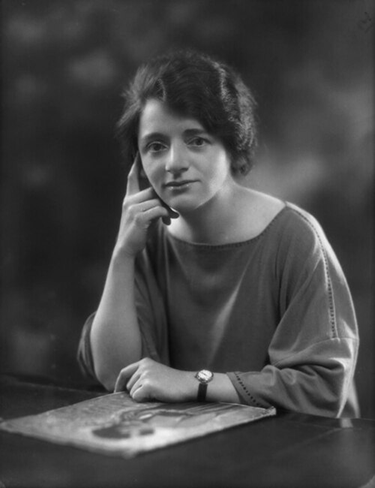
Called The Division Bell Mystery, it was set in the House of Commons, the first such book I believe, and was by Ellen Wilkinson, a Labour MP who became Minister of Education in Attlee’s government after the war, having served previously as Parliamentary Private Secretary to several ministers. Her hero Robert West is also a PPS, but a conservative, and his Minister, of Home Affairs, is an old style aristocrat, not much loved by the less orthodox Prime Minister, who nevertheless needs his support on many occasions.
The murder, in a private dining room in the house, is of a financier with whom the government was negotiating a loan. When this seemed difficult the Minister of Home Affairs agreed to lead discussions, since he had known Mr Oissel the financier when they were young. Hence the private dinner, but when the Minister stepped out for a vote, Oissel was shot just as the Division Bell rang.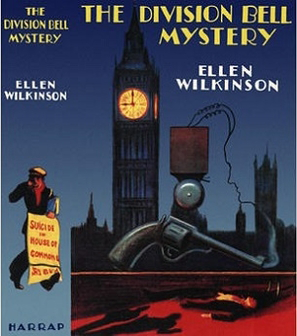
West was just outside the door when the shot was heard, and when he opened it saw only the dead body with a revolver beside it. The assumption that this was suicide was however challenged by Oissel’s grand-daughter Annette, who was his heir, on the grounds that he would never have killed himself. But her view was given greater credence by the Inspector put in charge of the case who said there were no burn marks on the body which would have been the case had Oissel fired the pistol himself.
Matters are complicated by the fact that Oissel’s flat had been burgled while he was at dinner, and Jenks the policeman allocated to him, who had served the Home Secretary and seemed more acceptable to Oissel than someone from the Security Service, had been killed. Matters get even more complicated when Annette says her grand-father’s notebook in which he wrote his secrets in cipher was missing.
That was found in Jenks’ pocket, and then a photographer came to West to say he had been asked by Jenks to photograph this. More worryingly for West, he finds in the Home Secretary’s drawer a few pages from the notebook with what appears to be an interpretation of the cipher.
Ellen
Overwhelmed by all this he confides in a recently created peer who knows all about the business world, who insists that they leave the house party at which they had met over dinner and discuss the matter with the Prime Minister who promptly summons the Home Secretary.
But the Home Secretary had gone to Scotland to launch a ship over the weekend, so the meeting could take place only on the morning of the Monday, when difficult questions were expected on the adjournment motion. He admits at the meeting that he had got Jenks to take the notebook, and also that he knew the code since it had been created by him and Oissel when they were young.
He thought he should resign, and even contemplated suicide, but the Prime Minister told him that that would be even worse for the government, and that he should go home to bed. The Prime Minister said that he himself would handle the question, which he did with aplomb, insisting that confidentiality was needed until the inquest. What had happened would be made clear then, he declared, leaving West and Inspector Blackit and Lord Dalbeattie what seemed the impossible task of solving the murder.
Dalbeattie had suggested that West ask a female Labour MP who was very fond of him to get what information she could from the staff. That there was some involvement there had become clear when West, going back late one night to collect a briefcase he had left in a dining room, found someone lurking in the dark in the corridor outside the private rooms. Room J, where the murder had happened, was meant to be guarded throughout by a policeman, but he had left the room having felt dizzy, and it seemed that his coffee had been drugged. West’s sudden appearance however had prevented anyone else getting into the room.
Dalbeattie decides to recreate the scene of the murder and has a dinner party in Room J on the Tuesday night, inviting West and Annette and the society hostess at whose house he had met, and also Patrick Kinnaird, an MP who was engaged to Annette, as well as the Permanent Secretary to the Home Ministry.
After coffee Inspector Blackit comes in with Grace, the Labour MP who had got the confidence of the staff, and a journalist who had also been helpful, and just as they say they think they are on the track the division bell rings. Grace jumps up and tells the Inspector that that provides the solution and they get a ladder, and sure enough find the revolver in the space where the bell is. Directed at the place where Oissel had sat, it had been primed to go off with the ringing of the bell. The waiter who had helped to set things up made clear who the murderer had been.
The reason for the murder and the confused motives of all those involved made for a fascinatingly intricate mix. But also impressive in the book were the descriptions of the isolation possible in the crowded premises of the house, the forceful characterization of the members – Grace based on the writer, the society hostess based on Nancy Astor, the first female MP – and the laid back nature of senior politicians which West realized had to change in the brave new world of high finance.

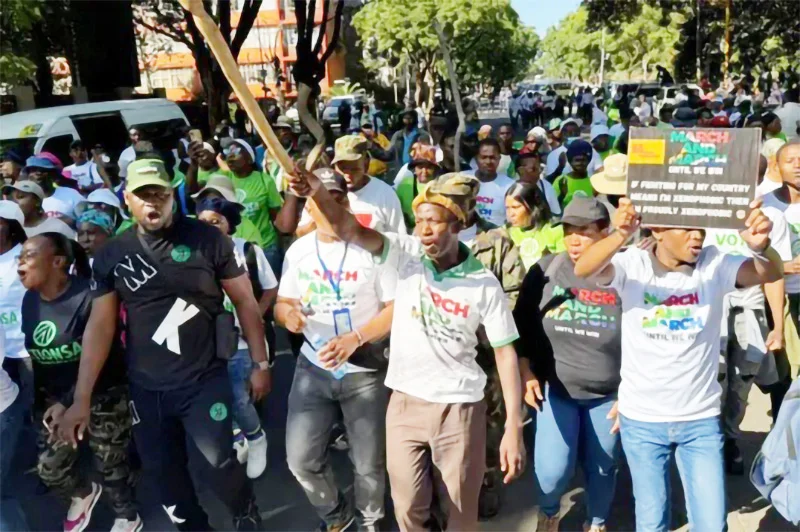
 The current outbreak of anti-immigrant protests in Durban, South Africa is bound to have taken many a subscriber to value-based politics or political idealism quite by surprise. After all, this is evidence that despite the historic accomplishments of nation-builders of the stature of the late President Nelson Mandela it cannot be taken for granted that identity politics, including racism in its worst forms, is no more in South Africa.
At the time of this writing details are scarce on the substantive root causes of the protests but it could very well be that economic grievances, particularly on the part of the majority community in South Africa, are contributing considerably to the disaffection. Shrinking employment and material prospects are likely to figure majorly among the factors igniting the unrest.
Fortunately, the local authorities in Durban are losing no time in calling for peaceful co-existence among the relevant communities and are pointing to the vital importance of stepping-up national integration processes. Apparently, immigrants in sizable numbers from neighbouring countries are present in Durban. However, international TV footage of the protests quoted some local authorities as saying that the majority of the immigrants in some centres that housed them were not illegal migrants and had the documents that entitle them to be in Durban.
In the Durban protests the world has fresh proof of the socially divisive consequences of the gathering globe-wide economic disaffection, touched off particularly by the continuing crisis in West Asia. Going ahead, the world would need to brace for increasing identity-based unrest of the kind it is just witnessing in South Africa.
Considering that the material lot of ordinary people everywhere could only aggravate progressively, with the US and Iran showing no signs of negotiating an end to their confrontation any time soon, it will be left to the more democratic and progressive sections of the world community to initiate positive measures collectively to bring a measure of relief to the discontented.
The swiftness with which such relief will be provided would depend crucially on the importance those sections taking up these undertakings attach to value-based politics as opposed to Realpolitik of power politics.
Going by these yardsticks, Italy could be considered to be moving in the right direction. Recently Italy came to the fore in initiating the collective named, ‘Rome Coalition for Food Security and Access to Fertilizer’, which has as one of its aims the swift provision of fertilizer to economically weak African countries.
In a recent statement Italian Minister of Foreign Affairs and International Cooperation, Antonio Tajani, said that a principal aim of the project was to ensure that the farmers of Africa gained easy access to fertilizer, considering that food security is a growing concern among some of Africa’s economically vulnerable countries.
The statement went on to mention that some 30 countries hailing from the Mediterranean region, the Middle East, the Balkans as well as the FAO had been invited to join the coalition. The venture is far-seeing in that food security is main among the reasons for social discontent which in turn could degenerate into endemic political turmoil and bloodshed. Separatist violence and geographical fragmentation of countries wouldn’t be too far behind these developments, as Africa itself has often proved.
It is hoped that more G7 countries would take the cue from Italy and do what they could to ease the hardships of economically distressed countries, particularly of the global South. In these efforts they would need to break rank with the US, which is today brutally indifferent to the consequences of its policy of making ‘America First’, come what may.
Going by current developments, the Trump administration seems to be blithely oblivious to the wider, deleterious effects of its policy course in West Asia. Besides rendering Iran militarily and otherwise impotent nothing else seems to matter to Washington, as regards West Asia. This is policy short-sightedness of an extreme kind. After all, right now West Asia could be said to be sitting on the proverbial powder keg.
On the other hand, Iran is not giving the world the impression that it is doing anything constructive to get out of the policy straitjacket that it wove for itself decades ago. Rather than enter into a policy of ‘live and let live’ in relation to Israel in particular and initiate a process of reconciliation with the latter, it has chosen to operate within policy parameters that continue to damn Israel. This has put Israel always on the ‘defensive’ so to speak and prevented the opening up of space for meaningful dialogue.
That said, Israel is obliged to explore the possibilities of entering into a negotiatory process with the Arab-Islamic world that could lead to a de-escalation of tensions and bloodshed. It cannot continue to look at its neighbours through lenses that distort them as archetypal enemies who should be ‘wiped off completely from the face of the earth.’
In other words, the need is urgent for Realpolitik to give way to value-based politicks. Italy is beginning to prove that the latter approach could be pursued with some success. May be the EU and the UK could throw their weight behind these initiatives as well and establish that international politics could be refashioned on the basis of humane, civilized norms. The UN would need to be fully supportive of these moves and prove an organizational nucleus of the operations that follow.
In fact the time is ripe for people of conscience to collectively stand up on the side of peace and say ‘No’ to war and violence. Organizations such as the ICRC, the WHO and Medicines Sans Frontiers have already taken up this call. Referring to the widespread destruction of health facilities and their dehumanizing results these organizations have said, among other things, that ‘This is not a failure of the law. It is a failure of political will.’
True, ‘failure of political will’ among those powers that matter accounts for the runaway, uncontrollable nature of war and destruction in contemporary times, but more fundamentally it is a failure of the human conscience. It could very well be that the phenomenal levels to which violence and war have been unleashed today have had the effect of deadening consciences. This is a matter for urgent study and wide discussion.

 I would describe Indunil Kaushalya Dissanayaka as innovative and creative, and she operates under the name of Cuteefly.
Indunil always comes up with something novel to celebrate special occasions, and she does it with candles … and that’s her profession.
She was in the spotlight when she created a happening scene, with candles, for Christmas, Sinhala and Tamil New Year, and Valentine’s Day.
As lanterns light up Sri Lanka for Vesak, the Colombo-based candle maker is quietly turning wax and wick into little pieces of the festival.

Candles reflecting Vesak themes
Her candles reflect Vesak themes – light, peace, remembrance, giving, etc., to enable you to fill your Vesak celebration with devotion and beauty.
Among her Vesak creations is a lotus-shaped soy candle, scented with sandalwood, lavender, etc., meant to burn during this Vesak Poya Day.

Indunil Kaushalya Dissanayaka: Customers
praise her for her creativity
These handcrafted Vesak candles are perfect for offering at the temple, she says.
What makes her creations so novel is that they come in different shapes, scents, themes, and all are handmade.
What’s more, her customers have heaped praise on her for her creativity.
According to Indunil, her creations are perfect as a thoughtful gift … to bring beauty, unity, and light into every moment.
Says Indunil: “Our beautifully handcrafted Unity candles are designed with premium detail and love, making them perfect for celebrations, gifts, and meaningful occasions.”
Cuteefly, says Indunil, is available online.
Readers could contact Indunil on 0778506066 for more details.
He Facebook Page is: Cuteefly.

Handmade with love

Tickner five-for wraps up innings win for New Zealand

Ambidextrous spinner Shashini Gimhani in Sri Lanka’s T20 World Cup squad

Pakistan’s famous cheerleader ‘Chacha Cricket’ to retire this year

South Africa Women’s maiden tour to Zimbabwe to feature five T20Is

Navy renders assistance to bring injured fisherman ashore

Applications called to recruit 400 public officers as Digital Champions for the Public Impact Champions Network

‘Dates have the highest sugar content to fight Coronavirus’

Sunday Island 27 December – Headlines

#SundayIsland 17th December – Headlines

Sunday Island – 28th March

Sunday Island Headlines – 21 March

Sunday Island – 21st February – Headlines
-

 News6 days ago
All-New GRAVITE launches at LKR 6.99 Mn
-
 Features6 days ago
The NPP’s pivot to the past
-
 News5 days ago
Police probe underway to ascertain links between criminals deported from UAE and local politicians
-
 News4 days ago
Easter Sunday carnage: Court told Maulana’s statement cannot be accepted without cross-examination
-
 Features6 days ago
End of Peacekeeping
-
 Opinion4 days ago
Undermining the democratic political framework
-
 News4 days ago
UK passport holder hiding here wants to have deportation order rescinded to leave without blemish
-
 News5 days ago
Dickoya double murder suspect arrested