
Sports
Will the Americans embrace cricket?


Rex Clementine
in Dallas
In a bid to promote cricket in certain countries, the sport’s authorities used to stage the now defunct ICC Knockout Tournament in countries that had not got full member status. As a result, Bangladesh hosted the event in 1998 followed by Kenya in 2000. The tournament from thereon was abandoned and Champions Trophy came into existence. There was immense commercial value in the fast-paced two-week tournament and soon authorities decided to play events exclusively in full member countries.
Rightly so too. Full Members for example want to host these events and already existing facilities in these countries give the organizers fewer headaches. In return they could invest the money earned from these tournaments to fund countries that are developing their game.
So, why suddenly take the game to the United States. This World Cup could have been easily staged in the West Indies. But US came into the picture for the massive commercial value that exists here.
It had been apparently observed that the demand to watch live cricket in US is huge due to the presence of Indian and Pakistani expatriates in this part of the world.
Staging 16 games of the 20-team tournament in three US venues – New York, Dallas and Miami will further put the interest levels up and more importantly will win over new fans.
US is in a world of their own. While rest of the world gains immense pleasure by playing football, cricket, rugby and other sports, the Americans have invented their own sports such as basketball, baseball and American football.
The expatriates will always love cricket but will the natives buy into our beautiful game remains to be seen.
The World Cup obviously has faced challenges. Pitches for the tournament had to be made in Adelaide, Australia and shipped to the US. They are a far cry from ideal cricket pitches and free flowing batting has hardly been seen. You can understand the plight with the pitches but what about the outfield in New York? It was heavy and the ball hardly travelled. Not ideal for the game of cricket. Yet, these are early days and you should give them more leeway. But then, when you know that the World Cup is coming wouldn’t it have been a wise idea to play some international games a year prior to the event?
There may have been challenges with that too. New York for example is a purpose-built stadium. Everything in that venue is temporary and it will vanish after the tournament. There won’t be a stadium after the World Cup.
So, there are challenges in promoting the sport among locals when a cricket ground that hosted a World Cup ceases to exist. If you are promoting cricket in schools, children will play, but they need to have grounds. Bringing down existing venues will not help.
However, what will keep the Americans interested in the sport is feats like the one that was exhibited on Thursday. US went on to beat former champions Pakistan in a super over thriller in Dallas.
The locals still don’t completely understand the complexities of cricket. For example, on the day US and Pakistan were playing, Sri Lanka had a training session at the same venue in Dallas but the cops wouldn’t let the Sri Lankan team in. According to them, Sri Lanka had no business to be at the ground that day. But the practice facilities are away from the playing area and it took a while for the police to understand that the team had a reason to be there. After some deliberation they were allowed in. All’s well that ends well.
Attendance has been pretty good for games held in the United States and the potential is huge. But it remains to be seen whether the Americans will convert to cricket. After all, it’s a little-known fact that the first ever international cricket game was played in New York between the US and Canada. It was way back in 1844, some 33 years before England and Australia met at MCG for the first time.









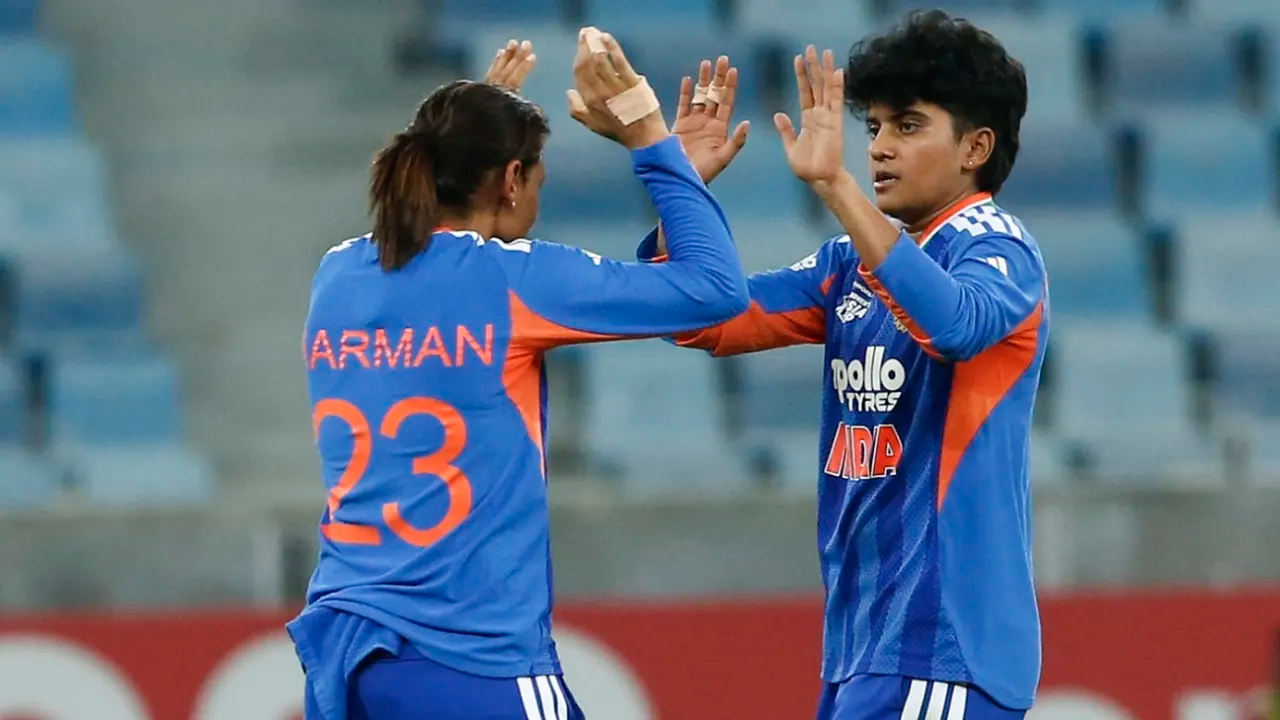
Defending gold-medal winners India overcame hosts Japan by eight wickets in the fourth quarter-final of the women’s cricket competition at the Asian Games in Nisshin on Friday. India chased down 58 in five overs to comfortably secure their place in the semi-finals. They will now face Bangladesh on September 20.
Japan did not exit the competition empty-handed. Their effort to bat as close to the full 20 overs as possible, their running between the wickets and their fielding effort were big positives. But they were bowled out for 57 in 19.5 overs after a solid start, leaving India with little to chase.
India, who opted to field, made the most of a pitch offering turn and bounce, which made stroke-making difficult for Japan. Shree Charani led the attack with another four-wicket haul, continuing an impressive run after taking 4 for 20 in the Women’s T20 Asia Cup final. She struck twice off consecutive balls in the seventh over, removing opener Haruna Iwasaki for 10 before having captain Mai Yanagida caught behind for a duck, but couldn’t convert it into a hat-trick.
Iwasaki and Ayaka Kato Stafford had put on 24 for the opening wicket, but Japan struggled to build partnerships once the stand was broken. Kato-Stafford top-scored with 25 off 47 balls, while Iwasaki made 10 off 22. Japan lost their last eight wickets for just 33 runs.
Charani finished with 4 for 10 from her four overs, while Shafali Verma took 2 for 13 and Deepti Sharma claimed 1 for 14.
Shrevanka Patil, returning to international cricket for the first time in three months after recovering from an ankle ligament injury suffered during the T20 World Cup in June, took 1 for 8 from 3.5 overs. Japan’s innings ended when Patil bowled Nonoha Yasumoto for a duck.
Chasing 58, Shafali opened the innings aggressively, smashing four boundaries in the first over to immediately put Japan under pressure. G Kamalini, who opened in place of Smriti Mandhana, and No. 3 Bharti Fulmali then threw their wickets away to fielders at long-on and point respectively. Left-arm seamer Yasumoto, who dismissed Kamalini, also delivered a wicket-maiden with the new ball.
Shafali finished the game with a six over long-on, staying unbeaten on 40 off just 15 balls. She struck six fours and two sixes at a strike rate of 266.66, as India won with 15 overs to spare.
Scores:
India Women 59 for 2 in 5 overs (Shafali Verma 40*, Richa Ghosh 12*; Nonoha Yasumoto 1-08, Ayaka Kato-Stafford 1-14) beat Japan Women 57 in 19.5 overs (Haruna Iwasaki 10, Ayaka Kato-Stafford 25; Shree Charani 4-10, Shreyanka Patil 1-08, Deepti Sharma 1-14, Shafali Verma 2-13) by eight wickets
[Cricinfo]
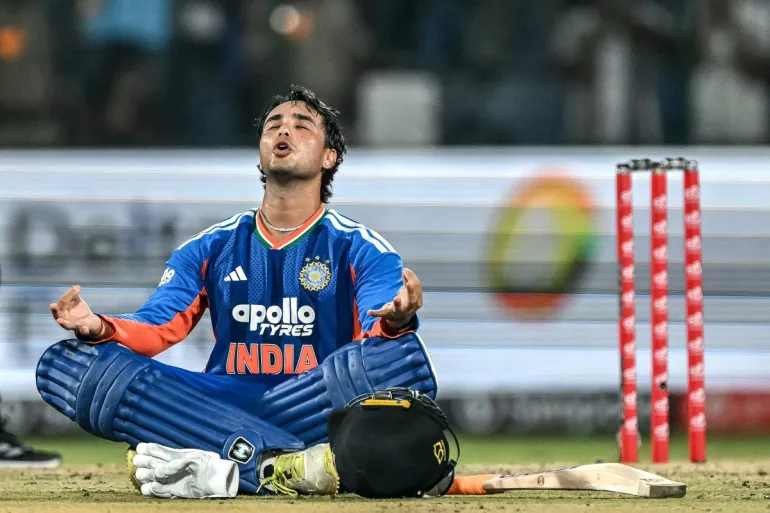
Opener Abhishek Sharma hit a record T20 century off 30 balls to set up a crushing 127 run win for India in the third match against Afghanistan and sweep the series 3-0.
Left-handed Abhishek’s ton on Thursday was the fastest in a T20 international between full Test-playing nations as he guided India to 221-7 at New Delhi’s Arun Jaitley Stadium.
Afghanistan, who were the official hosts for the series, checked the opposition surge after Abhishek departed for 108 off 34 balls and India lost their way from 142-1 in 10 overs.
But the Afghan batters once again disappointed and were bowled out for 94 in 14.1 overs.
Afghanistan had posted 156-8 and 159-8 while batting first in the first two matches.
Left-arm spinner Axar Patel struck twice in his first over to send back Rahmanullah Gurbaz, for 15 and Sediqullah Atal, for one. Afghanistan could never recover from the losses.
Seam bowler Nitish Kumar Reddy also took two wickets in one over to return figures of 3-25.
Leg-spinner Ravi Bishnoi wrapped up the Afghanistan innings with his third strike of the match.
Abhishek stood out with his third T20 century as he surpassed Zimbabwean Sikandar Raza’s ton off 33 balls against Gambia in 2024 and Finn Allen’s effort from the same number of deliveries in New Zealand’s T20 World Cup semi-final win over South Africa earlier this year in India.
The only two faster T20I hundreds came in matches between the lower-tiered associate members of the ICC.
Sahil Chauhan of Estonia holds the overall record of 27 balls after his century against Cyprus two years ago, while Muhammad Fahad needed just 29 balls for his ton for Turkey against Bulgaria in 2025.
Abhishek tore into the Afghanistan bowling attack after India were invited to bat first.
The swashbuckling opener hit a six to reach 99. He completed the hundred with a single and sat in meditation pose to celebrate.
He finally fell for 108 off 34 balls to leg-spinner Rashid Khan. The 26-year-old’s knock was laced with nine fours and 11 sixes.
His opening stand of 142 with Sanju Samson, who hit 50, put India on course for a big total but the Afghan bowlers hit back with regular wickets.
Tilak Varma was run out for two by Rashid and Samson departed after his second successive half-century as he fell to pace bowler Azmatullah Omarzai.
Omarzai struck another blow helped by a stunning catch by Rashid in the deep to send back Shivam Dube for 14.
India raised their 100 in six overs but managed just 79 from the last 60 balls.
India now head to Japan for the Asian Games starting September 19 at Nagoya-Aichi.
Afghanistan will send a largely different team to the Asian Games under Darwish Rasooli.
[Aljazeera]
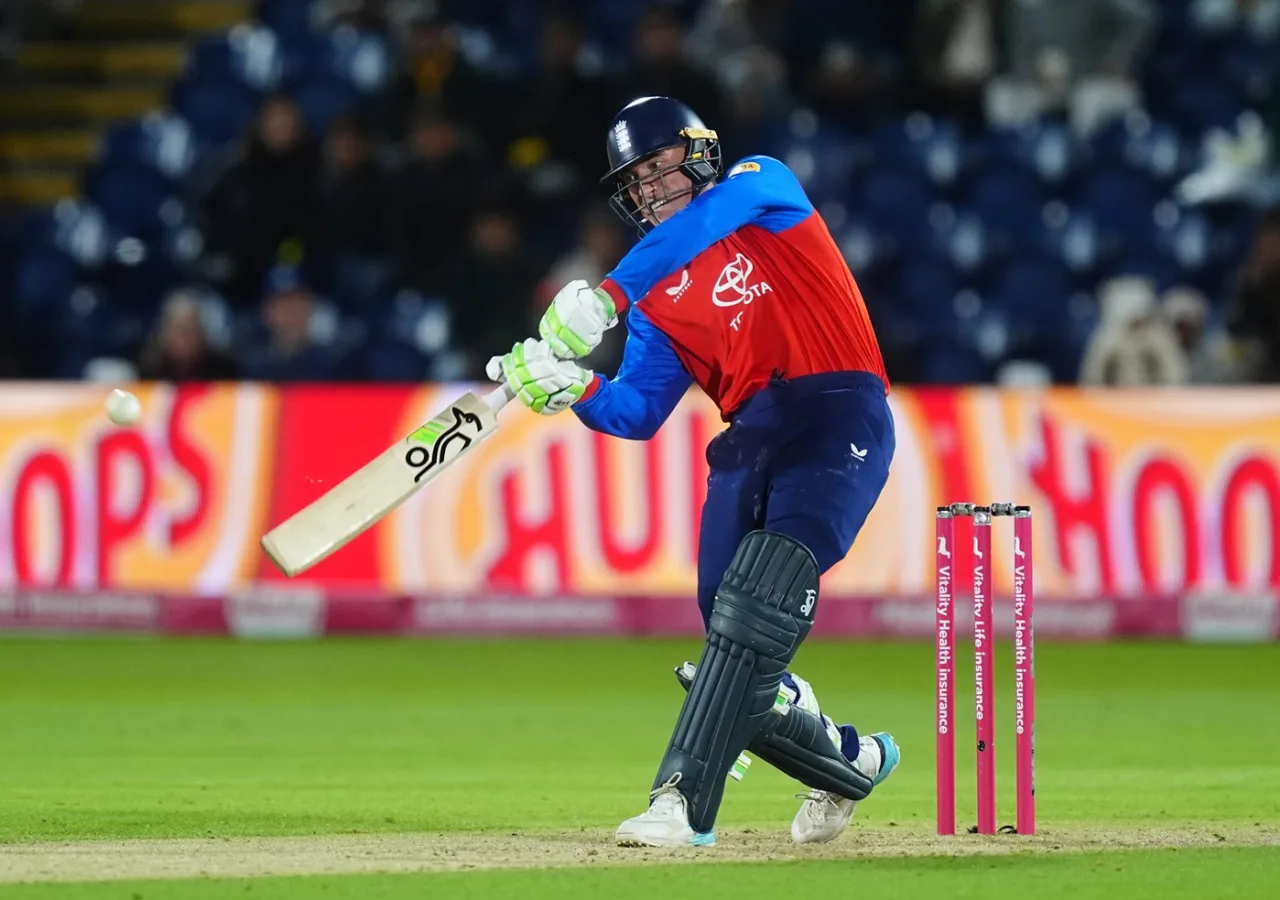
Consecutive thrashings in three days saw England take the T20I series against Sri Lanka with a game to spare. Thursday’s victory was just as one-sided as the opener at the Utilita Bowl, which they took by 119 runs; in Cardiff, Harry Brook’s side reached a lacklustre target of 146 with 47 balls to spare, with Tom Banton unbeaten on 52 off 24 for the conclusion as England took an unassailable 2-0 lead.
Brook was able to give his team their usual chasing privileges at Sophia Gardens. They punched their ticket once more for a 10th win in 12 completed T20Is at this venue. Their overall record has extended to 22 wins from 25 completed matches since Brook took over last June.
Sri Lanka’s stand-in skipper Charith Asalanka also wanted to bat second to make use of the shorter, straight boundaries, a fact Sri Lanka seemed to forget when setting a total. Their paltry 145 for 9 was baffling: barring Pathum Nissanka’s 37 from 21 and Kamindu Mendis’s 12 off 8, there was no urgency or attempt at ingenuity.
Nissanka lifted them to 55 for 0 after the first five overs, but they were held hostage for the final 15, returning 90 for 9. That included just seven runs from the final three overs, including a wicket-maiden in the 19th for Sonny Baker.
That initial burst of scoring was capped with a 17-run over off Will Jacks, who failed to hide the short, straight hit from the River Taff End. Liam Dawson then removed Lahiru Udara and Kamil Mishara in consecutive balls in the final Powerplay over.
That proved to be the end of Sri Lanka’s impetus, and this contest. Asalanka’s 31 and Wanindu Hasaranga’s 27 came in the face of an exceptionally professional middle-overs display from Jamie Overton, Adil Rashid and Dawson, who finished with 3 for 32 to earn player-of-the-match honours.
Aneurin Donald, as the hometown hero returning to his boyhood county, Glamorgan, had the crowd with him, managing to better his debut knock with 21 off 13 this time but struggled to get his timing right.
Buttler initially had no such issues, carrying over his form from the 80 struck on Tuesday. He wasted no time getting to 30, moving to 15,000 runs in all T20, reclaiming the outright lead, now one ahead of Kieron Pollard. That included taking 16 off the second over from left-arm seamer Dilshan Madushanka, brought into the XI with debutant Tharindu Rathnayake, as spinners Dunith Wellalage and Maheesh Theeskshana made way.
With Buttler removed, and Brook dismissed for the first time in four innings – his 23 today taking his aggregate in that stretch to 311 runs – there was a hint of jeopardy at 79 for 3 after seven overs. But with 69 required from the remaining 78 balls, England’s middle order could decided between themselves who was going to see it home with a score of note.
In the end, it was Banton, adding another finishing cameo to his catalogue. He ticked over a fifth half-century from 24 deliveries before a succession of no-balls and wides was followed by Jacks’s lame tuck into midwicket for an underwhelming finish.
The silent “W” in the ECB (England and Wales Cricket Board) was represented in the first T20I on Tuesday by Aneurin Donald. It was the first time since 2005 that an England team has featured a product of Glamorgan. This evening, however, was that much more special.
Born in Swansea, Donald – who hails from a family with deep roots in the game – stepped out at Cardiff to an emotional home coming. Even Kevin Pietersen, who presented Donald his maiden cap, referenced it ahead of Southampton. This, really, meant more.
It was with Glamorgan that Donald made his domestic debuts, before leaving to join Hampshire in 2015. The route to this point, back at Sophia Gardens as a Welshman of international repute, has been long, and riddled with doubt.
Donald was not quite able to grab the night for himself. With a low crowd, and against poor opposition, it felt like the evening needed him to be the story. But a lap over fine leg for six, and two fours – all in a row against Dushmantha Chameera – did get the Welsh support vibing with him a little more.
A scuffed heave off Eshan Malinga – misreading a slower ball – saw him depart for just 21 in a low run-chase. But it was an important cameo in the bigger picture.
“I’ve got the opportunity to fly the flag for everyone that’s put some time and energy into me, but not just that, the wider Welsh game,” Donald told the BBC in the lead-up to this match. “It’s an added responsibility but I’m determined to try and fly the flag.”
If you really squint, Pathum Nissanka’s breezy innings could be seen as a silver lining.
Two months on from surgery to his right wrist – which took place in London – the 28-year old produced his most recognisable innings since returning to competitive action at the end of August.
Having missed the Test series against India, and the Lanka Premier League, a couple of T20s for Nondescripts and a couple of hits against England Lions meant he looked understandably rusty in Southampton. Sri Lanka were a doubt to challenge their 255 target, and certainly not when their best batter managed just 12 from 11.
Here in Cardiff, there was a return close to the norm. He was a cut above his teammates, a chasm initially exaggerated at first by Lahiru Udara struggling at the other end, who at one point had 1 off 9 balls.
It was clear Nissanka was central to any respectable total. The only batter sharp enough to use his feet, and create different angles, Jofra Archer was taken for 14 in his opening over. After a flick around the corner, Nissanka charged and cut square before lapping the final ball over his shoulder, crouching to send England’s fastest quick inside the man at short fine.
The problem was always going to be the other end, and consecutive dismissals in the final over of the Powerplay summed that up. After the six-over mark, Sri Lanka were 56 for 2, with 33 contributed by Nissanka, having only faced 13 balls with the fielding restrictions. If that felt like a waste, then his dismissal at the end of the 9th certainly was, having added just 4 runs in eight more balls.
Remarkably, he was the only Sri Lanka batter to target the short, straight boundaries when he hit Will Jacks for a straight six at the start of the fourth over.
Scores:
England 146 for 4 in 12.1 overs (Jos Buttler 30, Aneurin Donald 21, Harry Brook 23, Tom Banton 52*, Jordan Cox 12; Dushmantha Chameera 1-29, Wanidu Hasaranga 1-42, Eshan Malinga 1-27, Tharindu Rathnayake 1-25) beat Sri Lanka 145 for 9 in 20 overs (Pathum Nassanka 37, Lahiru Udara 21, Charith Asalanka 31, Kamindu Mendis 12, Wanidu Hasaranga 27; Sonny Baker 1-15, Joffra Archer 2-34, Liam Dawson 3-32, Jamie Overton 2-23, Adil Rashid 1-18) by six wickets
[Cricinfo]

Charani, Shafali power India past Japan and into Asian Games semi-finals

Athapaththu and Dilhari muscle Sri Lanka past Malaysia in mismatch

Abhishek Sharma hits record T20 ton as India beat Afghanistan by 127 runs

Trump administration approves sale of F-35 jets to Saudi Arabia

Banton steers England into unassailable 2-0 series lead

Showers expected in the Western, Norrh-western and Sabaragamuwa provinces and in Galle, Matara, Kandy and Nuwara-Eliya Districts.

‘Dates have the highest sugar content to fight Coronavirus’

Sunday Island 27 December – Headlines

#SundayIsland 17th December – Headlines

Sunday Island – 28th March

Sunday Island Headlines – 21 March

Sunday Island – 21st February – Headlines
-

 News6 days ago
Gnanasara Thero absconding after SC ruling
-

 Latest News7 days ago
Sri Lanka thwart Fatima Sana challenge to secure Asia Cup final spot
-

 News7 days ago
Ammunition cache found in old Kandy bungalow
-

 News7 days ago
Green Climate Fund (GCF) Regional Dialogue for East and South Asia will be held from 14 to 17 September 2026 at Cinnamon Life at City of Dreams Hotel, Colombo
-

 News7 days ago
Prof. Pieris says Buddha Dhamma recognised as source of law under Constitution
-

 Opinion5 days ago
From Galkissa (Mount Lavinia) to Tambuttegama
-

 Latest News7 days ago
ITS Giuseppe Garibaldi’ departs Colombo
-

 Business6 days ago
HNB Finance strengthens Board with four independent directors