
News
Will America be able to achieve its sinister objectives in Sri Lanka? Prof.Tissa Vitarana

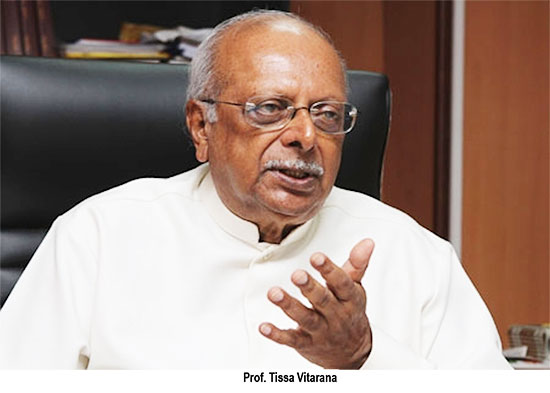
One recollects that the UNP-led “Yahapalanaya” Government was on the verge of signing the MCC and SOFA agreements with the US Government after having signed the periodic ACSA agreement. The latter was signed at regular intervals to enable military exercises to be conducted in Sri Lanka and to receive military assistance from the USA. This was renewed at regular intervals and therefore it was a routine, but the MCC and SOFA agreements are new developments. These were a result of the only American military base in the Indian Ocean rim located at Diego Garcia being given back to the country that it belong to, the Mauritius, by virtue of a verdict given by the International Criminal Court (ICC). According to the MCC agreement the strip of land extending from Colombo and Katunayake to Trincomalee harbour was to be given to the USA to construct a means of rapid transport (rail and road) and the door would also be open for American companies to freely operate within our country. This would naturally lead to domination of our economy as well. The SOFA agreement would enable any American soldier in uniform with gun in hand to enter our country bringing any type of arms as luggage. Sri Lankan Customs would not be able to even examine them, leave alone charging any duty. The US Army personnel would have full use of all Ports and Airports and right to enter any of our Government premises at any time. In other words Sri Lanka would become a virtual colony of the USA and its military base. But these two agreements could not be signed because of the defeat of the “Yahapalanaya’’ Government at the Presidential and General Elections.
It was generally accepted that the present Government would not sign the two agreements and that the danger was passed. But a series of events should make us reconsider whether this danger may be forced upon us in the near future. The Sri Lankan economy has been run down to the lowest level in its history since independence. 60% of families are living below the poverty line and the level of malnutrition has grown to 18.3%(an MRI survey about 7 months ago). Many families have only one meal and that too without adequate nutrition. Children are suffering badly. I regret my proposal to give highest priority to feeding those who are hungry made to the higher authorities has been ignored.
A major cause for the above situation is the high cost of living. It has soared due to Covid 19 virus epidemic on top of the global economic crisis. But what is surprising is that the Government has allowed the traders to fix the price without any control or justification. To make matters worse the Government has not intervened to bring down the cost of living by measures that have succeeded in the past. For example during the Coalition Government of 1970-75 which strengthened the cooperative system thereby linking producer cooperatives with consumer cooperatives, so that essentials were available at a reasonable price without any profit. This was supported by the Food Control Department and the Marketing Department which also directly bought from the producer and delivered through sales outlets to the consumer, only adding on the actual cost. There was no profiteering. Automatically the traders too had to bring their prices down as well.
The people are suffering due to unwise decisions (e.g. the fertilizer problem which has badly affected the farmers). The major blunder has been the dollar crisis which has led to shortages of imported items that have affected all layers of society as well as the many industries that depend on imported inputs. The lack of fuel, gas, imported food and medicines has led to shortages resulting in long queues and to disruption of the whole transport system. Many people have lost their jobs as a result. This dollar crisis has led to our Foreign Reserves falling from US dollars 8 billion to less than 1 billion. The rating agencies such as Fitch and Moody have dropped Sri Lanka to the lowest level, a single C, as being on the verge of bankruptcy. Our importers are badly affected as the Letters of Credit (LC’s) are no longer accepted, so that orders are only acted on when dollars are directly paid to the suppliers. This means a delay of several months even if dollars are sent. But the reality is that the importers are unable to get dollars from local banks. Our foreign debt is said to have reached 52 billion US dollars and the annual payment for interest etc. (debt servicing) is in the region of US dollars 6 billion per year. The Government has not made use up to now of the various methods that are available to escape from this situation. For example re-structuring the economy by negotiating a moratorium on the debt payments. For instance it is possible to negotiate for a postponement of the annual debt servicing for a period of about 5 years. This would save us about 30 billion dollars starting from the next payment due in June this year. This money can be used to provide the people’s needs from abroad and also develop the economy. A very surprising feature is that no serious effort is being made to have such an arrangement with our main creditor, China.
Instead we are now signing an agreement with the IMF and a begging mission has gone to Washington, USA. This will only make matters worse as in addition to getting into deeper debt we are likely to be subject to their conditions which include the neoliberal policy of unlimited imports. The main cause of our dollar crisis is the fact that the Government when it began to be faced with the emerging dollar crisis failed to severely restrict the imports (which cost more than twice our export earnings) to narrow the adverse foreign trade gap. There should have been strict banning of the import of all non-essentials so that the outflow of the dollars would be minimized. There should have been more support to the organizations that I set up to promote the SMEs, like the 243 Vidatha Centers, to provide technology to support SMEs, one in each administrative division around the country. In the 5 years that I was Minister of Science and Technology the outcome had been the development of 231,000 SMEs. To support large scale industry as well as the SMEs, I set up a Nano Technology Centre in Homagama (which happens to be the 18th Nano Technology Centre in the world, which even India had not done). While the Government talks of cutting down imports and promoting local industries, there has been no serious attempt to promote this technology transfer mechanism.
The complaint of many Ministers that various decisions are taken without their knowledge suggest that there is a section of the bureaucracy, possibly supported by some politicians, who are controlling the Economy according to a plan determined by the USA to disrupt our economy to the point where we may be forced to accept any terms and even sign the MCC and SOFA agreements. The fact that both the Executive President and the former Finance Minister are American citizens further complicates the situation. Thus the proposal to set up an Interim Government for a period of 6-8 months to restore the economy and stabilize the social and economic situation in the country, if done effectively, as proposed by the group of 11 decedent political parties may provide a way out. But this will not be easy and certainly it would need a firm hand and the active support of the people.

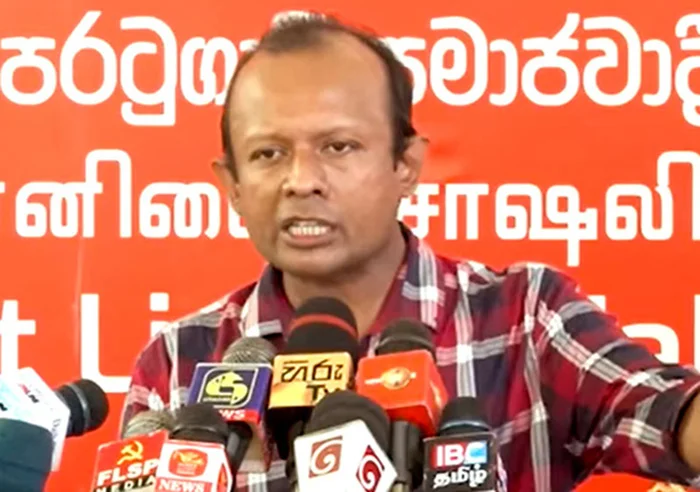
The Frontline Socialist Party (FSP) yesterday accused the government of seeking to use the proposed Protection of the State from Terrorism Act (PSTA) to suppress popular political activity, claiming that some of its provisions were more repressive than those of the Prevention of Terrorism Act (PTA).
FSP Education Secretary Pubudu Jayagoda told a media briefing, in Nugegoda, that the definition of terrorism in the Bill was so broad that it could be used to label almost any form of popular political activity as terrorism.
He said the Bill’s approach to defining terrorism was based largely on attempts to compel a government, or an international organisation, to do, or refrain from doing something, rather than on internationally recognised criteria, such as killings, causing serious bodily harm, kidnapping or acts intended to spread terror among the public.
Jayagoda also alleged that the Bill transferred substantial powers from the judiciary to the executive, while extending powers of arrest, investigation and detention to the armed forces, in addition to the police.
He claimed that the government had sought to portray the Bill as a replacement for the PTA while retaining or introducing provisions that could facilitate political victimisation and repression.
The FSP also questioned the government’s decision to proceed with the Bill, despite having previously sought public views on an earlier draft.
Jayagoda said a draft had been published earlier this year, with the period for public submissions ending on February 28, but the Bill subsequently gazetted was essentially the same draft with some provisions rearranged.
Jayagoda also referred to a letter reportedly sent by Attorney-at-Law Saliya Peiris, a member of a Committee, chaired by President’s Counsel Rienzie Arsecularatne, that had been appointed to draft the legislation. He said Peiris had stated, in the October 06 letter, that changes had been made to the draft prepared by the Committee.
“This means that even the Committee, appointed to prepare the Bill, was a deception,” Jayagoda alleged.
He said that the PSTA was fundamentally similar to the Anti-Terrorism Bill introduced by the previous government, in 2023, which the National People’s Power (NPP) opposed and challenged in court.
“If the NPP opposed that Bill then and is now bringing the same legislation before Parliament, the government must explain its position,” he said.
Jayagoda called on NPP MPs to oppose the PSTA in Parliament and urged trade unions and other groups to build a broad public movement against the legislation.
He challenged the government to an open debate on the Bill.
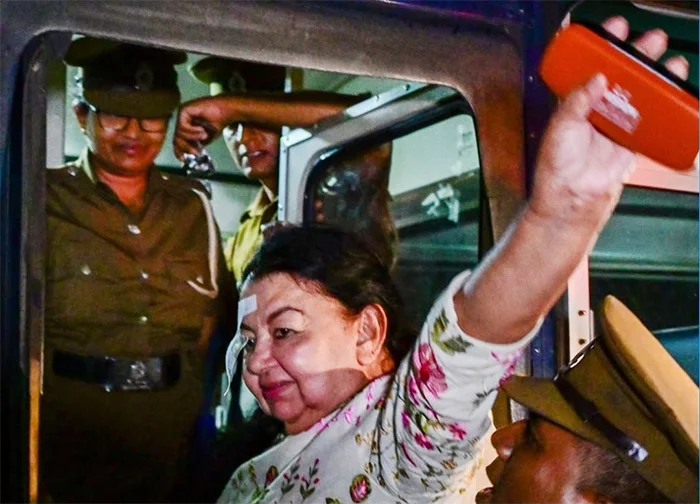
Former First Lady Shiranthi Rajapaksa was yesterday remanded until 13 October after being produced before the Colombo Magistrate’s Court following her arrest by the Commission to Investigate Allegations of Bribery or Corruption (CIABOC).
Shiranthi, wife of former President Mahinda Rajapaksa, was arrested at her residence on Poorwarama Road, Kirulapone, after CIABOC officers recorded a statement from her for nearly two hours.
According to the CIABOC, the arrest was made over allegations that Rs. 10 million obtained from the National Savings Bank through the Siriliya Saviya organisation was misappropriated.
The money was allegedly obtained to provide a Computed Tomography (CT) scanner to the children’s hospital. Investigators allege that the scanner was not provided and that the funds were instead unlawfully used.
CIABOC is investigating alleged offences under the Public Property Act and corruption-related provisions in connection with the transaction and other financial activities involving Siriliya Saviya, which was headed by Rajapaksa.
Rajapaksa returned to Sri Lanka on Monday night on a flight from Malaysia after travelling overseas for medical treatment. She left for Singapore on 16 September after being admitted to a private hospital in Colombo on 15 September following an illness.
She had been due to appear before the Financial Crimes Investigation Division (FCID) on 13 October in connection with its investigation into the financial affairs of Siriliya Saviya.
Meanwhile, her lawyers filed an anticipatory bail application before the Maligakanda Magistrate’s Court on Monday, seeking an order preventing her arrest in connection with the FCID investigation.
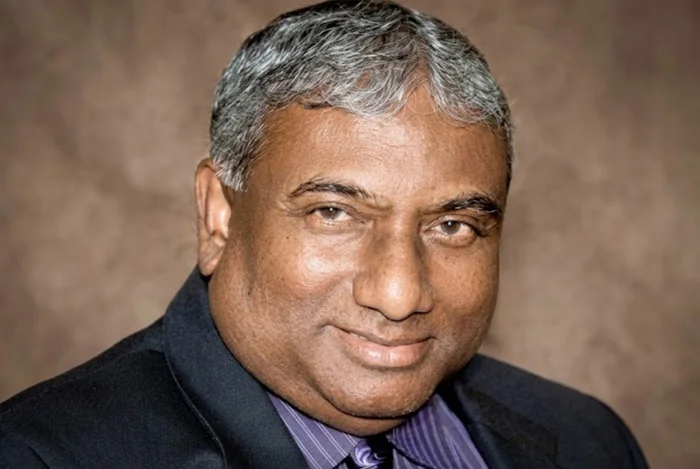
Former National Savings Bank (NSB) Chairman Pradeep Kariyawasam was yesterday granted bail by the Colombo Magistrate’s Court following his arrest by the Commission to Investigate Allegations of Bribery or Corruption (CIABOC).
Kariyawasam, husband of former Chief Justice Shirani Bandaranayake, was arrested in connection with the Bribery Commission’s investigation into the ‘Siriliya Saviya’ account linked to former First Lady Shiranthi Rajapaksa.
The investigation concerns financial activities involving the Siriliya Saviya initiative, which was headed by Rajapaksa, wife of former President Mahinda Rajapaksa.
CIABOC is continuing investigations into the alleged financial irregularities relating to the account.

Showers above 100 mm are likely at some places in the Western, Sabaragamuwa, Central, Uva and Southern provinces and in Anuradhapura district

PSTA worse than PTA: FSP

Shiranthi R remanded until 13 Oct.

Former NSB Chairman Kariyawasam granted bail

Katchatheevu row: India SC urges fishermen to avoid Sri Lankan waters

Remembering Juvenal, Coke, Acton and Machiavelli

‘Dates have the highest sugar content to fight Coronavirus’

Sunday Island 27 December – Headlines

#SundayIsland 17th December – Headlines

Sunday Island – 28th March

Sunday Island Headlines – 21 March

Sunday Island – 21st February – Headlines
-

 Editorial7 days ago
Colombo Port drug bust: The plot thickens
-

 Features5 days ago
The first woman in the foreign service or Ceylon Overseas Service it was then called
-

 Editorial6 days ago
Fuelling discontent and protest
-

 News4 days ago
Geneva takes up Sallay’s case and govt. ignores opportunity to answer accusations
-
 Foreign News5 days ago
Ten injured after car crashes into rugby supporters in Australia
-

 Latest News6 days ago
Tharindu Rathnayake, bowlers secure Asian Games Bronze for Sri Lanka
-
 News5 days ago
Nearly 20 Iranian tankers stranded off Lanka amid US sanctions
-

 Features4 days ago
Sri Lanka Cricket Bill: Governance reform is not yet a cricket strategy