
News
Wildlife conservation in crisis: Researcher warns of systemic collapse and calls for remedial action

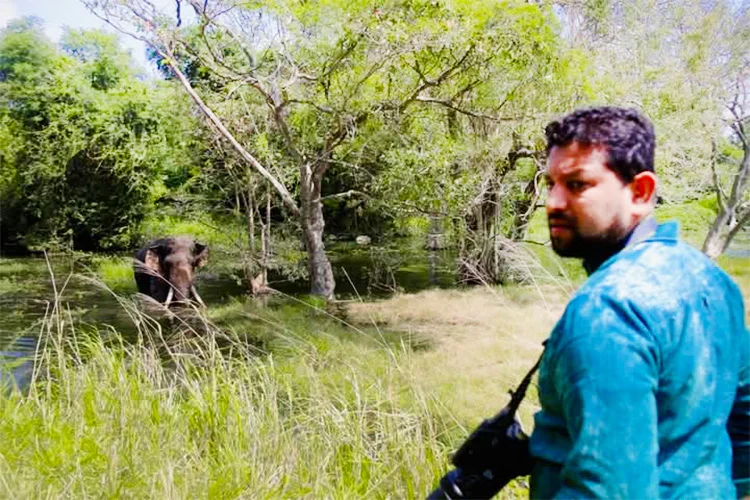
Sri Lanka’s wildlife conservation is teetering on the brink of collapse due to systemic neglect, mismanagement, and a crippling shortage of trained personnel, warns veteran conservation researcher Sameera Weerathunga.
Speaking on the state of the Department of Wildlife Conservation (DWC), Weerathunga said the institution — once a respected guardian of Sri Lanka’s unique biodiversity — is now being stripped of its core identity and responsibilities through arbitrary restructuring and short-sighted policy decisions.
“We are watching the dismantling of the country’s premier conservation body in real time,” he said.
“These aren’t reforms. This is erosion.”
Weerathunga pointed to the recent rebranding of frontline conservation staff under different service categories such as Civil Security, Integrated Services, and Multipurpose Services. Now relabeled as part of the Grama Arakshaka Sevaya, the original identity and professional dignity of trained conservation officers are being erased.
“Soon, even identifying who is actually a conservation officer will become impossible,” Weerathunga said.
“We’re sacrificing professionalism for administrative convenience.”
This, he argued, is not just a naming issue — it reflects a fundamental loss of recognition for those dedicated to protecting Sri Lanka’s wildlife.
Weerathunga emphasised that the DWC lacks a proper operational hierarchy. Unlike in other professional services, there is no second-tier of trained officers, no clear succession plan, and critical cadres such as veterinary assistants and field-level supervisors are absent or underqualified.
“We have no trained second line, no third line. No trained reserve officers. No veterinary assistants. Even trained wildlife rangers are scarce,” he noted.
“If a single senior officer retires, there’s no one to take the baton.”
This leadership vacuum, he argued, is setting the stage for institutional failure.
Instead of grounding policy in scientific frameworks, Weerathunga accused decision-makers of relying on ad hoc interventions and politically motivated directives.
“It’s like groping in the dark. We’re using painkillers for a broken leg. There’s no evidence-based planning.”
From elephant corridors to human-wildlife conflict zones, critical ecological issues are being addressed reactively — not through long-term, scientifically sound strategies.
Weerathunga also acknowledged the marginalisation of experts and field voices.
“Those of us who speak out are labelled as the problem. Those who stay silent are rewarded,” he said.
“But if no one raises these alarms now, by 2040 there may not even be a Department of Wildlife Conservation left to save.”
With mounting pressure from unregulated tourism, encroachment, climate change, and poaching, the DWC’s current state of dysfunction could have catastrophic consequences.
Weerathunga is calling for a comprehensive overhaul, not to weaken the department further, but to rebuild it:
Reestablish the dignity and autonomy of conservation officers.
Invest in training and deploy a second tier of professionals.
Create a structured scientific policy framework.
Restore respect for expert voices and field data.
As political attention sways toward militarisation and bureaucratic reshuffling, Sri Lanka’s fragile ecosystems and its world-renowned wildlife are being left defenseless.
“The extinction we’re facing isn’t just of animals — it’s of a legacy, a profession, and a public trust,” Weerathunga concluded.
By Ifham Nizam







The National Building Research Organisation (NBRO) has issued Landslide Early Warnings to the Districts of Kurunegala and Ratnapura effective from 16:00 hrs on 23.04.2026 To 16:00 hrs on 24.04.2026
Accordingly,
Level 1 landslide early warnings have been issued to the Divisional Secretaries Divisions and surrounding areas of Rideegama in the Kurunegala district and Kuruwita, Kalawana, Ratnapura, Nivithigala, Pelmadulla and Eheliyagoda in the Ratnapura district.
Latest News
Advisory for Severe Lightning issued for the Western, Sabaragamuwa, Central, North-western, North-central, Southern, Uva provinces, and Ampara and Batticaloa districts

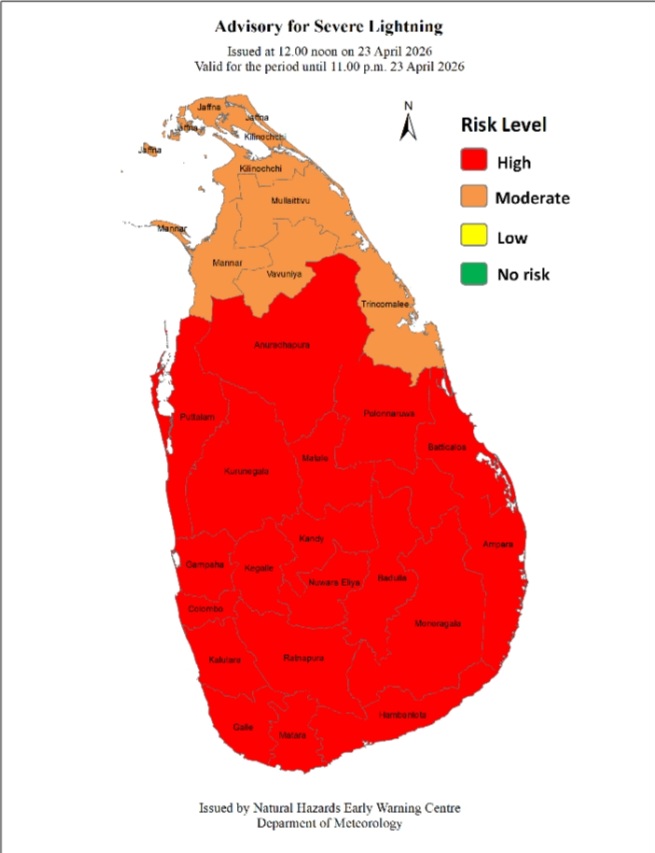
Advisory for Severe Lightning
Issued by the Natural Hazards Early Warning Centre of the Department of Meteorology
Issued at 12.00 noon 23 April 2026 valid for the period until 11.30 p.m. 23 April 2026
Thundershowers accompanied with severe lightning are likely to occur in the Western, Sabaragamuwa, Central, North-western, North-central, Southern, Uva provinces, and in Ampara and Batticaloa districts after 1.00 p.m.
There may be temporary localized strong winds during thundershowers. General public is kindly requested to take adequate precautions to minimize damages caused by lightning activity.
ACTION REQUIRED:
The Department of Meteorology advises that people should:
• Seek shelter, preferably indoors and never under trees.
• Avoid open areas such as paddy fields, tea plantations and open water bodies during thunderstorms.
• Avoid using wired telephones and connected electric appliances during thunderstorms.
• Avoid using open vehicles, such as bicycles, tractors and boats etc.
• Beware of fallen trees and power lines.
• For emergency assistance contact the local disaster management authorities.
News
Compensation payments and reconstruction activities related to the Ditwah relief measures must be expedited with special attention at the district level – PM
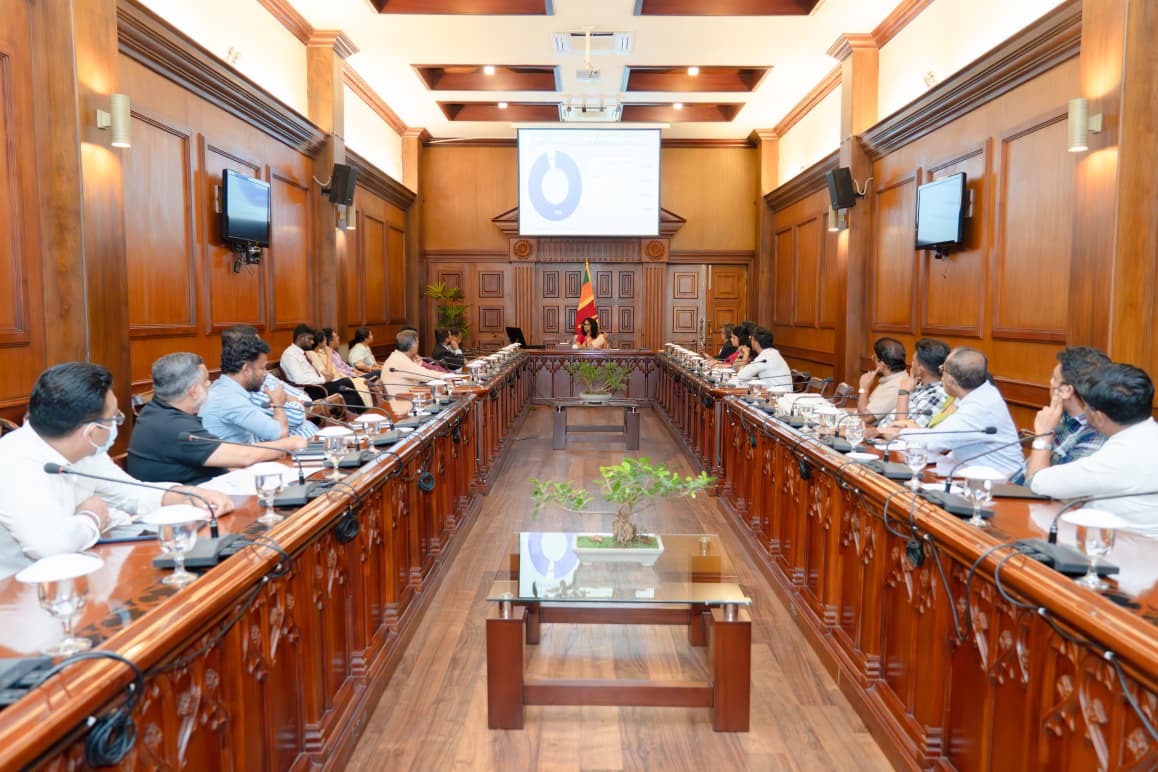
Prime Minister Dr. Harini Amarasuriya emphasized that compensation payments and reconstruction activities related to the Ditwah relief measures must be expedited with special attention at the district level. She further stated that all necessary allocations have already been made to Provincial Councils and instructed that the progress of disaster damage assessments and reconstruction efforts be closely monitored at the provincial level.
The Prime Minister made these remarks at a discussion held on Tuesday (21) at Temple Trees under her patronage, aimed at informing Chairpersons of District Coordination Committees and public representatives from disaster-affected districts, in order to accelerate the implementation of the “Rebuilding Sri Lanka” programme. The discussion focused on expediting disaster relief and compensation payments, as well as the swift restoration of infrastructure damaged by the disaster.
The Prime Minister emphasized that Rs. 500 billion has been allocated for damages caused by the Ditwah cyclone, and that all relevant development activities must be completed before the end of 2026. The Prime Minister also instructed officials to pay special attention to resolving issues at the local level that are causing delays in compensation payments.
Senior Additional Secretary to the President, G.M.R.D. Aponsu, stated that the estimated cost for reconstruction following the Ditwah cyclone is approximately USD 3.4 billion. Accordingly, funds have been allocated for compensation across several sectors including housing and social infrastructure, agriculture and livestock, fisheries, industry and livelihoods, and irrigation. He further noted that 99% of the Rs. 25,000 allowance has already been disbursed, while 95% of the Rs. 50,000 resettlement allowance has been paid. Compensation for fully and partially damaged houses is still ongoing, and 99% of temporary relief centres have been closed.
Additionally, attention was drawn to several other measures, including providing Rs. 25,000 to affected schoolchildren, paying Rs. 1 million as compensation for each deceased individual, compensation for children who lost one or both parents, support for persons with disabilities affected by the disaster, compensation for agricultural losses, and expediting resettlement of displaced families. Measures such as allocating land for new housing construction and accelerating the issuance of reports from the National Building Research Organization were also discussed.
Focus was also placed on the reconstruction of affected schools, hospitals, and daycare centres, improving the accuracy and speed of data collection at the local level, and accelerating infrastructure development.
The event was attended by Minister of Plantation and Community Infrastructure Samantha Vidyarathna, Minister of Public Administration, Provincial Councils and Local Government Dr. Chandana Abayarathna, Deputy Minister of Agriculture and Livestock Namal Karunaratne, Deputy Minister of Trade, Commerce, Food Security and Cooperatives R.M. Jayawardena, Deputy Minister of Education Dr. Madhura Senevirathna, Members of Parliament, Chairpersons of District Coordination Committees, Chief of Staff to the President and Commissioner General of Essential Services Prabath Chandrakeerthi, Additional Secretary to the President Jayantha Bandara; and officials of the Prime Minister’s Office.
[Prime Minister’s Media Division]

Sun Siyam Pasikudah marks the New Year at the shore of Sri Lanka’s rising coast

Allianz Avurudu Negam returns, easing the journey home

Golden Blues clash set for thrilling third edition

World Cup in South Africa, Kirsten’s priority

Colombo hosts sub-regional learning hub on Decent Work and the Care Economy

Bourse managing selling pressure and profit-taking complexities

‘Dates have the highest sugar content to fight Coronavirus’

Sunday Island 27 December – Headlines

#SundayIsland 17th December – Headlines

Sunday Island – 28th March

Sunday Island Headlines – 21 March

Sunday Island – 21st February – Headlines
-

 News3 days ago
Rs 13 bn NDB fraud: Int’l forensic audit ordered
-

 Business6 days ago
Harnessing nature’s wisdom: Experts highlight “Resist–Align” path to resilience
-

 Opinion4 days ago
Shutting roof top solar panels – a crime
-

 News6 days ago
Gratiaen Trust announces longlist for the 33rd Annual Gratiaen Prize
-

 News5 days ago
From Nuwara Eliya to Dubai: Isha Holdings markets Agri products abroad
-
 News6 days ago
Heroin haul transported on 50-million-rupee contract
-
 News4 days ago
Church calls for Deputy Defence Minister’s removal, establishment of Independent Prosecutor’s Office
-

 News5 days ago
‘Agents of the devil’ seeking to block Easter probe, Cardinal warns