
News
Wijeyadasa says legal process beyond scope of his Ministry


Easter Sunday carnage:
By Saman Indrajith
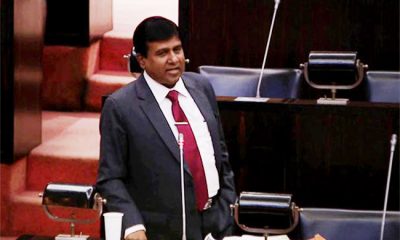
Justice Minister Dr. Wijeyadasa Rajapakshe yesterday (14) told Parliament that it was beyond the scope of the Justice Ministry to remove the officers found guilty of failing to thwart the Easter Sunday terror attacks to ensure justice and non-interference in ongoing investigations
Dr. Rajapakshe said that the court had delivered its ruling, and now it was up to the relevant departments to take further action regarding these officers. “This matter is beyond the scope of the Justice Ministry,” the Minister said, responding to a query raised by SJB Gampaha District MP Dr. Kavinda Jayawardana.
Minister Dr. Rajapakshe said that on January 12, 2023, the Supreme Court had ruled that former President Maithripala Sirisena, former IGP Pujith Jayasundara, former SIS head Snr DIG Nilantha Jayawardena, former Secretary to the Ministry of Defence Hemasiri Fernando, former Chief of National Intelligence Sisira Mendis, and the government had failed to prevent the Easter Sunday terror attacks. “The court considered findings of the Presidential Commission of Inquiry, which probed the Easter Sunday carnage, along with police investigations submitted to the Department of the Attorney General. As a result, 42 indictments had been served at Colombo and other High Courts against 79 accused persons. Some of the accused had been granted bail,” the Minister said.
When he was asked to reveal the actions taken by the government to prevent interference in investigations by those officers, including Snr DIG Nilantha Jayawardena, who are still in service, the Minister said it was beyond the scope of his ministry to do so.
The Supreme Court had ordered that compensation be paid to the victims and their families through the Office for Reparation.
The Minister said his ministry had requested the Judicial Service Commission and the Department of the Attorney General to take necessary actions to expedite hearings of the cases related to the Easter Sunday terror attacks.



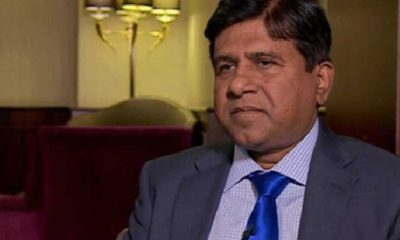

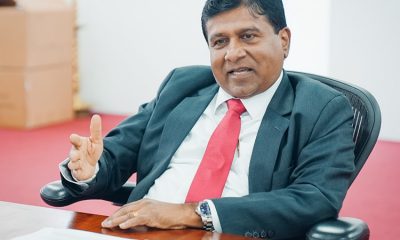



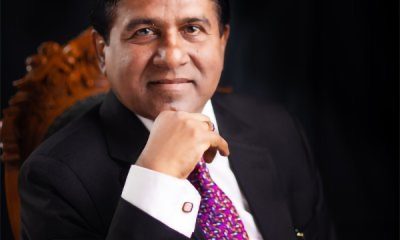

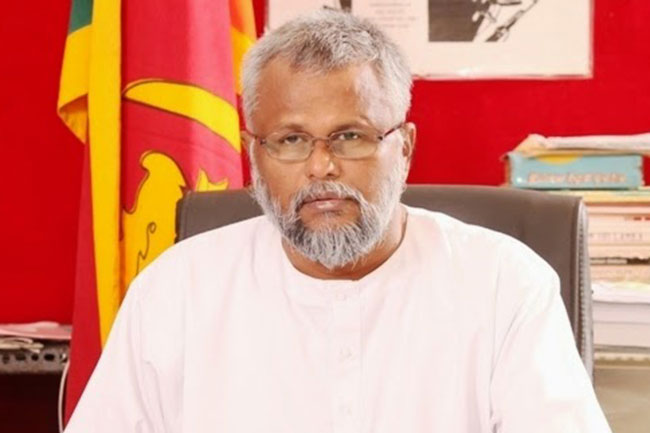
EPDP leader and ex-Minister Douglas Devananda, arrested by the Criminal Investigation Department (CID) on Friday (26), was remanded till 9 January, 2026.
The former Jaffna District parliamentarian was remanded after being produced before the Gampaha Magistrate.
The CID arrested Devananda in connection with an ongoing investigation into a pistol issued to him by the Army way back in 2001 ending up with the underworld. Police said that the pistol had been recovered after interrogation of Makandure Madush, who was later killed while in government custody. The former Minister’s pistol was found concealed in a forested area near a culvert in Weliweriya.
The National Peace Council (NPC) has warned that the Protection of the State from Terrorism Act (PSTA) may allow the government to categorise acts of dissent and civil disobedience as terrorism. The NPC made its assessment pointing out that the broad definition of terrorism under the draft law may allow disproportionate and excessive responses by the state. Such provisions replicate the logic of the PTA rather than mark a clear break from it, the civil society group said.
The following is the text of the statement issued by the NPC: “The National Peace Council welcomes the government’s decision to allow a two-month period of public consultation on the proposed Protection of the State from Terrorism Act, intended to replace the Prevention of Terrorism Act. Given Sri Lanka’s long and painful experience with national security legislation, this consultation period will provide a valuable opportunity to prevent the repetition of past mistakes. Meaningful public engagement prior to the enactment of a new anti-terrorism law is essential if the promise of system change is to be realised and if Sri Lanka is to avoid entrenching yet another draconian law whose consequences may be felt for decades to come.
When in opposition and in their election manifesto, the JVP and NPP pledged to repeal repressive laws such as the PTA, citing its repeated misuse against ethnic and religious minorities, political activists and journalists. The continued application of the PTA, where individuals have been detained for prolonged periods even for non-terrorism related reasons, such as in the Eastern Province in Valachchenai over alleged forest land encroachment demonstrates how easily exceptional powers are extended to ordinary disputes.
A preliminary review of the draft PSTA indicates that it retains core features of the PTA that have enabled serious abuse over decades. These include provisions permitting detention for up to two years without a person being charged before a court of law. In addition, the broad definition of terrorism under the draft law allows acts of dissent and civil disobedience to be labelled as terrorism, thereby permitting disproportionate and excessive responses by the state. Such provisions replicate the logic of the PTA rather than mark a clear break from it.
The PTA itself was enacted as a temporary law, intended to operate for only six months, yet it has remained in force for forty six years. This history shows how difficult it is to remove national security laws once they are enacted. For this reason, special care needs to be taken with regard to the new law on two counts. The first is the observation that power corrupts. The second is that laws must protect citizens from future governments, not only the current one. Institutions and laws are designed to endure beyond the lifespan of any one government and need to safeguard the public interest when political circumstances change.
The two month consultation period on the PSTA therefore carries special responsibility. The National Peace Council urges civil society organisations, the legal community and in particular the Bar Association of Sri Lanka to study the draft law carefully, to draw on Sri Lanka’s experience and international standards, and to place their considered views before the government to incorporate in a well-balanced law. These would include provisions for speedy judicial actions to release those improperly and unfairly arrested under its provisions and compensation to those who are discharged without legal action after many months or years.”

A 25-member delegation of dairy farmers from Sri Lanka visited India from 14–20 December, 2025, to participate in a specialised Training and Capacity-Building Programme, the Indian HC spokesperson said.
The delegation represented dairy farmers from across Sri Lanka. The programme was organised pursuant to the announcement made by Prime Minister of India, Narendra Modi, during his visit to Sri Lanka in April 2025, under which India committed to offering 700 customised training slots annually for Sri Lankan professionals, she mentioned.
She said: “The week-long training programme was conducted by the Government of India at the National Dairy Development Board (NDDB), Anand, Gujarat. The programme featured a comprehensive set of technical and thematic sessions covering the entire dairy value chain. Key modules included technological developments in animal breeding, quality assurance across the dairy value chain, feeding practices for different categories of animals, and the importance of balanced nutrition, with a focus on enhancing practical skills, strengthening industry exposure, and building advanced production capabilities.
As part of the experiential learning component, the participants undertook site visits to key institutions and industry facilities. These engagements provided valuable insights into contemporary dairy ecosystems, modern production technologies, and evolving retail and supply-chain practices.
Beyond technical skill development, the programme enabled participants to gain exposure to India’s successful dairying model, with emphasis on improving farmer livelihoods and building sustainable dairy systems. The training strengthened participants’ capacities in efficient dairy farm management, clean milk production, hygienic handling practices, and climate-resilient and environmentally sustainable approaches.”

Devananda remanded till 9 Jan. over recovery of personal weapon from underworld

New anti-terrorism law a threat to political dissent, civil disobedience: NPC

Suzuki urges Fronx owners: ‘Do not use rear seats’ following serious seatbelt failure

People’s Bank Holds 47th Annual Christmas Carols

Hemas Hospital Wattala reaffirms its commitment to advanced liver care

Specialised Indian training for Lankan dairy farmers

‘Dates have the highest sugar content to fight Coronavirus’

Sunday Island 27 December – Headlines

#SundayIsland 17th December – Headlines

Sunday Island – 28th March

Sunday Island Headlines – 21 March

Sunday Island – 21st February – Headlines
-

 News6 days ago
Members of Lankan Community in Washington D.C. donates to ‘Rebuilding Sri Lanka’ Flood Relief Fund
-

 News4 days ago
British MP calls on Foreign Secretary to expand sanction package against ‘Sri Lankan war criminals’
-

 News7 days ago
Air quality deteriorating in Sri Lanka
-

 News7 days ago
Cardinal urges govt. not to weaken key socio-cultural institutions
-

 Features6 days ago
General education reforms: What about language and ethnicity?
-
 News6 days ago
Suspension of Indian drug part of cover-up by NMRA: Academy of Health Professionals
-

 News7 days ago
CID probes unauthorised access to PNB’s vessel monitoring system
-

 Sports4 days ago
Chief selector’s remarks disappointing says Mickey Arthur