
Features
Wiggy may outwit GR-MR and TNA

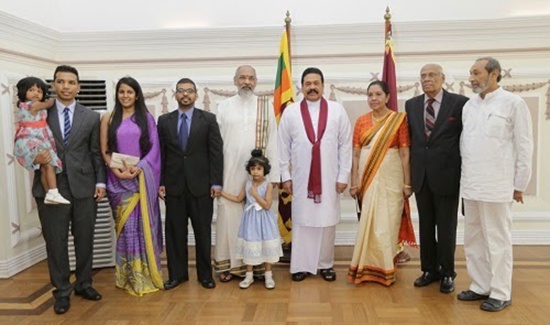
Tamil Buddhism and oldness of Sinhala lingo are beside the point
by Kumar David
Justice Wigneswaran is not laying traps to snare GR-MR or the TNA; that’s not the import of my title. I am suggesting is that wily old Wiggy is calculating that these worthies will snare themselves in traps of their own making, and then his line will pay off. His expectation is that the regime will turn explicitly anti-Tamil and his second calculation is that the TNA is too deeply mired in compromises to extricate itself. Of course, I am attributing motives to him; but in politics it’s okay for analysts to make assumptions about why leaders do this or that and I am within limits of fairness in imputing not unreasonable motives to Wiggy.
This of course is in addition to the fun he must be having watching Field Marshals and Rear Admirals frothing at the mouth. The more they froth the better it plays into his gambit. The old fox’s trick is to say incendiary stuff like: ‘Tamil was the original language of the island, the Sinhala tongue emerged only in the Sixth or Seventh Century AD’; ‘Tamils were the first Buddhists in Lanka and switched to Saivism in early BC’; ‘Dushata Kaamini was a Tamil Buddhist fighting Ellalan a Tamil Saivite’. Stuff like that, even if true, the mere utterance will make ‘hela, jathika, abimane’ blood boil.
Leaving to one side whether Wiggy is stirring things up for larks or for political gain, what’s the historical and anthropological evidence. The Wiggy-Fonny adipudi seemed at first a brawl between two ageing crack-pots and I thought experts would weigh in and sort out fact from fiction sans ethnic and ideological bias. But all experts have chickened out, which tells us how explosive the topic is. I have over the years done some amateur reading so fools need to drift in where angels are cowardly to tread. I don’t care whether Tamil, Sinhalese or Double-Dutch is older or whether the Tamils or the Sinhalese first sniffed religious opium. What I have learnt is from writings of Lanka’s best historian, Leslie (RALH) Gunawardena and anthropologist Sudarshan Seneviratne. I am also very familiar with Indrapala’s excellent Evolution of Ethnic Identity, portions of K.M. de Silva’s tome, what was readily available of Gananath, and Wikipedia level stuff. Let me blurt out this little learning till an expert picks up the courage to speak.
Yes, Tamil is one of the oldest living languages; living means it is still spoken. Chinese, Greek and Tamil may be the oldest. Second, many (most?) Tamils in South India and Lanka were Buddhists in ‘BC times’ before the onward march of Saivism inundated them in ‘AD times’, especially during the apogee of Chola power. There is evidence of widespread practice of Buddhism and Jainism in Southern India and the northern and eastern parts of this island before it was pushed out between the first century BC and the third century AD. The third point is what has got the experts into a funk; they don’t want to be lynched. Sinhala became the lingua franca of southern Lanka during the fifth to sixth centuries AD; that is quite recently. The language of the elite and the clergy prior to Mahavamsa times was Prakrit while a classical version called Pali was used by the learned. In olden times the mass of the people, a few thousand, lived in small tribes and communities and a collective name for their speech is Hela or Elu or Helu; hence the case made by certain pundits for going back to the original Hela stuff has a point.
Vijaya and his horde were a raiding band who spoke an Indian dialect and were assimilated by the tribes and communities who proliferated across the island. Only a few hundred strong they could not have made large sperm donations. The originals in the north were tribal groups but linguistically Tamilised by South Indian migration from BC times. Genetically, Tamil and Sinhalese folk are to a large extent, descendants of these tribal pools though these days all they want to do is gouge each other’s eyes out. Then the interesting bit follows. The difference between our warring idiots is not race – they are much the same gene pool – it is ethnic, that is language, religion and culture. After the high period of Chola conquest two separate cultures ossified in different portions of the island among racially similar peoples. These are the two mentally retarded communities we confront today; this comes across clearly in Leslie and Indrapala’s writings but they put it politely. However, propensity for conflict does not disappear; ethnicities can hate each other as much as races because friction is about material and social benefits. But hopefully, if the mass mind knows that the two are of racially the same stock in conflict over benefits and politics, visceral hatred of the ‘other’ may diminish.
Wiggy suspects that the GR-MR government will screw the Muslims first and then turn on the Tamils. He like the rest of us is anticipating tough times ahead for economy and at that time what is more profitable for the regime than the race-card? Many Venerables and State and Cabinet Ministers are merchants of death that GR-MR dare not leash, and that indicates where power lies. The TNA is too compromised. Its efforts were not unprincipled; it correctly judged that without a deal with the Sinhalese the Tamils will get nowhere. It picked on yahapalana because the UNP is liberal as opposed to the SLPP and SLFP which are of Sinhala-Buddhist ethos. The poor sods ended up as empty handed as Chelva and the FP but not quite as stone dead as Prabakaran. It seems unlikely that the TNA can rise again, but true, stranger things have happened.
Moody’s Investor Service last week dropped Lanka’s sovereign rating from B2 to Caa1, a two-tier drop bypassing B3. The agency defines Caa as “speculative, of poor standing and subject to very high credit risk”; that is junk! The corresponding grade in Standard & Poor and Fitch is CCC, CC or C. While rating agencies have responsibility to both lender and debtor the double whammy is harsh; a one tier downgrade was unavoidable since medium-term prospects for the economy are poor. Recent improvements (remittances rising to pre-COVID levels, sharp reduction in imports, fall in 2020 balance of payments deficit from a feared $8 billion to an expected $6 billion deficit, and enhanced activity in the domestic economy) though loudly touted by the Finance Ministry seem to have been dismissed by the agency as short-term gains. Sadly, the outlook is a looming fiscal (budget) deficit, deterioration of asset quality and a depressing employment picture. Not all of Cabraal’s rantings could have deflected a one-tier downgrade. Wiggy reckons that the regime will go after the minorities when troubles multiply. Maybe he reckons ‘Why would a post-20A regime not do just what autocrats do when cornered by a flailing economy?’
Wiggy is palpably mischievous and enjoys baiting the ‘hela, jathika, abimane’ fraternity. For proof peruse the hundreds of naïve, goofy and brain-dead comments following any Wiggy piece in the Colombo Telegraph. On the serious side I think he calculates that Tamil leadership will go next to the one who walks the talk; he who is most boldly Tamil! Though Tamil militancy was the outcome of Sinhala politics even a militant Wiggy will eventually have to cut a deal; there is no other option. The Tamil stand-off has no realisable solution other than cutting a deal with the Sinhalese state. Muslims have always been of this view. Wiggy is upper middle-class; a liberal intellectual who speaks and writes the Queen’s English like, well like a judge. He is a Royalist who must have just missed entry to S. Thomas’ by a few marks. But strangely he is also an obscurantist. I don’t know what to make of a man who is a devotee of the late Swami Premananda convicted on multiple counts of murder and rape in India in 1997. See-
[https://en.wikipedia.org/wiki/C._V._Vigneswaran and https://en.wikipedia.org/wiki/Swami_Premananda_(guru)]
Late Note:
Though the infection rate is now declining the 1000+ that tested positive for COVID in the Gampaha District signal a ‘community outbreak’ described as spread by mechanisms that cannot be traced to contact with a ‘recently-returned person’ or foreign visitor. This is alarming; community outbreaks are very difficult to control; no one knows where this sneaky bug is hiding. If GR and team impose production and industry disrupting curfews again, damage to the economy will be devastating and follow hard on Moody’s downgrade of our credit rating to junk. In the wake of previous mutilation this will act as a geometric multiplier. The possible closure of BIA will further deflate business confidence. If the economy goes into a tailspin the regime will need some drama to distract attention: Dump 20A? Blame minorities for something? Discover ever more welcome crimes of the “previous regime”? The second possibility relates to today’s column.


 Going forward, it is hoped that a reported ceasefire agreement between the US and Iran would provide a basis for a degree of stability in the Middle East and pave the way for substantive peace talks between the powers concerned. The world is compelled to fall back on hope because there is never knowing when President Donald Trump would change his mind and plans on matters of the first importance. So erratic has he been.
Yet, confusion abounds on who has agreed to what. The US President is on record that a number of conditions put forward by him to Iran to deescalate tensions have been accepted by the latter, whereas Iran is yet to state unambiguously that this is so. For instance, the US side claims that Iran has come clear on the point that it would not work towards acquiring a nuclear weapons capability, but there is no official confirmation by Iran that this is so. The same goes for the rest of the conditions.
Accordingly, the peace process between the US and Iran, if such a thing solidly exists, could be said to be mired in uncertainty. Nevertheless, the wider publics of the world are bound to welcome the prospects of some sort of ceasing of hostilities because it would have the effect of improving their economic and material well being which is today under a cloud.
However, questions of the first magnitude would continue to bedevil international politics and provide the breeding ground for continued tensions between East and West. Iran-US hostilities helped highlight some of these divisive issues and a deescalation of these tensions would not inevitably translate into even a temporary resolution of these questions. The world community would have no choice but to take them up and work towards comprehending them better and managing them more effectively.
For example, there are thorny questions arising from the Treaty on the Non-Proliferation of Nuclear Weapons (NPT). Essentially, this treaty bans the processing and use of nuclear weapons by states but some of the foremost powers are not signatories to it.
Moreover, the NPT does not provide for the destroying of nuclear arsenals by those signatory states which are already in possession of these WMDs. Consequently, there would be a glaring power imbalance between the latter nuclear-armed states and others which possess only conventional weapons.
Such a situation has grave implications for Iran’s security, for instance. The latter could argue, in view of the NPT restrictions, that the US poses a security threat to it but that it is debarred by the Treaty from developing a nuclear arms capability of its own to enable it to match the nuclear capability of the US. Moreover, its regional rival Israel is believed to possess a nuclear weapons capability.
Accordingly, a case could be made that the NPT is inherently unfair. The US would need to help resolve this vexatious matter going forward. But if it remains, US-Iran tensions would not prove easy to resolve. The same goes for Iran-Israeli tensions. Consequently, the Middle East would remain the proverbial ‘powder keg’.
Besides the above issues, the world has ample evidence that it could no longer speak in terms of a united NATO or West. Apparently, there could be no guarantee that US-NATO relations would remain untroubled in future, even if the current Iran-US standoff is peacefully resolved. US-NATO ties almost reached breaking point in the current crisis when the US President called on its NATO partners, particularly Britain, to help keep open the Hormuz Straits for easy navigation by commercial vessels, militarily, on seeing that such help was not forthcoming. Such questions are bound to remain sore points in intra-Western ties.
In other words, it would be imperative for the US’ NATO partners to help pull the US’ ‘chestnuts out of the fire’ going ahead. The question is, would NATO be willing to thus toe the US line even at the cost of its best interests.
For the West, these fractious issues are coming to the fore at a most unpropitious moment. The reality that could faze the West at present is the strong opposition shown to its efforts to bolster its power and influence by China and Russia. Right through the present crisis, the latter have stood by Iran, materially and morally. For instance, the most recent Security Council resolution spearheaded by the US which was strongly critical of Iran, was vetoed by China and Russia.
Accordingly, we have in the latter developments some marked polarities in international politics that could stand in the way of the West advancing its interests unchallenged. They point to progressively intensifying East-West tensions in international relations in the absence of consensuality.
It is only to be expected that given the substance of international politics that the West would be opposed by the East, read China and Russia, in any of the former’s efforts to advance its self interests unilaterally in ways that could be seen as illegitimate, but what is sorely needed at present is consensuality among the foremost powers if the world is to be ‘a less dangerous place to live in.’ Minus a focus on the latter, it would be a ‘no-win’ situation for all concerned.
It would be central to world stability for International Law to be upheld by all states and international actors. Military intervention by major powers in the internal affairs of other countries remains a principal cause of international mayhem. Both East and West are obliged to abide scrupulously with this principle.
From the latter viewpoint, not only did the West err in recent times, but the East did so as well. Iran, for instance, acted in gross violation of International Law when it attacked neighbouring Gulf states which are seen as US allies. Neither Iran nor the US-Israel combine have helped in advancing international law and order by thus taking the law into their own hands.
Unfortunately, the UN has been a passive spectator to these disruptive developments. It needs to play a more robust role in promoting world peace and in furthering consensual understanding among the principal powers in particular. The need is also urgent to advance UN reform and render the UN a vital instrument in furthering world peace. The East and West need to think alike and quickly on this urgent undertaking.
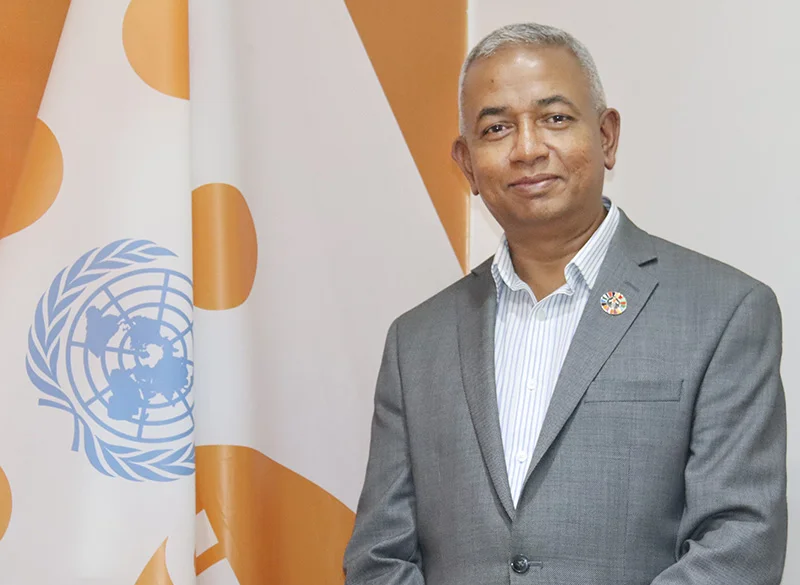
Marking World Health Day on April 7, health experts have called for a stronger commitment to science-based decision-making to address increasingly complex and evolving health challenges in Sri Lanka and beyond.
Dr. Dayanath Ranatunga, Assistant Representative of the United Nations Population Fund, stressed that health is no longer confined to hospitals or traditional medical systems, but is shaped by a broad spectrum of social, environmental, and technological factors.
“This year’s theme, ‘Together for Health. Stand with Science,’ reminds us that science is not only for laboratories or policymakers. It is a way of thinking and a tool that shapes everyday decisions,” he said.
Dr. Ranatunga noted that modern health challenges are increasingly interconnected, ranging from infectious diseases such as COVID-19 to climate-related risks, demographic shifts, and emerging forms of online violence.
He warned that maternal and newborn health continues to demand urgent attention despite progress. Globally, an estimated 260,000 women died from pregnancy and childbirth-related causes in 2023 alone—many of them preventable through timely, science-based interventions.
“In countries like Sri Lanka, where fertility rates are declining and survival rates improving, every pregnancy carries greater significance—not just for families, but for the future of communities and economies,” he said.
The UNFPA official also highlighted the growing threat of Technology Facilitated Gender-Based Violence (TFGBV), including cyber harassment and online abuse, noting that these forms of violence can have deep psychological consequences despite lacking visible physical harm.
He emphasised the need for multidisciplinary, science-informed approaches that integrate mental health, digital safety, and survivor-centered care.
Turning to demographic trends, Dr. Ranatunga pointed out that increasing life expectancy is bringing new challenges, particularly the rise of non-communicable diseases such as diabetes, cardiovascular illnesses, and cancers.
In Sri Lanka, nearly 13.9% of mothers develop diabetes during pregnancy, a trend attributed to obesity and unhealthy lifestyles, underscoring the urgent need for preventive healthcare strategies.
“Are we investing enough in prevention?” he asked, noting that early intervention and healthier lifestyles could significantly reduce long-term healthcare costs, especially in a country with a free public healthcare system.
He underscored the importance of data-driven policymaking, stating that scientific research and analytics enable governments to identify gaps, anticipate future needs, and allocate resources more effectively.
The UNFPA, he said, is already leveraging tools such as Geographic Information Systems (GIS) to improve access to maternal healthcare, including mapping travel times for pregnant women to reach health facilities.
Digital innovation is also transforming healthcare delivery, from telemedicine to real-time data systems, improving efficiency and ensuring continuity of care even during emergencies.
In Sri Lanka, partnerships between the government and development agencies are helping to modernise training institutions, including facilities in Batticaloa, equipping healthcare workers with both clinical and digital skills.
However, Dr. Ranatunga cautioned that technology alone is not a solution.
“It must be guided by evidence and grounded in equity,” he said, pointing out that women’s health remains significantly underfunded, with only about 7% of global healthcare research focusing on conditions specific to women.
He also drew attention to the growing health impacts of climate change, including extreme weather, food insecurity, and displacement, describing it as an emerging public health crisis.
“Health does not begin in hospitals. It is shaped by the environments we live in, the choices we make, and the systems we build,” he said.
Calling for renewed commitment, Dr. Ranatunga urged stakeholders to invest in prevention, embrace innovation, and ensure that science remains central to policy and practice.
“Science is not just about knowledge—it is about ensuring that everyone has the opportunity to live healthy, dignified lives, and that no one is left behind,” he added.
By Ifham Nizam

 Melantha Perera is well known as a very versatile musician.
He was involved with the band Mirage, as their keyboardist/vocalist, and was also seen in action with other outfits, as well, before embarking on a trip to Australia, as a solo artiste.
I now hear that he has plans to operate as a trio.
However, what has got many talking about Melantha, these days, is his awesome work with the visually impaired Bright Light Band.
They have worked out a special song for the Sinhala and Tamil New Year, aptly titled ‘Awurudu Kaale.’
Says Melantha: “This song has been created to celebrate the spirit of the Sinhala and Tamil New Year and to share the joy of the Awurudu season with all Sri Lankans”.
Yes, of course, Melantha composed the song, with the lyrics written collaboratively by Melantha, Badra, and the parents of the talented performers, whose creative input brought the song to life during moments of inspiration.
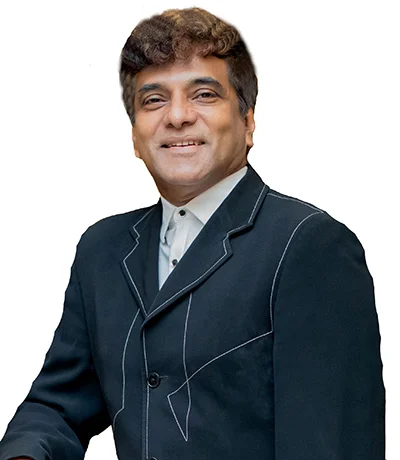
Melantha Perera: Awesome work with Bright Light Band
This meaningful collaboration reflects the strong community behind the Bright Light Band.
According to Melantha, accompaning the song is a vibrant video production that also features the involvement of the parents, highlighting unity, joy, and togetherness.
Beyond showcasing their musical talents, the visually impaired members of Bright Light Band deliver a powerful message, through this project, that their abilities extend beyond singing, as they also express themselves through movement and dance.
Melantha expressed his satisfaction with the outcome of the project and looks forward to sharing it with audiences across the country during this festive season.
He went on to say that Bright Light Band extends its sincere gratitude to Bcert Australia for their generous Mian sponsorship, the CEO of the company, Samath Fernando, for his continuous support in making such initiatives possible, and Rukshan Perera for his personal support and encouragement in bringing this project to completion.
The band also acknowledges Udara Fernando for his invaluable contribution, generously providing studio space and accommodating extended recording sessions to suit the children’s availability.
Appreciation is warmly extended to the parents, whose unwavering commitment from ensuring attendance at rehearsals to supporting the video production has been instrumental in the success of this project.
Through ‘Awurudu Kaale’, Bright Light Band hopes to spread festive cheer and inspire audiences, proving that passion and talent know no boundaries.

Greece to ban social media for under-15s from next year

Showers will occur at a few places in the Western, Sabaragamuwa and North-western provinces and in Galle, Matara, Kandy, Nuwara-Eliya and Mannar districts after 2.00 p.m.

Sun directly overhead Chilaw, Bingiriya, Halmillawewa, Panduwasnuwara, Gokarella, Kawudupelella, Koppaveli and Kirankulam about 12:12 noon. today (09)

Heat Index at Caution Level in the Western, Sabaragamuwa, Southern, Eastern, North-western, Northern and North-central provinces and in Monaragala district

AG: Coal procurement full of irregularities

Rs 13.2 bn NDB fraud: House committee declares serious breach in banking system

‘Dates have the highest sugar content to fight Coronavirus’

Sunday Island 27 December – Headlines

#SundayIsland 17th December – Headlines

Sunday Island – 28th March

Sunday Island Headlines – 21 March

Sunday Island – 21st February – Headlines
-

 Features4 days ago
Ranjith Siyambalapitiya turns custodian of a rare living collection
-

 News4 days ago
Global ‘Walk for Peace’ to be held in Lanka
-

 News2 days ago
Lankan-origin actress Subashini found dead in India
-

 Opinion6 days ago
Hidden truth of Sri Lanka’s debt story: The untold narrative behind the report
-

 Features4 days ago
Beyond the Blue Skies: A Tribute to Captain Elmo Jayawardena
-
 Features6 days ago
The Ramadan War
-

 Features4 days ago
Aspects of Ceylon/Sri Lanka Foreign Relations – 1948 to 1976
-

 Editorial5 days ago
Brouhaha over a book