
News
Who is pouring oil on the flames in Sri Lanka?

By Feng Guoquan
Sri Lanka is in a dire situation. Known as the “Pearl of the Indian Ocean,” the country is facing the worst economic crisis since independence in 1948. Western media has taken this opportunity to hype up the so-called Chinese debt trap, alleging that Sri Lanka is on the verge of economic collapse because it was unable to repay its large loans from China. They add that the Belt and Road Initiative (BRI) has brought a heavy burden to the Sri Lankan economy, and constantly pitting the Sri Lankan government and its people against China, while turning a blind eye to those who are really behind all this.
Caught fire by accumulated debt
There are many causes for Sri Lanka’s economic crisis, among which the foreign exchange crisis is the main factor. Since its independence, Sri Lanka has suffered from internal and external troubles. It has been carrying trade deficits and relying on loans for years. Due to the combined impact of a string of terrorist attacks in April 2019, the COVID-19 pandemic and the Russia-Ukraine conflict, the country’s pillar industries including tourism, overseas remittances, tea and garments have been hit hard and it has rapidly drained its reserves.
What’s worse, Sri Lanka introduced a low tax regime in late 2019, which caused the government a loss of more than $1.4 billion in revenue, further limiting its capability to purchase foreign exchange.
While foreign exchange earnings have plummeted, Sri Lanka’s import payments have continuously increased. Sri Lanka’s production materials and daily necessities are highly dependent on imports, and the armed conflict between Russia and Ukraine has triggered a surge in global commodity prices. Taking energy as an example, 60 percent of Sri Lanka’s electricity is generated from coal and oil, both of which need to be imported. The global oil price increased by six-fold from $18 a barrel in April 2020 to above $100 a barrel now.
At the beginning of 2021, the Sri Lankan government banned the import of chemical to prevent the outflow of foreign exchange, resulting in large-scale crop failures, and the government had to replenish food reserves from abroad, further exacerbating the shortage of foreign exchange.
Sri Lanka’s foreign exchange reserves have plummeted by about 70 percent in the past two years. Its reserves stand at around $1.9 billion at the end of March, while its foreign debt obligations for this year exceed $7 billion. On April 12, the Sri Lankan government officially announced the temporary suspension of foreign debt payments, defaulting on its $50.7 billion foreign debt. On May 19, the government announced that it had failed to repay a total of $78 million in debt, which marked the nation’s first sovereign debt default since it gained independence.
The U.S.-led West have been pouring oil on the flames after setting fire
Although Sri Lanka has been in debt for many years, it has previously maintained a good record of foreign debt repayment. The Russia-Ukraine conflict, which was caused by the U.S.-led Western intervention, had a very serious impact on Sri Lanka’s economy, which was already in bad shape, and leading to its default. It is the hegemony and the greed of capital of the U.S.-led West that are the root causes of the economic crisis faced by Sri Lanka and other developing countries.
The mounting sanctions imposed on Russia by the U.S.-led West have been pushing global food and energy prices to new heights, and there are also restrictions on Russian financial and aviation sectors. The food prices surged in Sri Lanka due to soaring prices of wheat and corn triggered by the Russia-Ukraine conflict.
Sri Lanka exports about $150 million of tea and other commodities to Russia annually. However, as more and more Russian banks are banned from the SWIFT network, Sri Lanka was unable to obtain foreign exchange by exporting to Russia. In January this year, Russia was Sri Lanka’s largest source of tourists, but in March, the state-run national carrier of Sri Lanka suspended its flights to Russia due to the Western sanctions.
In terms of debt structure, most of Sri Lanka’s debts are in the form of international sovereign bonds, and the Asian Development Bank and Japan are its main lenders. According to the Central Bank of Sri Lanka data, as of October 2021, Sri Lanka’s international sovereign bonds reached $11.82 billion, accounting for 34.1 percent of total external debt. In terms of bilateral loans, Japan and India ranked first and second, with $3.54 billion (10.2 percent) and $790 million (2.3 percent) respectively, higher than China.
China’s bilateral loans to Sri Lanka are not the largest. Even with financial market loans (Exim Bank of China) included, it only accounts for 10 percent, and most of the loan interest rates are much lower than the capital markets, among which over 60 percent are concessional loans, and the remaining 40 percent are interest-free loans. So Sri Lanka’s debt repayment problems have very little to do with Chinese loans.
In fact, Sri Lanka is not the only country that suffers from the economic crisis. The Federal Reserve and other major central banks have raised interest rates to quell inflation, which drives up borrowing costs and may bring debt crisis to many developing countries. Turmoil triggered by rising food and energy prices is already gripping countries like Egypt, Tunisia and Peru. Scarcities of food, energy and finance put more than 70 countries at risk of following Sri Lanka into default, says United Nations, according to a recent report by the Wall Street Journal.
The trap of so-called Chinese debt trap
In recent years, governments and media of the U.S.-led West have tied the concept of the “debt trap” to China as a weapon to tarnish China’s reputation and the Belt and Road Initiative in order to counter China’s promotion of BRI, maintain their political and economic hegemony, and prevent the developing countries from participating in the BRI.
The Hambantota Port is a most cited case by the U.S.-led West in hyping up the “Chinese debt trap.” It is falsely claimed that China used the port to drag Sri Lanka deep in debt and would transform it into a military base in the future. But the fact is that the Hambantota Port added $1.12 billion of foreign exchange reserves for Sri Lanka to repay some short-term foreign debts. What’s more, the Hambantota Port is difficult to use as a military base due to water depth limitations, and the Sri Lankan government has explicitly prohibited the use of the Hambantota Port as a foreign military base.
On the contrary, India has recently partially acquired the Trincomalee Port situated on the eastern coast of Sri Lanka, which is a large natural port from a military point of view and used to be a strategic oil terminal for the British army during World War II. Because the United States intended to build an “economic corridor” and highway from Trincomalee to Colombo through the Millennium Challenge Corporation (MCC), which is obviously for military purposes, the United States, India and other countries have played deaf and dumb.
As a close neighbor of Sri Lanka, China has been sincerely helping Sri Lanka develop its economy. Instead of causing any crisis, China has over the years provided selfless help and firm support to Sri Lanka in socio-economic development. Especially since the onset of the COVID-19 pandemic, China and Sri Lanka have supported each other and pulled through together, writing a new chapter of China-Sri Lanka friendship. Chinese Premier Li Keqiang noted that China empathizes with Sri Lanka for its difficulties and challenges, and China is ready to provide much-needed livelihood assistance for Sri Lanka within its capacity.
The Sri Lankan government has explicitly refuted the myth of “Chinese debt trap” time and time again. Recently, Ranil Wickremesinghe, Sri Lanka prime minister and leader of the United National Party, expressed his gratitude to China for assisting Sri Lanka in overcoming difficulties in all aspects and stressed that the government will continue to attach great importance to developing ties with China and push forward BRI projects in the country, accelerate the development of the Colombo Port City, Hambantota Port and other major cooperation projects, make every effort to protect the safety of Chinese institutions and personnel in Sri Lanka.
The international community, especially the developing countries, need to be wary of the trap of “Chinese debt trap” set by the U.S.-led West
,which is a systematic move orchestrated by the U.S. to obstruct the BRI. Countries should endeavor to safeguard their national security and development interests, strengthen international cooperation, including those under the BRI, increase their representation and voice in global economic governance, and promote the establishment of a more just and reasonable international economic order. For developing countries including China, underdevelopment is the biggest trap, and the political, economic, military, and cultural hegemony of the U.S.-led West is the real trap.
(Writer Feng Guoquan is a commentator on international affairs. The article was first published by The People’s Daily, in Chinese, on June 11, 2022. The article reflects the author’s views, and not necessarily those of CGTN (China Global Television Network.)



Sri Lankan singer Latha Walpola has passed away today (27) at the age of 92.


Opposition and SJB Leader Sajith Premadasa has alleged that the current government is attempting to suppress freedom of expression and media freedom to lead the country towards authoritarian rule.
In a video message on Thursday (25), Premadasa said that in a democratic country, the four main pillars safeguarding democracy are the legislature, the executive, the judiciary, and the independent media, but, at present, the government is using the police to violate both the democratic rights of the people and the rights of police officers themselves.
He said that the government is working to establish a police state that deprives citizens of their right to access truthful information.
“For democracy to be protected, media freedom must be safeguarded, and space must be given to independent media. Instead, the government is interfering with the independent media process, using the police to suppress and intimidate independent media,” he said.
He noted that even when independent media present their views based on reason, facts, and evidence, the government attempts to suppress them. Such actions, he said, amount to turning a democratic country into a police state. “Do not suppress the voice of the silent majority, the independent media,” he urged.
Premadasa emphasised that independent media represent the voice of the silent majority in the country and must not be suppressed.
“Media repression is a step towards authoritarian rule, and the people did not give their mandate to create an authoritarian regime or a police state. If the government attempts to abolish democratic rights, the Samagi Jana Balawegaya will stand as the opposition against it,” he said.
The Opposition Leader further alleged that the government was interfering with police independence, stating, “Political interference has undermined the independence of the police, making it impossible for them to serve impartially. Suppressing freedom of expression is an attempt to lead the country towards authoritarian rule.”
Premadasa pointed out that the media has the right to reveal the truth, and interfering with that right is a violation of the rights of 22 million citizens.
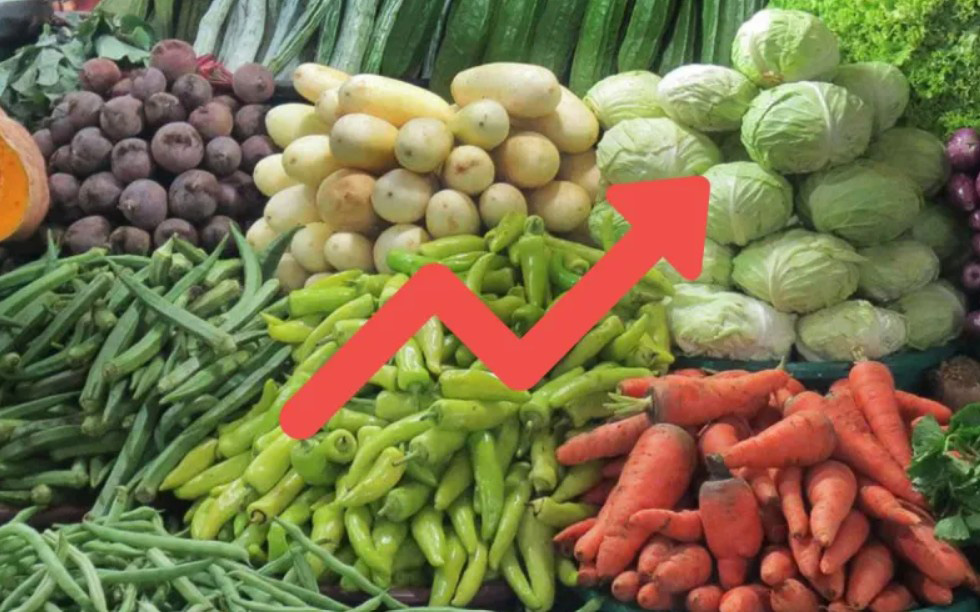
Vegetable prices at the Peliyagoda Manning Wholesale Market surged to unusually high levels yesterday (26), raising concerns among consumers as the festive season drives up demand. The situation is expected to persist over the next few days, a spokesman for the Manning Market told The Island.
He said a sharp increase in the number of buyers visiting the wholesale market, ahead of upcoming festivities, had resulted in a sudden spike in demand, prompting wholesale traders to raise prices significantly. The price hikes have affected a wide range of commonly consumed vegetables, placing additional pressure on household budgets.
According to market sources, the wholesale price of beans climbed to Rs. 1,100 per kilogram, while capsicum soared to Rs. 2,000 per kilogram. Green chillies were selling at around Rs. 1,600 per kilogram. Prices of other vegetables, including beetroot, brinjal (eggplant), tomatoes, bitter gourd, snake gourd and knolkhol, also recorded unusually high increases.
The spokesman alleged that despite the steep rise in prices, vegetable farmers have not benefited from the increases. Instead, he claimed that a group of traders, who effectively control operations at the wholesale market, are arbitrarily inflating prices to maximise profits.
He warned that if the relevant authorities fail to intervene promptly to curb these practices, vegetable prices could escalate further during the peak festive period. Such a trend, he said, would disproportionately benefit a small group of middlemen while leaving consumers to bear the brunt of higher food costs.
By Kamal Bogoda ✍️

Nine arrested in Italy for allegedly raising millions for Hamas

Over 1,500 flights cancelled as winter storm Devin hits US holiday travel

Thailand and Cambodia agree on ceasefire to end weeks of deadly fighting

Latha Walpola passes away at the age of 92

India’s chance to test themselves and their bench strength

Wobbly England register first Test win in Australia in 15 years

‘Dates have the highest sugar content to fight Coronavirus’

Sunday Island 27 December – Headlines

#SundayIsland 17th December – Headlines

Sunday Island – 28th March

Sunday Island Headlines – 21 March

Sunday Island – 21st February – Headlines
-

 News5 days ago
Members of Lankan Community in Washington D.C. donates to ‘Rebuilding Sri Lanka’ Flood Relief Fund
-

 News3 days ago
British MP calls on Foreign Secretary to expand sanction package against ‘Sri Lankan war criminals’
-

 Business7 days ago
Browns Investments sells luxury Maldivian resort for USD 57.5 mn.
-

 News6 days ago
Air quality deteriorating in Sri Lanka
-

 News6 days ago
Cardinal urges govt. not to weaken key socio-cultural institutions
-
 Features7 days ago
Hatton Plantations and WNPS PLANT Launch 24 km Riparian Forest Corridor
-

 Features5 days ago
General education reforms: What about language and ethnicity?
-
 Features7 days ago
Another Christmas, Another Disaster, Another Recovery Mountain to Climb