
News
WHO, Health Ministry pay tribute to Lankan health workers with new stamp

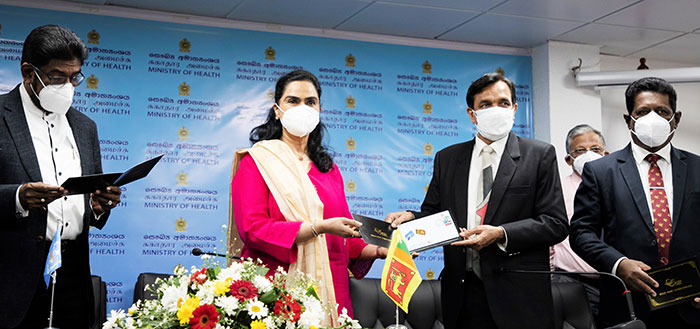
World Health Organization-Sri Lanka in collaboration with the Ministry of Health on Thursday issued a postage stamp and a special first-day cover to pay tribute THE Sri Lankan health workers leading the country’s battle against the COVID-19 pandemic.
Minister of Health Dr. Keheliya Rambukwella, Minister of Mass Media Dullas Alahapperuma, World Health Organization Representative to Sri Lanka Dr. Alaka Singh and senior officials of the Ministry of Health presided at the ceremonial release of the commemorative stamp at the auditorium of the Ministry of Health on 30 December 2021.
The COVID-19 pandemic has had a profound impact on the health care delivery system and its workforce and there is an urgent need to increase investment and protection for health and care workers. The World Health Organization has designated the year 2021 as the International Year of Health and Care Workers in appreciation and gratitude for their invaluable service in responding to COVID-19 pandemic.
In Sri Lanka, nearly 140 000 health and care workers are employed in the state allopathic sector both in the line ministry and provincial ministry institutions and contributed immensely to the COVID-19 response in diverse capacities at different levels. Health personnel in armed forces, private health sector, traditional and ayurvedic sector, and in community-based organisations also played a significant role in controlling the COVID-19 situation in the country.
The release of special first-day cover and the postage stamp is the inaugural event of a series of provincial level felicitation of health and care workers to be conducted jointly by the WHO Sri Lanka and the Ministry of Health. The primary aim of the felicitation events is to recognize and pay gratitude to health and care workers for their sacrificial service, especially in fighting against COVID-19 and to harness their support to the country’s efforts to build back better beyond COVID-19. The campaign also aims to make all of us aware and recognize the service extended by the health and care workers during the COVID-19 pandemic and beyond in reaching universal health coverage. Further, the campaign will be instrumental in advocating the policymakers to invest in and improve the health workforce to achieve the universal health coverage objectives while ensuring fair and decent working environment. In 2021, WHO launched a year-long global campaign under the theme of Protect Invest.
Together with the prime objective of mobilising commitments from member states, international financing institutions, bilateral and philanthropic partners to protect and invest in health and care workers to ensure safe and decent working conditions and to protect their health including mental health. The investment will pay off generously with certainty in terms of health, employment, and economic and social opportunities and will accelerate the attainment of the Sustainable Development Goals and COVID-19 recovery.


USD 2.3 billion Airbus deal
The Commission to Investigate Allegations of Bribery or Corruption (CIABOC) yesterday told the Colombo Magistrate’s Court that former SriLankan Airlines CEO Kapila Chandrasena had admitted delivering a total of Rs. 60 million in three instalments of Rs. 20 million each to the then President Mahinda Rajapaksa, and Rs. 20 million to Aviation Minister Priyankara Jayaratne. The funds were allegedly linked to the controversial Airbus aircraft deal.
Chandrasena, who was arrested on March 12 over bribery allegations connected to the deal, was further remanded until April 2 by Colombo Chief Magistrate Asanga S. Bodaragama. He was produced before court yesterday by prison officials.
Investigators say Chandrasena is accused of accepting a US$2 million bribe in the transaction and conspiring to secure a total of US$16 million. They also allege that €1.45 million was transferred to a bank account in Singapore.
Prosecutors told court that Chandrasena had created a shell company in Brunei in his wife’s name to channel the kickbacks into its Singapore account.
The case stems from a 2013 agreement in which SriLankan Airlines purchased 10 aircraft valued at US$2.3 billion. Court proceedings are ongoing.The court fixed the date for March 24 to consider evidence with regard to issue warrants for Priyanka Neomali Wijearatne and Shamindra Rajapaksa.
By AJA Abeynayake
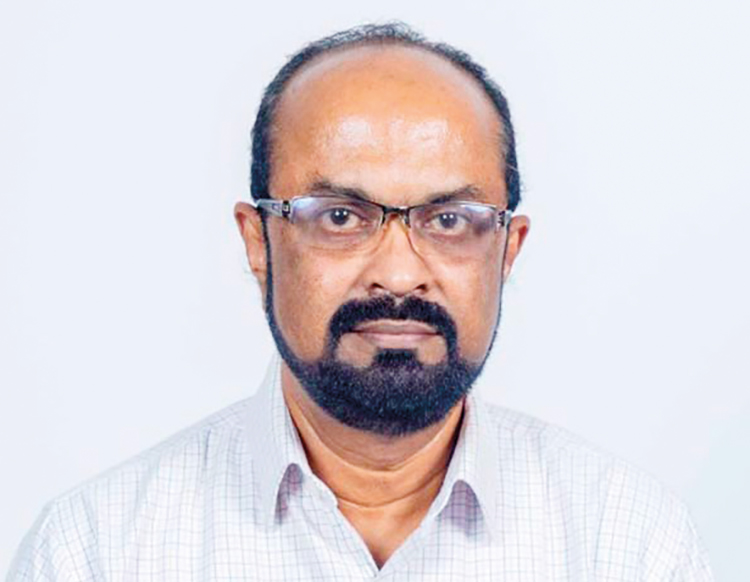
Opposition lawmakers yesterday handed over a no-confidence motion against Energy Minister Kumara Jayakody to Speaker Dr Jagath Wickramaratne over alleged irregularities in coal procurement, etc.
Chief Opposition Whip MP Gayantha Karunathilaka submitted the motion to the Speaker yesterday morning. It has been signed by Opposition Leader Sajith Premadasa, members of the SJB, and several other Opposition representatives.
The motion accuses the Minister of failing to fulfil his primary responsibility of ensuring the procurement of adequate and high-quality coal for the Lakvijaya Coal Power Plant at Norochcholai. It states that such negligence in managing a critical national energy asset amounts to a serious breach of ministerial responsibility.
It further notes that the Minister has been formally charged before the Colombo High Court by the Commission to Investigate Allegations of Bribery or Corruption (CIABOC) under Section 70 of the Bribery Act. The charge relates to an alleged act of corruption during his tenure as Procurement Manager of the Ceylon Fertiliser Company Limited.
The Opposition maintains that the combination of administrative failures and pending legal proceedings undermines the Minister’s ability to hold office, warranting a vote of no confidence.
By Saman Indrajith

The National Joint Committee (NJC) has raised concerns over the arrest and detention of retired Major General Suresh Sallay, calling for due process and caution in handling sensitive national security matters.
Issuing a statement signed by Dr Anula Wijesundera, the NJC has said the former senior military officer served the country for decades in the armed forces and intelligence services during critical periods of the conflict against terrorism.
While acknowledging that all citizens are subject to the law, the Committee has stressed that due process, fairness and respect for institutions tasked with safeguarding national security must be upheld.
Full text of the statement: The National Joint Committee (NJC) expresses deep concern regarding the recent arrest and detention of Retired Major General Suresh Sallay under a detention order.
Major General Sallay served Sri Lanka for decades in the armed forces and in the intelligence services during some of the most challenging periods of our country’s struggle against terrorism.
While all citizens are subject to the rule of law, the NJC believes that due process, fairness, and respect for the institutions that safeguard national security must be upheld at all times.
Particularly troubling are reports that sensitive intelligence-related details, including references to intelligence structures and personnel, are being publicly discussed in ways that could compromise operational security. The exposure of intelligence methodologies or personnel in the public domain can place lives at risk and weaken the effectiveness of national security institutions.
Sri Lanka has already experienced the grave consequences of such actions in the past. The Millennium City incident in 2002 led to the exposure of intelligence operatives who had been working against terrorist networks. Following the disclosure of their identities, many of those officers became targets of retaliation by the LTTE, resulting in the tragic loss of numerous lives and the dismantling of critical intelligence networks at a time when the nation most needed them.
It is therefore imperative that lessons from that painful episode are not forgotten.
It is also important to recall that prior investigations and public records confirm that intelligence warnings regarding potential attacks were received in Sri Lanka before 21 April 2019. The tragic loss of life that followed was therefore not the result of an absence of intelligence, but rather the failure of responsible authorities to act effectively upon those warnings in time to prevent the attacks. The numerous Commissions and Committees have identified these individuals and recommended action against them.
Equally relevant to the current public discussion is the factual record that Major General Suresh Sallay was neither serving as the Head of the State Intelligence Service nor present in Sri Lanka at the time when the attacks took place.
The NJC urges all authorities involved in the present investigation to ensure that the legal process is conducted with the utmost professionalism, transparency, and responsibility, while safeguarding sensitive national security information.
At a time when Sri Lanka continues to face evolving security challenges, the morale and integrity of the armed forces and intelligence services must be protected. Public confidence in these institutions is essential to the safety and stability of the nation.
The National Joint Committee therefore calls upon all responsible stakeholders — including investigators, public officials, media institutions, and civil society — to act with caution and responsibility so that the pursuit of justice does not inadvertently undermine the very institutions entrusted with protecting the country.
Sri Lanka’s patriots must remain vigilant to ensure that the sacrifices made by our armed forces and intelligence officers are not disregarded, and that national security institutions are not weakened in ways that could endanger the country in the future.

Senegal and Morocco tied by religion and trade but divided by AFCON fallout

Showers expected in the Central, Sabaragamuwa and Uva provinces and in Galle, Matara, Mannar, Anuradhapura and Vavuniya districts after 2.00 pm.

CIABOC tells court Kapila gave Rs 60 mn to MR and Rs. 20 mn to Priyankara

Opposition moves no-faith motion against Energy Minister Kumara Jayakody

NJC takes up cudgels on behalf of Sallay, who played pivotal role in combating terrorism

Leopards haunt Pera Uni having already killed several cattle at Vet Faculty

‘Dates have the highest sugar content to fight Coronavirus’

Sunday Island 27 December – Headlines

#SundayIsland 17th December – Headlines

Sunday Island – 28th March

Sunday Island Headlines – 21 March

Sunday Island – 21st February – Headlines
-

 Business4 days ago
Browns EV launches fast-charging BAW E7 Pro at Rs. 5.8 million
-

 Life style5 days ago
From culture to empowerment: Indonesia’s vision for Sri Lanka
-

 News2 days ago
CIABOC questions Ex-President GR on house for CJ’s maid
-
 Business6 days ago
Sri Lanka Institute of Information Technology raises the bar for academic excellence
-

 Life style5 days ago
Ranjith Fernando celebrates cricketing journey with Hob Nails to Spikes
-

 Latest News5 days ago
QR code system will be implemented for fuel with effect from 06.00 a.m. today (15th)
-

 News3 days ago
Australian HC debunks misleading travel risk claims for Sri Lanka
-

 News3 days ago
Sri Lankan marine scientist Asha de Vos honoured at UNGA opening