
Features
Who Broke Syria?

by Nilantha Ilangamuwa
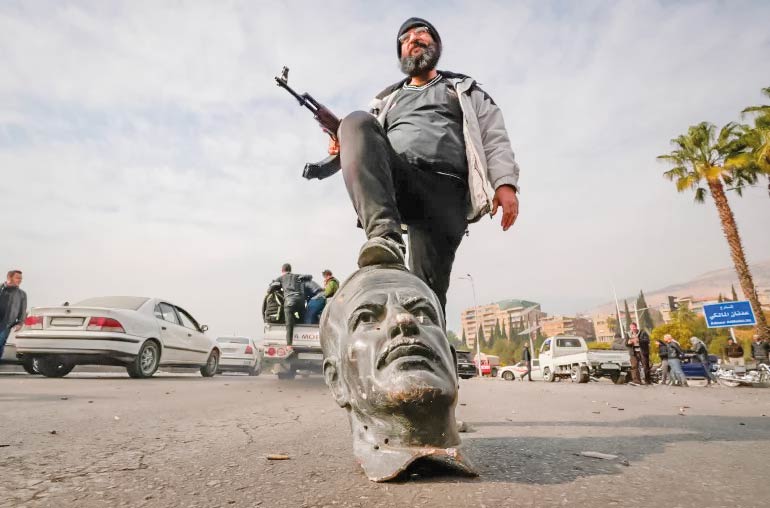
By end of November, the situation in Syria was dire. Government forces were on the brink of exhaustion, stretched thin by an economic crisis that spiraled out of control. Soldiers earned a paltry $7 a month, with even high-ranking officers receiving only $40. This was in sharp contrast to militia fighters funded by external powers, who earned up to $2,000 monthly. This glaring disparity revealed not just economic fault lines but the extent of foreign intervention sustaining these militias. Meanwhile, protests erupted across Suwayda province, historically a stronghold of Assad support, highlighting widespread famine, collapsing services, and the devaluation of the Syrian pound. Discontent was palpable, threatening to upend the regime’s fragile grasp on power.
Iran, Syria’s long-time ally, reportedly pressured Assad to address these challenges. Tehran’s warnings underscored the erosion of public trust and a crumbling economy, urging decisive action. Yet Assad seemed increasingly aloof, allegedly seeking new alliances with Gulf nations, hoping these relationships would secure his future. By December, reports emerged that the United States and the United Arab Emirates were considering lifting sanctions on Assad—but only if he severed ties with Iran and halted arms transfers to Hezbollah. This diplomatic maneuver was a calculated strategy to weaken Assad’s regime further. Relief from Caesar sanctions (sanctions designed to punish Assad and associates for atrocities) was an unlikely prospect given Washington’s decade-long effort to dismantle the Assad family rule. The outcome was preordained: Assad was isolated, and the geopolitical chessboard advanced.
The trajectory of Assad’s downfall mirrors a broader pattern in Western foreign policy. Leaders once celebrated as reformers—from Saddam Hussein to Muammar Gaddafi—are vilified when their geopolitical utility wanes. Assad, who was once lauded for fostering coexistence among Syria’s religious and ethnic groups, became the West’s pariah. In 2010, Syria was a stable nation, ranked seventh on The New York Times’ “31 best places to visit.” Assad met with Queen Elizabeth, hosted Nancy Pelosi, and welcomed Pope John Paul II. Yet the West’s affection was short-lived. As geopolitical calculations shifted, Assad’s regime was recast as the antithesis of democracy, paving the way for intervention.
The Syrian conflict was never just a civil war. It was a proxy war fueled by external actors. Over 100,000 jihadists were funneled into Syria, backed by a coalition of nations. The United States, Israel, Saudi Arabia, and Qatar allegedly provided financial and logistical support. Turkey and Jordan facilitated arms shipments and fighter transport. Western media amplified anti-Assad narratives, while the UK-backed White Helmets shaped public perceptions. Each player pursued its own agenda, yet all converged on a singular goal: regime change.
The motivations driving this coalition were diverse. The United States and Israel sought regional hegemony, neutralizing perceived threats while advancing the Greater Israel project. Qatar’s pipeline ambitions clashed with Assad’s preference for an Iranian alternative, further entrenching divisions. These dynamics turned Syria into a battleground for competing interests, with devastating consequences for its people.
By late 2013, the influx of foreign fighters intensified. Western nations grappled with their citizens joining extremist groups in Syria. The UK reported approximately 600 fighters, while France contributed around 1,200. Belgium, the Netherlands, and Sweden also faced significant outflows. However, the greatest contributions came from West Asia and North Africa, with Tunisia leading at 3,000 fighters, followed by Saudi Arabia at 2,500. Russia’s involvement, particularly from regions like Chechnya, underscored the conflict’s global reach.
The arms supply chain further exacerbated the war. Gulf states like Qatar and Saudi Arabia allegedly supplied weapons, supported by over 160 military cargo flights. These arms, transported through Turkey and Jordan, sustained rebel factions. European nations, such as Croatia, indirectly contributed by routing surplus weapons through Jordan. This complex web of arms smuggling empowered extremist groups, further destabilizing Syria.
Western hypocrisy was stark. While denouncing Assad’s regime, the United States supported “moderate rebels” aligned with Al Qaeda and ISIS. Declassified documents revealed this duplicity. In 2012, General Michael Flynn’s memo to the Pentagon warned that the opposition included jihadist factions. Similarly, Hillary Clinton’s advisor, Jake Sullivan, acknowledged in an email that “Al Qaeda is on our side in Syria.” The West’s support for these groups undercut its claims of promoting democracy, revealing a strategy rooted in destabilization.
Atrocity propaganda became a central tool in the anti-Assad narrative. Staged chemical attacks, amplified by the White Helmets, justified military intervention. Western media perpetuated these fabrications, obscuring the reality on the ground. Idlib province, under “rebel” control, became a dystopian preview of Syria’s potential future: public executions, forced veiling of women, and sectarian slogans. This grim reality highlighted the consequences of regime change.
Operation Timber Sycamore, the CIA’s covert program, exemplified Western duplicity. Billions of dollars in weapons were funneled to extremist factions, prolonging the war. The irony was stark: the West, claiming to combat terrorism, empowered the very groups destabilizing the region. Syria’s devastation became a witness to the destructive nature of interventionist policies.
Syria’s collapse parallels other Western interventions. Iraq’s 2003 invasion, justified by the false pretext of weapons of mass destruction, left the nation in tatters. Libya, once Africa’s wealthiest country, descended into anarchy following Gaddafi’s overthrow. These interventions, framed as humanitarian missions, unleashed chaos, empowering extremist factions and creating power vacuums.
The broader motivations behind these actions lie in geopolitics. Syria’s strategic location, its role as a buffer between Iran and Israel, and its proximity to oil-rich regions made it a prime target. The West’s desire to reshape the region’s political structure has driven decades of intervention, often with catastrophic consequences. Meanwhile, allies like Saudi Arabia and Turkey, despite their human rights abuses, remain central to Western strategy, exposing the moral bankruptcy of interventionist policies.
Syria’s tragedy is a miniature of a global pattern. The collapse of nations like Iraq, Libya, and Syria reflects a broader system where sovereignty is sacrificed for strategic interests. Foreign interventions, far from promoting democracy or stability, have left legacies of destruction, displacement, and despair. The narrative of “humanitarian intervention” serves as a veneer, masking the true motives of power and greed.
As the 50th anniversary of Iran’s 1979 revolution approaches in 2029, the stakes are higher than ever. Iran’s defiance of Western hegemony remains a critical factor in the region’s future. The forces shaping West Asia—Israel, Turkey, and Western powers—are poised to challenge Iran’s resilience. Syria’s collapse serves as both a warning and a call to scrutinize the ethics of intervention. The legacy of these actions is clear: a world shaped by greed, ambition, and the devastating cost of unchecked power.


 by Kaushalya Perera
Time has, by and large, stood still in the business of academic staff recruitment to state universities. Qualifications have proliferated and evolved to be more interdisciplinary, but our selection processes and evaluation criteria are unchanged since at least the late 1990s. But before I delve into the problems, I will describe the existing processes and schemes of recruitment. The discussion is limited to UGC-governed state universities (and does not include recruitment to medical and engineering sectors) though the problems may be relevant to other higher education institutions (HEIs).
How recruitment happens currently in SL state universities
Academic ranks in Sri Lankan state universities can be divided into three tiers (subdivisions are not discussed).
* Lecturer (Probationary)
– recruited with a four-year undergraduate degree. A tiny step higher is the Lecturer (Unconfirmed), recruited with a postgraduate degree but no teaching experience.
* A Senior Lecturer can be recruited with certain postgraduate qualifications and some number of years of teaching and research.
* Above this is the professor (of four types), which can be left out of this discussion since only one of those (Chair Professor) is by application.
State universities cannot hire permanent academic staff as and when they wish. Prior to advertising a vacancy, approval to recruit is obtained through a mind-numbing and time-consuming process (months!) ending at the Department of Management Services. The call for applications must list all ranks up to Senior Lecturer. All eligible candidates for Probationary to Senior Lecturer are interviewed, e.g., if a Department wants someone with a doctoral degree, they must still advertise for and interview candidates for all ranks, not only candidates with a doctoral degree. In the evaluation criteria, the first degree is more important than the doctoral degree (more on this strange phenomenon later). All of this is only possible when universities are not under a ‘hiring freeze’, which governments declare regularly and generally lasts several years.
Problem type 1
– Archaic processes and evaluation criteria
Twenty-five years ago, as a probationary lecturer with a first degree, I was a typical hire. We would be recruited, work some years and obtain postgraduate degrees (ideally using the privilege of paid study leave to attend a reputed university in the first world). State universities are primarily undergraduate teaching spaces, and when doctoral degrees were scarce, hiring probationary lecturers may have been a practical solution. The path to a higher degree was through the academic job. Now, due to availability of candidates with postgraduate qualifications and the problems of retaining academics who find foreign postgraduate opportunities, preference for candidates applying with a postgraduate qualification is growing. The evaluation scheme, however, prioritises the first degree over the candidate’s postgraduate education. Were I to apply to a Faculty of Education, despite a PhD on language teaching and research in education, I may not even be interviewed since my undergraduate degree is not in education. The ‘first degree first’ phenomenon shows that universities essentially ignore the intellectual development of a person beyond their early twenties. It also ignores the breadth of disciplines and their overlap with other fields.
This can be helped (not solved) by a simple fix, which can also reduce brain drain: give precedence to the doctoral degree in the required field, regardless of the candidate’s first degree, effected by a UGC circular. The suggestion is not fool-proof. It is a first step, and offered with the understanding that any selection process, however well the evaluation criteria are articulated, will be beset by multiple issues, including that of bias. Like other Sri Lankan institutions, universities, too, have tribal tendencies, surfacing in the form of a preference for one’s own alumni. Nevertheless, there are other problems that are, arguably, more pressing as I discuss next. In relation to the evaluation criteria, a problem is the narrow interpretation of any regulation, e.g., deciding the degree’s suitability based on the title rather than considering courses in the transcript. Despite rhetoric promoting internationalising and inter-disciplinarity, decision-making administrative and academic bodies have very literal expectations of candidates’ qualifications, e.g., a candidate with knowledge of digital literacy should show this through the title of the degree!
Problem type 2 – The mess of badly regulated higher education
A direct consequence of the contemporary expansion of higher education is a large number of applicants with myriad qualifications. The diversity of degree programmes cited makes the responsibility of selecting a suitable candidate for the job a challenging but very important one. After all, the job is for life – it is very difficult to fire a permanent employer in the state sector.
Widely varying undergraduate degree programmes.
At present, Sri Lankan undergraduates bring qualifications (at times more than one) from multiple types of higher education institutions: a degree from a UGC-affiliated state university, a state university external to the UGC, a state institution that is not a university, a foreign university, or a private HEI aka ‘private university’. It could be a degree received by attending on-site, in Sri Lanka or abroad. It could be from a private HEI’s affiliated foreign university or an external degree from a state university or an online only degree from a private HEI that is ‘UGC-approved’ or ‘Ministry of Education approved’, i.e., never studied in a university setting. Needless to say, the diversity (and their differences in quality) are dizzying. Unfortunately, under the evaluation scheme all degrees ‘recognised’ by the UGC are assigned the same marks. The same goes for the candidates’ merits or distinctions, first classes, etc., regardless of how difficult or easy the degree programme may be and even when capabilities, exposure, input, etc are obviously different.
Similar issues are faced when we consider postgraduate qualifications, though to a lesser degree. In my discipline(s), at least, a postgraduate degree obtained on-site from a first-world university is preferable to one from a local university (which usually have weekend or evening classes similar to part-time study) or online from a foreign university. Elitist this may be, but even the best local postgraduate degrees cannot provide the experience and intellectual growth gained by being in a university that gives you access to six million books and teaching and supervision by internationally-recognised scholars. Unfortunately, in the evaluation schemes for recruitment, the worst postgraduate qualification you know of will receive the same marks as one from NUS, Harvard or Leiden.
The problem is clear but what about a solution?
Recruitment to state universities needs to change to meet contemporary needs. We need evaluation criteria that allows us to get rid of the dross as well as a more sophisticated institutional understanding of using them. Recruitment is key if we want our institutions (and our country) to progress. I reiterate here the recommendations proposed in ‘Considerations for Higher Education Reform’ circulated previously by Kuppi Collective:
* Change bond regulations to be more just, in order to retain better qualified academics.
* Update the schemes of recruitment to reflect present-day realities of inter-disciplinary and multi-disciplinary training in order to recruit suitably qualified candidates.
* Ensure recruitment processes are made transparent by university administrations.
Kaushalya Perera is a senior lecturer at the University of Colombo.
(Kuppi is a politics and pedagogy happening on the margins of the lecture hall that parodies, subverts, and simultaneously reaffirms social hierarchies.)

 This week, too, the spotlight is on an outfit that has gained popularity, mainly through social media.
Last week we had MISTER Band in our scene, and on 10th February, Yellow Beatz – both social media favourites.
Talento is a seven-piece band that plays all types of music, from the ‘60s to the modern tracks of today.
The band has reached many heights, since its inception in 2012, and has gained recognition as a leading wedding and dance band in the scene here.
The members that makeup the outfit have a solid musical background, which comes through years of hard work and dedication
Their portfolio of music contains a mix of both western and eastern songs and are carefully selected, they say, to match the requirements of the intended audience, occasion, or event.
Although the baila is a specialty, which is inherent to this group, that originates from Moratuwa, their repertoire is made up of a vast collection of love, classic, oldies and modern-day hits.
The musicians, who make up Talento, are:
Prabuddha Geetharuchi:

Geilee Fonseka: Dynamic and charismatic vocalist

Prabuddha Geetharuchi: The main man behind the band Talento
(Vocalist/ Frontman). He is an avid music enthusiast and was mentored by a lot of famous musicians, and trainers, since he was a child. Growing up with them influenced him to take on western songs, as well as other music styles. A Peterite, he is the main man behind the band Talento and is a versatile singer/entertainer who never fails to get the crowd going.
Geilee Fonseka (Vocals):
A dynamic and charismatic vocalist whose vibrant stage presence, and powerful voice, bring a fresh spark to every performance. Young, energetic, and musically refined, she is an artiste who effortlessly blends passion with precision – captivating audiences from the very first note. Blessed with an immense vocal range, Geilee is a truly versatile singer, confidently delivering Western and Eastern music across multiple languages and genres.
Chandana Perera (Drummer):
His expertise and exceptional skills have earned him recognition as one of the finest acoustic drummers in Sri Lanka. With over 40 tours under his belt, Chandana has demonstrated his dedication and passion for music, embodying the essential role of a drummer as the heartbeat of any band.
Harsha Soysa:
(Bassist/Vocalist). He a chorister of the western choir of St. Sebastian’s College, Moratuwa, who began his musical education under famous voice trainers, as well as bass guitar trainers in Sri Lanka. He has also performed at events overseas. He acts as the second singer of the band
Udara Jayakody:
(Keyboardist). He is also a qualified pianist, adding technical flavour to Talento’s music. His singing and harmonising skills are an extra asset to the band. From his childhood he has been a part of a number of orchestras as a pianist. He has also previously performed with several famous western bands.
Aruna Madushanka:
(Saxophonist). His proficiciency in playing various instruments, including the saxophone, soprano saxophone, and western flute, showcases his versatility as a musician, and his musical repertoire is further enhanced by his remarkable singing ability.
Prashan Pramuditha:
(Lead guitar). He has the ability to play different styles, both oriental and western music, and he also creates unique tones and patterns with the guitar..
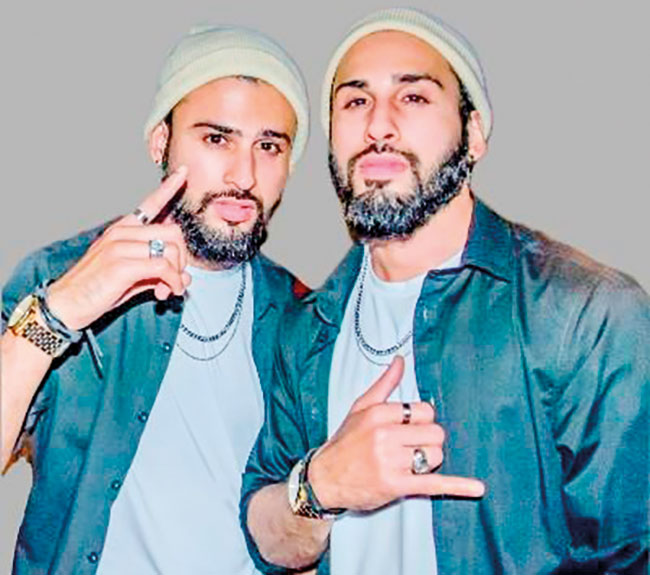
The JJ Twins, the Sri Lankan musical duo, performing in the Maldives, and known for blending R&B, Hip Hop, and Sri Lankan rhythms, thereby creating a unique sound, have come out with a brand-new single ‘Me Mawathe.’
In fact, it’s a very special milestone for the twin brothers, Julian and Jason Prins, as ‘Me Mawathe’ is their first ever Sinhala song!
‘Me Mawathe’ showcases a fresh new sound, while staying true to the signature harmony and emotion that their fans love.
This heartfelt track captures the beauty of love, journey, and connection, brought to life through powerful vocals and captivating melodies.
It marks an exciting new chapter for the JJ Twins as they expand their musical journey and connect with audiences in a whole new way.
Their recent album, ‘CONCLUDED,’ explores themes of love, heartbreak, and healing, and include hits like ‘Can’t Get You Off My Mind’ and ‘You Left Me Here to Die’ which showcase their emotional intensity.
Readers could stay connected and follow JJ Twins on social media for exclusive updates, behind-the-scenes moments, and upcoming releases:
Instagram: http://instagram.com/jjtwinsofficial
TikTok: http://tiktok.com/@jjtwinsmusic
Facebook: http://facebook.com/jjtwinssingers
YouTube: http://youtube.com/jjtwins
Six US soldiers killed in Iranian strike on Kuwait base

Israel attacks presidential office in Tehran as reported death toll in Iran rises to 787

Attorney At Law S K Sangakkara pasess away

SriLankan Airlines Update on Middle East Operations

Trump says Iran war projected to last 4 to 5 weeks, could go ‘far longer’

Qatar downs two Iranian fighter jets as conflict widens

‘Dates have the highest sugar content to fight Coronavirus’

Sunday Island 27 December – Headlines

#SundayIsland 17th December – Headlines

Sunday Island – 28th March

Sunday Island Headlines – 21 March

Sunday Island – 21st February – Headlines
-

 Opinion5 days ago
Jamming and re-setting the world: What is the role of Donald Trump?
-
 Features5 days ago
An innocent bystander or a passive onlooker?
-
 Features6 days ago
Ratmalana Airport: The Truth, The Whole Truth, And Nothing But The Truth
-

 Business7 days ago
Dialog partners with Xiaomi to introduce Redmi Note 15 5G Series in Sri Lanka
-
 Features7 days ago
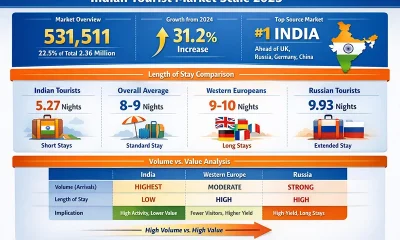
Building on Sand: The Indian market trap
-
 Opinion7 days ago
Future must be won
-
 Features2 days ago
Brilliant Navy officer no more
-

 Opinion2 days ago
Sri Lanka – world’s worst facilities for cricket fans