
Midweek Review
Whitewashing Ltte & Multiple Narratives Of Genocide In Canada

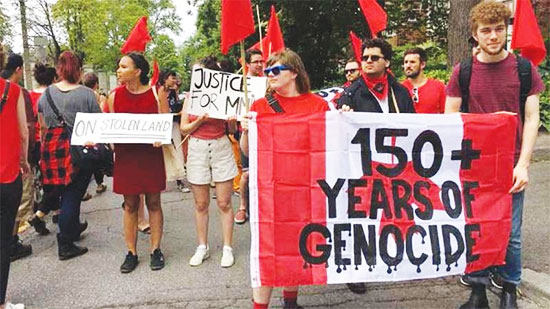
“Canada has this image internationally of a great defender of human rights violations, the protector of human rights throughout the world, but in its own backyard it’s violated the rights of the First Peoples indiscriminately for years and years. And the greatest human rights violation has been the imposition of the residential school experience.”
Phil Fontaine, Aboriginal Canadian leader
By Sudharshan Seneviratne
A recent announcement featuring the news, Tamil Genocide Education Week by Scarborough MPP Vijay Thanigasalam’s Bill 104, received third reading at Queen’s Park on May 6th. Let us look at the “messenger” first and his credibility and secondly, the nature of the Canadian State i.e. hidden political agenda Canada has for the dependent diaspora as a cat’s paw. The man himself has a dubious history and was a one-time LTTE sympathizer even after the Elam war ended in 2009 (CDN 14th May 2021 Sugeeswara Senadhira).
Quite naturally Thanigasalam’s antics immediately sparked off a debate within Canada and the overseas resident Sri Lankan community. The mindset of the pro-LTTE diaspora is inevitable. It is another step in the long march consolidating its racial identity and legitimacy within a white-dominated country and the West. It also needs a bogy to legitimize the very existence in the eyes of its host country, the international community, and funding agencies, mostly, to the next generation and generations yet born. Mythifying the heroic struggle opposing this evil is an instrument unifying the larger Tamil community and a convenient “oppressed people’s theory”. On the other hand, it is an essential ingredient imaging the “enemy” i.e. the Sri Lankan state, Sinhala speaking community, and Buddhists.
There is a certain dialectic in this process. While projecting the “Evil” Sri Lankan state, Sinhala people and Buddhists, simultaneously whitewashes the genocide carried out by the LTTE. It will be an education to learn to what extent this “education” will list the human and cultural genocide and the carnage carried out by the LTTE. The abduction of children transforming them into killer machines and feeding them with cyanide pills; physical liquidation of opposing Tamil political parties and their leadership; the killing of Sri Lankan leaders, civilians (Tamil, Muslim and Sinhalese), Buddhist monks and the destruction of cultural property is an unending list of scalps that need to be listed as ‘genocide’ even by UN standards. Huge funds they amassed by robberies, intimidation carried out on the helpless Tamil-speaking diaspora by pro-LTTE thugs will not feature in the awareness programme. They also will not speak of the untold racial discrimination they themselves faced in White Canada. This will provide a comfort zone to the Canadian State to whitewash and present itself to the international community as the “moral state”, which ironically emerged by default as a champion of the oppressed when President Trump was doing his number in the neighbourhood. Ironically, Canada’s own track record on human rights needs a new chapter on the history of genocide.
Will the learning material highlight the genocide carried out by the LTTE and unfold the genocide track record of the masters of the Pro-LTTE diaspora – Canada? These are the antecedents of rewriting history to be introduced to the school system perpetuating a mythical story of the birth of a new “Nation” to the next generation. This is the long-term plan of laying the foundation of its own future Eelam State which will be the next step towards demanding or carving out a Province within the State of Canada. It may be too late when Canada wakes up to a replay of the “Quebec Syndrome”! It will dilute Canada’s banal excuse of inclusivity is nothing but empty rhetoric. Only a week back it was reported that the highest number of racial attacks on Asians is in Vancouver. With almost 1 out of every 2 residents of Asian descent in British Columbia experienced a hate incident as it was reported in the past year (Bloomberg Equality + Businessweek May 7th 2021). Of course, this is happening in Canada, in case the pro-LTTE diaspora forgot the map! It will be interesting to document the nature of discrimination the newly arriving Tamil-speaking immigrants faced in Toronto and other cities. Either they are silent or consciously hide such facts without causing embarrassment to the Canadian White Master.
Conversely, the pro LTTE diaspora will never educate their children on how the LTTE gunned down their own people while escaping along the eastern beach front; they will never speak of Tamil-speaking people who were fleeing not so much from the Sri Lankan military but from the LTTE and how many of them were also hunted down overseas. It is unlikely that the humanitarian aid given by the Sri Lankan Army to the public in the North and the East as the war ended; social development carried out in the north and the east, where inclusivity programmes and systems were placed on track and among other people-friendly measures. Will they educate the children that in almost all metropolitan centres such as Colombo, Kandy, Jaffna, Batticaloa, Galle Trincomalee and Nuwara-Eliya the Sinhala and Buddhist population is less than 50% of the resident population and there is coexistence among language, religious and ethnic groups? Will they be educated on the quantum of investments made by the diaspora in such places during the post-war period and the rich harvest they reap from such investments?
There is another important factor we often tend to forget. This is conscious support and the nurturing of pro-LTTE elements and lovingly embraced by the Canadian State. The great saviour and knight in the shining armour crying and lamenting on Heroes Memorial Day who actually shed tears and how their voices break down at such events. Full marks to the Canadian political leadership for the Oscar-winning performances. Seeing this, Niccolo Machiavelli may have added another volume to his thesis on The Prince pleased that the pro-LTTE diaspora followed his famous dictum, “the end justifies the means”! Of course, Canada will not shed any tears for its own indigenous people nor will it take the state of Israel to task for the current massacres carried on the Palestinian people!
Hero worshipping Prabakaran is a God-given excuse to sweep under the carpet Canada’s own miserable history of slavery, racial discrimination, exploitation of indigenous people and brutally putting down its own French origin white citizen’s aspirations and silent support for multinationals that undermine environment protection within Canada and overseas. This is the diaspora’s His Masters Voice that was screaming on Sri Lanka’s genocide record at the UNHRC this March! A press release from the Scarborough-Rouge Park MPP, however, said the Conservative government, bypassing the bill, “demonstrated its commitment to fighting injustices and standing up for the Tamil people who call Canada home”. (MAY 11, 2021 BY MIKE ADLER. SCARBOROUGH MIRROR). Amen!
The thread of history: Multiple narratives
The study of history and its dynamics needs to be seen in the motion of events and people. This dynamic is seen in cyclical and spiral movements. However, if the circle or spiral is stretched, it becomes linear. There is linearity representing the History of Canada as multiple narratives connecting it from the past to the present. Canada’s ruling cabal may wish to hide behind the sympathetic engagements of the pro-LTTE diaspora and presenting itself as the greatest exponent of human rights (bleating from the UNHCR pulpit). But it cannot wash away the sins of the past, its double standards, and crimes against humanity which is yet a living reality in its sub- stratum culture and psyche.
 The Tamil diaspora is not monolithic; it is differentiated by class, excludes certain castes and is gendered in its exploitation. The mobilisation of the diverse Tamil diaspora abroad and the rhetoric used have become the rationale for reinforcing the security establishment in Sri Lanka. A democratic Tamil leadership from within the country should challenge the larger Tamil diaspora to change course and work constructively towards building a plural and democratic society out of the ravages of war.
Ahilan Kadirgamar ” Tamil Diaspora: Classes, State and politics”
Economic & Political Weekly. July 31, 2010 vol. xlv no 31
Narrative 1: Colonialism
As in the case of most countries “discovered” by the West, Canada was founded under Colonialism with a history of discrimination and cruelty to humanity. Colonialism commenced as early as 1600 though Canada became a nation in 1867. Formalizing genocide as a policy of the state then commenced with state patronage and blessings. Controlling land and resources was imperative. Indigenous people had to be physically liquidated that provided the space to appropriate their land (mainly resource areas) by force. They were expelled to unproductive land unworthy of good soil, water resources, and game including sacred spaces. The most successful system of liquidating the indigenous people was: the forced sterilization and disenfranchising them of their indigenousness thus mentally and physically deculturalizing those communities. The most damaging strategy was by culturally absorbing them to the Western ethos introducing by force the damning colonial school system and the creation of stolen generations. This was practiced in the USA, Australia and Africa with great success and Canada fine-tuned this system by establishing the Resident or Industrial School system. Since the Pro LTTE Diaspora is targeting the school system, let us look at the roots of the Canadian school system under Colonialism and how subordinate people were educated, and its tragic consequences.
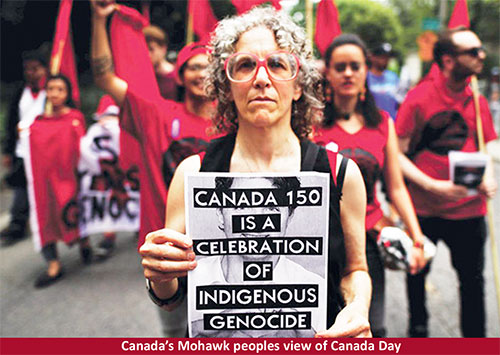
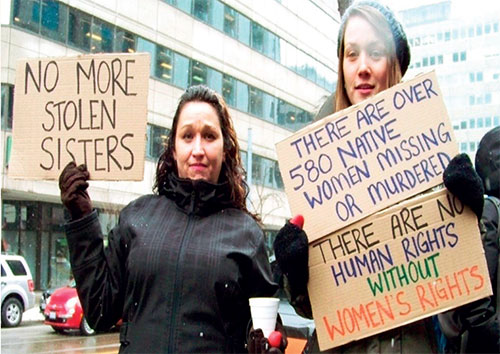
The Truth and Reconciliation Commission of Canada (TRC) in 2015, released its final report, documenting the tragic experience of at least 150,000 residential school students. Residential Schools “were part of a coherent policy to eliminate Aboriginal people as distinct peoples and to assimilate them into the Canadian mainstream against their will.” (“Genocide and Indigenous people in Canada”. The Canadian Encyclopedia). Policy on indigenous education was primarily based on assimilation and colonization. Assimilation was carried out by removing children from their parents and families to “educate” and to be deculturalized and isolate them where “children had to be caught young” (1879 Devin Report). Residential School (RS) system run by the Federal Government and the Church totally removed children from parents, who were not permitted to visit their children. They in fact never saw their children again. Between1890-1970 over 100,000 children were forced to attend 139 RS. Half the day they had no education but menial work in school, barns, and farms. It was slave labour and hardly any time for education. Girls were taught to cook, sew, and household work to become maids. Eventually, when they left school after 10 years, their level of knowledge and education was at the level of a Grade 2 child. In the final count over 70% of children were tortured, sexually abused by school teachers, priests, and nuns. This is cultural genocide at its best!
These children were unable to adjust to an alien space and society nor were they able to receive higher education or skills. They often resorted to larceny, drug and alcohol addiction, ending up as urban poor and plantation workers and often without livelihood as urban poor. The memory of their cultural past was obliterated and abuse blocked out the indigenousness. School leaving children who lacked family love, parental guidance, and poor family life and pauperized in turn also resorted to child abuse of their own children. Five generations of children went through this school system and the next generation of indigenous people was diluted & devastated and had no identity. Only in 2008 did the Prime Minister of Canada, Steven Harper, apologized to the indigenous people, again too late.
Similarly, the Australian Prime Minister too apologized for the wrong done to the indigenous people only in 2008.
“It has been very trying for Indigenous populations to have their existence annulled—that’s what the last 150 years have been. The 150th anniversary has to be marked by the fact that things have to change. We must confront our colonial thinking and attitudes and redefine what Canadian-ness means. We must move beyond the false notion that Canada was founded by the French and the English, recognizing that we started off with the First Nations, Métis, and Inuit, and have become a society that thrives on diversity and knows how to share resources fairly among everyone.” – Karla Jessen Williamson (Inuk), June 2017. Canada’s Dark Side. Origins Vol. 11 June 2018)
Will the pro-LTTE diaspora convey this dark history to their children by instructing them on Sri Lanka’s imagined genocide and sweep under the carpet the history of their White Master’s ugly history? They are only perpetuating the White Man’s history and not looking at their own history taught in the school system (Justice Murray Sinclair).
Narrative 2: French separatist Movement.
 The Quebec Sovereignty Movement (Mouvement souverainiste du Québec) emerged in the 1960s as a political movement and presented its ideology advocating an independent movement for the province of Quebec. Its antecedents ran to a much earlier period. The 1837 Patriotes Rebellion was the first attempt by French Canadians to overthrow British dominance since 1760 conquest. An entire literature has grown up around the theme of the exploitation of the French-Canadian people. Until the II World War, the French-Canadians, who constituted more than two-sevenths of the population, disposed of only one-seventh of the wealth.
Of the 31 richest mines, 12 were owned by Anglo-Canadians and nineteen by Americans. The 497 mining companies listed employed a grand total of seven French-Canadian engineers (“French Canada and the war”. TE Wood. VQR.1940). It is their ethnic and language identity that propelled the French-speaking Canadians to move towards separation.
In 1969 the FLQ stepped up its campaign of violence with the October Crisis. The group claimed responsibility for the bombing of the Montreal Stock Exchange, and in 1970 the FLQ kidnapped British Trade Commissioner James Cross and Quebec Labour Minister Pierre Laporte was later murdered. The silent repression that followed is not popularly recoded.
Many of Quebec’s francophones felt that the 1982 constitution significantly eroded their status and powers and threatened their survival as a people. The Canadian Charter of Rights and Freedoms specifically acknowledges the multicultural character of Canada. The tension between the bi-communal and emerging multicultural aspects of Canadian society and politics is at the root of the current threat to Canada’s survival as a country. (Vol. XVII No. 2, Fall 1997 Ethnic Structure, Conflict Processes and the Potential for Violence and Accommodation in Canada. by David E. Schmitt).
Here is another thread in history the Pro-LTTE school book may wish to include. They may well borrow Charles de Gaulle’s famous slogan expressed in Montreal during a state visit to Canada, “Vive le Québec libre!” only with a slight twist, “Vive le Scarborough libre!”
Narrative 3: Environment and genocide
One of the focus areas of colonialism was its predatory expansion into land held by indigenous people that had resources of water, precious metal and minerals, supply of fish, animal skins and furs, and by the mid19th Century striking crude oil. The height of eviction of indigenous people, massacres, forced sterilization, enhanced expansion of Industrial (Residential) schools coincided with this period. They were placed in reservations and had little ownership over their traditional land.
The First Nation or indigenous people are yet alienated from their land and resources and are on a relentless confrontation with the Federal government of Canada. To cite some case studies. The Aamjiwnaang First Nation community has expressed concern regarding its proximity to chemical plants over a falling birth rate. This is due to the adverse effects of maternal and exposure to the effluent and emissions of the nearby chemical plants.
Protests broke out in many parts of Canada including Wet’suwet’en community, triggered off by arrests of dozens of protesters on traditional indigenous land along a route for TC Energy Corp’s TRP.TO planned Coastal GasLink pipeline. The flashpoint was police arrests that started in northern British Columbia of protesters who opposed the pipeline’s construction on the traditional land of the Wet’suwet’en indigenous people. Some 28% of the pipeline route runs through Wet’suwet’en lands. “Alberta Premier Jason Kenney, whose province depends on oil and gas revenue, called for police to step up enforcement, saying the protests are about ideology that is opposed to fossil fuels, not indigenous issues”. (Reuters Feb. 13th 2020).
In addition to pipelines, coal deposits salmon fishing zones and timber growing areas are on or adjacent to indigenous residential areas. There is a constant conflict between these communities and investors who are covertly supported by authorities.
The worst of it comes from the conduct of Canadian companies outside Canada (see Report to UN Committee in Mining Companies Pervasive abuse against women Oct. 4th, 2016. The Mining watch/Canada) Human rights advocates’ report shows that the government has actively supported abusive companies, rather than holding them accountable (Ottawa/Washington, D.C.) “A majority of the world’s mining companies, operating at over 8000 sites in over 100 countries, are headquartered in Canada. Many of these mines are also sites of serious human rights violations, including direct violence against local women and environmental degradation. One recent study found that Canada’s mining companies are involved in such abuses and conflict more than any other country. The report, submitted to the UN Committee on the Elimination of Discrimination against Women (CEDAW), charges that Canada has been supporting and financing mining companies involved in discrimination, rape, and violence against women in their operations abroad, when it should be holding those companies accountable for the abuse”.
I hope this part of environmental and human degradation will be taught to the diaspora school programme enlightening the students on the violence and abuses supported by the magnanimous state of Canada while it sheds tears of genocide against Sri Lanka over the fallen heroes of LTTE!
Epilogue
The greatest hope and asset to the Tamil-speaking diaspora is their children, the next generation. Let their minds open up to the world, inquire, question, and think for themselves. This is all about education and not something that is poured into one’s head tainted with biases and prejudices. Let them be exposed to their parents’ and grandparents’ place of origin and learn for themselves what Sri Lanka is and its inclusive history and heritage.
This account does not point the finger at all resident individuals of the Tamil-speaking diaspora. I personally know of high-end professionals, intellectuals, and friends who are very close and dear to me. Some of them cannot voice their sentiments in an invisible draconian social environment that has taken root over 40 odd years making them a potential “voice of the voiceless”. This is in some ways is dedicated to such individuals who one day will rise up and question the residue of a fascist rule controlling their thoughts and mind. Please reach out to your brothers and sisters across the ocean in Sri Lanka.

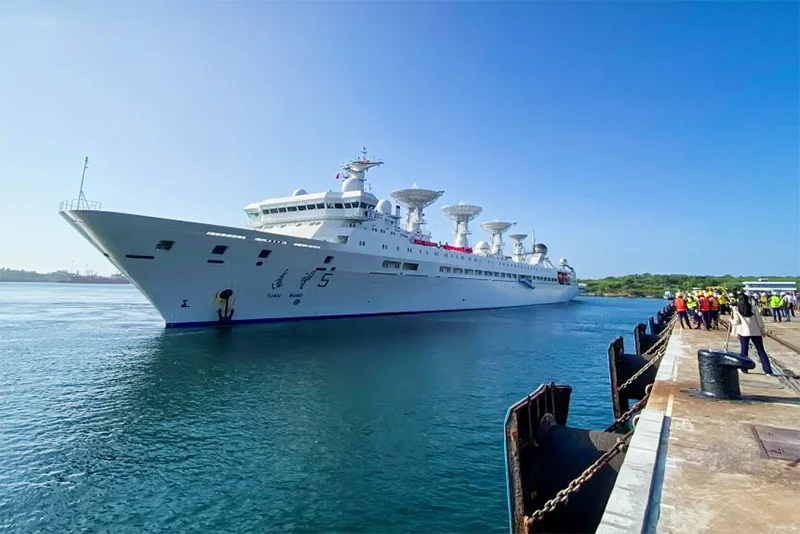
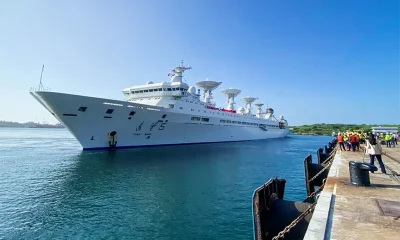
Chinese scientific research vessel Yuan Wang 5 at the Hambantota International Port (HIP) in August 2022. The visit took place just weeks after the overthrowing of President Gotabaya Rajapaksa. The second Chinese research vessel Shi Yan 6 arrived at the Colombo port in October, 2023. In the wake of the Chinese ship visits, the US and India forced Sri Lanka to impose a moratorium on such visits on January 1, 2024. Although the government announced it would be for one year, the moratorium remains.
By Shamindra Ferdinando
Dual-use naval facilities are commercial ports, shipyards, or maritime hubs operationally designed and equipped to support military operations when required though they operate primarily for civilian trade in peacetime.
The issue at hand is whether the Hambantota International Port (HIP) operated as a public-private partnership between Sri Lanka and China is one such dual-use naval facility, as propagated by the US?
Sri Lanka handed over the Port to China on December 09, 2017, after the finalisation of the hotly disputed 99-year old lease for the strategic port on July 29, 2017. Having opposed Chinese projects in Sri Lanka in the run-up to the 2015 presidential election, the then Prime Minister Ranil Wickremesinghe attended the handing over ceremony. China paid USD 1.2 bn for the Port.
In spite of repeated denials by successive governments over the years, the US still identifies HIP as a dual-use naval facility. India, too, subscribes to that view. There is no doubt that the Quad, a strategic partnership among the US. India, Japan and Australia considers HIP as such and its policy, vis-a-vis Sri Lanka, geared to meet that challenge. But, is HIP really a dual-use naval facility as alleged and Sri Lanka part of the overall Chinese strategy. The other issue is whether Sri Lanka is a willing partner of the Chinese strategy or caught up in that due to circumstances beyond its control.
The Indo-Pacific Defence Forum, published quarterly by the US Indo-Pacific Command, has regularly dealt with HIP. Its first issue this year went all out to emphasise HIP’s status as a dual-use naval facility. Sarosh Bana, Executive Editor of Business India magazine, in an article, titled ‘Indian Ocean Primacy,’ published in the first issue of the Indo-Pacific Defence Forum, referred to HIP as a dual-service naval facility.
In the article that dealt with the Indian move to establish a strategic naval base this year, in Andhra Pradesh, to neutralise China’s Longpo naval base on Hainan island, Bana categorised Bangladesh Navy base BNS Pekua and Kyaukphyu deep seaport being developed in Myanmar. Bana declared all above mentioned facilities as part of China’s One Belt, One Road (OBOR) infrastructure scheme. Since 2013, China has invested as much as USD 700 bn for OBOR projects covering over 150 countries across Africa, Europe, Latin America and the Indo-Pacific.
Specialist in political economy Dr. Alfred Oehlers, in an article, titled ‘Peace Through Economic Strength,’ also carried in the same edition of the Indo-Pacific Defence Forum, discussed the Hambantota Port, while another specialist in Chinese affairs Dr. Jinghao Zhou dealt with overall Chinese strategy at global level. Zhou’s article was titled ‘Countering OBOR’ and primarily argued how ports in Chinese hands could be used for military purposes.
Obviously the US and its partners are deeply concerned over the growing Chinese, influence both at regional and global level. Sri Lanka remains one of their key focus as HIP, located just 10 nm from major east – west shipping routes, continues to grow, quite rapidly and received significant international attention during the war between Israel-US against Iran (February-June, 2026).
US sub strike
HIP received global attention in the wake of a US torpedo attack on non-belligerent Iranian frigate IRIS Dena off Sri Lanka’s southern coast. The attack took place off Galle Port, within the country’s exclusive economic zone, in the first week of March, just days after the eruption of hostilities in West Asia. Sinking of IRIS Dena was the only attack that took place outside the war zone before Pakistan-Qatar mediated talks that brought about a fragile ceasefire that enabled the re-opening of Strait of Hormuz, albeit amidst many a violation.
In the immediate aftermath of the unprovoked attack on unnamed IRIS Dena returning home after participating in International Fleet Review (IFR) and Exercise Milan 2026 at Visakhapatnam (15-25 June), Indian Foreign Minister S. Jaishankar declared Hambantota as a Chinese military facility. This happened in the presence of Sri Lanka Foreign Minister Vijitha Herath at Raisina Dialogue 2026 (March 5 to 7) in New Delhi. Dr. Jaishankar said so as he responded to a pointed query regarding India’s much-touted position as the region’s net security provider. India was given a shocking jolt without even a warning, when the US struck in Delhi’s backyard, ignoring its status as the purported regional policeman.
Without mentioning that India, too, participated in US-led military exercises off Diego Garcia, Dr. Jaishankar referred to joint US-British base at Diego Garcia, Chinese military base at Djibouti in east Africa and Hambantota.
The US submarine strike also underscored that regardless of the climax of US-India relations during Narendra Modi’s third consecutive term as the Prime Minister, beginning in June 2024, the overall US strategy may disregard domestic and regional issues. India that backed the Israeli-US offensive against Iran by conveniently remaining silent on the assassination of Iranian Supreme Leader Ayatollah Ali Khamenei on 28 February, 2026, after Modi visited Israel on the eve of the daring surprise attack on Iran, however had to protest US military action during the last phase of Pakistan-Qatar mediated talks to arrange a ceasefire. India bitterly complained when US targeted ships crewed by Indians in the Hormuz Strait.
In the second week of June, 2026, the US attacked three ships, namely The Marivex, a Palau-flagged oil tanker, merchant tanker Jalveer and merchant tanker Settebello in the Gulf of Oman. The attack on Settebello claimed the lives of three Indians. The US justified attacks on the basis that all three ships violated blockade imposed on Iranian ports. Can such unilateral actions be justified under any circumstances?
Indian and foreign news agencies quoted India’s Centre of Indian Trade Unions as having said in a statement: “When a foreign military kills Indian workers in international waters, the government of India must speak – loudly and firmly.” That statement even received the attention of CNN.
The US launched the blockade on 13 April, 2026, after failing to achieve its primary objectives though Iran endured significant damage. The US forces disabled eight vessels and redirected 134 others.
India insisted that “targeting of commercial shipping and civilian infrastructure in the region must end. But, India never condemned the sinking of an unarmed Iranian frigate returning home from Visakhapatnam.
The US allowed Sri Lanka and India to accommodate two other ships that were accompanying IRIS Dena at the time of its sinking off Galle-Hambantota stretch. The US had the opportunity to hit all three ships but refrained from doing so.
Expanded US role
While claiming Sri Lanka a part of OBOR strategy on the basis of HIP being a dual-use naval facility, the US and India stepped up military assistance to Sri Lanka. Since the transferring of a US Coast Guard vessel in 2004/2005 to Sri Lanka, the US provided a range of assistance with direct intelligence support during the 2006-2009 period leading to destruction of four LTTE floating warehouses in the high seas.
But with the US-India backed regime change operation achieving the desired result in 2022, the superpower and the regional power appeared to have advanced their strategy to a new level. The removal of President Gotabaya Rajapaksa had been of pivotal importance to their game plan but emergence of Ranil Wickremesinghe as Gotabaya’s successor undermined their strategy.
On behalf of the conspirators, the then Indian High Commissioner Gopal Baglay (2020 to 2023) went to the extent of urging Speaker Mahinda Yapa Abeywardena to take over the presidency as an interim measure to thwart Wickremesinghe’s ascent to power for obvious reasons.
The US quietly dropped accountability issues that dominated bilateral issues since the successful conclusion of war in 2009 from its agenda while it stepped-up military assistance to cash-strapped Sri Lanka.
US Assistant Secretary of State for South and Central Asian Affairs Paul Kapur, on 22 June, declared in Colombo the delivery of U.S. satellite communications technology to the Sri Lanka Navy, their self-proclaimed Indo-Pacific partner. The US Embassy, in a statement issued following the official announcement made on aboard SLNS Gajabahu at the Port of Colombo, quoted Kapur as having said: “This secure, real-time connection —representing a transformational upgrade for the Sri Lanka Navy— will be available aboard their entire fleet of offshore patrol vessels and ensures no communication gap at sea. It will allow our Sri Lanka partners to respond quickly to emergencies, protect the cargo ships that fuel our economy, and disrupt illegal activity across the Indian Ocean before it reaches our shores.”
On the following day, the US officially handed over 10 US-built TH-57 Sea Ranger (Bell 206) single engined helicopters to the Sri Lanka Air Force. The event, held at the Ratmalana air base, was attended by President Anura Kumara Dissanayake, US Assistant Secretary of State for South and Central Asian Affairs Kapur and US Pacific Air Forces Commander General Kevin Schneide.
It would be pertinent to mention that the SLNS Gajabahu is one of the four former US Coast Guard vessels transferred since 2004/2005. But, the US refrained from transferring ships to Sri Lanka during the war and the second ex-Coast Guard vessel was made available in 2017, a decade after the end of the conflict. Of the four US Coast Guard vessels, Sri Lanka took delivery of the last one a couple of months ago and it arrived here in May.
The US-Sri Lanka relations had never been so strong though the Acquisition and Cross-Servicing Agreement (ACSA) was signed in March 2007 during Mahinda Rajapaksa’s first term. The US and India seemed to be overtly happy with the ruling National People’s Power (NPP) approach.
The US-India accusations that HIP is a dual-use naval facility while simultaneously providing military assistance seems contradictory.
A forgotten move
Soon after the 2019 presidential election, Gotabaya Rajapaksa deeply antagonised China when he declared that the 99-year lease of the Hambantota Port was a mistake. President Rajapaksa revealed his decision to renegotiate the agreement.
In an hour-long exclusive interview, his first since becoming the President, aired on Nitin A Gokhle’s Strategic News International (SNI) web platform and on the defence website Barthshakthi, the newly elected President said: “We were never to give control of the Port [Hambantota] to China; that was a mistake.” Rajapaksa pointed out that the decision was made by the previous administration.
“The previous Government gave it on a 99-year lease, and even though China is a good friend of ours and we need their assistance for development, I am not afraid to say that was a mistake.”
But, the President retracted his statement soon after China warned that re-negotiations wouldn’t be possible under any circumstances. The President had no option but to call a special meeting with the Colombo-based journalists working for international news agencies to retract his statement to the Strategic News International (SNI) web platform and the defence website Barthshakthi. Who influenced President Rajapaksa to declare his intention to renegotiate the Hambantota Port deal? Did President Rajapaksa at least consult his elder brother Prime Minister Mahinda Rajapaksa or the Cabinet of Ministers? Or did Gokhle, in some way, influenced the President.
The President couldn’t have been unaware of the possible angry Chinese reaction as Sri Lanka suffered due to the foolish Yahapalana decision to suspend the Colombo Port City project. In keeping with UNP leader Ranil Wickremeinghe’s promise to halt the Colombo Port City project, in the run-up to the presidential election, in January 2015, at his behest the Cabinet of Ministers suspended the project. Sri Lanka made the announcement on 5 March, 2015.
The utterly irresponsible Yahapalana leadership justified their idiotic decision on the failure on the part of China and Sri Lanka to follow proper procedures in launching the project. The Indian and US hand in the Colombo Port City work stoppage was transparent. But, at the end, China forced the Yahapalana government to lift the suspension to pave the way for the resumption of work.
The NPP hadn’t been formed at that time. The JVP formed the NPP ahead of the 2019 presidential poll and opposed both the Colombo Port City and the Hambantota Port, primarily over sovereignty concerns. But since winning the presidential and parliamentary polls in 2024, the JVP-led NPP seemed to be continuing with Chinese projects while creating extra space for the US and India. It wouldn’t be wrong to say that Sri Lanka is tilted towards the US-India combine. Regardless of the often repeated pledge to what some called strict commitment to non-alignment, Sri Lanka is now in that US-led camp. US Assistant Secretary of State for South and Central Asian Affairs Kapur’s declaration onboard SLNS Gajabahu proved that.
Indo-Lanka relations
The signing of the Memorandum of Understanding on Defence, on 5 April, 2025, in Colombo, immediately followed by India securing controlling shares of the security-related Colombo Dockyard Ltd., previously owned by Quad member Japan, marked an increasing loss of sovereignty to an overwhelming neighbour. Altogether, India and Sri Lanka signed seven MoUs. The presence of the Indian Premier at the signing ceremony underscored the importance of the occasion.
Both governments are of the view that all MoUs cannot be fully disclosed. They believe that there is no need or responsibility on the part of India and Sri Lanka to do so. However, none of the political parties represented in the current Parliament are not publicly opposed to the Indian approach. Over the years, India, China and the US have enhanced relations with political parties here as well as others, they are confident of pursuing their agendas.
While the local and global focus is on Hambantota Port, within 24 hours after Premier Modi concluded his visit to Colombo in the first week of April 2025, the Colombo West International Terminal (CWIT), Lanka’s first fully automated container terminal with an $800 million investment, officially began operations.
The project, developed under a 35-year Build, Operate, and Transfer (BOT) agreement, is managed by a consortium of India’s Adani Ports and Special Economic Zone Ltd (APSEZ), Sri Lankan conglomerate John Keells Holdings PLC, and the Sri Lanka Ports Authority (SLPA).
There are five container terminals at the Colombo port. They are Jaya Container Terminal (JCT), the oldest built during JRJ tenure; South Asia Gateway Terminals (SAGT), Colombo International Container Terminals (CICT), Unity Container Terminal (UCT), and the Colombo West International Terminal (CWIT). China spearheads the CICT operation. China (China Merchants Port Holdings Company Limited [CMPort]) owns 85% stake and the rest belongs to Sri Lanka (Sri Lanka Ports Authority).
Regardless of US and Indian interventions, China has sustained its operations here primarily focusing on Beijing’s major investments. China suffered a setback in 2024, when the US-India combine forced President Ranil Wickremesinghe to announce a one-year ban on foreign research ships visiting Sri Lanka. It was supposed to end on December 31, 2024. But, the NPP, in spite of publicly promising to state its stand on the ban that obviously targeted China, is yet to disclose its position. In fact, the writer raised this issue with Foreign Minister Vijitha Herath in January this year and he assured an announcement within two months.
Sri Lanka is in a deepening dilemma as the US and India relentlessly pressure the country on multiple issues. New Delhi is keen to upgrade the Free Trade Agreement (FTA) and also connect the two countries through a land bridge in line with the overall enhancement of bilateral relations at every level. The seven MoUs finalised on 5 April, 2025, were meant to take the relations to the next level. The following are the MoUs (1) HVDC Interconnection (high-voltage direct current power link) for Import/Export of Power (2) Sharing Successful Digital Solutions Implemented at Population Scale for Digital Transformation (3) Development of Trincomalee as an Energy Hub (4) defence cooperation (5) grant assistance for the Eastern Province (6) cooperation in the fields of health and medicine and (7) Pharmacopoeial cooperation between the Indian Pharmacopoeia Commission.
With Sri Lanka in total political turmoil, foreign powers may find it easier to advance their agendas at different levels, simultaneously.
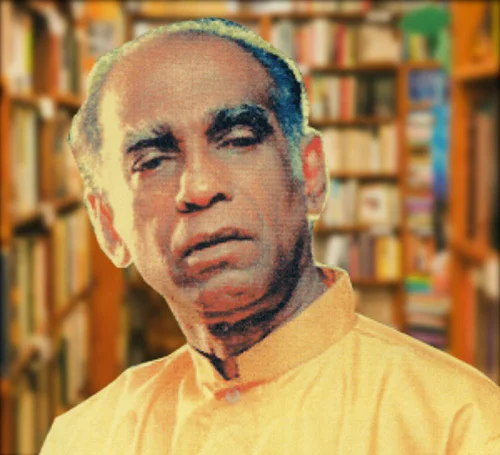
The mellow, sacred strains of W.D. Amaradewa,
The master singer who plumbed the depths,
Of the ordinary people’s hearts and minds,
Wafting from the Dansala across the street,
Where devotees clad in immaculate white,
Gave themselves a much needed repast,
Helped give the venerated day just past,
Its special spiritual meaning and identity,
Putting the cardinal point beyond doubt,
Of content and medium being one in great art.
By Lynn Ockersz

The Commission to Investigate Allegations of Bribery or Corruption (CIABOC) on 12 June questioned former President Mahinda Rajapaksa regarding the USD 2 Mn bribe allegation directed at the late SriLankan CEO Kapila Chandrasena, whose body was found on 8 May in a close relative’s home in Kollupitiya. Chandrasena’s alleged suicide sent shock waves through political circles and interested parties questioned the circumstances leading to him being granted bail on 6 May on cash bail of Rs. 500,000 with three sureties of Rs. 10 million each. The Colombo Magistrate court also imposed a travel ban. The issue at hand is as to how Mohamed Riswan and Mohamed Irshan stood as sureties for Chandrasekera. Of all the investigations undertaken by the CIABOC, the USD 2 Mn bribe case is the most politically charged probe.
Of the Rajapaksas, former State Minister Shasheendra Rajapaksa is so far the last to be indicted. CIABOC on 19 June filed indictments before the Colombo High Court against him and two others Sepalika Saman Kumari and Keerthi Bandara Kotagama. According to the charges, the accused are alleged to have committed the offence of corruption and aided and abetted the commission of the offence by using official influence to pressure certain government officials, attached to the Office for Reparations, to obtain compensation amounting to Rs. 8.85 million for a property built on a state land by Shasheendra and destroyed by marauding Aragalaya mobs.

By Shamindra Ferdinando
The ruling National People’s Power (NPP) government last week emphasised, in no uncertain terms, that it wouldn’t tolerate the growing Opposition challenge.
Amidst the growing controversy over the continuing detention of retired Maj. Gen. Suresh Sallay. in terms of the draconian Prevention of Terrorism Act (PTA), under humiliating conditions, in connection with the ongoing investigations into the 2019 Easter Sunday carnage, police arrested Sugeeshwara Bandara, leader of the New People’s Front (NPF). The Central Crime Investigation Bureau (CCIB) apprehended him on 18 June and the Fort Magistrate’s Court remended him till 1 July..
The CCIB also apprehended Binoy Hettiarachchi who was accompanying Bandara. Hettiarachchi served as a media coordinator at the former President Ranil Wickremesinghe’s Flower Road Office. Police intercepted their vehicle at Kollupitiya where the arrests were made like in an action-packed movie. Hettiarachchi was freed four hours later.
But, it would be better to identify Bandara as the former private secretary to President Gotabaya Rajapaksa as well as the Director General of Special Projects at the Presidential Secretariat in the wake of Ranil Wickremesinghe taking over the presidency.
Accused of receiving two salaries simultaneously, under the President’s Expenditure Head, Bandara who managed the media for Gotabaya Rajapaksa, in the run-up to the 2019 presidential election, is under investigation for abuse of government vehicles and employing government workers for political work.
Having launched his political career as the Colombo District organiser of the alliance New People’s Front, a breakaway faction of the UPFA, in February, 2024, Bandara contested the November, 2024, parliamentary polls on the New Democratic Front (NDF) ticket. But, of late, Bandara, as the leader of NPF, became one of the most active opposition activists, aligned with the political grouping, dubbed People’s United Opposition, operating from Ranil Wickremesinghe’s Flower Road Office.
Bandara drew the wrath of the government when he launched a noisy protest outside Finance Secretary Dr. Harshana Suriyapperuma’s residence at Akuregoda, Pelawatta, on 26 April, where he and his protesting supporters were given a shower of excreta. The group, led by Bandara, demanded the Finance Secretary’s resignation over the theft of USD 2.5 mn from the Treasury. No less a person than President Anura Kumara Dissanayake reacted angrily to Bandara’s actions.
Acknowledging the right for legitimate protests, the President warned against protests directed at residences of officials. On 18 April, Bandara led a protest outside Agriculture Minister K.D. Lal Kantha’s recently built luxury residence at Weliwita, Kaduwela, where he questioned how the JVPer managed to build such a home as he was on record as having repeatedly said that he lived a difficult life.
The police apprehended Bandara as he was returning from a meeting between senior representatives of the People’s United Opposition and the IMF Colombo at the Tiki Bar, Shangri-La. In spite of negligible parliamentary presence, with those elected on the NDF ticket at the last parliamentary election not really speaking in one voice, the Flower Road project has become a headache for the government.
In fact, the Flower Road operation has been causing continuous harassment to the NPP, while the Samagi Jana Balawegaya (SJB) struggled to play its anticipated role as the main Opposition. Instead of conducting a cohesive campaign against the cocky NPP government, members of the SJB seem to be pulling in different directions at the expense of the common opposition front.
Regardless of the Wickremesinghe-led grouping vowing to press ahead with its campaign, the arrest of Bandara is obviously meant to have a detrimental impact on the activities of the Opposition.
It would be pertinent to mention that Bandara had been among those who stayed with President Gotabaya Rajapaksa at the President’s House, in Colombo, as a massive protest erupted on 9 July, 2022. Bandara was among the last to flee the President’s House as the military withdrew, amidst mounting pressure on their positions.
The police arrested Bandara as former President Gotabaya Rajapaksa moved the Court of Appeal in terms of Article 140 of the Constitution to prevent him being arrested under the PTA. The wartime Defence Secretary sought the court intervention in the wake of police probing the 2019 Easter Sunday carnage and obtaining a travel ban against him.
The court heard Romesh de Silva PC’s submissions on behalf of the ex-President on 18 June. The court deferred the hearing to 24 June. The crux of the matter is that the ex-President fears that the CID is about to arrest him on the basis of a statement made by fugitive Azad Moulana, in Paris, linking Sallay directly with the Easter Sunday carnage.
NPP intensifies pressure
The NPP seems confident of its current course of action meant to pin down the Opposition. In spite of unbridled corruption being the major issue on the post-war election platform, no political party succeeded in going flat-out against the political opposition.
However, the NPP allowed the judicial process to continue. The first major sentencing was announced on 2 April, 2025, just six months after the parliamentary polls, handsomely won by the NPP. The Commission to Investigate Allegations of Bribery or Corruption (CIABOC) moved the Colombo High Court successfully against the former Chief Minister of the North Central Province S.M. Ranjith Samarakoon.
Colombo High Court No. 01 Judge Adithya Patabendige sentenced him in terms of Section 70 of the Bribery Act. The HC declared the former CM perpetrated malpractices by ordering fuel to his personal secretary’s vehicle. The personal secretary happened to be Shanthi Chandrasena, wife of his brother S.M. Chandrasena, a former Cabinet Minister and one of the most powerful Ministers to represent the North Central province.
The ex- Chief Minister and the second accused, his personal secretary, were convicted guilty of two charges. Both were sentenced to 16 years rigorous imprisonment and were also ordered to pay a fine of Rs. 200,000/- with an additional two-year prison term in case of default.
Deputy Director General Asitha Anthoney appeared on behalf of the Commission to Investigate Allegations of Bribery or Corruption.
There had never been any really coordinated CIABOC campaign against corruption. No political party, or a particular family, felt threatened by CIABOC. Both those in and outside Parliament acted with impunity. They feared no one. There was no need to be because the powerful and the influential operated above the law.
Just a couple of weeks after sentencing of S.M. Ranjith Samarakoon and Shanthini Chandrasena, the CIABOC arrested the latter’s husband, one-time Deputy Economic Development Minister and Special Projects Minister, S.M. Chandrasena. The CIABOC took him into custody on 4 July, 2025.
The CIABOC accused the former Minister of causing loss to the government by distributing seed corn, imported at a cost of Rs 25 mn, in 2024, among the farmer community in the Anuradhapura district, at a subsidised price. The distribution had taken place ahead of the 2015 presidential election contested by Mahinda Rajapaksa and estranged former SLFP General Secretary Maithripala Sirisena. The CIABOC alleged that Chandrasena exerted undue influence on the Director (Planning) and other officers of the District Secretariat and distributed seeds through his political allies to gain an advantage in the 2015 presidential election and incurred a loss to the government.
Chandrasena was granted bail on 1 August, 2025. He was indicted on 12 June before the Colombo High Court.
Before further discussing the ongoing anti-corruption campaign, let me introduce the top leadership of CIABOC. The Commission consists of Justice W.M.N.P. Iddawela (Chairman), K.B. Rajapakse and Chethiya Goonesekera P.C, with High Court judge R.S.A. Dissanayake as its Director General.
The sentencing of the S. M. Ranjith Samarakoon didn’t really bother his side. The arrest of his brother S.M. Chandrasena, too, didn’t really upset those facing charges. But, sentencing of former Minister Mahindananda Aluthgamage and former Sathosa Chairman and former Trade Minister Nalin Fernando on 29 May, 2025, sent shock waves through the Opposition.
The Colombo High Court Trial-at-Bar sentenced Aluthgamage and Fernando for committing the offence of corruption by purchasing 14,000 carrom boards and 11,000 checkers boards through Sathosa, allegedly to distribute to schools and sports clubs selected by the Sports Ministry, and distributing them to party offices of the government, during the 2015 presidential election campaign thereby, causing a loss of over 53 million rupees to the government, stunned the Opposition.
Aluthgamage was sentenced to 20 years of rigorous imprisonment, Fernando received a sentence of 25 years of rigorous imprisonment. Additionally, a fine of Rs. 100,000 (hundred thousand) was imposed for each count.
The CIABOC’s Assistant Director General Mrs. Anuththara Jayasinghe and Assistant Director General Mrs. Thushari Dayaratne conducted the prosecution.
During the Yahapalana government Aluthgamage spearheaded a high profile anti-corruption campaign, dubbed ‘Yahapalana Top 10 kamba horu’. The then Joint Opposition (JO) group, led in Parliament by Dinesh Gunawardena, published a 750-page book, targeting the Yahapalana ministers. Mahindananda, who spearheaded that campaign, is now serving a long sentence.
The JO group consists of UPFA lawmakers who declined to throw their weight behind the then President Sirisena aligned with the UNP.
Let me mention the names of those against whom the accusations were made by the JO.
Yahapalana corruption
The JO dealt with 10 major cases. (1) The Treasury bond scams perpetrated in 2015 and 2016. Accusations were directed at Ranil Wickremesinghe, Ravi Karunanayake and Governor Central Bank Arjuna Mahendran. The losses were estimated at Rs 26 bn. (2) causing losses amounting to Rs 10 bn through the fraudulent import of vehicles. Ravi Karunanayake was named the chief culprit (3) Misappropriation of Mahapola funds to the tune of Rs. 1 bn. Allegations were directed at Malik Samarawickrema (4) Stealing from an insurance scheme implemented for the benefit of those going for employment in West Asia. The JO accused Thalatha Atukarale of misappropriating funds amounting Rs 1.5 bn (5) Receiving Rs 1.5 bn through the leasing of Hambantota port to China on a 99-year lease. Ranil Wickremesinghe, Malik Samarawickrema and R. Paskaralingam were named the offenders (6) Kabir Hashim was accused of causing a loss of Rs 54 bn by cancelling aircraft ordered from Airbus Industries for the national carrier (7) fraudulent activities pertaining to the release of paddy stocks held by the government. The JO estimated the losses caused to the government at Rs 10 bn. (8) Scam in vehicle parts. Ravil Karunanayake was accused of causing losses amounting to Rs. 6.5 bn, (9 A) Dr. Rajitha Senaratne was accused of leasing of the Modera fisheries harbor and procurement of eight vessels to catch fish, fraudulently, and thereby causing losses up to Rs 1 bn, (9B) The JO also found fault with Dr. Senaratne for perpetrating Rs 1.5 bn fraud in the procurement of medicine and lastly (10) Ranil Wickremesinghe, Malik Samarawickrema, R. Paskaralingam and Charitha Ratwatte were blamed for a massive fraud in the procurement of coal for the Norochcholai coal-fired power plant. That particular fraud was estimated at Rs 5 bn.
Although the JO transformed itself to Sri Lanka Podujana Peramuna (SLPP) later, to successfully contested the 2019 presidential election, none of the above-mentioned cases were investigated. As far as we know, none of those cases had been dealt with during the SLPP rule, from November, 2019, to July, 2022. Faced with an externally backed regime change operation, the SLPP invited Wickremesinghe, who had been named by them in three major corruption cases, to accept the premiership in May, 2022, and presidency in July same year.
So far, there is no indication whether the mentioned JO allegations had received the attention of the CIABOC or the Attorney General of the government. As far as we know of all the politicians and officials, Wickremesinghe is the only one facing imminent threat due to the ongoing case pertaining to him visiting the UK in September, 2023, to join his wife Prof. Maithree at the University of Wolverhampton at her graduation ceremony.
Wickremesinghe has been accused of squandering nearly 17 mn rupees at a time the country was in deep economic turmoil. The Fort Magistrate’s court is scheduled to take up the case on 8 July.
SLPP parliamentary group leader Namal Rajapaksa is also facing a major legal challenge. The former Minister has been indicted on charges of criminal misappropriation of Rs. 70 mn in connection with the controversial Krrish project. The indictments have been forwarded to the Colombo High Court by the Attorney General, alleging that Namal Rajapaksa misappropriated funds by receiving Rs. 70 million from the Indian real estate company for the development of rugby in Sri Lanka.
Yoshitha Rajapaksa, too, has been dealt with by the CIABOC. The Rajapaksas have been accused of lowering qualifications required to join the executive branch of the Navy and then sending him to the Royal Naval Academy in the United Kingdom at taxpayers’ expense. Produced before the Colombo Additional Magistrate, Yoshitha was released on three personal bail bonds of Rs. 5 million each.
Producing Yoshitha before court on 17 June, Deputy Director General of the Bribery Commission, Ruvini Wickramasinghe declared: “”Your Honour, the complaint regarding this incident was received on June 25, 2016. Accordingly, the Commission initiated investigations. The complaint states that the suspect had participated in naval training programmes held in England and Ukraine by misusing government funds, while depriving qualified applicants of such opportunities. At that time, this individual, who is a civilian in the dock today, was also a civilian in 2006 when he was deemed eligible for the Royal Navy Young Officer training at the Royal Naval Academy in the United Kingdom. The opportunities to receive this training are extremely limited. Your Honour, selection to this prestigious course is usually based on being the most outstanding cadet officer during a two-year training period or based on performance during training. However, this suspect, although a civilian in 2006, was proposed and included in the list and was sent for the course in haste.”
The Deputy Director General also stated that Yoshitha Rajapaksa had undergone medical examinations required for overseas training even before being officially recruited into the Navy.
The court was also told that though Sri Lanka previously received scholarships from the UK the Rajapaksa government funded Yoshitha to the tune of Rs 6.2 mn.
Opp. attacks CIABOC
The Opposition has repeatedly attacked the CIABOC with its Director General Ranga Dissanayake being the primary target. Accusing Dissanayake of being a JVPer, the Opposition has repeatedly questioned the conduct of the High Court judge demanding that the CIABOC inquired into the top official’s conduct, especially with regard to the alleged suicide of former Sri Lankan CEO Kapila Chandrasena who had been under investigation pertaining to the receiving of USD 2 mn bribe to facilitate procurement aircraft from Airbus Industrie during Mahinda Rajapaksa’s second term.
Former Foreign Minister Prof. G. L. Peiris, a regular speaker at Flower Road media briefings, alleged that the CIABOC was a political tool in the NPP’s hands.
A section of the Opposition to question the circumstances one-time JVP heavyweight Nandana Gunatilleke died in January this year at the Ragama Teaching Hospital after accusing Dissanayake of pursuing an agenda beneficial to the JVP, a charge denied by the High Court judge. When the writer raised the allegations with Dissanayake, he emphatically denied any wrongdoing on his part https://island.lk/ciaboc-dg-denies-jvp-link/.
The CIABOC has simply ignored accusations directed at its DG who proved through his actions that he really meant high profile public pronouncements against corruption.
Former Deputy Minister and ex-MP Sarana Gunawardena was sentenced to a total of 16 years rigorous imprisonment by the Colombo High Court on June 8, 2026.
During the Yahapalana administration many cases, filed by the CIABOC as well as the Attorney General, were either dismissed or dropped due to lapses on their part. The accused in such cases were ex-MP Sajin Vass Gunawardena, ex-EP Chief Minister Sivanesathurei Chandrakanthan alias Pilleyan, ex-Ministers Johnston Fernando, Rohitha Abeygunawardena, Basil Rajapaksha, Mahindananda Aluthgamage and Janaka Bandara Tennakoon and former AG and CJ Mohan Peiris.
Regardless of Opposition protests, the public appreciate tangible action against corruption. However, the NPP has not been free from serious allegations against it since the last general elections. The release of suspicious 323 containers, plus two containers filled with ice, in January, 2025, followed by the massive coal scam perpetrated in September 2025, loss of over USD 2.5 mn from the Treasury and controversial Aswesuma payments, as well as wealth, accumulated by NPP Ministers as revealed by declarations made to CIABOC, shocked the electorate.
The NPP has failed to counter allegations. The circumstances under which Energy Minister Kumara Jayakody resigned, along with Energy Secretary Udayanga Hemapala, on 17 April, just a week after the NPP defeated the no-confidence motion moved by the Opposition against the Energy Minister. dealt a devastating blow to the NPP’s much touted integrity. The NPP couldn’t explain as to why a person under investigation by the CIABOC for an alleged fraud perpetrated during the Yahapalana government was accommodated in President Dissanayake’s first Cabinet. Indicted before the Colombo High Court, Jayakody’s case commenced last week.
Asset declarations of some NPP Ministers have shocked the country. The SJB has called for CIABOC to investigate them without delay and prove that CIABOC was not only going after the Opposition. Ministers Lal Kantha and Wasantha Samarasinghe are two of the top JVPers who have attracted attention as the Opposition hits back at the government.
SJB MP Mujibur Rahuman said that the JVP/NPP owed an explanation as to how their members amassed so much wealth since 2024 as they repeatedly claimed their inability to meet even their basic needs. But, their asset declarations exposed their blatant lies.

Commander of the Navy pays courtesy call on Speaker of the Parliament

Woman suspected of Monaco bomb attack found dead in Ukraine

Balogun reprieve in vain as Belgium beat USA to set up Spain quarterfinal

Trump confirms he asked Fifa to review Balogun ban

Late Spain goal eliminates Portugal, ends Ronaldo’s international career?

Nyamhuri and Ngarava stun Bangladesh by defending 141

‘Dates have the highest sugar content to fight Coronavirus’

Sunday Island 27 December – Headlines

#SundayIsland 17th December – Headlines

Sunday Island – 28th March

Sunday Island Headlines – 21 March

Sunday Island – 21st February – Headlines
-
 News3 days ago
Singapore-based Buddhist monk marks nearly four decades of humanitarian service
-

 News4 days ago
Freedom 250: US Embassy celebrates America’s 250th Independence Day through magic of American cinema
-
 News5 days ago
CIABOC to question Harak Kata on Rs. 200 mn bribery allegation
-
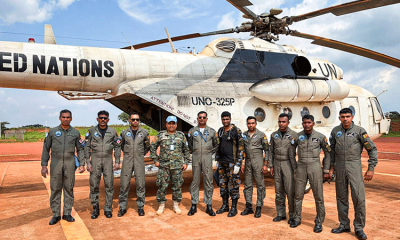
 News5 days ago
SLAF conducts successful rescue mission under UN command in Central African Republic
-
 Midweek Review7 days ago
H’tota port’s strategic status remains focal point of geopolitical scrutiny
-

 News2 days ago
AI concerned over proposed SL military deployment in Haiti
-
 News4 days ago
UNEP support pledged to strengthen Sri Lanka’s Environmental Priorities
-

 Features3 days ago
The NPP’s New Challenge: Balancing Easter Lawfare and Economic Welfare