
Editorial
When Grim Reaper rides shotgun


Monday 22nd May, 2023
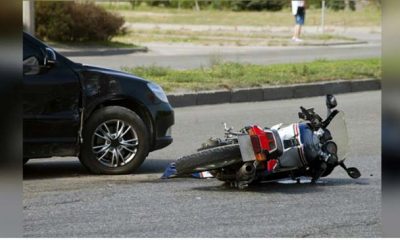
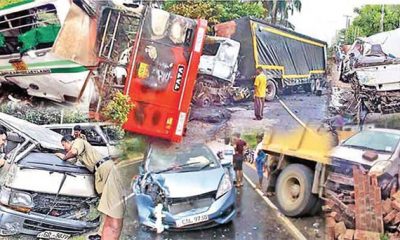
There has been a public outcry in this country, recently, over some extremely tragic deaths, the latest being that of a Sri Lankan woman in Singapore. Those incidents must be probed thoroughly and justice served expeditiously, but, curiously, there is no such public reaction to the daily loss of about seven lives in road accidents. In 2022, about 2,371 fatal road mishaps happened in Sri Lanka, snuffing out as many as 2,485 lives, according to the police. The general consensus is that the majority of these killer accidents are preventable, but nothing much has been done, all these years, to make roads safe.
It was reported yesterday that the police had, over the weekend, arrested several private bus drivers for driving under the influence of narcotics. Such action will go a long way towards ensuring road safety, for drug addiction among drivers is one of the main causes of road accidents.
It was announced some months ago that a roadside drug testing scheme would be launched, but we still see only half-hearted attempts on the part of the authorities concerned to tackle drug driving. The police are doing commendably well where random checks to nab drunk drivers are concerned, and the lack of equipment to conduct roadside drug testing may be the main reason why the problem of drug driving cannot be dealt with effectively.
Experts inform us that drugs and alcohol impair drivers’ cognitive functions, motor skills, reaction time and overall judgment, and it is not surprising that so many lives are lost in road mishaps, day in, day out. Sri Lankans are notorious for living dangerously even when they are sober. This fact is borne out by their reckless driving/riding and jaywalking; drugs and alcohol have made the roads even more dangerous. Private bus drivers and truckers are the worst culprits; they drive like bats out of hell and have become a law unto themselves. It is these asphalt cowboys, as it were, who determine the pace of vehicular traffic to all intents and purposes.
In 2021, the media quoted State Minister of Transport Dilum Amunugama as having said that about 80 percent of private bus drivers in Colombo and its suburbs were addicted to narcotics. Police Spokesman SSP Nihal Thalduwa has told the media that the highest number of road accidents are usually reported from the Western Province.
President of the Lanka Private Bus Owners’ Association (LPBOA) Gemunu Wijeratne has gone on record as saying that the majority of private bus workers are addicted to drugs. He has sought to attribute their drug addiction to occupational stress caused by long hours of work, traffic congestion, lack of parking facilities, etc. Stress may be one of the drivers of drug addiction among private bus workers, as he claims, but the fact remains that nothing can be cited in extenuation of drug driving, which endangers the lives of all road users alike.
LPBOA chief Wijeratne has welcomed the random drug testing and recent arrests, but said, in the same breath, that he wishes the police had the same high-octane performance in dealing with the progeny of wealthy, powerful individuals as well. Those who visit nightclubs, hotels, etc., and burn rubber in full view of the police must also be tested for drugs, he has said. One cannot but agree with him on this score. Private bus drivers must not be made to feel that they are being discriminated against. Roadside drug testing must be carried out on all drivers including rave party attendees. There are complaints from the residents of some parts of the Colombo city and its suburbs that drag races disturb the peace of night. It behoves the police to swoop on the culprits and have them tested for drugs and alcohol besides prosecuting them for illegal racing.
The police deserve encouragement and assistance to carry out random drug tests, which are long overdue. They should be provided with necessary resources such as equipment, training, etc., to rid the country’s roads of reckless drug addicts and dipsomaniacs behind the wheel and ensure the safety of all members of the public.






Monday 28th September, 2026
All low-enrolment schools across the country are being assessed for restructuring, according to media reports. While many of them are facing the prospect of amalgamation or closure, the performance of one such school has strengthened the argument against a blanket approach to low-enrolment schools.
Students of Panahetagala Primary School, located in the backwaters of the Ratnapura District, have demonstrated their ability to overcome challenges and achieve academic excellence. They have proved what rural students are capable of, when properly guided. Four of the eight Panahetagala Primary School students who sat this year’s Grade Five Scholarship Examination (GFSE), have scored above the Ratnapura District cut-off mark of 135; three others obtained 100 marks out of 200. The remaining candidate scored 81 marks. The school has 22 students on its roll, and five teachers including the principal. None of the GFSE candidates had the benefit of private coaching, and the credit for preparing them for the highly competitive examination should therefore go to their dedicated teachers.
One may argue that the success story of Panahetagala Primary School is the exception that proves the rule, but the challenge before the JVP-NPP government, which flaunts what its describes as a pro-poor agenda, is to devise a strategy to make the exception the rule by developing the low-enrolment schools and making them attractive to more students.
The Ceylon Teachers Union has accused the government of trying to close down low-enrolment schools across the country, and redeploy teachers currently working in them to fill vacancies elsewhere. There are 10,146 state-run schools in Sri Lanka. Of them 9,750 are under Provincial Councils and 396 are national schools. About 800 rural schools have already been closed down during the past several decades, and it is feared that many more will face the same fate in the near future.
President Anura Kumara Dissanayake, speaking in Parliament in July 2025, said 3,144 government schools had fewer than 100 students. He said some schools would have to be permanently closed, while others would have to be amalgamated. According to teachers’ trade unions and organisations dedicated to protecting universal free education, most of these low-enrolment schools are situated in rural and remote areas. This situation has been attributed to several factors, including improved public transport, which has enhanced students’ mobility and reduced their dependence on rural schools that have suffered from neglect.
The NPP’s 2024 manifesto, A Thriving Nation, A Beautiful Life, promises “a government school system for primary education within 3 km of one’s home or parents’ place of work.” One can argue that the school merger programme, which is said to be on the cards, is not inherently contrary to the NPP manifesto, which envisages a more rationalised school network. But the NPP has not sought a mandate to close down any school. Most of all, will the government be able to fulfil its three-km access commitment if it opts to close down rural low-enrolment schools?
During its second uprising in the late 1980s, the JVP coined many pithy slogans to mobilise the disadvantaged rural folk, particularly the youth, by highlighting the glaring urban bias in state resource allocation. One of them was ‘Kolombata kiri, gamata kekiri’ (‘milk for Colombo, melon for the village’). However, villages have been left with no alternative but to settle for kekiri even under the current government led by the JVP.
Students and teachers have to walk long distances, with some of them even using a makeshift ferry to cross a river, to reach Panahetagala Primary School. Buses have stopped operating on the road that leads to Panahetagala due to its dilapidated condition. Shouldn’t the incumbent government, which is spending billions of rupees on developing the metro bus service in Colombo, allocate some funds to repair the road that links Panahetagala with the main road?
President Dissanayake, in his parliamentary speech under discussion, revealed that the number of children leaving school prematurely had risen from 16,673 in 2019 to 20,759 in 2022, before virtually plateauing at 20,755 in 2024. Everything possible must be done to bring the number of school dropouts down in the shortest possible time.
A high number of school dropouts is much more than a mere statistic; it is a symptom of wider social problems. As we have pointed out in a previous comment, the state has a strong justification for bearing the cost of operating low-enrolment schools to make education easily accessible to rural children, for such expenditure helps reduce dropouts, promote educational equity, prevent social problems and build human capital across the country. The government must handle this sensitive issue with great care.

What’s this world coming to when the United Nations itself is not united? This rhetorical lament about the current state of the world crosses discerning minds when world leaders gather in New York for the UN General Assembly’s annual sessions, where threats, rhetoric and protest apparently take precedence over diplomacy expected of the civilised world.
Critics argue that US President Donald Trump regards the UN headquarters as his country’s backyard. The Trump administration has again denied visas to Palestinian Authority President Mahmoud Abbas and other senior Palestinian officials for the UN General Assembly, making this the second consecutive year of such restrictions, which have drawn criticism as a violation of the 1945 UN-US Headquarters Agreement. Trump’s boastful claims of economic growth, immigration, and other domestic issues at the UN summit were widely seen as being pitched to the American voters rather than the international community, with the US midterm elections looming.
What Trump intended for the consumption of the world, in his UN address, was basically a chilling message. He gave Iran a stark choice between a deal and annihilation. True, his threat was followed by some diplomacy. He disclosed that US and Iranian representatives had met on the sidelines of the summit, describing the meeting as “very good”. His threat however cannot be dismissed as mere rhetoric; he has already given free rein to his ‘epic fury’ and wreaked havoc on Iran. How does he intend to annihilate Iran? All the weapons used by the US so far have failed to frighten Iran into submission. Is he planning something far worse to achieve his goal?
The western world made a hue and cry in 2005, when the then Iranian President Mahmoud Ahmadinejad made a remark that was widely translated as a call to “wipe Israel off the map”. He said so in Tehran and not at a UN summit. But the western governments ignored Trump’s threat to Iran for all intents and purposes.
Aggression of the world powers runs counter to the raison d’etre of the UN, established in 1945, to replace the League of Nations, following the devastation of the Second World War, which exposed the limitations of the existing international system, principally to prevent another global conflict. UN founders sought a permanent international organisation through which countries could collectively maintain peace and security, settle disputes peacefully and prevent aggression. Trump, his allies, and their enemies have reduced the UN to a mere spectator. Their unbridled aggression makes one wonder if the world is sliding back into the League of Nations era.
The Global North’s pontification to the rest of the world about the virtues of peace, human rights, and good governance goes on ad nauseam. The US and its allies, particularly the UK, advocate for negotiations to resolve conflicts, and call for stringent action against the violators of human rights in the developing world, but when they deal with threats, perceived or real, to their security and economic and geopolitical interests, they let ballistic missiles, stealth bombers and warships do the talking with no heed for the human cost of their military onslaughts.
Perhaps, the biggest threat to global peace and the future of humankind emanates from the nuclear-armed world powers, whose ruthless competition for resources and aggression seem to reflect an ancient human propensity for violence. In Sapiens: A Brief History of Humankind, Yuval Noah Harari argues that Homo sapiens’ rise was accompanied by the disappearance of several other human species, including Neanderthals and Denisovans. He presents two possible explanations: competition for resources, which gradually displaced other populations, and direct violence when competition intensified. The fear that a fate similar to that of those unfortunate human species might befall the people in developing countries may not be totally unfounded, given the superpowers’ proclivity for violence and abililty to annihilate nations.

Saturday 26th September, 2026
The outcome of yesterday’s parliamentary vote on the 22nd Amendment (22A) to the Constitution came as no surprise. The ayes had it with a two-thirds majority. Now, the Speaker will sign the 22A bill into law posthaste, increasing the mandatory retirement ages of the judges of the Supreme Court and the Court of Appeal. However, even a special majority cannot make a bad law good.
It was speculated in some quarters that some NPP MPs would break ranks and vote against 22A. There was no such rift in the ruling party yesterday. Not that every NPP MP is well-disposed towards the controversial amendment, but it is seldom that a government MP votes against a crucial bill. There have been crossovers in previous Parliaments but they were mostly due to internal clashes and competing ambitions rather than policy issues.
Only the naïve expected 22A to be placed before the people at a referendum. The government is wary of facing elections and doing everything in its power to delay the Provincial Council elections further. It would not have proceeded with 22A if it had had the slightest doubt that there would be a referendum. President Anura Kumara Dissanayake has demonstrated a remarkable ability to make predictions about judicial decisions, much to the resentment of the Opposition. After all, he comes from the same district as Gnanakka, the go-to seeress for the leaders of the SLPP government––Anuradhapura.
Having failed to pressure the JVP-NPP government into deep-sixing 22A, the Bar Association of Sri Lanka, Opposition political parties and some civil society outfits resorted to what may be described as moral suasion. They urged the MPs to vote according to their conscience. Politicians are known to act out of expediency, which takes precedence over everything else in politics. A wag says exhorting politicians to act according to their conscience in Parliament is like expecting chastity to be practised in a house of ill-fame.
The government is crowing about the passage of 22A, but trouble is far from over for it. 22A has become a rallying point for the Opposition. The SLPP put on a good show of strength a few weeks ago in Anuradhapura, and the SJB held a successful protest on Thursday near Parliament.
The Opposition is bound to expand its protests to cover other issues as well and tap public resentment to fuel its anti-government campaign. The government will find itself in a dilemma. Adopting coercive methods to suppress dissent are counterproductive, and leniency encourages the Opposition to intensify its protests.
The government has antagonised the legal fraternity that played a pivotal role in engineering the 2024 regime change. Doctors, university teachers and other professionals who threw their weight behind the JVP/NPP, facilitating its rise to power, are also on the warpath. Farmers are in a paddy, unable to sell their produce at reasonable prices, so much so that both the Minister of Agriculture and his deputy had to skip President Dissanayake’s inaugural farmers’ rally in Polonnaruwa a few weeks ago. It is unlikely that what the government has sought to achieve through 22A politically will help it consolidate its power if it fails to deliver and grant some tangible economic relief to the public.
Meanwhile, 22A has brought about a situation where both the government and the judiciary will be under intense international scrutiny. Zimbabwe has been down that road before. The JVP/NPP did not ask for a mandate to emulate Zimbabwe, did it?

Mexico’s Pacific coast braces for Hurricane Polo

Washout against Afghanistan sends India into semi-finals

‘Still a lockdown’: Deadly floods hit Nepal tourism as peak season begins

Tharanga wins highly anticipated Asian Games gold

Tharanga on cusp of Asian Games Gold

Rain threat looms over lopsided India vs Afghanistan quarter-final

‘Dates have the highest sugar content to fight Coronavirus’

Sunday Island 27 December – Headlines

#SundayIsland 17th December – Headlines

Sunday Island – 28th March

Sunday Island Headlines – 21 March

Sunday Island – 21st February – Headlines
-

 News6 days ago
Mastermind Naufer Moulavi among 15 found guilty
-

 Midweek Review6 days ago
Thileepan’s fast unto death: An authentic narrative that many missed
-
 News7 days ago
Protest against setting up of cement factory in highly populated area near BIA
-

 Editorial7 days ago
Trouble beginning in earnest
-

 Latest News5 days ago
Showers above 100 mm are likely at some places in the Western, Sabaragamuwa, Central and North-western provinces and in Galle and Matara Districts
-
Editorial6 days ago
Big Bad Bills
-
 News7 days ago
Police may seek clarification from US
-
 News7 days ago
Govt. confident of 2/3 majority despite NPP split speculation