
Sports
When a cricket writer met the don of Bombay


Rex Clementine in Bombay
During Sri Lanka’s first Test tour of India in 1982, not following protocol when the team met former Indian President Zail Singh created quite a stir. Apparently, Board President Gamini Dissanayake was very angry. Some say that the players weren’t aware who Zail Singh was while others say they were too jaded after a long flight.
The post of Indian President is a five year term. Zahil Singh was President from 1982 to 1987. He had succeeded Neelam Sanjiva Reddy. There is a joke that for Zahil Singh’s inauguration when the photographers asked, ‘Mr. President are you ready,’ Zail Singh had replied, ‘I’m not Reddy. I’m Zahil Singh.’
Security is tight in Bombay the day before Sri Lanka’s game against India. The reason being the Chief Minister of Maharashtra Eknath Shinde is expected to be here. He is not coming here to interact with either of the teams. He is here for the unveiling of a statue of Sachin Tendulkar at the Wankhede Stadium.
Tendulkar began his Test career as a 16-year-old and it stretched for 24 long years. His batting exploits are well documented although his captaincy wasn’t spectacular. Some of Sri Lanka’s cricket highlights came when he was leading the Indian team.
During the famous 952 six declared game at RPS, Tendulkar graciously declared, ‘I haven’t seen Don Bradman, but I have seen Sanath Jayasuriya.’
The same year during the Asia Cup final, when Sri Lanka chased down India’s target with plenty to spare, Ravi Shastri at the post-match presentation asks Tendulkar what is a safe total against Sri Lanka. Tendulkar wonders around and declares, ‘Maybe 1000’.
Time was when India feared Sri Lanka like the plague. Many of their bowlers like Manoj Prabhakar and Venkatesh Prasad suffered at the hands of Jayasuriya and Aravinda de Silva.
India in fact had not beaten Sri Lanka in a World Cup fixture until 1999.
You can only reminisce about those glory days and desperately hope that good times will come back. The locals keep asking what ails Sri Lankan cricket. Someone who is really worried for Sri Lankan cricket is G. Viswanath, who has made many visits to Sri Lanka as the chief cricket correspondent of English daily The Hindu.
Many Sri Lankan players are Viswanath’s friends, and he keeps in touch with them regularly.
Viswanath is a curious reporter. Although he writes on sports alone, he keeps himself busy exploring other interesting subjects happening in the city.
Born and bred in Bombay, once in 1982 he had gone to meet Varadarajan Mudaliar, a powerful mob boss. He was adored by the locals, but the law enforcement was after him.
Viswanath had visited the underworld kingpin around lunch time. So Varadarajan requests him to come with him to feed his dogs. As they are feeding the dogs, one of his accomplices turns up to inform that two cops had come to see him. Varadarajan then tells his confidante, ‘I will feed these dogs. You go and feed those dogs.’ Apparently a reference to cops who had come to collect bribes.
There is a movie made on the life of Varadarajan Mudaliyar titled ‘Nayagan’. Leading Indian actor Kamal Hasan plays the role of Varadarajan in the film directed by Mani Ratnam, and it goes onto win several national awards.
To this date, Varadarajan is adored in Bombay by a certain section of the public for he looked after their interests. It’s hard to think that someone who was born and raised in south India will go onto become the leading don of India’s financial capital. And to this date, ‘Nayagan’ remains the best movie of Kamal Hasan.
As for Viswanath, he is still very active writing some fine stories on cricket. If you get to know him, he will kill you with his love. However, you need to make sure that you don’t go on unscheduled trips like the visit to Varadarajan.
The press box in Bombay is named after Bal Thackeray, a local politician and a right-wing Hindu nationalist. He had nothing to do with cricket and that’s why you keep telling the locals that the Bombay press box should be named after Viswanath and not after a politician.
For the World Cup, the Indian board had provided each cricket ground a donation to refurbish facilities at venues. Bombay looks fabulous but the problem with Indian grounds is that they don’t maintain these facilities. That’s where Sri Lanka is far ahead of India as our grounds are very well maintained.
For each match that the grounds host during the World Cup, the ICC gives US$ 700,000. So, if a venue hosts five games, they are walking away with a cool US$ 3.5 million.


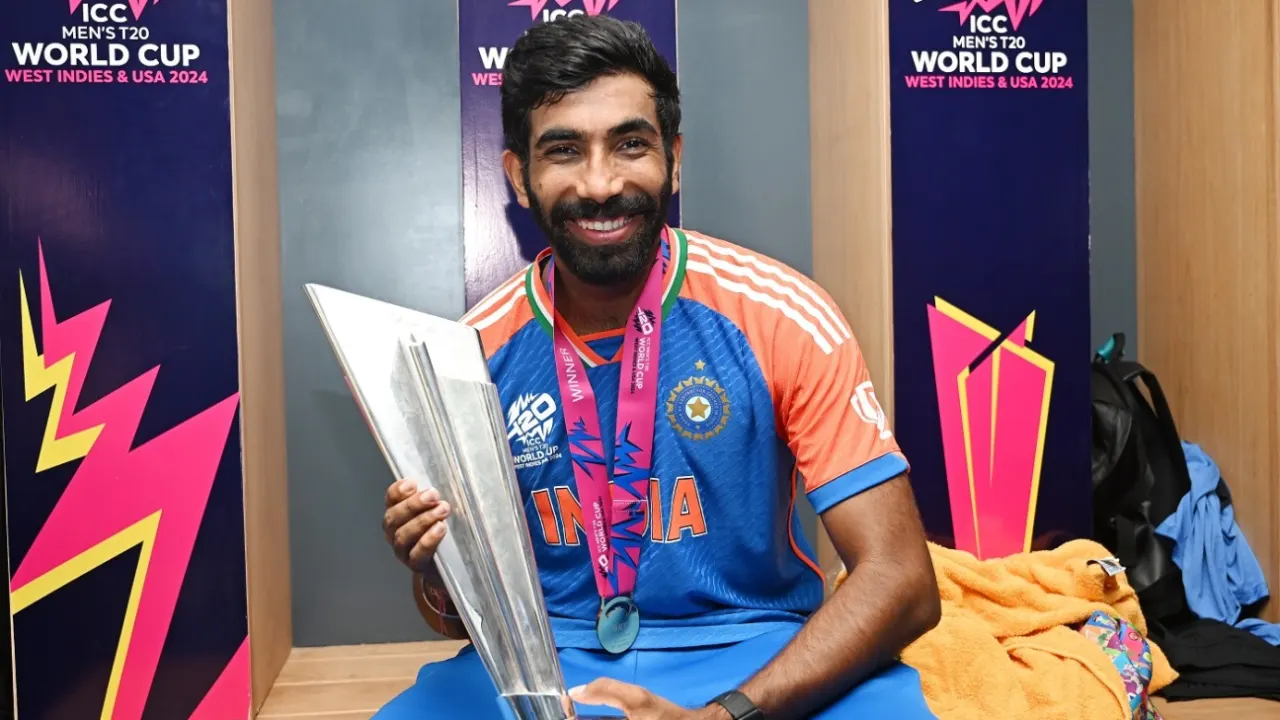
Tickets for the 2026 T20 World Cup will go on sale at 18.45 IST and Sri Lanka time (13.15 GMT) on December 11, with the tournament slated to begin on February 7 in India and Sri Lanka.
Prices for phase one of the ticket sales start at INR 100 (USD 1.1) at some venues in India and LRK 1000 (USD 3.2), the ICC said on Thursday. The dates for phase two of the ticket sales will be announced soon. Tickets can be purchased at tickets.cricketworldcup.com.
“Phase I of ticket sales is an important milestone in our journey towards delivering the most accessible and global ICC event ever staged,” ICC CEO Sanjog Gupta said. “Our vision for the ICC Men’s T20 World Cup 2026 is clear: every fan, regardless of background, geography or financial means, should have the chance to access an in-stadia experience of world-class marquee cricket.
“With tickets starting from just INR 100 and LKR1000, we are putting affordability at the centre of our strategy. This is about opening the gates wide and inviting millions to be part of a global celebration of cricket, not as spectators from afar, but as active participants in the energy, emotion and magic that only a stadium can offer.”
The 2026 T20 World Cup will be contested by 20 teams and comprises 55 matches. The games start at 11am (0530 GMT), 3pm (0930 GMT) and 7pm IST (1330 GMT). The format for the tournament is the same as the previous edition in 2024, where the teams were divided into five groups of four each.
The first-round groups are as follows:
Group A: India, Pakistan, USA, Netherlands, Namibia
Group B: Sri Lanka, Australia, Ireland, Zimbabwe, Oman
Group C: England, West Indies, Bangladesh, Nepal, Italy
Group D: New Zealand, South Africa, Afghanistan, Canada, UAE
The top two teams from each of the groups progress to a Super Eight phase, where they will be further divided into two groups of four each.
The Super Eight groups are as follows, assuming these teams qualify from the first round; if another team qualifies, they will take the place of the team from their group that failed to make it:
Super Eight Group 1: X1 (India), X2 (Australia), X3 (West Indies), X4 (South Africa)
Super Eight Group 2: Y1 (England), Y2 (New Zealand), Y3 (Pakistan), Y4 (Sri Lanka)
Each team will play the other three in their Super Eight group, with the top two from each group qualifying for the semi-finals. The two semi-finals are in Kolkata – or Colombo if Pakistan qualify – on March 4, and Mumbai on March 5. The final of the tournament will be played in Ahmedabad on March 8 – if Pakistan qualify, it will be held in Colombo.
[Cricinfo]
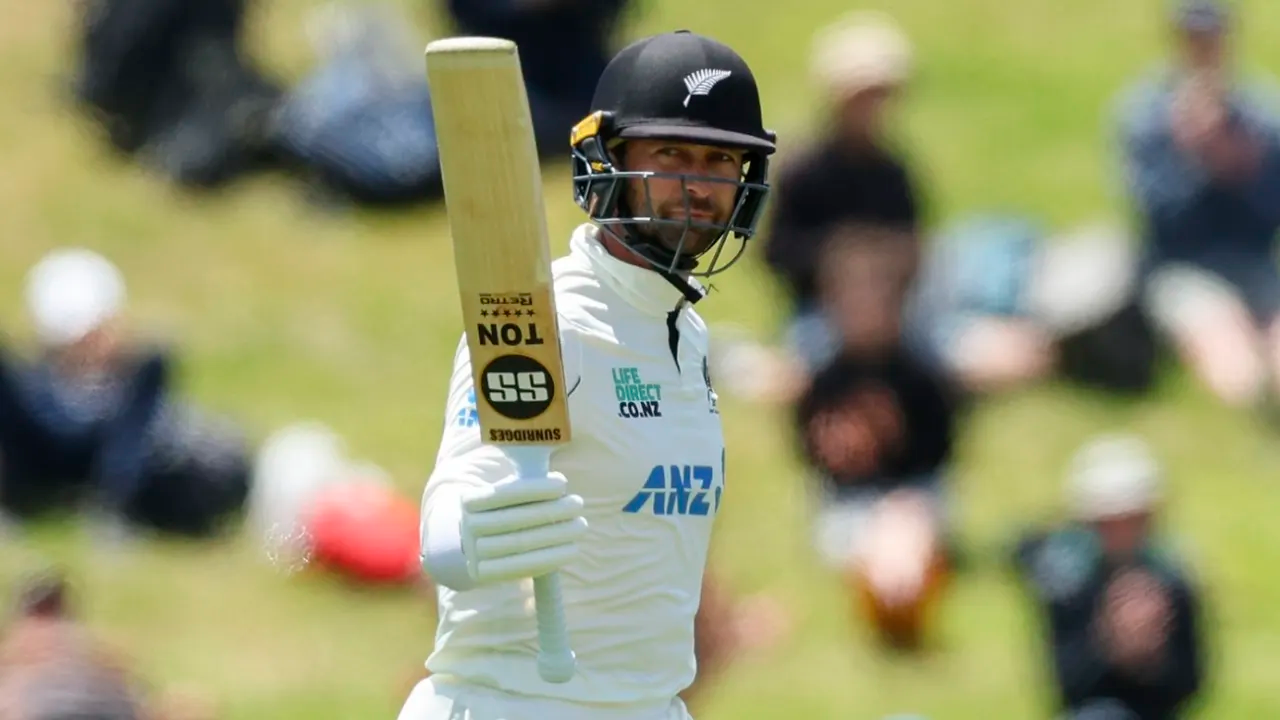
Despite a bright bowling performance from the West Indies seamers, half-centuries from New Zealand’s Devon Conway and Mitchell hay extended the hosts’ advantage after an absorbing second day of the Wellington Test. New Zealand secured a 73-run first-innings lead before a double-wicket burst from their quicks left West Indies still 41 behind with eight wickets in hand.
West Indies produced bursts of quality with the ball to keep pegging New Zealand back, and several home batters contributed to their own dismissals with loose shots. But the visitors also offered enough scoring opportunities for Conway and Hay to make valuable inroads.
Conway’s 60 – his first fifty against West Indies and 13th overall – anchored one end, while debutant Hay struck an enterprising 61 from No. 6. Their efforts allowed New Zealand to declare at 278 for 9, with the injured Blair Tickner not batting.
With the relatively new ball, Kemar Roach, Jayden Seales, Ojay Shields and Anderson Phillip consistently challenged the batters as the ball swung both ways and occasionally jagged off the surface. Conway, however, punished the loose deliveries, hitting eight fours – mostly cuts and flicks – to keep New Zealand moving.
From the non-striker’s end, he saw Tom Latham (11) lose his off stump to a nip-backer from Roach from around the wicket, before watching Kane Williamson (37) have his off stump pegged back by an Anderson Phillip delivery that squared him up. After lunch, Rachin Ravindra – who made 176 in Christchurch – was caught behind off Roach while chasing a wide one. Conway himself was then caught down the leg side off a poor Justin Greaves delivery, thanks to a superb diving take from Tevin Imlach. At that stage, New Zealand seemed to be wobbling at 117 for 4.
A fifth-wicket stand of 73 between Daryl Mitchell (25) and Hay – the latter playing in place of the injured Tom Blundell – brought New Zealand closer to West Indies’ first-innings score of 205. Mitchell was conservative, while Hay leaned on his white-ball instincts to score his runs, producing strong cuts through the off side and, when tested with short balls, pulling confidently over the leg side.
Mitchell, like Conway, was eventually strangled down the leg side off Phillip. Hay later fell to the short-ball tactic: after striking back-to-back fours behind square leg, he miscued a pull off Shields straight to Roach at deep-backward square and walked back bitterly disappointed. At 213 for 6, New Zealand then leaned on Glenn Phillips (18) and the lower order to extend their lead.
West Indies continued to pepper Phillips with short balls in a cat-and-mouse exchange that brought body blows and top-edges over the keeper. Seeking a change, captain Roston Chase turned to spin for the first time in the innings, and needed only four deliveries to tempt Phillips into a slog that failed to clear deep midwicket.
Zak Foulkes then batted 43 balls and frustrated West Indies with deflections off the seamers’ through the gully region on his way to an unbeaten 23. Jacob Duffy added further runs with boundaries to long-off and long-on, and No. 10 Michael Rae joined a rare group of batters to begin their Test careers with five runs off an overthrow boundary. Rae reached 13 before the expensive Seales finally claimed his first wicket of the match, knocking back the debutant’s leg stump.
New Zealand’s batting may have been patchy, but their bowlers restored control with a sharp ten-over burst late in the day. John Campbell fell in the seventh over, beaten by a Rae delivery that zipped in to hit off stump. Next over, nightwatcher Phillip initially survived a DRS review for caught behind off Duffy, but a second look confirmed he was lbw instead. Brandon King (15*) and Kavem Hodge (3*) saw out the final few minutes, but West Indies still face a steep challenge when play resumes on Friday.
Brief scores:
West Indies 205 and 32 for 2 (Brandon King 15*; Michael Rae 1-4, Jacob Duffy 1-8) trail New Zealand 278 for 9 dec (Mitchell Hay 61, Devon Conway 60; Andeson Phillip 3-70) by 41 runs
[Cricinfo]
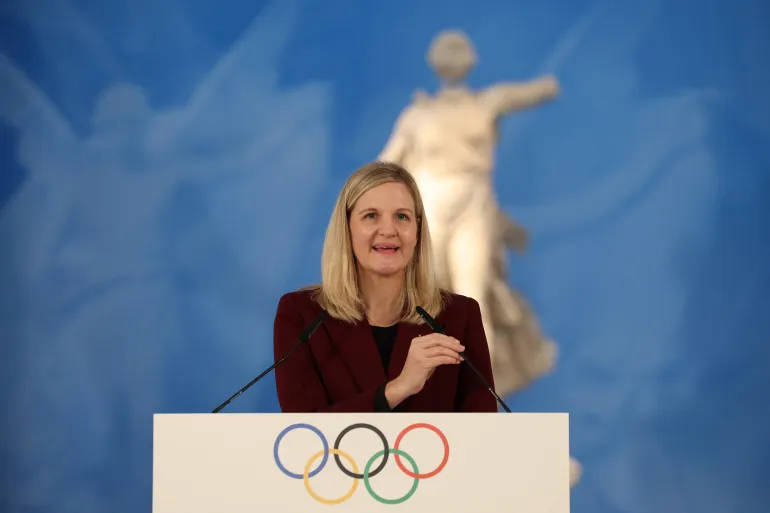
The International Olympic Committee says it will announce eligibility criteria for transgender athletes early next year, after months of deliberation as it seeks to find a consensus on how to protect the female category.
The issue has been a source of controversy, with no universal rule in place for the participation of transgender athletes at the Olympic Games.
The IOC, under its new President Kirsty Coventry, did a U-turn in June, deciding to take the lead in setting eligibility criteria for Olympic participation, having previously handed responsibility to the individual sports federations, leading to a confusing patchwork of different approaches.
In September, Coventry set up the “Protection of the Female Category” working group, made up of experts as well as representatives of international federations, to look into how best to protect the female category in sports.
“We will find ways to find a consensus that has all aspects covered,” Coventry told a press conference on Wednesday following an IOC executive board meeting. “Maybe it is not the easiest thing to do, but we will try our best, so when we talk about the female category, we are protecting the female category.”
Coventry said a decision would come in the first months of 2026.
“We want to make sure we have spoken to all stakeholders, taken adequate time to cross the Ts and dot the Is,” she said.
“The group is working extremely well. I don’t want to try to constrain the working group by saying they need to have a specific deadline, but I am hopeful in the next couple of months and definitely within the first quarter of next year we will have a clear decision and way forward, which I think we are all looking forward to,” said Coventry, a former Olympic swimming champion.
Before Coventry’s decision in June, the IOC had long refused to apply any universal rule on transgender participation for the Games, instructing international federations in 2021 to come up with their own guidelines. Under current rules, still in force, transgender athletes are eligible to take part in the Olympics.
Only a handful of openly transgender athletes have taken part in the Games. New Zealand’s Laurel Hubbard became the first openly transgender athlete to compete in a different gender category to that assigned at birth when the weightlifter took part in the Tokyo Olympics in 2021.
Currently, some international federations have rules in place, but others have not yet reached that stage.
US President Donald Trump has banned transgender athletes from competing in sports in schools in the United States, which civil society groups say infringes on the rights of trans people, as Los Angeles prepares to host the 2028 Summer Olympics.
Trump, who signed the “Keeping Men Out of Women’s Sports” order in February, has said he would not allow transgender athletes to compete at the LA Games.
[Aljazeera]

President’s Fund supports renovation of Wijewardane Children’s Home in Panadura

Level III landslide early warnings issued to the Districts of Kandy, Kegalle, Kurunegala and Matale extended

Bulgarian PM and government resign after mass protests

Austria bans headscarves in schools for under-14s

Sri Lanka grateful for the support extended by the United States and other friendly nations following the recent disaster – President

Malwatta, Asgiriya deputy registrars and Diyawadana Nilame meet President

‘Dates have the highest sugar content to fight Coronavirus’

Sunday Island 27 December – Headlines

#SundayIsland 17th December – Headlines

Sunday Island – 28th March

Sunday Island Headlines – 21 March

Sunday Island – 21st February – Headlines
-

 News4 days ago
Over 35,000 drug offenders nabbed in 36 days
-
 Features2 days ago
Finally, Mahinda Yapa sets the record straight
-
 News3 days ago
Cyclone Ditwah leaves Sri Lanka’s biodiversity in ruins: Top scientist warns of unseen ecological disaster
-

 Business6 days ago
LOLC Finance Factoring powers business growth
-

 News6 days ago
CPC delegation meets JVP for talks on disaster response
-
 News6 days ago
A 6th Year Accolade: The Eternal Opulence of My Fair Lady
-

 News4 days ago
Rising water level in Malwathu Oya triggers alert in Thanthirimale
-
 Features5 days ago
The Catastrophic Impact of Tropical Cyclone Ditwah on Sri Lanka: