
Features
What Swirls Beneath Research Activity of Chinese Ships in the Indian Ocean?

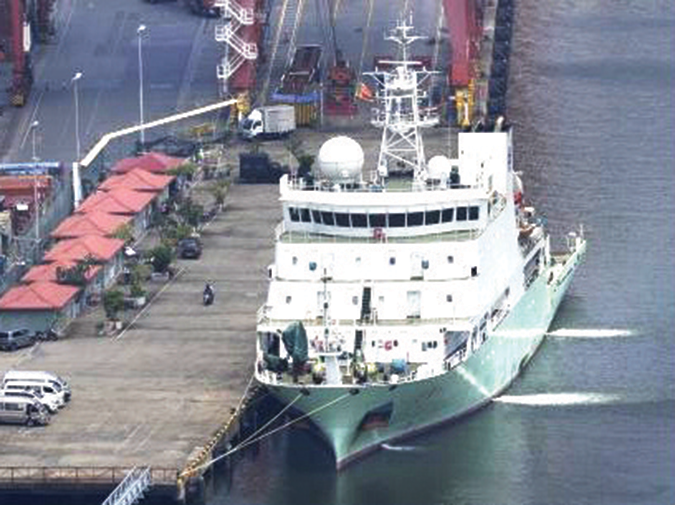
Collection of oceanic data will provide China with information about seabed resources and also help it prepare for submarine warfare.
by Rathindra Kuruwita
On October 31, Sri Lankan and Chinese researchers on board the Chinese research vessel Shi Yan 6, which recently docked at Colombo port in Sri Lanka, began two days of “marine scientific” research off the Sri Lankan coast.
The docking of the Shi Yan 6 a few days earlier had stirred strong responses from India and the United States. The same thing happened last year when another Chinese ship, the Yuan Wang 5, had docked at Sri Lanka’s Hambantota port.
Sri Lankan Foreign Minister Mohamed Ali Sabry acknowledged that the Sri Lankan government had come under pressure from India and other parties to halt the arrival of the Chinese research vessel. He emphasized the complexity of the situation due to geopolitics and the need to be prepared to handle these pressures while maintaining good relations with all involved parties.
Over the past 15 years, several Chinese research vessels and warships have visited Sri Lankan ports with limited media attention. It is only over the last couple of years that Chinese vessels arriving in Sri Lanka have received heightened scrutiny.
According to Dr. Nilanthi Samaranayake, a visiting expert at the United States Institute of Peace, the ongoing border conflict between China and India since 2020 has increased New Delhi’s concerns about China’s presence in the Indian Ocean. Recent visits of Chinese vessels to Lankan ports have garnered more attention, as they are closely monitored by the Indian Navy.
“The Chinese ships that have visited over the past year are different types with different missions and are closely tracked by the Indian Navy. The persistent border conflict between China and India since 2020 has elevated New Delhi’s threat perceptions of China’s presence in the Indian Ocean. This factor, combined with greater access to ship tracking data, has resulted in a situation where every visiting Chinese ship is likely to receive media attention for the foreseeable future,” Samaranayake said.
For most of the 20th century, the Indian Ocean has, at most, held secondary importance in the strategic considerations of Chinese leaders. China did assign a certain level of importance to India, primarily due to the longstanding border dispute that led to a short but significant war in 1962, India’s development of long-range missiles, and its acquisition of nuclear capabilities. For a long time, China lacked the naval capacity to project power in the Indian Ocean Region (IOR) and had not clearly articulated such ambitions in its public strategic documents. Additionally, the necessary military assets were not readily available.
However, significant changes have taken place in recent decades.
Increasing Chinese engagement in the IOR has raised fears among American and Indian strategists that China’s growing naval presence, together with control of strategically located ports in the region, might provide Beijing with significant military advantages far from its shores.
Indian observers are nervously eyeing China’s increasingly sophisticated military capabilities and noted its gradually expanding mission sets that extend beyond the waters of the western Pacific. American strategists, increasingly focused on a multifront competition with a rising China, are warning the world about China’s so-called debt-trap diplomacy. Both India and the United States insist that small countries within the region will not be able to navigate China’s political influence while retaining their freedom of maneuver.
From Indian and U.S. perspectives, these concerns are entirely reasonable. International relations scholars from the realist school had long predicted that India would be an important pillar in the balancing coalition that the United States would try to establish to contain China. And yet, most conclusions are derived not from present-day assessments of China’s influence, access, or capabilities in the region — all of which remain modest — but from future projections of its role in the wider IOR.
According to a 2020 Brookings Institution report, there are five “meta-mission objectives” that the People’s Liberation Army (PLA) might pursue in principle, and to varying degrees is already pursuing, roughly ordered from those that are the most notionally non-threatening to those that are the most ambitious and potentially troubling to the United States, and to its close partners in the region such as India.
They are: 1) conducting non-combat activities focused on protecting Chinese citizens and investments, and bolstering China’s soft power influence; 2) undertaking counterterrorism activities, unilaterally or with partners, against organizations that threaten China; 3) collecting intelligence in support of operational requirements, and against key adversaries; 4) supporting efforts aimed at coercive diplomacy toward small countries in the region; and 5) enabling effective operations in a conflict environment, namely the ability to deter, mitigate, or terminate a state-sponsored interdiction of trade bound for China, and to meaningfully hold at risk U.S. or Indian assets in the event of a wider conflict.
Of these, the third meta-mission objective seems to have caught the imagination of policymakers, strategists, and media outlets. Researchers affiliated with U.S. defense institutions have been raising concerns, dating back at least to 2017, regarding the potential significant implications of these vessels for U.S. national security.
In a 2018 report authored by Ryan D. Martinson and Peter A. Dutton of the U.S. Naval War College, it was noted that approximately 5 to 10 Chinese scientific research vessels were operating outside of Chinese jurisdictional waters, particularly in areas of the Indo-Pacific deemed strategically important. The authors also highlighted that most of the Chinese research vessels commissioned since 2012 are multifunctional research platforms equipped to conduct a wide array of research activities. These vessels primarily serve as hosts for various instruments, sensors, and equipment used for the collection of oceanic and atmospheric data.
The authors claim that certain sensors are affixed to these research vessels. For instance, many of these ships feature “science masts” at the bow, designed for the collection of meteorological data. Additionally, all these vessels are equipped with various sensors attached to their hulls. More modern vessels, such as the Kexue, are outfitted with “gondolas,” retractable structures located beneath the ship to prevent the interference of bubbles with data measurements.
Acoustic Doppler Current Profilers (ADCPs) are employed to send sound waves into the water column, with the returning echoes providing information about the direction and speed of undersea currents. Multi-beam echo sounders utilize sound pulses to achieve precise measurements of ocean depth, which can then be used to ascertain the contours, or bathymetry, of the seabed.
Some of these sensors are towed behind the ship. For example, the Chinese Academy of Science (CAS) research vessel Shiyan 1 boasts a twin-hull (SWATH) design, ensuring improved stability when towing its acoustic array. Several of these vessels can tow streamers utilized for seismic surveys, directing sound waves into the seabed. The strength and pattern of the echoes that return are then used to determine the geological composition of the subsoil, including the potential presence of oil and gas deposits.
China’s deployment of oceanographic research ships and related platforms in distant ocean areas is part of a massive program to collect oceanic data. What is the ultimate purpose of this collection effort?
Asanga Abeyagoonasekera, a senior fellow at The Millennium Project in the United States, told The Diplomat that the Shi Yan 6 research vessel specializes in geophysical exploration, a capability that holds potential implications for submarine warfare.
Abeyagoonasekera raised two primary concerns: First, the apprehension that China could access critical data regarding seabed resources in the Indian Ocean, particularly in the context of intensified global competition for minerals and energy resources. Second, he highlighted the collection of ocean and seabed data by vessels like the Shi Yan 6, which could be used in the future for strategic naval planning, especially relating to submarine warfare.
These concerns are amplified by the perception that Sri Lankan President Ranil Wickremesinghe, once seen as a friend of India and the West, has moved closer to China, as evident in recent agreements such as the one with Huawei to digitize Sri Lankan schools, a deal that was rejected during Maithripala Sirisena’s presidency.
This shift in Sri Lanka’s foreign policy is causing concern in India, Abeyagoonasekera pointed out.
Although the era of unipolarity has passed, the nature of the international system dictates that the United States will not relinquish its dominant position in Asia without contesting China, the rising power. It has formed the Quad alliance to counter China.
From the realist lens, Sri Lanka’s reassurances may not fully alleviate the suspicions harbored by the containment alliance regarding the country’s relationship with China. However, by conducting its activities with China in a more transparent manner, Sri Lanka can potentially persuade at least some sections of the containment alliance that its ties with China do not pose an immediate threat.
Samaranayake suggests that given its strategic location along the sea lanes of the Indian Ocean and its historical practice of allowing ship visits from extra-regional powers, Sri Lanka should promptly disclose the extensively discussed Standard Operating Procedure for foreign vessels entering Sri Lankan waters.










SERIES: THE GREAT DIGITAL RETHINK: PART I OF V
The Great Digital Bet
 Cast your mind back to the late 1990s. Technology evangelists, in government, in schools, in Silicon Valley boardrooms, were making a very confident prediction: the classroom of the future would be digital, and that future was essentially already here. Wire the schools. Buy the computers. Train the teachers to press the right buttons. And stand back as a generation of turbo-charged, digitally-empowered learners leapfrogs every educational problem ever known to humanity.
It was, to be fair, an intoxicating idea. Who wouldn’t want to modernise education? Who could argue against progress? And so governments around the world, rich and poor, north and south, opened their wallets and signed their contracts. Phase One of the Great Digital Experiment had begun, and very few people were allowed to ask awkward questions.
From Computer Labs to Pocket Supercomputers
Through the 2000s, the experiment scaled up. We moved from shared computer labs to 1:1 device programmes, a laptop or tablet for every child, like some kind of annual prize-giving that never ended. Vendors introduced the irresistibly catchy notion of ‘digital natives,’ a generation supposedly born knowing how to swipe, and, therefore, desperately in need of classrooms that matched their wired-up lives. And, gradually, quietly, commercial platforms began mediating almost everything that happened between a teacher and a student.
The research, even then, was sending mixed signals. OECD data showed that more personal screen time was not automatically producing better learners. Students who used computers heavily in school were not streaking ahead in reading or maths. But these inconvenient findings were absorbed into a simple narrative: the problem was not the technology, it was how teachers were using it. More training. Better platforms. Upgraded hardware. The answer, invariably, was more.
‘The pen is mightier than the keyboard’,
a slogan that turned a psychology study into a revolution in educational policy.
Then the Pandemic Happened
And then came COVID-19, and suddenly every school in the world was forced to discover whether digital education actually worked when it had no analogue alternative. The answer, for most children, was: not very well. Schools closed, screens opened, and learning largely ground to a halt, not because the technology failed, but because education, it turned out, is stubbornly, irreducibly human. What worked was teachers who knew their students, relationships built over time, the unquantifiable texture of a real classroom. A Zoom rectangle, however crisp the resolution, is not a substitute.
The pandemic accelerated digitalisation to a degree nobody had planned for and exposed its limits simultaneously. UNESCO’s own global monitoring report, not exactly a hotbed of anti-technology radicalism, sounded the alarm in 2023, issuing what amounted to a polite institutional apology: technology in education must be a tool that serves learners, not an end in itself. Translation: we may have overdone it.
The Evidence Catches Up
The science, meanwhile, had been accumulating quietly. A widely cited study showed that students who take notes by hand retain and understand information better than those typing on laptops, not because handwriting is some mystical ancient craft, but because the physical slowness forces you to process, summarise and think, while typing tempts you into verbatim transcription. Your fingers race across the keyboard and your brain mostly stays home.
At the scale of entire school systems, OECD analysis of PISA 2022 results, which showed historic declines in reading and mathematics across member countries, drew a striking curve: moderate use of digital devices is associated with better outcomes, but heavy use, especially for leisure during school time, correlates with lower performance. Not a little lower. Substantially lower. And this held true even after accounting for students’ socioeconomic backgrounds. In other words, digital distraction is an equal-opportunity problem.
PISA 2022 also produced some of the most dismal reading and maths scores seen in decades across wealthy nations. Was technology entirely to blame? Almost certainly not. But policymakers looking for something tangible to point at, and something they could actually change before the next election, had found their answer.
The Revolt of the Sensible
Finland, long the world’s favourite education success story, passed legislation in 2025 restricting mobile phone use in schools. Phones are now generally prohibited during lessons unless a teacher grants specific permission. Sweden went further still, announcing a full national ban, phones collected at the start of the school day and returned at dismissal, to take effect in 2026. The Swedes had already begun quietly rolling back their earlier enthusiasm for digital devices in preschools, reintroducing books and handwriting after noticing that children’s reading comprehension was suffering. Australia’s Queensland state had already launched its ‘away for the day’ policy, extending the ban to break times as well as lessons. We do not yet know how other wealthy, technologically advanced countries will respond to this challenge, but they are undoubtedly watching the pioneers of de-digitalisation with close attention.
These are not technophobic, backwards-looking nations. Finland and Sweden sit at the very top of every global education ranking. They have the infrastructure, the teacher quality and the research capacity to make considered decisions. What they have decided, after three decades of enthusiastic investment in digital education, is that smartphones in the hands of children during school hours are doing more harm than good. That is a significant statement from people who know what they are talking about.
The Two-Speed World
Here is where things become genuinely uncomfortable for the international education community. While many rich countries like Finland, Sweden and Australia are scaling back, vast swathes of the world are still scaling up. Across parts of South Asia, Africa and Latin America, and in pockets of the Global North that never quite caught up, governments are signing major contracts for tablet programmes and AI tutoring tools. They are, in good faith, doing what wealthy countries told them to do 30 years ago: invest in technology and watch the learning happen.
The people selling them these systems are not pointing to the Nordic retreat.
The multilateral organisations and development banks financing their ed-tech purchases have been slow to update their models. And so the world is now running two parallel education experiments simultaneously:
some rich countries are de-digitalising, while everyone else is still trying to digitalise in the first place. The disparity is not merely ironic, it raises serious questions about who sets the agenda for global education reform, and whose children bear the cost of getting it wrong. While Finland retreats from the classroom screen, others are still signing the contracts that will fill theirs.
What This Series Is About
Over the next four articles, this column will trace this story across every level of education, from primary classrooms where six-year-olds are learning cursive again in Stockholm, to universities where academics are requiring handwritten examinations partly to outwit AI essay-generators. We will look at the evidence honestly, without either the breathless optimism that launched the digital revolution or the nostalgic panic now driving some of the backlash.
We will also ask the question that international education policy rarely pauses to ask: when the wealthy world discovers that an experiment has not gone quite as planned, who bears the cost of correction, and who is still being sold the original experiment at full price?
De-digitalisation is not a confession. It is, at best, a mid-course correction by systems with the luxury of one. The real question is what we owe the rest of the world, which hasn’t had that luxury yet.
SERIES ROADMAP
Part I: From Ed-Tech Enthusiasm to De-Digitalisation (this article) | Part II: Phones, Pens & Early Literacy in Primary Schools | Part III: Attention, Algorithms & Adolescents in Secondary Education | Part IV: Universities, AI & the Return of the Handwritten Exam | Part V: A Critical Theory of Educational De-Digitalisation
(The writer, a senior Chartered Accountant and professional banker, is Professor at SLIIT, Malabe. The views and opinions expressed in this article are personal.)

The escalating conflict in the Middle East is of such magnitude, with loss of life, destruction of cities, and global energy shortages, that it is diverting attention worldwide and in Sri Lanka, from other serious problems. Barely four months ago Sri Lanka experienced a cyclone of epic proportions that caused torrential rains, accompanied by floods and landslides. The immediate displacement exceeded one million people, though the number of deaths was about 640, with around 200 others reported missing. The visual images of entire towns and villages being inundated, with some swept away by floodwaters, evoked an overwhelming humanitarian response from the general population.
When the crisis of displacement was at its height there was a concerted public response. People set up emergency kitchens and volunteer clean up teams fanned out to make flooded homes inhabitable again. Religious institutions, civil society organisations and local communities worked together to assist the displaced. For a brief period the country witnessed a powerful demonstration of social solidarity. The scale of the devastation prompted the government to offer generous aid packages. These included assistance for the rebuilding of damaged houses, support for building new houses, grants for clean up operations and rent payments to displaced families. Welfare centres were also set up for those unable to find temporary housing.
The government also appointed a Presidential Task Force to lead post-cyclone rebuilding efforts. The mandate of the Task Force is to coordinate post-disaster response mechanisms, streamline institutional efforts and ensure the effective implementation of rebuilding programmes in the aftermath of the cyclone. The body comprises a high-level team, led by the Prime Minister, and including cabinet ministers, deputy ministers, provincial-level officials, senior public servants, representing key state institutions, and civil society representatives. It was envisaged that the Task Force would function as the central coordinating authority, working with government agencies and other stakeholders to accelerate recovery initiatives and restore essential services in affected regions.
Demotivated Service
However, four months later a visit to one of the worst of the cyclone affected areas to meet with affected families from five villages revealed that they remained stranded and in a state of limbo. Most of these people had suffered terribly from the cyclone. Some had lost their homes. A few had lost family members. Many had been informed that the land on which they lived had become unsafe and that they would need to relocate. Most of them had received the promised money for clean up and some had received rent payments for two months. However, little had happened beyond this. The longer term process of rebuilding houses, securing land and restoring livelihoods has barely begun. As a result, families who had already endured the trauma of disaster, now face prolonged uncertainty about their future. It seems that once again the promises made by the political leadership has not reached the ground.
A government officer explained that the public service was highly demotivated. According to him, many officials felt that they had too much work piled upon them with too little resources to do much about it. They also believed that they were underpaid for the work they were expected to carry out. In fact, there had even been a call by public officials specially assigned to cyclone relief work to go on strike due to complaints about their conditions of work. This government official appreciated the government leadership’s commitment to non corruption. But he noted the irony that this had also contributed to a demotivation of the public service. This was on the unjustifiable basis that approving and implementing projects more quickly requires an incentive system.
Whether or not this explanation fully captures the situation, it points to an issue that the government needs to address. Disaster recovery requires a proactive public administration. Officials need to reach out to affected communities, provide clear information and help them navigate the complex procedures required to access assistance. At the consultation with cyclone victims this was precisely the concern that people raised. They said that government officers were not proactive in reaching out to them. Many felt they had little engagement with the state and that the government officers did not come to them. This suggests that the government system at the community level could be supported by non-governmental organisations that have the capacity and experience of working with communities at the grassroots.
In situations such as this the government needs to think about ways of motivating public officials to do more rather than less. It needs to identify legitimate incentives that reward initiative and performance. These could include special allowances for those working in disaster affected areas, recognition and promotion for officers who successfully complete relief and reconstruction work, and the provision of additional staff and logistical support so that the workload is manageable. Clear targets and deadlines, with support from the non-governmental sector, can also encourage officials to act more proactively. When government officers feel supported and recognised for the extra effort required, they are more likely to engage actively with affected communities and ensure that assistance reaches those who need it most.
Political Solutions
Under the prevailing circumstances, however, the cyclone victims do not know what to do. The government needs to act on this without further delay. Government policy states that families can receive financial assistance of up to Rs 5 million to build new houses if they have identified the land on which they wish to build. But there is little freehold land available in many of the affected areas. As a result, people cannot show government officials the land they plan to buy and, therefore, cannot access the government’s promised funds. The government needs to address this issue by providing a list of available places for resettlement, both within and outside the area they live in. However, another finding at the meeting was that many cyclone victims whose lands have been declared unsafe do not wish to leave them. Even those who have been told that their land is unstable feel more comfortable remaining where they have lived for many years. Relocating to an unfamiliar area is not an easy decision.
Another problem the victims face is the difficulty of obtaining the documents necessary to receive compensation. Families with missing members cannot prove that their loved ones are no longer alive. Without official confirmation they cannot access property rights or benefits that would normally pass to surviving family members. These are problems that Sri Lanka has faced before in the context of the three decade long internal war. It has set up new legal mechanisms such as the provision of certificates of absence validated by the Office on Missing Persons (OMP) in place of death certificates when individuals remain missing for long periods. The government also needs to be sensitive to the fact that people who are farmers cannot be settled anywhere. Farming is not possible in every location. Access to suitable land and water is essential if farmers are to rebuild their livelihoods. Relocation programmes that fail to take these realities into account risk creating new psychological and economic hardships.
The message from the consultation with cyclone victims is that the government needs to talk more and engage more directly with affected communities. At the same time the political leadership at the highest levels need to resolve the problems that government officers on the ground cannot solve. Issues relating to land availability, legal documentation and livelihood restoration require policy decisions at higher levels. The challenge to the government to address these issues in the context of the Iran war and possible global catastrophe will require a special commitment. Demonstrating that Sri Lanka is a society that considers the wellbeing of all its citizens to be a priority will require not only financial assistance but also a motivated public service and proactive political leadership that reaches out to those still waiting to rebuild their lives.
by Jehan Perera

 A recent panel discussion at the University of Peradeniya examined the implications of the Supreme Court’s judgement on ragging, in which the Court recognised that preventing ragging requires not only criminal penalties imposed after an incident occurs but also systems and processes within universities that enable victims to speak up and receive support. Bringing together perspectives from law, university administration, psychology and students, the discussion sought to understand why ragging continues to persist in Sri Lankan universities despite the existence of legal prohibitions. While the discussion covered legal and institutional dimensions, one theme emerged clearly: addressing ragging requires more than laws and disciplinary rules. It requires institutions that are capable of supporting victims.
Sri Lanka enacted the Prohibition of Ragging and Other Forms of Violence in Educational Institutions Act No. 20 of 1998 following several tragic incidents in universities, during the 1990s. Among the most widely remembered is the death of engineering student S. Varapragash at the University of Peradeniya in 1997. Incidents such as this shocked the country and revealed the consequences of allowing violent forms of student hierarchy to persist. The 1998 Act marked an important legal intervention by recognising ragging as a criminal offence. The law introduced severe penalties for individuals found guilty of engaging in ragging or other forms of violence in educational institutions, including fines and imprisonment.
Despite the existence of this law for nearly three decades, prosecutions under the Act have been extremely rare. Incidents continue to surface across universities although most are not reported. The incidents that do reach university administrations are dealt with internally through disciplinary procedures rather than through the criminal justice system. This suggests that the problem does not lie solely in the absence of legal provisions but also in the ability of victims to come forward and pursue complaints.
The tragic reminders; the cases of Varapragash and Pasindu Hirushan
Varapragash, a first-year engineering student at the University of Peradeniya, was forced by senior students to perform extreme physical exercises as part of ragging, resulting in severe internal injuries and acute renal failure that ultimately led to his death. In 2022, the courts upheld the conviction of one of the perpetrators for abduction and murder. The case illustrates not only the brutality of ragging but also how long and difficult the path to justice can be for victims and their families. Even when victims speak about their experiences, they may not always disclose the full extent of what they have endured. In the case of Varapragash, the judgement records that the victim told his father that he was asked to do dips and sit-ups. Varapragash’s father had testified that it appeared his son was not revealing the exact details of what he had to endure due to shame.
More than two decades after the death of Varapragash, the tragedy of ragging continues. The 2025 Supreme Court judgement arose from the case of Pasindu Hirushan, a 21-year-old student of the University of Sri Jayewardenepura, who sustained devastating head injuries at a fresher’s party, in March 2020, after a tyre sent down the stairs by senior students struck him. He became immobile, was placed on life support, and returned home only months later. If the Varapragash case exposed the deadly consequences of ragging in the 1990s, the Pasindu Hirushan case demonstrates that universities are still failing to prevent serious violence, decades after the enactment of the 1998 Act. It was against this background of continuing institutional failure that the Supreme Court issued its Orders of Court in 2025. Among the key mechanisms emphasised by the judgement is the establishment of Victim Support Committees within universities.
Why do victims need support?
Ragging in universities can take many forms, including verbal humiliation, physical abuse, emotional intimidation and, in some instances, sexual harassment. While all forms of ragging can have serious consequences, incidents involving sexual harassment often present additional barriers for victims who wish to come forward. Victims may hesitate to complain due to weak institutional mechanisms, fear of retaliation, or uncertainty about whether their experiences will be taken seriously. In many cases, those who speak out are confronted with questions that shift attention away from the alleged misconduct and onto their own behaviour: why did s/he continue the conversation?; why did s/he not simply disengage, if the harassment occurred as claimed?; why did s/he remain in the environment?; or did his/her actions somehow encourage the accused’s behaviour? Such responses illustrate how easily victims can be subjected to a second layer of scrutiny when they attempt to report incidents. When individuals anticipate disbelief, minimisation or blame, silence may appear safer than disclosure. In such circumstances, the presence of a trusted institutional body, capable of providing guidance, protection and support, become critically important, highlighting the need for effective Victim Support Committees within universities.
What Victim Support Committees must do
As expected by the Supreme Court, an effective Victim Support Committee should function as a trusted institutional mechanism that places the safety and dignity of victims at the centre of its work. The committee must provide a safe and confidential point of contact through which victims can report incidents of ragging without fear of intimidation or retaliation. It should assist victims in understanding and pursuing available complaint procedures, while also ensuring their immediate protection where there is a risk of continued harassment. Recognising the psychological harm ragging may cause, the committee should facilitate access to counselling and emotional support services. At a practical level, it should also help victims document incidents, record statements, and preserve evidence that may be necessary for disciplinary or legal proceedings. The committee must coordinate with university authorities to ensure that complaints are addressed promptly and responsibly, while maintaining strict confidentiality to protect the identity and well-being of those who come forward. Beyond responding to individual cases, Victim Support Committees should also contribute to broader awareness and prevention efforts, within universities, helping to create an environment where ragging is actively discouraged and students feel safe to report incidents. Without such support, the process of pursuing justice can become overwhelming for individuals who are already dealing with the emotional impact of abuse.
Making Victim Support Committees work
According to the Orders of Court, these committees should include representatives from the academic and non-academic staff, a qualified counsellor and/or clinical psychologist, an independent person, from outside the institution, with experience in law enforcement, health, or social services, and not more than three final-year students, with unblemished academic and disciplinary records, appointed for fixed terms. Further, universities must ensure that committees consist of individuals who possess both expertise and genuine commitment in areas such as student welfare, psychology, gender studies, human rights and law enforcement, in line with the spirit of the Supreme Court’s directions, rather than consisting largely of ex officio positions. If treated as routine administrative positions, rather than responsibilities requiring specialised knowledge, sensitivity and empathy, these committees risk becoming symbolic rather than functional.
Greater transparency in the appointment process could strengthen the credibility of these committees. Universities could invite expressions of interest from individuals with relevant expertise and demonstrated commitment to supporting victims. Such an approach would help ensure that the committees benefit from the knowledge and dedication of those best equipped to fulfil this role.
The Supreme Court judgement also introduces an important safeguard by giving the University Grants Commission (UGC) the authority to appoint members to university-level Victim Support Committees. If exercised with integrity, this provision could help ensure that these committees operate with greater independence. It may also help address a challenge that sometimes arises within institutions, where individuals, with relevant expertise, or strong commitment to addressing issues, such as violence, harassment or student welfare, may not always be included in institutional mechanisms due to internal administrative preferences. External oversight by the UGC could, therefore, create opportunities for such individuals to contribute meaningfully to Victim Support Committees and strengthen their effectiveness.
Ultimately, the success of the recent judgement will depend not only on the directives it issued, the number of committees universities establish, or the number of meetings they convene, or other box-checking exercises, but on how sincerely those directives are implemented and the trust these committees inspire among students and staff. Laws can prohibit ragging, but they cannot by themselves create environments in which victims feel safe to speak. That responsibility lies with institutions. When universities create systems that listen to victims, support them and treat their experiences with seriousness, universities will become places where dignity and learning can coexist.
(Udari Abeyasinghe is attached to the Department of Oral Pathology at the University of Peradeniya)
Kuppi is a politics and pedagogy happening on the margins of the lecture hall that parodies, subverts, and simultaneously reaffirms social hierarchies.
by Udari Abeyasinghe

SriLankan Airlines Alerts Customers to Social Media Scams

Four dead 32 injured in head on collision at Weerawila

JMSDF ship OONAMI concludes goodwill visit

Cabinet nod to amend Central Cultural Fund Act No. 57 of 1980
’National Namal Uyana’ declared as a National Heritage
Establishment of Supervisory Committees for restoring economic activities.

‘Dates have the highest sugar content to fight Coronavirus’

Sunday Island 27 December – Headlines

#SundayIsland 17th December – Headlines

Sunday Island – 28th March

Sunday Island Headlines – 21 March

Sunday Island – 21st February – Headlines
-

 News7 days ago
Historic address by BASL President at the Supreme Court of India
-

 Sports7 days ago
The 147th Royal–Thomian and 175 Years of the School by the Sea
-

 Business3 days ago
Browns EV launches fast-charging BAW E7 Pro at Rs. 5.8 million
-

 Life style4 days ago
From culture to empowerment: Indonesia’s vision for Sri Lanka
-

 News7 days ago
Power sector reforms jolted by 40% pay hike demand
-

 Latest News4 days ago
QR code system will be implemented for fuel with effect from 06.00 a.m. today (15th)
-

 Opinion6 days ago
M. D. Banda: Memories of Appachchi – II
-

 News2 days ago
Australian HC debunks misleading travel risk claims for Sri Lanka