
Sports
What Ronaldo can expect in Saudi Arabia: Luxury malls, great pay and half-empty stadiums

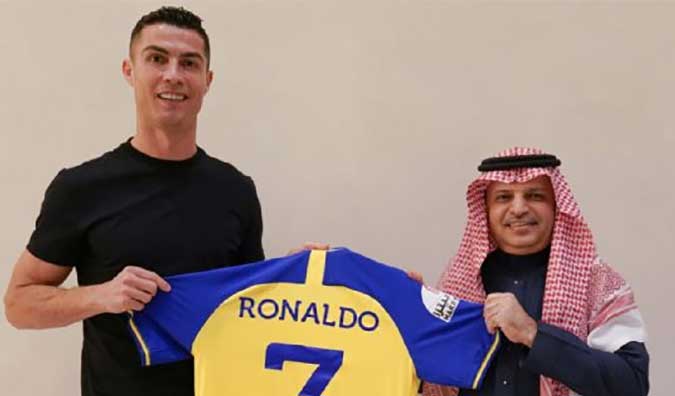
RIYADH, Saudi Arabia — Cristiano Ronaldo wanted a Champions League swan song in the football cathedrals of Madrid, Milan or Munich, playing on the biggest stage with and against the most famous players in the game. Instead, the floodlights will fade on his glittering career at Mrsool Park, Al-Nassr’s compact stadium in the grounds of King Saud University, a mile up the road from Saudi Arabia’s Ministry of Investment building.
It is an incongruous setting, but when you consider the financial package Ronaldo has been offered to join Al-Nassr, the Ministry of Investment is perhaps an appropriate neighbour for his new club. The $75 million-a-year (£62m) contract Ronaldo has signed with Saudi Arabia’s second-biggest team — Riyadh rivals Al-Hilal, reigning Asian Champions League winners, are the Real Madrid in this part of the world — will certainly soften the blow of the 37-year-old’s diminished status that inevitably comes with his move to the Saudi Pro League, but surely it wasn’t meant to come to this.
When he made it clear he wanted to leave Manchester United in the summer, Ronaldo’s desire to move was driven by a determination to play in the Champions League. But there were no major European takers for his talents then and with United cancelling his contract during the World Cup, there have been none since. The lucrative contract offer from Al-Nassr, which has been on the table for almost two months, turned out to be the best, and only, option for one of the greatest footballers ever to have played the game.
His new teammates will include former Arsenal goalkeeper David Ospina, Cameroon forward Vincent Aboubakar and Talisca, the Brazilian striker who leads the scoring charts in the Saudi Pro League with nine goals so far this season. Odion Ighalo, the former Manchester United forward, is one of three players in second place with six goals. Yet life in Saudi Arabia will be a whole new experience for Ronaldo, whose career so far has been based in the historic football cities of Lisbon, Manchester, Madrid and Turin.
Ronaldo will cause a stir in Saudi Arabia, a country with a well-resourced domestic league and national team, but he also risks being out of sight and out of mind following the switch.Social life in Riyadh seems to revolve around shopping malls. While Saudi Arabia is an absolute monarchy and an authoritarian state that strictly forbids alcohol consumption and employs religious police to uphold its strict interpretation of Islam, the growing power of Crown Prince Mohammed bin Salman has seen the country tentatively open up to Western influences in recent years.
It is in the malls where the new Saudi Arabia shows itself — a world in which Ronaldo will soon be immersed. For those who expect Ronaldo to be living in a country that does things differently to those in Europe and North America, they will be in for a surprise. It’s the same, but a little different.
The View Mall in central Riyadh could be anywhere in London, New York or Los Angeles. The multiscreen cinema is showing “Black Panther: Wakanda Forever,” “Puss In Boots” and “Bed Rest,” and there’s a bowling alley adjacent to a gaming arcade. Families are eating dinner at Nando’s, buying cakes at Magnolia Bakery or watching football on the big screens while waiting to bowl at Bob’s Famous Eat, Bowl and Chill.
It is the same at the Kingdom Tower Mall across town, next to the Four Seasons Hotel, which could have been built for Ronaldo and his family. It is aimed at the rich (and famous) with Dior, Louis Vuitton, Tiffany, Victoria’s Secret all having stores in the four-floor shopping centre.Across the road, there is a Nike store. One footballer dominates the window with his huge image wrapped around the glass. He is a wearing a Manchester United shirt, but it isn’t Ronaldo: it’s Marcus Rashford.
Talk to Uber drivers, hotel staff or baristas in the coffee shops and they all know and love football. The majority claim to be supporters of Al Ittihad, the Jeddah-based team, and they all talk excitedly about Saudi Arabia’s recent World Cup showing in which they beat eventual champions Argentina 2-1. In terms of their favourite players, two stand out as being mentioned more than the others: Paul Pogba and Mohamed Salah. Nobody says Ronaldo or even Lionel Messi, who agreed a £25 million-a-year contract to become the face of the Saudi Arabia tourist board in May.
“Pogba and Salah are very popular, primarily because they are great players, but also because they are Muslim,” a source at Saudi Arabia’s Ministry of Sport told ESPN. “They also endorse Pepsi, which is a big thing in Saudi because Pepsi dominates the market ahead of Coca-Cola. Both players are huge names in this country, but the leading Saudi players are also very popular.”
Life as a leading footballer in Saudi Arabia is a privileged one, though it’s not just Ronaldo who will be given the star treatment.
As part of their contracts with the Pro League teams, the top players earn salaries comparable to those in the major European leagues. While their bottom-line income will not be on a par with the highest earners in the Premier League or LaLiga, the overall packages are so comprehensive that it is a rarity for a Saudi Arabian player to seek a move to Europe. One source told ESPN that the leading Saudi players are “treated like rock stars” and given “huge houses in the best compounds [gated, security-patrolled luxury accommodations] and whatever cars they like.”
There is also no income tax for Saudi nationals, with a 20% flat rate on tax-adjusted profit for non-Saudis. In short, Ronaldo — and all foreign players in the Pro League — will lose far less of his earnings than he would in any European league.
Ronaldo can expect all of the perks reserved for the best players in Saudi Arabia. A luxury villa in the prestigious Al Muhammadiyah compound, the best schools for his children and a fleet of the best cars. But he will still have to negotiate negotiate the less enjoyable aspects of Riyadh city life — like traffic jams and smog — just like everybody else.
Mrsool Park (Mrsool is an app-based delivery platform) holds just 25,000 spectators when full. It is neat and tidy, with yellow and blue seats to match Al-Nassr’s colours, but it is tiny compared to Ronaldo’s previous home stadiums at Old Trafford or the Santiago Bernabeu.
There’s also no club shop at the stadium. If you want to buy an Al-Nassr Ronaldo shirt with his trademark No. 7 on the back, you will have to take an Uber ride to the club’s small outlet 30 minutes away.The size of the stadium and lack of a club shop at the ground certainly underline the impression that Al-Nassr are not quite ready for the whirlwind of attention that Ronaldo will bring. Al-Ittihad are Saudi Arabia’s best-supported team, with an average attendance of 31,309 at their 62,000-capacity King Abdullah Sports City Stadium during the 2021-22 season. Reigning champions Al-Hilal averaged 13,192 fans-per-game at their 67,000-capacity King Fahd Stadium, while Al-Nassr could only muster an average crowd of 8,121 at Mrsool Park.
It has been a while since Cristiano Ronaldo last played a club game at a half-empty stadium, but he might have to get used to it in Saudi Arabia. His global fame will ensure an upsurge in interest in games, but it would be optimistic to expect full houses wherever he goes.
But while the Saudi Pro League is well-financed and backed by passionate fans — Al-Hilal’s ultras made plenty of noise during their recent friendly game against Newcastle in Riyadh — it will be a different challenge for Ronaldo. Ultimately, though, it is football and Ronaldo will not be able to expect an easy ride.
“Football in Saudi Arabia is real,” Ian Cathro, assistant manager at Al Ittihad, told ESPN. “When I came over here to work alongside Nuno Espirito Santo, after being on his staff at Wolves and Tottenham, one thing that struck me very quickly was how real it all is in the sense of it being competitive and passionate, just like everywhere else I have worked. The facilities are excellent, there is a genuine intensity here and the players are top quality, as we all saw with Saudi Arabia during the World Cup.
“There is also a real pride in that all of the best Saudi players still play in the domestic league. I’m sure that having Cristiano Ronaldo in the league will only make everything bigger and put Saudi Arabian football firmly on the map.” (ESPN)


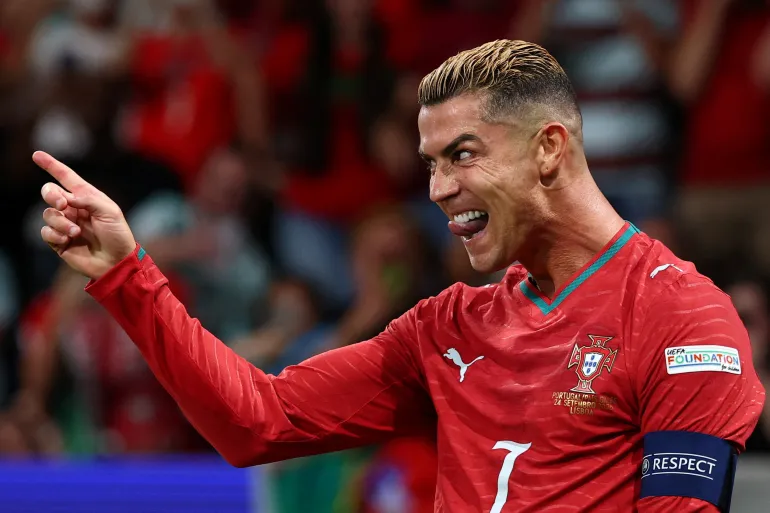
Cristiano Ronaldo has accused Portugal coach Jorge Jesus of twice breaking his word, saying a failed agreement to publicly explain his omission against Norway drove him out of the camp, but insisting he remained available after any punishment.
In a lengthy statement, the 41-year-old gave his account of the dispute that prompted his departure from Copenhagen before Portugal’s Nations League match versus Denmark last week.
Ronaldo said Jesus had agreed a plan under which the forward would miss the Norway and Denmark matches to manage his fitness. However, on the day of the Norway game, the coach told him he would play for 30 minutes.
“Everyone knows the rest. I warmed up from halftime onwards, watched the minutes tick by and wasn’t called on,” Ronaldo said.
“The manager had broken his word to me.”
Portugal’s captain and all-time leading scorer said a subsequent meeting with Jesus, attended by his club side Al Nassr’s sporting director Simao Coutinho, produced an agreement for the coach to clarify events at his next news conference.
According to Ronaldo, an eight-point document was prepared saying he had never demanded playing time, had respected Jesus’s decisions and that the coach asking him to warm up without bringing him on had been a mistake.
Ronaldo said the agreed notes did not require Jesus to apologise to him but said the coach’s public remarks bore no resemblance to their private discussion.
“It was the second time he had broken his word to me,” Ronaldo said. “I decided to leave the training camp without waiting for any further broken promises.”
The statement provided Ronaldo’s account, but on Sunday, after Portugal’s win over Norway, Jesus denied he had made any agreement with the player, nevertheless leaving the door open for his return.
The Portuguese Football Federation (FPF) did not immediately respond to a request for comment about Ronaldo’s statement.
Ronaldo apologised for failing to greet supporters after the Norway match and for leaving his teammates, accepting that his captaincy made his conduct more serious.
“The consequences of my actions must be assessed and punished by the Portuguese Football Federation,” he said.
Despite the rupture, Ronaldo said he was not limiting his international ambitions to a farewell appearance.
“If I’m physically fit, playing for my club – scoring goals, I hope – after serving whatever suspension is imposed on me, I’ll be available, as I’ve always been until now, to compete and win for our national team,” he added.
(Aljazeera)

by Reemus Fernando
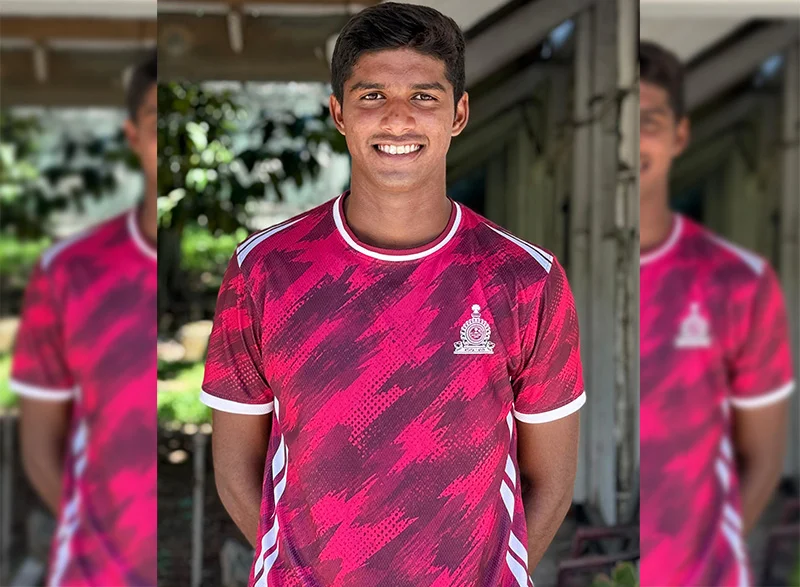
Nalanda College, Colombo continued their unbeaten run to come closer to securing a berth in the knockout stage as they beat Gurukula College by nine wickets in the Under 19 Division I Tier A Limited Overs Tournament match played at Campbell Place on Tuesday.
With Rusandu Silva continuing his impressive run in the tournament, Nalanda did well to restrict the team from Kelaniya to just 113 runs (in 35.4 overs).
After two outings Rusandu had six wickets against his name coming to this match.Rusandu and Methuka Perera claimed three wickets each. Lithum Wijekumara also impressed with two wickets, while Santhul Wijeyarathne took one.
Adeepa Pinsara was the only batsman to make a contribution of note as he top-scored with 35 off 49 balls, including four fours and two sixes, while Javindu Madusanka made 20.
In their chase Nalanda made light work of the modest target, reaching 114 for one, scoring at a rate of over a run a ball.
Nadul Jayalath cracked an unbeaten 62 from just 52 balls. His innings contained four fours and five sixes. He received valuable support from Lithum Wijekumara, who scored 35 off 42 deliveries with six boundaries.
Ranmith Senarath completed the successful chase with an unbeaten 10 off seven balls, including two fours.
Nalanda lost only one wicket as the opening pair added 89 for the first wicket. Jayalath and Senarath then finished the contest comfortably, securing a convincing nine-wicket victory with many overs to spare.
It was Nalanda’s third successive victory in the Tier A tourney after having beaten Thurstan (155) by seven wickets and St. Servatius’ Matara (187) by four wickets in the first two matches.
As of now, they are the leading team in Group G where they have only St. Joseph’s Darley Road to meet before the knockout stage.
With just two teams advancing to the next stage from each Group Nalanda are almost assured of their place.
33RD SINGER – MCA Super PREMIER LEAGUE
Hayley’s Group ‘A’, HNB ‘A’ and CDB registered wins by defeating Colombo Aces, Fairfirst Insurance and SLC Youth in the matches of the Mercantile Cricket Association’s Super Premier League cricket tournament on Sunday (04).
The MCA Super Premier League is sponsored by Singer Sri Lanka for the 33rd consecutive year.
At the Bloomfield Cricket ground, Nishan Madushka, Pulindu Perera and Minod Dhanuka smashed half tons as Hayley’s Group ‘A’ registered their second win of the tournament defeating Colombo Aces by six wickets.
At the Thurstan ground, Nipun Dhananjaya and Muditha Lakshan posted eighty plus scores to help CDB amass 307/8, which the bowlers defended by 71runs.
At the Colts Ground Milan Rathnayake starred with bat and ball [71 and 3-24] to help HNB ‘A’ overcome SLC Youth by 41 runs. Rehan Pieris topped SLC Youth score card with a 108 ball 77 with six fours and a six.
At Bloomfield Ground Colombo:
Hayley’s overcome Colombo Aces by six wickets
Colombo Aces 222/10 in 49 overs
[ Kavin Bandara 62, Dinura Kalupahan 50; Dhanajaya Lakshan 2-14, Ramesh Mendis 4-36]
Hayleys Group A 227/4 in 25.2 overs [Nishan Madushka 61, Pulindu Perera 51, Minod Bhanuka 54; Dinura Kalupahana 2-35]
At Thurstan College Ground:
CDB BY 71 runs
CDB 307/8 in 50 overs
[ Vishsd Randika 53, Nipun Dhananjaya 86, Muditha Lakshan 89; Himesh Ramanayake 3-49, ]
Fairfirst Insurance 236/10 in 46.4 overs
[Sanoj Dharshika 58, Yasiru Rodriga 78; Movin Subasinghe 3-27, Lahiru Madushanka 2-16]
At Colts ground;
Milan Rathnayake stars in HNB A’s 41 run win:
HNB ‘A’ 262/10 in 50 overs
[Janishka Perera 43, Anjala Bandara 54, Milan Rathnayake 71; Gimhan Mendis 2-43, Latheendra Akash 2-28, Himaru Deshan 2-42]
SLC Youth 221/10 in 44 overs [Rehan Peiris 77, Kithma Widnapathirana 53; Duvindu Ranathunga 2-40, Milan Rathnayake 3-24, Chamindu Wijesinghe 2-18]

Ronaldo apologizes for Portugal walkout; says Jesus broke promise

Showers in the Western, Sabaragamuwa, Central, Uva, North-western and Southern provinces and in Anuradhapura and Mannar districts

Fuel crunch looms

Gnansara Thera to be assigned to prison printing section: Officials

Speaker rejects Ajith Perera’s privilege complaint

OIC of FCID summoned before Maligakanda Magistrate

‘Dates have the highest sugar content to fight Coronavirus’

Sunday Island 27 December – Headlines

#SundayIsland 17th December – Headlines

Sunday Island – 28th March

Sunday Island Headlines – 21 March

Sunday Island – 21st February – Headlines
-

 News6 days ago
US-assisted ‘Ice’ detection: NPC to examine IGP’s move to transfer drug-busting team
-

 Editorial5 days ago
Colombo Port drug bust: The plot thickens
-

 Editorial6 days ago
Drug busting, transfers and trust deficit
-

 Features3 days ago
The first woman in the foreign service or Ceylon Overseas Service it was then called
-

 Editorial4 days ago
Fuelling discontent and protest
-
 News6 days ago
Sri Lankan facing death penalty in Saudi Arabia: Mano G appeals to Crown Prince
-

 Latest News4 days ago
Tharindu Rathnayake, bowlers secure Asian Games Bronze for Sri Lanka
-

 News2 days ago
Geneva takes up Sallay’s case and govt. ignores opportunity to answer accusations