
Features
‘Weli Park’, an old message revisited

by Ravi Perera
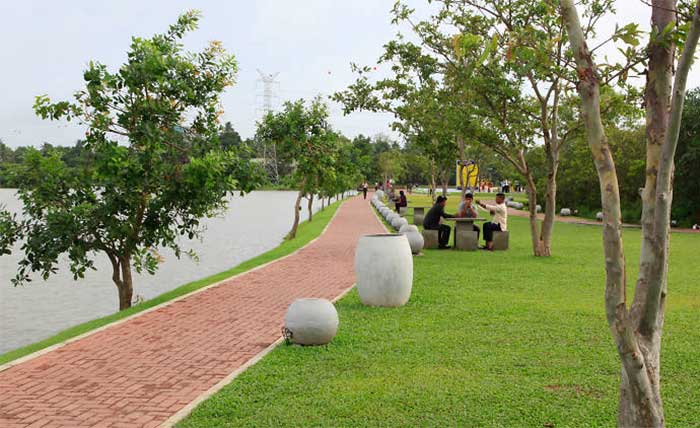
Breaking the urban disarray of the hectic Nawala-Nugegoda Road is the charming walkway commonly referred to as the “Weli Park”.The park’s immediate surroundings are oppressively commercial, hundreds of shops sitting cheek by jowl, selling hardware, tiles, bathroom fittings, interspersed with banks, eateries, one even selling pet food. Not a planned development clearly; one by one, all the dwellings with a road frontage have been turned into business places, buildings seem to have come up in defiance of regulations, standing monstrously in tiny plots of land.
Often an entire row of shops would be selling bathroom fittings; made in China, same thing, same price, only the discount varies! Like the rest of Colombo, there is inadequate provision for parking along the Nawala-Nugegoda road, forcing the vehicles to jostle for the few spaces available, obstructing the moving traffic. The competition for business is fierce, disfiguring the shop fronts are huge hoardings and glaring neon lights advertising their wares.
Then, unexpectedly there is this most welcome openness, a park on a slightly raised landscape with a right angle carpark extending from an intersection of the road. A gravel walkway runs inwards from the park along a canal with steep banks; the water is stagnant. Across the canal there are largish houses, of different shape and style; the fetid water creates a waterfront, apparently adding to the value!
The view however is only notional, in the design of many of the houses there is no suggestion of openness – forbidding gates, high walls, barred windows, tiny balconies; security concerns have overridden the aesthetics. The walkway runs on a straight line for a couple of hundred yards and then loops back, traversing between the stagnant canal and patches of mangrove whose waters merge with the swarms extending towards Kotte. A remainder of the wetlands that once defined greater Colombo, a good location for a walk.
Small in dimension, with less range than parks in other countries, the “Weli Park” and other similar recreational spaces that were created around the same time have nevertheless contributed towards making Colombo a more liveable place. They are popular, providing recreational spaces for the city dwellers, otherwise confined by the constraints of the metropolis; fresh air, lush greenery and the wetlands spread yonder.
And as it happens in nearly every Sri Lankan endeavour, there is a discordant note, by the entrance to the “Weli Park”, a public project created by State institutions, is a plastered concrete plaque commemorating its launch. Although after 10 years of standing in the sun, rain and humidity some of the wordings are now faded, the savagery of the message lingers in what is legible.
” The Urban Wetland Park is hereby vested in the citizens of Sri Lanka by His Excellency Mahinda Rajapaksa President of the Democratic Socialist Republic of Sri Lanka and would remain a lasting testament to the glorious vision contained in the ‘Mahinda Chintanaya’ of ushering in modernity to the State, sound health to the nation and picturesqueness to the environment while bringing more lustre and grandeur to the renowned city of Nugegoda –Gotabaya Rajapaksa, Secretary Ministry of Defence and Urban Development on this 12th day of January 2013″
It is humiliating that we live in a country where such an arrogant uncouth message comes to be openly displayed, and of all places, at a small park meant for recreational activity. Such parks are standard features in every city of the world. This plaque at ‘Weli Park’ is a perfect metaphor for what the relationship between the rulers and the ruled in this country has become. A confounded people, utterly abject, willing to lap up any abomination with reverential gratitude.
A shameless glorification of the ruler’s benefaction coming from his own brother would have been an embarrassment in another culture. The 10-year gap between this grandiloquence and now, gives us perspective; the poor results, emptiness of the actors, the failure of these men and their methods. Sharply clashing with the trees and flowers of the “Weli Park ” is a rusting armoured car, World War Two vintage or thereabouts, reminding the park goers that he is also Secretary of Defence.
Who would presume to bring “more” lustre and grandeur to the “renowned” city of Nugegoda! Only a person who has never gone outside of Nugegoda, if in body, certainly not in mind! Words robbed of meaning, an indescript Nugegoda made ‘grand and lustrous’ by mere declaration! Where a better educated mind would have desisted, Gotabaya Rajapaksa, then wearing the shoes of Secretary of Urban Development, foolishly glorifies his President brother, the source of his own power.
There is sanction for this unabashed exaltation of own family, D S Senanayake our very first post- independence Prime Minister manoeuvred to have his son Dudley inherit the premiership after him. That gave the go ahead to an ingrained attitude, something waiting to happen; father to son, husband to wife, brother to brother, politics became an heirloom, no surprise he is called the father of the nation!
The resultant culture has given rise to a deplorable national leadership, wholly occupied in self-perpetuation. Seizing every opportunity to exalt their supposed big deeds, even the most commonplace is made to sound like a benediction the people have received, because of them. According to our self-declared visionaries and doers, we enjoy democracy, the right to vote, public highways, irrigation schemes, electricity to even recreational parks only because they have gifted these to us. However, the country, economically, politically as well as socially has only deteriorated-relative to East Asia sharply, and now a steady decline even against South Asian countries like India and Bangladesh which are burdened with enormous structural issues including massive populations. We have become a non-performer, a country emblematic of failure.
This is not a failure that occurred overnight. Blunder following blunder, each act of omission more criminal than the last, every government outdoing its predecessor in covering up corruption. The Sri Lankan failure has gradually built up from almost the time of independence, when a peaceful nation with a reasonable economy was handed over to our leaders to govern. There is a wearisome sameness about our leaders; coming from a handful of families, invariably second or third political generation, same secondary schools (established by the colonialists, a fact proudly stressed), exaggerated religiosity (the rituals) or cultural adherences (white sarong in public), pretences of knowledge/ability (heavy sounding, jargon filled speeches) yet, it is only big talk followed by small deeds, a country otherwise mediocre in every way.
In the sweltering midday heat at the ‘Weli Park’ meanwhile, the sun beats down fiercely, young lovers seek relief under the shade of trees, the putrid water simmers in the heat and the old message on the plaque keeps growling.


I was recently given several books dealing with religion, and, instead of looking at questions of church union in current times, I turned first to Buddhism in the 19th century. Called Locations of Buddhism: Colonialism and Modernity in Sri Lanka, the book is a study by an American scholar, Anne M Blackburn, about developments in Buddhism during colonial rule. It focuses on the contribution of Ven. Hikkaduwe Sri Sumangala who was perhaps the most venerated monk in the latter part of the 19th century.
Hikkaduwe, as she calls Ven. Sumangala through the book, is best known as the founder of the Vidyodaya Pirivena, which was elevated to university statues in the fifties of this century, and renamed the University of Sri Jayewardenepura in the seventies. My work in the few years I was there was in the Sumangala Building, though I knew little about the learned monk who gave it its name.
He is also renowned for having participated in the Panadura debates against Christians, and having contributed to the comparative success of the Buddhist cause. It is said that Colonel Olcott came to Sri Lanka after having read a report of one of the debates, and, over the years, Ven. Sumangala collaborated with him, in particular with regard to the development of secondary schools. At the same time, he was wary of Olcott’s gung ho approach, as later he was wary of the Anagarika Dharmapala, who had no fear of rousing controversy, his own approach being moderate and conciliatory.
While he understood the need for a modern education for Buddhist youngsters, which Olcott promoted, free of possible influences to convert which the Christian schools exercised, he was also deeply concerned with preserving traditional learning. Thus, he ensured that in the pirivena subjects such as astrology and medicine were studied with a focus on established indigenous systems. Blackburn’s account of how he leveraged government funding given the prevailing desire to promote oriental studies while emphatically preserving local values and culture is masterly study of a diplomat dedicated to his patriotic concerns.
He was, indeed, a consummately skilled diplomat in that Blackburn shows very clearly how he satisfied the inclinations of the laymen who were able to fund his various initiatives. He managed to work with both laymen and monks of different castes, despite the caste rivalry that could become intense at times. At the same time, he made no bones about his own commitment to the primacy of the Goigama caste, and the exclusiveness of the Malwatte and Asgiriya Chapters.
What I knew nothing at all about was his deep commitment to internationalism, and his efforts to promote collaboration between Ceylon Lanka and the Theravada countries of South East Asia. One reason for this was that he felt the need for an authoritative leader, which Ceylon had lost when its monarchy was abolished by the British. Someone who could moderate disputes amongst monks, as to both doctrine and practice, seemed to him essential in a context in which there were multiple dispute in Ceylon.
Given that Britain got rid of the Burmese monarchy and France emasculated the Cambodian one, with both of which he also maintained contacts, it was Thailand to which he turned, and there are records of close links with both the Thai priesthood and the monarchy. But in the end the Thai King felt there was no point in taking on the British, so that effort did not succeed.
That the Thai King, the famous Chulalongkorn, did not respond positively to the pleas from Ceylon may well have been because of his desire not to tread on British toes, at a time when Thailand preserved its independence, the only country in Asia to do so without overwhelming British interventions, as happened for instance in Nepal and Afghanistan, which also preserved their own monarchies. But it could also have been connected with the snub he was subject to when he visited the Temple of the Tooth, and was not permitted to touch the Tooth Relic, which he knew had been permitted to others.
The casket was taken away when he leaned towards it by the nobleman in charge, a Panabokke, who was not the Diyawadana Nilame of the day. He may have been entrusted with dealing with the King, as a tough customer. Blackburn suggests it is possible the snub was carefully thought out, since the Kandyan nobility had no fondness for the low country intercourse with foreign royalty, which seemed designed to take away from their own primacy with regard to Buddhism. The fact that they continued subservient to the British was of no consequence to them, since they had a façade of authority.
The detailed account of this disappointment should not, however, take away from Ven. Sumangala’s achievement, and his primacy in the country following his being chosen as the Chief Priest for Adam’s Peak, at the age of 37, which placed him in every sense at the pinnacle of Buddhism in Ceylon. Blackburn makes very clear the enormous respect in which he was held, partly arising from his efforts to order ancient documents pertaining to the rules for the Sangha, and ensure they were followed, and makes clear his dominant position for several decades, and that it was well deserved.
by Prof. Rajiva Wijesinha
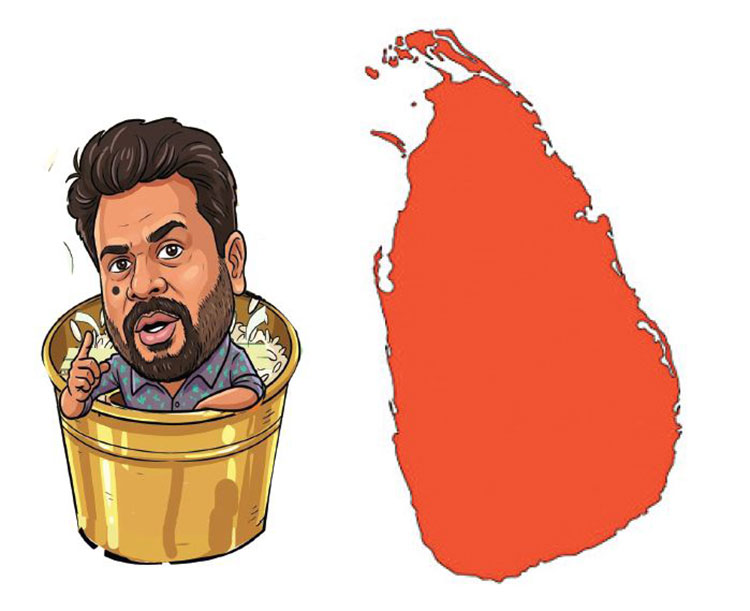
Attempting to bask in the glory of the past serves no purpose, some may argue supporting the contention of modern educationists who are advocating against the compulsory teaching of history to our youth. Even the history they want to teach, apparently, is more to do with the formation of the earth than the achievements of our ancestors! Ruminating over the thought-provoking editorial “From ‘Granary of the East’ to a mere hunduwa” (The Island, 5th March), I wished I was taught more of our history in my schooldays. In fact, I have been spending most of my spare time watching, on YouTube, the excellent series “Unlimited History”, conducted by Nuwan Jude Liyanage, wherein Prof. Raj Somadeva challenges some of the long-held beliefs, based on archaeological findings, whilst emphasising on the great achievements of the past.
Surely, this little drop in the Indian ocean performed well beyond its size to have gained international recognition way back in history. Pliny the Elder, the first-century Roman historian, therefore, represented Ceylon larger than it is, in his map of the world. Clicking on (https://awmc.unc.edu/2025/02/10/interactive-map-the-geography-of-pliny-the-elder/) “Interactive Map: The Geography of Pliny the Elder” in the website of the Ancient World Mapping Centre at the University of North Carolina at Chappel Hill, this is the reference to Anuradhapura, our first capital:
“The ancient capital of Sri Lanka from the fourth century BCE to the 11th century CE. It was recorded under the name Anourogrammon by Ptolemy, who notes its primary political status (Basileion). It has sometimes been argued that a “Palaesimundum” mentioned by Pliny in retelling the story of a Sri Lankan Embassy to the emperor Claudius is also to be identified with Anourogrammon. A large number of numismatic finds from many periods have been reported in the vicinity.”
Ptolemy, referred to above, is the mathematician and astronomer of Greek descent born in Alexandria, Egypt, around 100 CE, who was well known for his geocentric model of the universe, till it was disproved 15 centuries later, by Copernicus with his heliocentric model.
It is no surprise that Anuradhapura deservedly got early international recognition as Ruwanwelisaya, built by King Dutugemunu in 140 BCE, was the seventh tallest building in the ancient world, perhaps, being second only to the Great Pyramids of Giza, at the time of construction. It was overtaken by Jetawanaramaya, built by King Mahasena around 301 CE, which became the third tallest building in the ancient world and still holds the record for the largest Stupa ever built, rising to a height of 400 feet and made using 93.3 million baked mud bricks. Justin Calderon, writing for CNN travel under the heading “The massive megastructure built for eternity and still standing 1,700 years later” (https://edition.cnn.com/travel/jetavanaramaya-sri-lanka-megastructure-anuradhapura) concludes his very informative piece as follows:
“Jetavanaramaya stands today as evidence of an ancient society capable of organising labour, materials and engineering knowledge on a scale that rivalled any civilisation of its time.
That it remains relatively unknown beyond Sri Lanka may be one of history’s great oversights — a reminder that some of the ancient world’s most extraordinary achievements were not carved in stone, but shaped from earth, devotion and human ingenuity.”
Extraordinary achievements of our ancestors are not limited to Stupas alone. As mentioned in the said editorial, our country was once the Granary of the East though our present leader equated it to the smallest measure of rice! Our canal systems with the gradient of an inch over a mile stand testimony to engineering ingenuity of our ancestors. When modern engineers designed the sluice gate of Maduru Oya, they were pleasantly surprised to find the ancient sluice gates designed by our ancestors, without all their technical knowhow, in the identical spot.
Coming to modern times, though we vilify J. R. Jayewardene for some of his misdeeds later in his political career, he should be credited with changing world history with his famous speech advocating non-violence and forgiveness, quoting the words of the Buddha, at the San Francisco Conference in 1945. Japan is eternally grateful for the part JR played in readmitting Japan to the international community, gifting Rupavahini and Sri Jayewardenepura Hospital. Although we have forgotten the good JR did, there is a red marble monument in the gardens of the Great Buddha (Daibutsu) in Kamakura, Japan with Buddha’s words and JR’s signature.
It cannot be forgotten that we are the only country in the world that was able to comprehensively defeat a terrorist group, which many experts opined were invincible. Services rendered by the Rajapaksa brothers, Mahinda and Gotabaya, should be honoured though they are much reviled now, for their subsequent political misdeeds. Though Gen-Z and the following obviously have no recollections, it is still fresh in the minds of the older generation the trauma we went through.
It is to the credit of the democratic process we uphold, that the other terrorist group that heaped so much of misery on the populace and did immense damage to the infrastructure, is today in government.
As mentioned in the editorial, it is because Lee Kuan Yew did not have a ‘hundu’ mentality that Singapore is what it is today. He once famously said that he wanted to make a Ceylon out of Singapore!
Let our children learn the glories of our past and be proud to be Sri Lankan. Then only they can become productive citizens who work towards a better future. Resilience is in our genes and let us facilitate our youth to be confident, so that they may prove our politicians wrong; ours may be a small country but we are not ‘hundu’!
By Dr Upul Wijayawardhana

The election in Nepal last week was not merely a political exercise; it was an eruption of pentup fury, a rejection of the old guard that had throttled any semblance of progress for decades. But what now stares the country in the face is a stark question: have the people truly changed their future, or simply traded one set of illusions for another?
For years, Nepalis endured the same trio of power brokers — the Nepali Congress, the CPNUML, and the socalled Communist Party — as these entities pirouetted through government halls, recycled leadership, and maintained an endless cycle of impressive promises and microscopic delivery. Institutions decayed, corruption metastasized, unemployment worsened further. Youth unemployment stands north of 20 per cent — more than double the national average. Around 1,500 young Nepalis leave their homeland every single day seeking work abroad, a staggering exodus that undermines any future the country might hope to sculpt for itself.
So, when the uprising erupted, when Gen Z and youth frustration boiled over into the streets, it was not just rage — it was despair. For a generation raised on unfulfilled promises, the old guard simply had no authority left to persuade a battered population of its relevance. History remembers political decay, but seldom the emotional collapse that precedes a revolt.
Into this void surged Balendra Shah, the rapperturnedKathmandu mayor better known as Balen. He became the face of something many claimed they wanted: a break with the past. The Rastriya Swatantra Party (RSP), a party as new as its leader’s rise from outside the entrenched political class, swept to an unprecedented majority: 125 of the 165 firstpastthepost seats. A single party holding nearly twothirds control in Nepal is almost unheard of, a brutal indictment of the old establishment’s collapse.
Yet, beneath the celebrations, the mood of unrestrained optimism conceals something far darker: a population battered into radical decisionmaking by emotion, not strategy. It is a politics driven not by reflection, debate, or longterm planning, but by hatred — hatred of “corrupt leaders,” hatred of stagnation, hatred of a system that failed to deliver rice (dal bhat), work, dignity. This emotional current, once unleashed, is merciless. It propels movements forward with the force of steam but leaves them to sputter once the fire runs out.
Nepal’s new leadership inherited not opportunity but catastrophe. The economic foundation is weak and brittle. Public debt hovers around 40–45 per cent of GDP, but it is the quality of the economy that terrifies: a narrow tax base, enormous dependence on remittances accounting for roughly onequarter of GDP, and a private sector too fragile to absorb the burgeoning army of young jobseekers. Tourism, once thought a panacea, remains exquisitely sensitive to global disruptions. Agriculture remains archaic and unproductive. Power outages and distribution inefficiencies plague even the most basic enterprises. Crucially, the labour force — the very youth that marched in protests — has no obvious outlet for meaningful employment.
The RSP manifesto, the socalled “2082 Vision,” is nothing if not audacious: 1.2 million jobs in five years; GDP expansion to almost $100 billion; per capita income rising to $3,000; 15,000 megawatts of installed capacity; halving LPG imports; digital services exports of $30 billion in ten years; the construction or upgrade of 30,000 kilometres of national highways. These numbers are ambitious — some might say visionary — but independent observers see them as fantasy built on the emotional reservoir of hope, not on deeply rooted economic analysis. Nepal’s energy grid cannot reliably distribute current capacity; transportation infrastructure routinely buckles under seasonal rains; foreign direct investment remains underwhelming; and the digital economy is throttled by regulatory unpredictability and an underdeveloped legal regime for international payments.
These are the grim realities. A promise to reduce imports without addressing critical bottlenecks in trade policy or crossborder logistics is a promise destined for frustration. A pledge to build tens of thousands of kilometres of roads without sustained institutional capacity to manage land acquisition, competitive bidding, quality control, and anticorruption oversight offers little more than ritual groundbreaking and even more ceremonial delays.
This mismatch between aspirational rhetoric and structural capacity points to a far more troubling truth: Nepalis have been deceived not by individuals but by narratives. The uprising was not wrong in its desire for change. But it was driven by visceral emotion — a collective impulse to reject the old, often without a coherent alternative blueprint that could realistically transform the economy and provide stability. Angry protests and street fervour commandeered the engine of politics, and once that engine is running on emotion rather than evidence, it becomes dangerously unpredictable.
Look at Chile. Gabriel Boric was once lauded as a youthful saviour, riding a wave of antiestablishment fervour following mass protests. He came to power promising transformation, only to be bogged down by economic crises, political fragmentation, and opposition so ferocious that his capacity to govern was severely curtailed. Boric faced impeachment, suffered plummeting approval ratings, and struggled to balance reformist zeal with the weight of practical governance. If Nepal is honest with itself, it must question whether Balen may tread a similar path: overwhelmed by the emotional thunder that elevated him, yet unprepared to deliver the institutional and economic stability the nation desperately needs.
Here’s the painful truth: Gen Z politics, fuelled by emotion, creates momentum but not mechanisms. Momentum wins rallies; mechanisms build nations. The current administration’s inexperience — not merely in government, but in managing a modern economy under immense pressure — sets the stage for something grim: a crescendo of disappointed expectations. When job creation fails to materialize at the promised scale, when infrastructure projects lag, when remittances cool and capital flight accelerates, the emotional energy that once propelled this movement may transform into a bitter sense of betrayal. That betrayal has a name in political history: radicalization without deliverables.
Worse still, emotional politics is ripe for exploitation by external actors. Nepal is geostrategically hemmed in by its two giant neighbours. India — the largest source of trade, investment, energy supplies, and transit routes — watches with both interest and caution. China, shareholder in multiple infrastructure ventures and a central actor in Belt and Road projects, has its own expectations. Both have engaged with the RSP, seeking alignment with their own strategic interests. But emotion is a currency external powers love to leverage: where national confidence is high and institutional clarity is low, foreign influence finds entry points. A government fuelled by public passion — but lacking robust policy anchors — becomes pliable, attractive, and dangerous.
The question is: did the electorate truly choose a path to prosperity, or merely a dream of it? Emotional politics gave the people a mirror — a reflection of their hurt, their labour unrecognized, their aspirations denied. But mirrors do not map roads; they only reveal what is already before us.
Balenomics may become a lesson in hubris — not because the goals are unworthy, but because goals without disciplined implementation, institutional reform, and credible governance remain poetry when the country needs engineering. Nepal needs a systemic recalibration of labour markets, transparent rulemaking, competitive commerce, legal certainty for investments, and infrastructural credibility — not just slogans that rouse crowds.
When citizens see delays, when promised jobs fail to materialise, when inflation stubbornly erodes incomes, and when foreign capital does not flood in simply because of optimism, the inevitable question will surface: was this all just emotional theatre? If the answer is yes, Nepal risks entering a phase worse than the old guard’s mismanagement: disillusionment with revolt itself.
by Nilantha Ilangamuwa

From Que Sera, Sera … to QR

Plant-based tourism could be Sri Lanka’s overlooked growth opportunity: Andrea Diaz

Social and political aspects of Buddhism in a colonial context

Kidney awareness drive at Kegalle hospital

NPP pre-poll promises still unfulfilled – SLUNBA

Iran, Lanka FMs discuss regional developments over telephone

‘Dates have the highest sugar content to fight Coronavirus’

Sunday Island 27 December – Headlines

#SundayIsland 17th December – Headlines

Sunday Island – 28th March

Sunday Island Headlines – 21 March

Sunday Island – 21st February – Headlines
-

 News7 days ago
Repatriation of Iranian naval personnel Sri Lanka’s call: Washington
-

 News6 days ago
Prof. Dunusinghe warns Lanka at serious risk due to ME war
-
 News4 days ago
Historic address by BASL President at the Supreme Court of India
-

 Sports5 days ago
Royal start favourites in historic Battle of the Blues
-

 Sports4 days ago
The 147th Royal–Thomian and 175 Years of the School by the Sea
-
 Business5 days ago
BOI launches ‘Invest in Sri Lanka’ forum
-
 News5 days ago
CEBEU warns of operational disruptions amid uncertainty over CEB restructuring
-

 Features7 days ago
Pay attention or pay the price: Sri Lanka’s maritime imperative in a fractured ocean