
Business
Plant-based tourism could be Sri Lanka’s overlooked growth opportunity: Andrea Diaz

As Sri Lanka searches for new sources of foreign exchange and sustainable economic reform, an unexpected opportunity may lie in something as simple as the food on its plate. According to Andrea Diaz, Executive Director of Dharma Voices for Animals (DVA), Sri Lanka could strengthen tourism revenue, improve public health and advance environmental resilience by positioning itself as a vegetarian- and vegan-friendly destination rooted in its Buddhist heritage.
“Compassion is not only a moral value,” Diaz says. “It can also be an economic strategy.”
Sri Lanka occupies a unique place in the global Buddhist world, having preserved the Theravada tradition for more than two millennia. Diaz believes this heritage gives the island a distinctive moral authority to demonstrate how Buddhist principles such as non-harming and compassion can shape modern policy and everyday life. Dharma Voices for Animals promotes plant-based food systems that protect animals, safeguard the environment and support human health. In Sri Lanka, the organisation frames its work as an effort to reconnect contemporary lifestyles with longstanding cultural values.
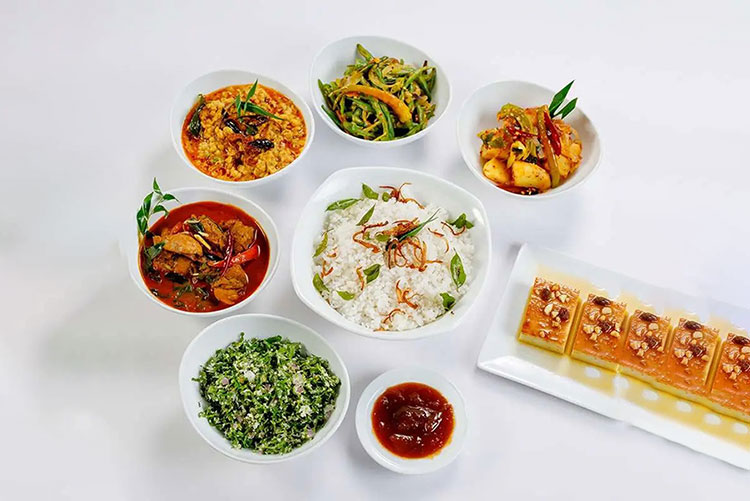
Historically, many Sri Lankan communities relied heavily on plant-based diets before colonial influences altered food systems. Even today, much of the island’s traditional cuisine – dhal curry, mallung, jackfruit dishes and coconut-based preparations – remains naturally vegetarian or easily adaptable. Diaz argues that this culinary foundation gives Sri Lanka an advantage that many countries struggle to build.
Rather than reinventing its food culture, she says, Sri Lanka could highlight its existing culinary traditions and present them to the world as part of a compassionate and sustainable national identity.

Andrea Diaz, Executive Director of Dharma Voices for Animals (DVA)
DVA’s work on the ground focuses on translating these ideas into practical change. A network of volunteer regional coordinators conducts educational programmes at temples, Sunday schools, community centres, women’s groups, medical clinics and even army facilities, encouraging people to reflect on how daily food choices align with Buddhist ethics. According to Diaz, the organisation’s outreach in 2025 alone reached more than 146,000 individuals through lectures, discussions and community events.
Education is paired with practical tools aimed at making plant-based eating accessible. The organisation has published Sri Lanka’s first vegan cookbook using locally available ingredients, while cooking classes broadcast on cable television and community cooking competitions demonstrate that plant-based meals can be affordable, nutritious and culturally familiar.
By highlighting that many rice-and-curry combinations already meet nutritional needs, advocates hope to dispel the perception that dietary change requires dramatic lifestyle adjustments.
The economic implications extend beyond cuisine. Diaz notes that global tourism trends are shifting toward values-driven travel. Visitors from Europe, North America and Australia increasingly seek destinations where vegetarian and vegan food is readily available and clearly labelled. Countries that accommodate this demand often benefit from longer stays and strong word-of-mouth promotion among conscious travel communities.
Sri Lanka, she suggests, could tap into this market with relatively modest policy steps – clearer menu labelling, plant-based certifications for hotels and targeted marketing highlighting the island’s naturally vegetarian culinary traditions.
Positioning Sri Lanka as a compassionate culinary destination could also strengthen its broader tourism brand. Modern travellers increasingly consider sustainability, ethics and wellness when choosing destinations. A national identity linking Buddhist values with environmentally responsible food culture could help differentiate Sri Lanka from competing tropical tourism destinations while supporting farmers who produce rice, lentils, vegetables, spices and coconuts.
Beyond tourism, Diaz believes dietary shifts could contribute to climate resilience and food security. Animal agriculture requires significant land, water and grain while producing comparatively high greenhouse gas emissions. Redirecting more crops directly to human consumption improves efficiency and allows more people to be fed from the same land base.
For a country already rich in plant-based staples, strengthening these agricultural systems could reduce reliance on imported animal feed while supporting smallholder farmers and protecting natural resources.
Public health represents another potential benefit. Many of the world’s most costly diseases including cardiovascular disease, diabetes and hypertension are strongly linked to diet. Diets rich in legumes, vegetables, fruits and whole grains are associated with lower rates of these conditions. Encouraging plant-forward diets, Diaz argues, could help governments reduce long-term healthcare costs while improving workforce productivity.
Dietary change, she emphasises, does not require universal adoption to produce meaningful social impact. Research on social movements suggests that when roughly 3.5 percent of a population actively supports a cause, broader cultural and political change can begin. In Sri Lanka’s case, that would mean about 800,000 people visibly committing to compassionate food choices and discussing the values behind them.
Yet while discussions about compassion and sustainability are gaining attention, Sri Lanka’s legal framework for animal protection remains outdated. The country still operates under a law dating back to 1907, a colonial-era statute widely viewed as inadequate for modern welfare standards. A proposed Animal Welfare Bill – developed through years of consultation and legal drafting – has twice received Cabinet approval but has never been presented to Parliament.
If enacted, the legislation would replace the colonial-era statute with modern welfare standards, establishing clearer definitions of cruelty and neglect, stronger penalties and improved investigative powers. It would also formalise internationally recognised welfare principles such as adequate food, shelter, medical care and humane handling of animals.
Advocates also emphasise that the growth of plant-based industries need not threaten farmers currently involved in livestock production. Instead, they see opportunities for gradual diversification. With appropriate training and policy support, farmers could transition toward crops central to plant-based diets or participate in value-added food production, strengthening rural livelihoods while reducing environmental strain.
For Sri Lanka, the broader message is that compassion, sustainability and economic development need not be competing priorities. A food system that emphasises plant-based traditions already embedded in local culture could simultaneously strengthen tourism, improve public health, enhance climate resilience and support rural agriculture.
Seen through that lens, the humble rice-and-curry meal may represent more than a culinary tradition. In a world searching for more sustainable ways to live and travel, Sri Lanka’s oldest food traditions may yet become one of its most modern economic opportunities.
by Sanath Nanayakkare

By Ifham Nizam
Sri Lanka’s fuel market is coming under renewed pressure as the escalating West Asian conflict and disruption to key oil-shipping routes push up international crude and refined-fuel prices, with a top Ceylon Petroleum Corporation (CPC) official saying the Corporation is closely monitoring developments and the potential impact on domestic fuel costs.
A top CPC official said the sharp rise in international oil prices was being driven by the conflict and disruptions to energy infrastructure and shipping routes in the region.
The official said Sri Lanka’s exposure to the international price shock would also depend on the timing of fuel purchases, as petroleum cargoes are ordered well before they arrive in the country and the final landed cost is determined when the cargo is delivered.
The CPC is also seeking to cushion consumers from the full impact of international price increases while maintaining uninterrupted supplies, the official said.
The latest developments come as Brent crude remains above USD 100 a barrel despite a recent retreat in prices following efforts by Saudi Arabia to maintain exports through alternative routes.
Brent crude futures fell to USD 104.74 a barrel yesterday, while West Texas Intermediate was trading at USD 101.60, according to Reuters. Saudi Arabia has been offering additional crude cargoes to Asian refiners through Oman to offset disruptions caused by attacks on its East-West pipeline.
The immediate concern for Sri Lanka is the potential impact on the country’s petroleum import bill, foreign-exchange requirements and inflation.
Higher international crude and refined-product prices mean that more dollars are required to finance fuel imports, while higher domestic energy costs can feed into transportation, manufacturing, agriculture, fisheries and logistics.
The pressure is already being felt elsewhere in Asia.
Pakistan has raised petrol prices by Pakistani Rs. 4.42 a litre and high-speed diesel by Rs. 6.10, taking the prices to Rs. 380.24 and Rs. 409.42 respectively. The latest increase is reported to be the sixth consecutive fuel price increase in the country.
The Philippines has also raised fuel prices, with petrol increasing by 5.68 Philippine pesos a litre, diesel by 4.31 pesos and kerosene by 4.62 pesos for the latest pricing period.
The developments provide an indication of how quickly international energy-market disruptions can feed into domestic fuel markets across fuel-importing Asian economies.
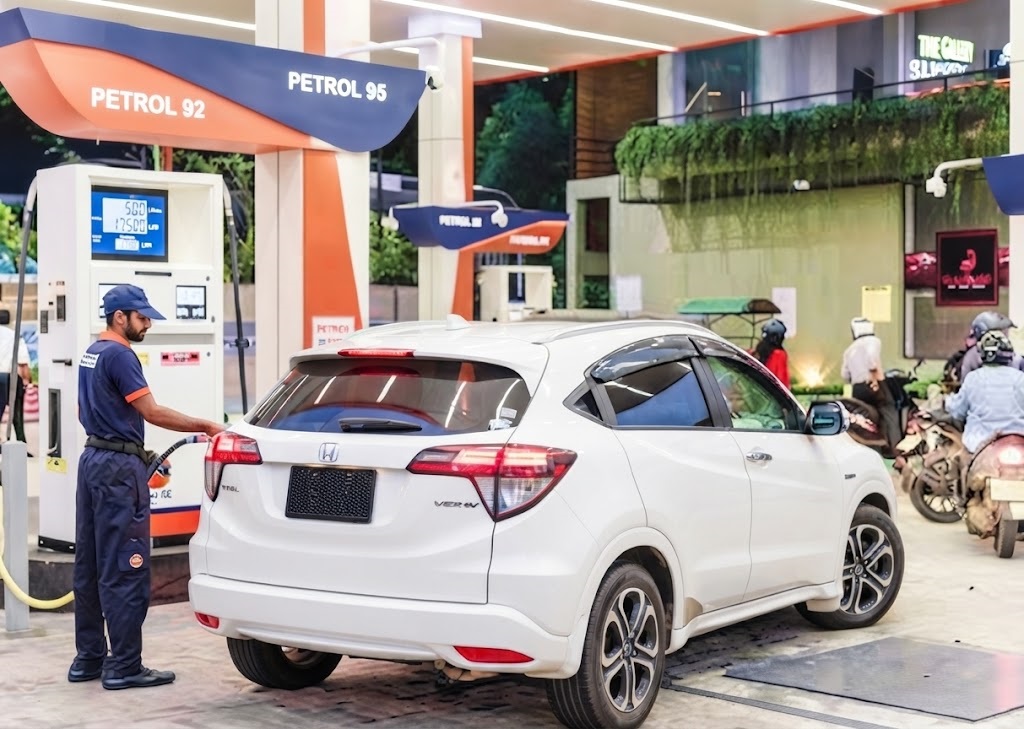
For Sri Lanka, the issue is particularly significant because petroleum remains a major component of the country’s import bill. The CPC’s current prices stand at Rs. 399 a litre for 92-octane petrol and Rs. 382 for auto diesel, according to the Corporation’s latest published prices.
The government is meanwhile facing pressure to balance consumer protection with the financial sustainability of fuel suppliers.
The Energy Minister has said several options are being considered, including fuel subsidies, price limits for private distributors and adjustments to retail prices. Private operators have reported substantial losses on diesel under prevailing prices, while the CPC has said it is currently absorbing losses on diesel through earnings from other petroleum operations.
A prolonged international oil-price shock could therefore have consequences extending well beyond the pump.
Higher fuel costs would raise operating expenses for transport-dependent businesses and could increase the cost of moving goods throughout the economy. For manufacturers and exporters, higher energy and logistics costs could also affect margins and competitiveness.
At the macroeconomic level, a sustained increase in petroleum prices could increase Sri Lanka’s foreign-exchange requirements and place additional pressure on the trade balance and inflation.
The international oil market, however, remains highly fluid. Saudi Arabia’s efforts to redirect crude exports through Oman have eased some immediate supply concerns, while expectations that its damaged East-West pipeline could return to operation within days have also helped push crude prices lower.
But shipping through the Strait of Hormuz remains severely disrupted and the wider conflict continues to pose risks to crude and refined-product supplies.
For Sri Lanka, the coming weeks will therefore be closely watched by fuel suppliers, importers and businesses as the country assesses whether the current international price shock proves temporary or develops into a more prolonged increase in the cost of energy.
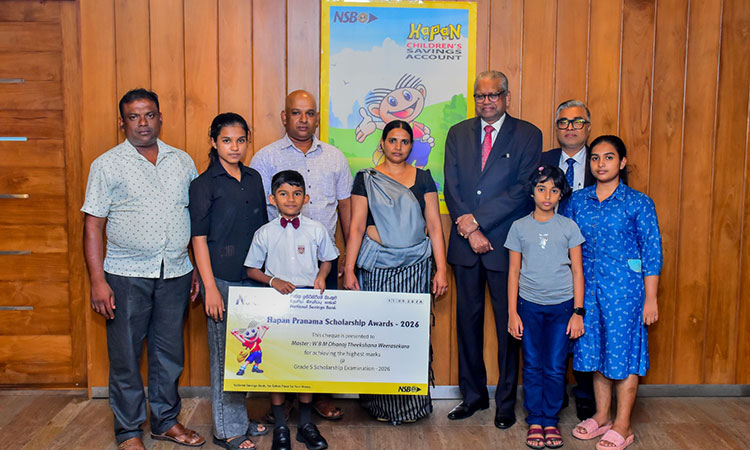
The student, who obtained the highest marks in the Sinhala medium, at the Grade 5 Scholarship Examination – 2026, was felicitated by the National Savings Bank (NSB), recently, at the NSB Head Office, under the Hapan Pranama Scholarship Program -2026, organized by the Bank.
The Chairman of the Bank, Dr. Harsha Cabral PC, the Actg. General Manager/CEO, Rohana Bandara Weerakoon and the Corporate Management were present at the occasion.
Danoj Theekshana Weerasekara, a student of Ahatuwewa Model Primary School in Kurunegala District, has won the first place in Sinhala Medium at Grade 5 Scholarship Examination this year, with 193 marks. His remarkable achievement reflects not only his personal talents, but also the commitment of his family members, guidance of his teachers and support of the entire school community, who came together to make his triumph a reality.
The National Savings Bank, while complimenting his achievement, wishes him good luck, strength and courage for his future academic endeavors.
Being always committed towards realizing the educational goals of the children of the country, NSB organizes a seminar series, well in advance of the Examination, every year, to support them in preparation for the exam. The Bank has been able to hold more than 100 seminars islandwide this year as well.
Through these seminars, it is expected to provide the students with knowledge, guidance and mental strength, required to be successful at the Examination and the Bank has joined hands with them at an important juncture of their lives, assuring support and strength to face the exam with confidence. (NSB)

The Colombo Stock Exchange (CSE) has received the ‘Great Place to Work’ Certification’ for the 5th consecutive year in a row. Since 2022 the bourse has been continually awarded the certification in recognition of its commitment to providing a welcome, inclusive and safe environment.
“At CSE, our people remain our greatest strength.” remarked Rajeeva Bandaranaike, CEO of the CSE “Receiving the Great Place to Work Certification for the fifth consecutive year is a meaningful recognition of our commitment to creating a workplace culture founded on trust, respect, and collaboration. It is an achievement shared by every member of the CSE team and reflects the passion, commitment, and teamwork that continue to drive our success.”
The certification was awarded by Great Place to Work®, a global organization that grants this recognition across more than 180 countries and regions and represents over 20 million employees and 22,000 companies worldwide. The certification was based on the results of an anonymous, company-wide survey that evaluated workplace culture across five key dimensions: credibility, respect, fairness, pride, and camaraderie.
The certification reaffirms CSE’s commitment to its foundational values of Professionalism, Integrity, Care, Teamwork, Passion and Agility. By championing equity and inclusion, the CSE has built a welcoming, discrimination-free culture where every individual can thrive. A cornerstone of this success is CSE’s leadership in workplace diversity as an equal opportunity employer and signatory to the UN Women’s Empowerment Principles, alongside its close collaboration with the UN Global Compact and Respectful Workplaces initiatives. Additionally, the exchange fosters dynamic young talent, with early-career professionals accounting for 57% of its workforce.

Charani, Shafali power India past Japan and into Asian Games semi-finals

Athapaththu and Dilhari muscle Sri Lanka past Malaysia in mismatch

Abhishek Sharma hits record T20 ton as India beat Afghanistan by 127 runs

Trump administration approves sale of F-35 jets to Saudi Arabia

Banton steers England into unassailable 2-0 series lead

Showers expected in the Western, Norrh-western and Sabaragamuwa provinces and in Galle, Matara, Kandy and Nuwara-Eliya Districts.

‘Dates have the highest sugar content to fight Coronavirus’

Sunday Island 27 December – Headlines

#SundayIsland 17th December – Headlines

Sunday Island – 28th March

Sunday Island Headlines – 21 March

Sunday Island – 21st February – Headlines
-

 News6 days ago
Gnanasara Thero absconding after SC ruling
-

 Latest News7 days ago
Sri Lanka thwart Fatima Sana challenge to secure Asia Cup final spot
-

 News7 days ago
Ammunition cache found in old Kandy bungalow
-

 News7 days ago
Green Climate Fund (GCF) Regional Dialogue for East and South Asia will be held from 14 to 17 September 2026 at Cinnamon Life at City of Dreams Hotel, Colombo
-

 News7 days ago
Prof. Pieris says Buddha Dhamma recognised as source of law under Constitution
-

 Opinion5 days ago
From Galkissa (Mount Lavinia) to Tambuttegama
-

 Latest News6 days ago
ITS Giuseppe Garibaldi’ departs Colombo
-

 Business6 days ago
HNB Finance strengthens Board with four independent directors