
News
WEF: Climate finance pivotal to alleviating harm from South Asia’s extreme heat


The World Economic Forum said in a report last week that Climate finance is pivotal to alleviating harm from South Asia’s extreme heat as weather phenomena casting a long shadow over the region’s future.
It said: In the sweltering streets of South Asia, where temperatures soar to staggering heights, heat waves are not merely weather phenomena but existential threats, casting a long shadow over the region’s future. Recently, temperatures have soared as high as 52 degrees Celsius in Pakistan and India, emphasizing the severity of the situation.
As climate change accelerates, South Asia finds itself at the forefront of a battle against rising temperatures, with heat waves wreaking havoc on lives, livelihoods and ecosystems. From the ancient ruins of Mohenjo Daro in Pakistan to the modern hustle of Delhi, India, no corner of the subcontinent is immune to the scorching embrace of extreme heat.
However, the most vulnerable populations, those who have least contributed to climate change, bear the heaviest burden. Among these vulnerable groups, the impacts are even more severe for female-headed households, children, persons with disabilities, Indigenous Peoples, ethnic minorities, landless tenants, migrant workers, displaced persons, sexual and gender minorities, older people and other socially marginalized communities.
The Intergovernmental Panel on Climate Change’s Sixth Assessment Report emphasizes urgency – that climate risks are escalating faster than anticipated. The report highlights how 3.6 billion people live in highly vulnerable areas, with low-income countries and small island developing states disproportionately affected. Despite contributing minimal emissions, these regions suffer the most, with death rates from extreme weather events 15 times higher than in less vulnerable areas.
In South Asia, extreme heat has forced thousands of schools to close, widening the education gap for children from low-income families. This disruption compounds previous school closures during the COVID-19 pandemic, increasing dropout risks and negatively impacting human capital development.
Certain occupational groups, such as construction workers, transport drivers, farmers and fishermen, face disproportionate heat impacts, affecting their livelihoods, reducing income and posing serious health risks.
Additionally, an exceptionally warm April and May event occurred, with only a 3% probability of occurring in any given year, roughly once every 30 years. Climate change has made these extreme temperatures about 45 times more likely and 0.85 degrees Celsius hotter compared with previous decades.
Delivering adequate climate finance and establishing an effective’ loss and damage’ fund are crucial in addressing climate change impacts in South Asia, including heat waves. Despite over $700 million pledged to the Loss and Damage Fund at the 2023 United Nations Climate Change Conference (COP28), questions persist regarding the transparency and effectiveness of fund disbursement. Urgent action is needed to ensure climate finance reaches those most vulnerable, especially at the grassroots level.
While the establishment of the fund is a positive step, significant uncertainty remains about the timing and distribution of promised funds. Effective mechanisms are required to ensure wealthier countries fulfil their obligations to support developing nations in managing climate change consequences.
It is imperative to implement systems that facilitate efficient fund distribution and hold those responsible for providing assistance to communities most affected by heat waves and other climate-related disasters in South Asia accountable.
In light of these challenges, it is crucial to employ targeted strategies that utilize climate finance effectively to manage heat stress and mitigate the devastating impacts of heat waves in South Asia.




The Situation Report issued by the Disaster Management Center at 06:00AM on 16th December 2025 shows that 70,297 persons belonging to 22,338 house holds are still being housed at 731 safety centers established by the government.
The number of deaths due to the recent disastrous weather stands at 643 while 183 persons are missing.

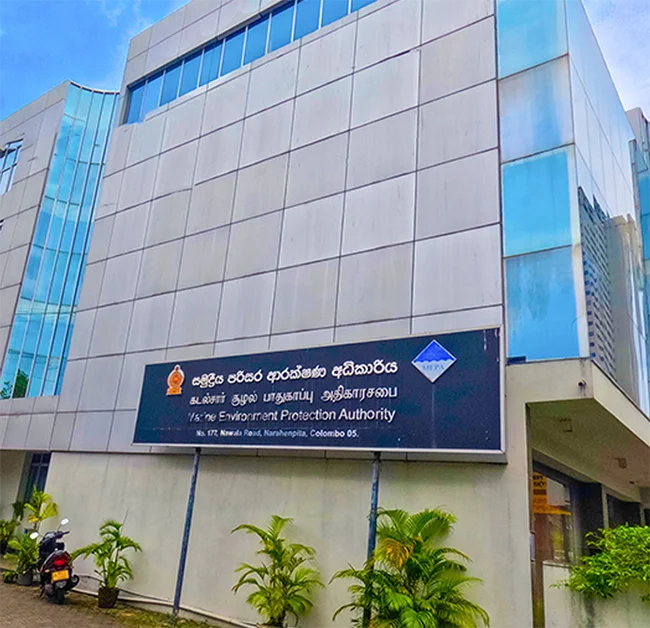
… Warns would-be polluters of criminal prosecution, hefty fines and even blacklisting
The Marine Environment Protection Authority (MEPA) has warned that ship owners, operators and local entities responsible for marine pollution will face criminal prosecution, heavy financial penalties and possible blacklisting, MEPA Chairman Samantha Gunasekera said yesterday.
Gunasekera told The Island that Sri Lanka would no longer tolerate negligence and regulatory breaches that threaten the country’s marine ecosystems, coastal livelihoods and national economy.
“Any party that pollutes our seas—whether foreign vessels or local operators—should be prepared to face the full force of the law,” Gunasekera said. “There will be no room for excuses, delays or backdoor negotiations when marine pollution is involved.”
He said MEPA has intensified surveillance of major shipping routes, ports and environmentally sensitive zones amid rising maritime traffic through Sri Lankan waters, which remain among the busiest in the Indian Ocean.
by Ifham Nizam
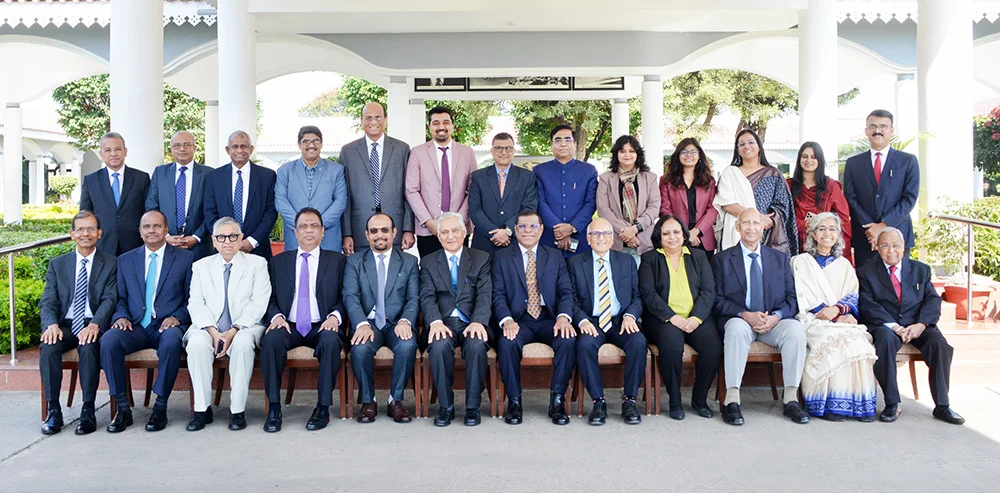
A 10-member delegation from Sri Lanka’s Supreme Court, headed by Chief Justice P. Padman Surasena, departed to New Delhi on the 11th of December, 2025, for an official visit to the Supreme Court of India as part of the ongoing official visit by the delegation to India.
The group was accorded a ceremonial welcome in the Court’s main hall, led by the Chief Justice of India (CJI) Surya Kant. CJI Kant told the assembled Judges that “the Indian judiciary was honoured to host” their Sri Lankan counterparts, expressing hope that the visit would be “meaningful and very constructive” and underscoring the “close emotional bonds” between the two countries.
The focal point of the programme was a special sitting of the Supreme Court. Chief Justice Surasena joined CJI Kant and Justice Joymalya Bagchi on the bench, presiding over the Court as a guest Justice. He was accompanied by nine other Supreme Court justices from Sri Lanka, who took seats in the well of CJI Kant’s courtroom to observe the day’s proceedings.
Supreme Court Bar Association President Vikas Singh formally greeted the delegation and praised Justice Surasena’s reformist efforts. Singh recalled the Sri Lankan Chief Justice’s own maxim, “If you want something you have never had, then you have got to do something you have never done”, highlighting the bold changes Surasena had introduced to modernise Sri Lanka’s Court system. Singh noted that these initiatives, particularly court digitization, were aimed at eradicating “the persisting problems of law delays” and streamlining case backlogs.
The Sri Lankan Judges spent the morning observing live Supreme Court proceedings in CJI Kant’s courtroom. This first-hand exposure to Indian court operations formed a key part of the programme’s judicial engagement. During the hour-long session, the visiting justices witnessed a range of cases on the Supreme Court’s roster, with Justice Surasena and the delegation following arguments from the front. The experience was designed to be immersive and following the hearing the Sri Lankan Judges were briefed on India’s own initiatives towards a digitalised court system, e-filing and case management systems.
The official programme then shifted to capacity-building and information exchange. In the early afternoon, Indian Supreme Court officials gave the Sri Lankan delegation detailed briefings on India’s technological initiatives. Court registrars demonstrated the e-filing system and other e-initiatives implemented by the Supreme Court of India. Additional presentations outlined the Court’s new case management systems and administrative reforms. These sessions highlighted how digital tools and better case-listing procedures have been used in India to increase efficiency. The Sri Lankan judges asked questions about India’s experience with electronic court records and the integration of technology in daily judicial work, reflecting their own interest in similar reforms back home.
The visit underscored the growing collaboration between the Indian and Sri Lankan judiciaries. Throughout the proceedings, both sides emphasised their shared legal traditions and mutual respect. As Chief Justice Surasena noted during the sitting, India is Sri Lanka’s “closest neighbour,” and historic links, even dating back to ancient epics, form the backdrop for today’s judicial dialogue. CJI Kant remarked that having the chief justices of two vibrant democracies together on the bench was a “significant moment” for the rule of law.
The Sri Lankan delegation continued its programme in Delhi on 12 December with a visit to the Delhi High Court and its International Arbitration and Mediation Centres. The exchange visit is expected to deepen judicial cooperation and provide practical insights for both courts. Officials on both sides say the engagement aimed at sharing best practices in court administration, reinforce legal ties and support ongoing reforms aimed at reducing case backlogs and delays.

Trump files $5bn defamation lawsuit against BBC over Panorama speech edit

UK and South Korea strike trade deal

Rob Reiner’s son Nick arrested for murder after director and wife found dead

70,297 persons still in safety centers

Showers will occur at times in the Northern, North-Central, Eastern, Uva and Central provinces

MEPA to crack down on marine polluters

‘Dates have the highest sugar content to fight Coronavirus’

Sunday Island 27 December – Headlines

#SundayIsland 17th December – Headlines

Sunday Island – 28th March

Sunday Island Headlines – 21 March

Sunday Island – 21st February – Headlines
-

 Features6 days ago
Finally, Mahinda Yapa sets the record straight
-

 Features6 days ago
Handunnetti and Colonial Shackles of English in Sri Lanka
-
 Business5 days ago
Cabinet approves establishment of two 50 MW wind power stations in Mullikulum, Mannar region
-
 News5 days ago
Gota ordered to give court evidence of life threats
-

 Features5 days ago
Cliff and Hank recreate golden era of ‘The Young Ones’
-
 Opinion6 days ago
A national post-cyclone reflection period?
-
 Features5 days ago
Sri Lanka and Global Climate Emergency: Lessons of Cyclone Ditwah
-

 Latest News6 days ago
Sri Lanka squad named for ACC Men’s U19 Asia Cup