
Features
Weere, the Blind Scholar, at Peradeniya

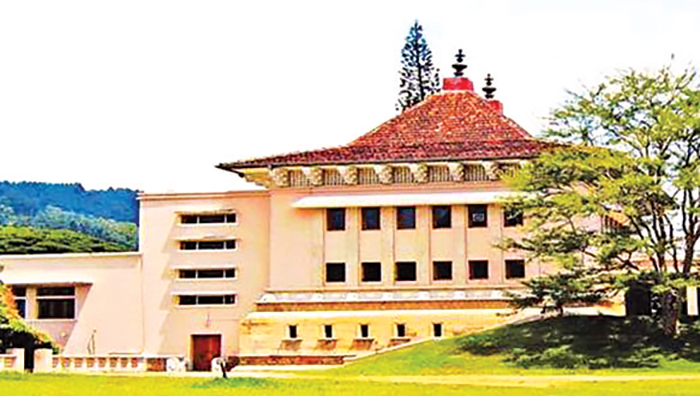
By Jayantha Perera
I met Weere (Weerakkody) at Peradeniya University in 1972, when we were final-year students – he was in Western Classics, and I was in Sociology. We were at Arunachalam Hall as resident students. Weere was blind. He knew how many steps he had to walk from his room to the dining room, hall telephone, toilet, and office. Carefully counting his steps, he strolled towards his destination with his white cane. Any interruption to his calculation of steps would make him mad. He then demanded someone to take him back to his room, where he could restart his walk and count the steps. When he went to his classes, church, or Arts Theatre, he depended on a small circle of friends for assistance, and I was one of them.
On Sundays, Weere, accompanied by a few friends, would walk to the Catholic Church, where he was a frequent speaker. He often shared his thoughts with the congregation, and his speeches were always enlightening. Once, he addressed the congregation on ‘Witnesses of Truth and Belief.’ He invited someone to translate his speech into Sinhala, sentence by sentence, to benefit freshers who had just joined the university. I volunteered. I was amazed to watch his enthusiasm and breadth of knowledge on Christianity and other religions, especially Judaism.
After the church service, Weere was looking for me. He recognised my voice and asked whether I could walk with him to Arunachalam Hall. I agreed. He told me he would like to be my friend. He accompanied me to his room to show me his books. We had about one hour before lunch, and he asked me to read a few pages from a large book he had borrowed from the library. He said my reading abilities were excellent. He suggested I visit him more often, read his books, and discuss them with him.
I told him I could not fully understand some passages I had just read, and they were like Greek to me. He smiled and said, “Yes, what you have just read was a difficult translation of an ancient Greek script!” He studied Latin, Ancient Greek, Classical Civilization, and Ancient History. He said reading classics would make a man a cultured gentleman. He hastened to say, “You are already a gentleman. By reading classics with me, you could polish your English.”
Several female classmates generously helped him by reading him textbooks and literature aloud. Some had complicated personal experiences with Weere, as he was very fond of knowing the female body. Perhaps he wanted to understand the female body by exploring it, as he could not see it. Some female classmates felt uncomfortable when he attempted to touch them while reading books to him. They felt terrible telling him to stop because he was blind and helpless. They did their “duty” and dropped out from his reading clique as early as possible to escape from him.
Once, a classmate offered to introduce him to a blind undergraduate at Ramanathan Hall. But he refused to meet her. He told the classmate he would consider developing a relationship only with a ‘normal’ girl who could see. Unfortunately, he never met a ‘normal’ girl and remained single.
After lectures, Weere would wait at the main entrance to the Arts Faculty, hoping for someone to assist him back to the hall. He would listen to the students around him, trying to ‘identify’ a friend he could ask to walk with him. Some friends would silently tiptoe past him, avoiding his request for help. Despite these challenges, Weere’s determination and resilience were evident to all who knew him. His unwavering spirit inspired his friends and classmates.
One Thursday morning, I saw him waiting for someone in front of the main library. I offered to walk with him as I was returning to the hall. He politely declined the offer, saying, “I have some official work today. I will come later. Thanks for the offer”. After reaching the hall, I checked the pedestrians on the Galaha road and saw Weere walking with a female colleague. I told my friends what Weere did. Subsequently, it became our pastime to offer to bring him to the hall soon after Thursday morning classes. He refused our help and waited for his friend to take him to the hall.
Every day at 6 pm, Weere would climb the stairs to the hall telephone. One day, I decided to play a prank and removed the phone cord from the socket before he arrived. To my surprise, Weere managed to reach the telephone, found the dead phone, and after a brief moment of thought managed to reconnect the cord and make his call. Before leaving, he removed the cord from the socket and hid it under the deck with a smile, showcasing his independence and resourcefulness.
I tried to avoid Weere on weekdays as I was studying. I thought he could not locate me if I did not talk when he was around. But Weere knew where I usually sat in the dining room. It was great fun for my colleagues to tell him, “Here is Jayantha to your left” or “in front of you.” He invariably asked me to read a few pages from a “fascinating” book he borrowed from the library. Often, I was reluctant to go; nevertheless, each time he wanted me to read, I agreed.
Once, he was studying the architecture of the Temple of Hephaestus in Athens, a well-preserved ancient temple. Weere was fascinated by the details of Greek architecture and wanted to remember as much information as possible from the reading. I had to re-read some sections for him, and he absorbed every word I read. If I hesitated to read a word because it was strange to me, he assisted me in pronouncing it correctly and discussed its meaning with me. He typed notes on the braille typewriter at the end of the reading, which usually lasted an hour. He showed me how to type and read braille script on brown paper.
Weere discouraged his friends from entering his room. He had kept his belongings according to a pattern that only he knew. Once, at an after-dinner hall meeting, he spoke on Greek Literature and wanted to show some building diagrams to the group. He shouted, “Jayantha, please bring the sketches I showed you last night. When you enter my room, to your left side is the small cupboard. Beyond the closet, there is a book self. There is a big file on the second shelf at the far-left corner. Please bring it. It is straightforward to find the file.” I was curious to know how he found my presence at the talk.
Weere was generous and allowed his friends to borrow things from him. Once, when a junior student borrowed his glue stick, Weere told him to leave it on the book cabinet. But the friend left it on Weere’s table. Weere was angry and hated people who messed around with his belongings.
Weere had a few juniors as his friends. Although kind and helpful, Weere sometimes demanded their services, which they resented. Weere once asked one of them to wash a bundle of dirty clothes. When the junior refused, Weere was sad and told him not to tell anyone about the request.
Weere was an ardent member of the University drama and musical societies. He assisted the DRAMSOC (University Dramatic Society) in translating Latin and Greek stories into Sinhala and writing drama scripts. He spent hours training actors and singers. As a mature student, Weere felt comfortable working with professors and lecturers on such engagements. At the church, he sang English, Latin and Sinhala Christian hymns beautifully. He was the author of several hymns.
During the weekends, Weere gladly joined his friends for an evening walk on the campus or to see a documentary film at the Arts Theatre. He also loved to listen to Sinhala music that the Arts Theatre had organised. Each year, it hosted a French film festival. Once, I went with Weere to see a French film. He proudly translated French dialogues into Sinhala for me and two others. He enjoyed the film more than I did. After the movie, he explained to me the role of French cinema in changing French urban society.
After the film, I waited with Weere for a few minutes on the parapets in front of the Arts Theatre. I watched vehicles and pedestrians on the Galaha road. Weere suddenly inquired, “Is there a demonstration that goes towards the Vice Chancellor’s Lodge?” I did not see any demonstration, but I saw a group of students alighting from a bus shouting at each other. Weere interpreted their shouting as a demonstration and presumed the students were moving towards VC Lodge to protest against some issue.
I once felt that Weere had betrayed me by studying while I was demonstrating with my other friends against the poor quality of hall food. When I told him how disappointed I was not to see him among the demonstrators, he told me that he was a poor man and that the university had fully subsidised his education. Therefore, it would be improper for him to join anti-university or hall agitations. I told him I was also a poor student who got a bursary but wanted to participate in students’ protests and agitations. He laughed and said, “You are a Marxist; that is why you want to join them. But I am an Aristotelian and believe in debate and consultation. In any case, Marx is too recent for me.”
I was disappointed when I saw Weere studying in the dark when the entire student population at the university was demonstrating against power cuts, which lasted one to two hours every day. His defence of studying during the dark spell was that he did not know the power had gone out! I asked him, “Did not you hear the shouting and screaming of students?” He said, “My hearing is also getting bad.” I knew that was not true, but I did not contradict him as I knew he was against any type of protest or agitation.
Weere got a first-class in Western Classics. But he was unhappy. He told me that his favourite subject was the only paper for which he got a ‘B’ pass. On his demand, his professors checked with the School for the Blind at Ratmalana (where his answer scripts were translated into the Roman script from the Braille script) whether the school had made a mistake in translating his answer script. The School found two untranslated braille pages that were a part of Weere’s answer script. The professors apologised to Weere for poorly handling his answer scripts and revised his ‘B’ grade to an ‘A.’
Weere joined the university teaching staff and won a government scholarship to read for a PhD at Hull University in the UK. His thesis examined Greece and Roman contacts with ancient Sri Lanka. He returned to Sri Lanka and joined Peradeniya University as a lecturer in Western Classics. He translated several Greek and Latin classics into Sinhala. His famous translations were Plato’s Phaedo and the Republic. His translations opened the doors for students who studied in Sinhala to read Western classics and study Western philosophy. When he died at 68 in 2013, a colleague wrote a newspaper article about him. He said, “Weerakkody was born blind but worked much more than many other academics who had sight.”



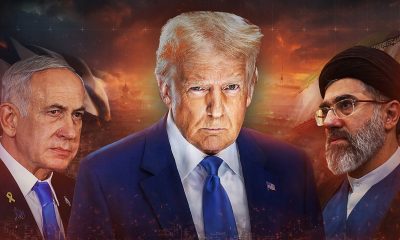
 Going forward, it is hoped that a reported ceasefire agreement between the US and Iran would provide a basis for a degree of stability in the Middle East and pave the way for substantive peace talks between the powers concerned. The world is compelled to fall back on hope because there is never knowing when President Donald Trump would change his mind and plans on matters of the first importance. So erratic has he been.
Yet, confusion abounds on who has agreed to what. The US President is on record that a number of conditions put forward by him to Iran to deescalate tensions have been accepted by the latter, whereas Iran is yet to state unambiguously that this is so. For instance, the US side claims that Iran has come clear on the point that it would not work towards acquiring a nuclear weapons capability, but there is no official confirmation by Iran that this is so. The same goes for the rest of the conditions.
Accordingly, the peace process between the US and Iran, if such a thing solidly exists, could be said to be mired in uncertainty. Nevertheless, the wider publics of the world are bound to welcome the prospects of some sort of ceasing of hostilities because it would have the effect of improving their economic and material well being which is today under a cloud.
However, questions of the first magnitude would continue to bedevil international politics and provide the breeding ground for continued tensions between East and West. Iran-US hostilities helped highlight some of these divisive issues and a deescalation of these tensions would not inevitably translate into even a temporary resolution of these questions. The world community would have no choice but to take them up and work towards comprehending them better and managing them more effectively.
For example, there are thorny questions arising from the Treaty on the Non-Proliferation of Nuclear Weapons (NPT). Essentially, this treaty bans the processing and use of nuclear weapons by states but some of the foremost powers are not signatories to it.
Moreover, the NPT does not provide for the destroying of nuclear arsenals by those signatory states which are already in possession of these WMDs. Consequently, there would be a glaring power imbalance between the latter nuclear-armed states and others which possess only conventional weapons.
Such a situation has grave implications for Iran’s security, for instance. The latter could argue, in view of the NPT restrictions, that the US poses a security threat to it but that it is debarred by the Treaty from developing a nuclear arms capability of its own to enable it to match the nuclear capability of the US. Moreover, its regional rival Israel is believed to possess a nuclear weapons capability.
Accordingly, a case could be made that the NPT is inherently unfair. The US would need to help resolve this vexatious matter going forward. But if it remains, US-Iran tensions would not prove easy to resolve. The same goes for Iran-Israeli tensions. Consequently, the Middle East would remain the proverbial ‘powder keg’.
Besides the above issues, the world has ample evidence that it could no longer speak in terms of a united NATO or West. Apparently, there could be no guarantee that US-NATO relations would remain untroubled in future, even if the current Iran-US standoff is peacefully resolved. US-NATO ties almost reached breaking point in the current crisis when the US President called on its NATO partners, particularly Britain, to help keep open the Hormuz Straits for easy navigation by commercial vessels, militarily, on seeing that such help was not forthcoming. Such questions are bound to remain sore points in intra-Western ties.
In other words, it would be imperative for the US’ NATO partners to help pull the US’ ‘chestnuts out of the fire’ going ahead. The question is, would NATO be willing to thus toe the US line even at the cost of its best interests.
For the West, these fractious issues are coming to the fore at a most unpropitious moment. The reality that could faze the West at present is the strong opposition shown to its efforts to bolster its power and influence by China and Russia. Right through the present crisis, the latter have stood by Iran, materially and morally. For instance, the most recent Security Council resolution spearheaded by the US which was strongly critical of Iran, was vetoed by China and Russia.
Accordingly, we have in the latter developments some marked polarities in international politics that could stand in the way of the West advancing its interests unchallenged. They point to progressively intensifying East-West tensions in international relations in the absence of consensuality.
It is only to be expected that given the substance of international politics that the West would be opposed by the East, read China and Russia, in any of the former’s efforts to advance its self interests unilaterally in ways that could be seen as illegitimate, but what is sorely needed at present is consensuality among the foremost powers if the world is to be ‘a less dangerous place to live in.’ Minus a focus on the latter, it would be a ‘no-win’ situation for all concerned.
It would be central to world stability for International Law to be upheld by all states and international actors. Military intervention by major powers in the internal affairs of other countries remains a principal cause of international mayhem. Both East and West are obliged to abide scrupulously with this principle.
From the latter viewpoint, not only did the West err in recent times, but the East did so as well. Iran, for instance, acted in gross violation of International Law when it attacked neighbouring Gulf states which are seen as US allies. Neither Iran nor the US-Israel combine have helped in advancing international law and order by thus taking the law into their own hands.
Unfortunately, the UN has been a passive spectator to these disruptive developments. It needs to play a more robust role in promoting world peace and in furthering consensual understanding among the principal powers in particular. The need is also urgent to advance UN reform and render the UN a vital instrument in furthering world peace. The East and West need to think alike and quickly on this urgent undertaking.
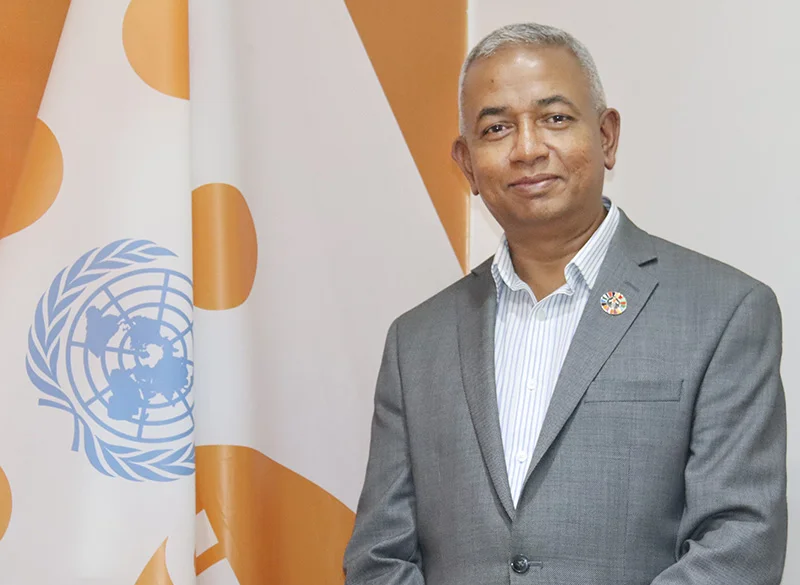
Marking World Health Day on April 7, health experts have called for a stronger commitment to science-based decision-making to address increasingly complex and evolving health challenges in Sri Lanka and beyond.
Dr. Dayanath Ranatunga, Assistant Representative of the United Nations Population Fund, stressed that health is no longer confined to hospitals or traditional medical systems, but is shaped by a broad spectrum of social, environmental, and technological factors.
“This year’s theme, ‘Together for Health. Stand with Science,’ reminds us that science is not only for laboratories or policymakers. It is a way of thinking and a tool that shapes everyday decisions,” he said.
Dr. Ranatunga noted that modern health challenges are increasingly interconnected, ranging from infectious diseases such as COVID-19 to climate-related risks, demographic shifts, and emerging forms of online violence.
He warned that maternal and newborn health continues to demand urgent attention despite progress. Globally, an estimated 260,000 women died from pregnancy and childbirth-related causes in 2023 alone—many of them preventable through timely, science-based interventions.
“In countries like Sri Lanka, where fertility rates are declining and survival rates improving, every pregnancy carries greater significance—not just for families, but for the future of communities and economies,” he said.
The UNFPA official also highlighted the growing threat of Technology Facilitated Gender-Based Violence (TFGBV), including cyber harassment and online abuse, noting that these forms of violence can have deep psychological consequences despite lacking visible physical harm.
He emphasised the need for multidisciplinary, science-informed approaches that integrate mental health, digital safety, and survivor-centered care.
Turning to demographic trends, Dr. Ranatunga pointed out that increasing life expectancy is bringing new challenges, particularly the rise of non-communicable diseases such as diabetes, cardiovascular illnesses, and cancers.
In Sri Lanka, nearly 13.9% of mothers develop diabetes during pregnancy, a trend attributed to obesity and unhealthy lifestyles, underscoring the urgent need for preventive healthcare strategies.
“Are we investing enough in prevention?” he asked, noting that early intervention and healthier lifestyles could significantly reduce long-term healthcare costs, especially in a country with a free public healthcare system.
He underscored the importance of data-driven policymaking, stating that scientific research and analytics enable governments to identify gaps, anticipate future needs, and allocate resources more effectively.
The UNFPA, he said, is already leveraging tools such as Geographic Information Systems (GIS) to improve access to maternal healthcare, including mapping travel times for pregnant women to reach health facilities.
Digital innovation is also transforming healthcare delivery, from telemedicine to real-time data systems, improving efficiency and ensuring continuity of care even during emergencies.
In Sri Lanka, partnerships between the government and development agencies are helping to modernise training institutions, including facilities in Batticaloa, equipping healthcare workers with both clinical and digital skills.
However, Dr. Ranatunga cautioned that technology alone is not a solution.
“It must be guided by evidence and grounded in equity,” he said, pointing out that women’s health remains significantly underfunded, with only about 7% of global healthcare research focusing on conditions specific to women.
He also drew attention to the growing health impacts of climate change, including extreme weather, food insecurity, and displacement, describing it as an emerging public health crisis.
“Health does not begin in hospitals. It is shaped by the environments we live in, the choices we make, and the systems we build,” he said.
Calling for renewed commitment, Dr. Ranatunga urged stakeholders to invest in prevention, embrace innovation, and ensure that science remains central to policy and practice.
“Science is not just about knowledge—it is about ensuring that everyone has the opportunity to live healthy, dignified lives, and that no one is left behind,” he added.
By Ifham Nizam

 Melantha Perera is well known as a very versatile musician.
He was involved with the band Mirage, as their keyboardist/vocalist, and was also seen in action with other outfits, as well, before embarking on a trip to Australia, as a solo artiste.
I now hear that he has plans to operate as a trio.
However, what has got many talking about Melantha, these days, is his awesome work with the visually impaired Bright Light Band.
They have worked out a special song for the Sinhala and Tamil New Year, aptly titled ‘Awurudu Kaale.’
Says Melantha: “This song has been created to celebrate the spirit of the Sinhala and Tamil New Year and to share the joy of the Awurudu season with all Sri Lankans”.
Yes, of course, Melantha composed the song, with the lyrics written collaboratively by Melantha, Badra, and the parents of the talented performers, whose creative input brought the song to life during moments of inspiration.
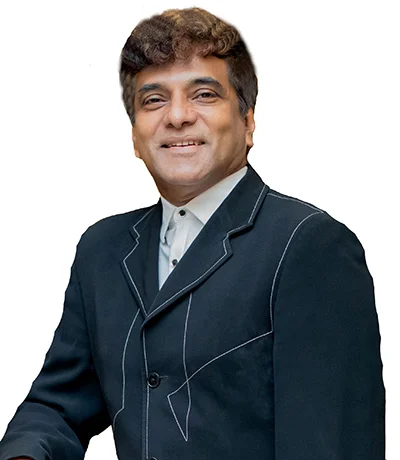
Melantha Perera: Awesome work with Bright Light Band
This meaningful collaboration reflects the strong community behind the Bright Light Band.
According to Melantha, accompaning the song is a vibrant video production that also features the involvement of the parents, highlighting unity, joy, and togetherness.
Beyond showcasing their musical talents, the visually impaired members of Bright Light Band deliver a powerful message, through this project, that their abilities extend beyond singing, as they also express themselves through movement and dance.
Melantha expressed his satisfaction with the outcome of the project and looks forward to sharing it with audiences across the country during this festive season.
He went on to say that Bright Light Band extends its sincere gratitude to Bcert Australia for their generous Mian sponsorship, the CEO of the company, Samath Fernando, for his continuous support in making such initiatives possible, and Rukshan Perera for his personal support and encouragement in bringing this project to completion.
The band also acknowledges Udara Fernando for his invaluable contribution, generously providing studio space and accommodating extended recording sessions to suit the children’s availability.
Appreciation is warmly extended to the parents, whose unwavering commitment from ensuring attendance at rehearsals to supporting the video production has been instrumental in the success of this project.
Through ‘Awurudu Kaale’, Bright Light Band hopes to spread festive cheer and inspire audiences, proving that passion and talent know no boundaries.

BCCI curbs movement of benched IPL players in latest rules

Prasidh trumps Miller in last-ball finish as Gujarat Titans clinch thriller

Greece to ban social media for under-15s from next year

Showers will occur at a few places in the Western, Sabaragamuwa and North-western provinces and in Galle, Matara, Kandy, Nuwara-Eliya and Mannar districts after 2.00 p.m.

Sun directly overhead Chilaw, Bingiriya, Halmillawewa, Panduwasnuwara, Gokarella, Kawudupelella, Koppaveli and Kirankulam about 12:12 noon. today (09)

Heat Index at Caution Level in the Western, Sabaragamuwa, Southern, Eastern, North-western, Northern and North-central provinces and in Monaragala district

‘Dates have the highest sugar content to fight Coronavirus’

Sunday Island 27 December – Headlines

#SundayIsland 17th December – Headlines

Sunday Island – 28th March

Sunday Island Headlines – 21 March

Sunday Island – 21st February – Headlines
-

 Features4 days ago
Ranjith Siyambalapitiya turns custodian of a rare living collection
-

 News4 days ago
Global ‘Walk for Peace’ to be held in Lanka
-

 News2 days ago
Lankan-origin actress Subashini found dead in India
-
 Opinion6 days ago
Hidden truth of Sri Lanka’s debt story: The untold narrative behind the report
-

 Features4 days ago
Beyond the Blue Skies: A Tribute to Captain Elmo Jayawardena
-

 Features4 days ago
Aspects of Ceylon/Sri Lanka Foreign Relations – 1948 to 1976
-
 Features6 days ago
The Ramadan War
-

 Editorial5 days ago
Brouhaha over a book