
Sports
‘We can turn the tables on England. This series is 50-50’ – Mahela Jayawardene

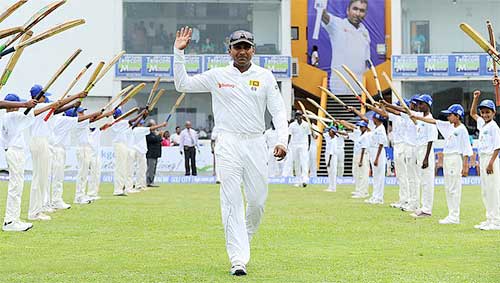
Jayawardene isn’t keen on taking up a permanent role in the Sri Lankan setup despite his status(Getty)
Sri Lanka are raring to go ahead of facing an under-prepared England for a two-Test series, and the hosts see an opportunity for an upset.
England head into the series without Jofra Archer and Ben Stokes and with less than two days of match practice, while Sri Lanka are keen to bounce-back after a series defeat to South Africa.
Sportsmail’s Nasser Hussain caught up with Sri Lanka legend and Mumbai Indians coach Mahela Jayawardene ahead of the series.
NH:
I know Sri Lanka have asked you in the past, and you felt they hadn’t taken on board some of your proposals, but in the long term would you like to coach the national side?
MJ:
For me the biggest hurdle is to be involved full-time, whether it’s franchise cricket or a national team. I don’t see myself being a coach who’s going to be involved with one team for 12 months a year. That’s not enjoyable for me.
It’s got nothing to do with Sri Lanka Cricket as such, and I’ve always said I’m happy to contribute and help the team — as long as what I see is wrong has been corrected. It hasn’t happened over the years.
I don’t want to walk in and be a figure in a process where I know the system hasn’t allowed cricketers or the team to evolve.
NH:
The talent in Sri Lanka has always been remarkable. What is it like at the moment?
MJ:
The raw ingredients are there. It’s just that a lot of the guys struggle with the pathway after school. The domestic structure has so many teams, so the quality gets diluted pretty quickly, and people make wrong decisions.
Not all the coaches are good enough, so we lose a lot of talent in that process. It’s not a professional setup at that level, and a lot of the guys give up and do other things, like league cricket in Australia or England.
NH:
Is Test cricket still financially viable in Sri Lanka?
MJ:
We still have an appetite for Test cricket. Because of the history of Sri Lanka’s Test team, they all want to play cricket at that level. But if you don’t improve and evolve, five or 10 years down the line we will have guys who only want to play white-ball cricket.
The recent T20 Lankan Premier League was good. We’ve needed something like that for the last 10 years, to make the game at that level financially viable.
NH:
The Test team have just come back from South Africa with a lot of injuries. Where are they at the moment?
MJ:
I was pretty pleased with the way they started in South Africa, putting nearly 400 on the board at Centurion. But the bowlers broke down, and that was a real issue. Guys who played at the LPL still had niggles, and they went into the second Test quite depleted.
For the English tour, we’ve got Angelo Mathews coming back after the injury, and Dinesh Chandimal should be fit as well — two experienced guys in the middle order to support Dimuth Karunaratne at the top. It’s about that discipline in the longer format: how do you cope with pressure for four to five days?
NH:
Any promising players England fans might not have heard of?
MJ:
It’s unfortunate that Dhananjaya de Silva has a long-term injury, but Kusal Mendis is a talent, and has scored seven hundreds in his short Test career. He knows how to go big.
And Sri Lankan have found two all-rounders: Wanindu Hasaranga, the leg-spinner, who bats at seven, and seamer Dasun Shanaka, who bowled really well in South Africa.
NH:
Is Mickey Arthur the right man to coach them at the moment?
MJ:
Yeah, he’s one of those guys who’s quite methodical and regimental, but he’s a good coach — a players’ coach. We need to give Mickey some time with the team, because he’s proven himself with a lot of international teams.
NH:
And he tends to speak his mind. He did an interview the other day when he said ‘I don’t think the pitch at Galle will turn: I know it will turn.’ Are you expecting a bunsen burner at Galle?
MJ:
You know Galle: it’s going to slow down, and start turning. So those first two days are crucial, and after that it’s going to be a grind. It will be quite interesting to see how the second Test match is going to pan out, because you’re playing at the same venue.
They’ll definitely make sure Sri Lanka have that advantage of playing at Galle, but the England boys have played there many times.
NH:
Where do you see England at the moment, and in particular their playing of spin. Is that still a nemesis for them?
MJ:
I think it can be. It depends on the tempo they want to play. The modern England team plays at a different tempo, but you still need someone to grind out an innings — Cooky (Alastair Cook) has done that in the past. Someone has to do that now, whether it’s Rooty (Joe Root) or someone else.
The other guys are much more high-tempo players, so how you balance that is crucial. And which way do you go with the bowlers? You don’t have the pace of Jofra (Archer), so who’s going to take up that role on a slow wicket? Sometimes you need extra firepower to get something going.
NH:
As you say, there’s no Jofra, no Ben Stokes, and Moeen Ali is ill. Is this an opportunity for Sri Lanka, on a turner, to get payback for England’s 3-0 win there in 2018?
MJ:
Yeah, it is. Even though Sri Lanka didn’t do well in South Africa, they’ll see this as a very good opportunity.
The first two days will set the tone. But England have two good experienced bowlers in Broady (Stuart Broad) and Jimmy (Anderson), who understand what needs to be done in these conditions. They will fall back on them. It’ll be interesting to se if they pick both in the same Test.
NH:
How much did the 3-0 defeat hurt Sri Lanka, and how much is it feeding into their mindset now?
MJ:
It did hurt Sri Lanka a lot, although it feels like a lifetime ago now. They had opportunities in that series, but never grabbed them, and England had that experience to control sessions. They were dominant.
But these two Test matches are at Galle, whereas last time it was in three different places, and Sri Lanka have a much better record at Galle. It will suit the current group of players. I don’t think Sri Lanka will be thinking too much about last time around.
NH:
Do you worry about the mental and physical wellbeing of players when they’re spending so much time in bubbles?
MJ:
Yeah, that’s something you have to look at. We used to have three weeks’ R&R with our families between tours, but now they’re straight into another bubble.
That’s when player management is important. When you see guys who aren’t mentally fresh, you might have to let them go home for two or three weeks. Going bubble to bubble is always going to have an impact. If this runs through 2021, that’s going to be a long stretch for a lot of cricketers.
NH:
When I went to Sri Lanka, England were never favourites. Do you see this England as favourites?
MJ:
With Stokes missing, England don’t have that same experience in the top order, so I make it 50-50. I don’t think they’re going as favourites. I think Sri Lanka have something in them. (Daily Mail)


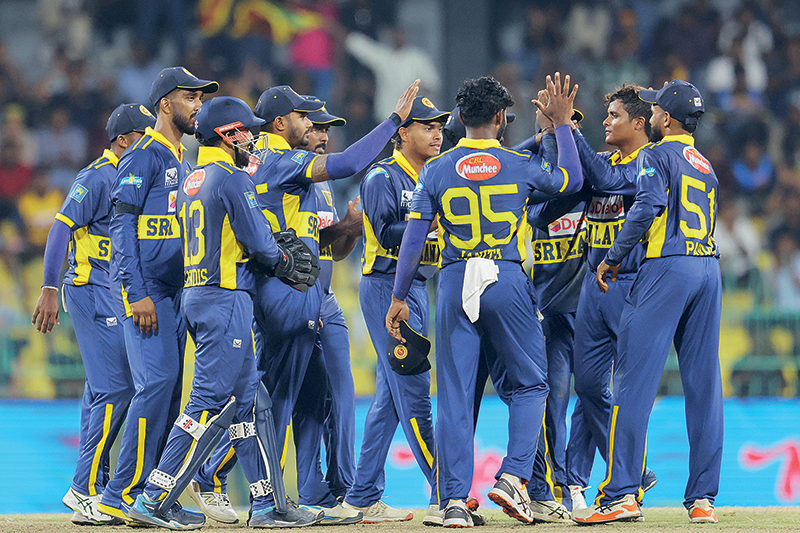
Sri Lanka’s home ODI record since the wreckage of the 2023 World Cup has been a study in quiet efficiency. Ninth place in India and an early Champions Trophy exit could have sent the wheels spinning, but instead the hosts have responded by turning their backyard into a fortress. Since then, Sri Lanka have played seven ODI series at home and won all of them. These are not against minnows, but against the heavyweights, including World Cup finalists Australia and India. Beat England again on Saturday and within the space of 18 months, the so-called Big Three would have been ticked off one by one.
Much of this good work has been done at the R. Premadasa Stadium, a venue that has become Sri Lanka’s tactical sweet spot. There are murmurs, as always, about doctored pitches handing the hosts an unfair edge, but that argument doesn’t quite stand. The current England series has been played on honest strips and in any case, this is no longer the Sri Lankan line-up of old, blessed with nimble feet and wrists made for slow bowling. Apart from Kusal Mendis, the current batting group struggles badly against spin, particularly wrist spin, which explains why Pakistan doubled up with leg-spinners recently and why England rolled out Adil Rashid and Rehan Ahmed in the opening ODI.
The RPS blueprint is fairly straightforward: bat first, post something in the region of 275, then squeeze. Patience is the currency here. After the 30th over of the chase, the surface begins to grip, the ball talks a little more and visiting sides often find themselves strangled by scoreboard pressure rather than outright turn.
The opening win against England, however, didn’t quite follow the script. Sri Lanka’s seamers sprayed it around towards the end, struggling for line and control, perhaps guilty of overcooking the wide yorker. That is where solid coaching support becomes priceless, brains in the dugout to complement Sanath Jayasuriya, not attention-seekers chasing social media applause.
The old saying goes that the ends don’t justify the means, but winning has a way of papering over cracks. The public may forget the flaws, but coaches can’t afford to. Margins at this level are wafer-thin and what slips by on one day can bite hard on another.
One major positive was Kusal Mendis finally embracing the anchor’s role. Without him, Sri Lanka might well have been bowled out inside the 50 overs. Too often Mendis has dazzled with a rapid 30 before gifting his wicket with a low-percentage stroke. This time, it was a back-to-the-wall innings – cramps, pressure and all – and he refused to throw in the towel.
The maturity was evident in the final over. Sitting on 92, Mendis resisted the temptation to hog the strike in search of a hundred, instead backing Dunith Wellalage. The youngster repaid the faith in style, clouting three boundaries and a six as 23 runs came off the over – the decisive burst in a 19-run victory.
Mendis also effected two sharp stumpings and many in the press box had him pencilled in as Player of the Match. But the nod went to Wellalage and rightly so. His all-round contribution tilted the contest Sri Lanka’s way and that stunning catch to dismiss Rehan Ahmed was pure athleticism and good presence of mind.
Off the field, the British tourists outnumbered locals in the stands and beer sales reportedly went through the roof on Thursday. Colombo’s leading hotels are full, a timely shot in the arm for the economy. Now the hosts must play their part off the pitch as well – clear signboards, directions to washrooms and basic facilities go a long way.
by Rex Clementine ✍️
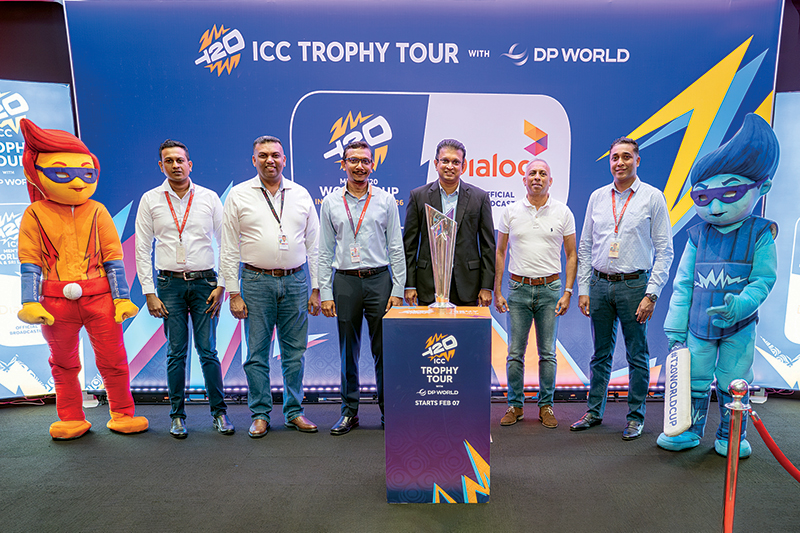
The ICC Men’s T20 World Cup Trophy made a landmark stop at the Dialog Axiata PLC headquarters on Friday, marking a celebratory moment in Sri Lanka’s countdown to the ICC Men’s T20 World Cup 2026.
Following its stop at Dialog headquarters, the trophy embarked on an island-wide tour, travelling to Kandy, Dambulla, and Jaffna. The tour offers fans a rare opportunity to see the trophy up close, capture memorable moments and take part in the build-up to the tournament.
Co-hosted by Sri Lanka and India, the ICC Men’s T20 World Cup 2026 will be played from 7th February to 8th March across multiple venues in both countries.
The visit carried special significance for Dialog, a long-standing partner of Sri Lankan cricket. Over the years, Dialog has played a key role in transforming how fans experience the game, from live broadcasts and digital platforms to on-ground activations, helping ensure that cricket remains widely accessible to supporters across the island.
Dialog holds the exclusive ICC Men’s T20 World Cup media and broadcasting rights in Sri Lanka under a multi-year agreement. Fans will be able to enjoy live matches, highlights, expert analysis, and comprehensive coverage on Dialog Television and Dialog Play App, bringing the excitement of world-class cricket into Sri Lankan homes. This is complemented by a free-to-air broadcast partnership with Supreme TV, helping extend coverage to audiences nationwide.
Foreign News
Naqvi casts uncertainty on Pakistan’s participation in T20 World Cup after Bangladesh ouster

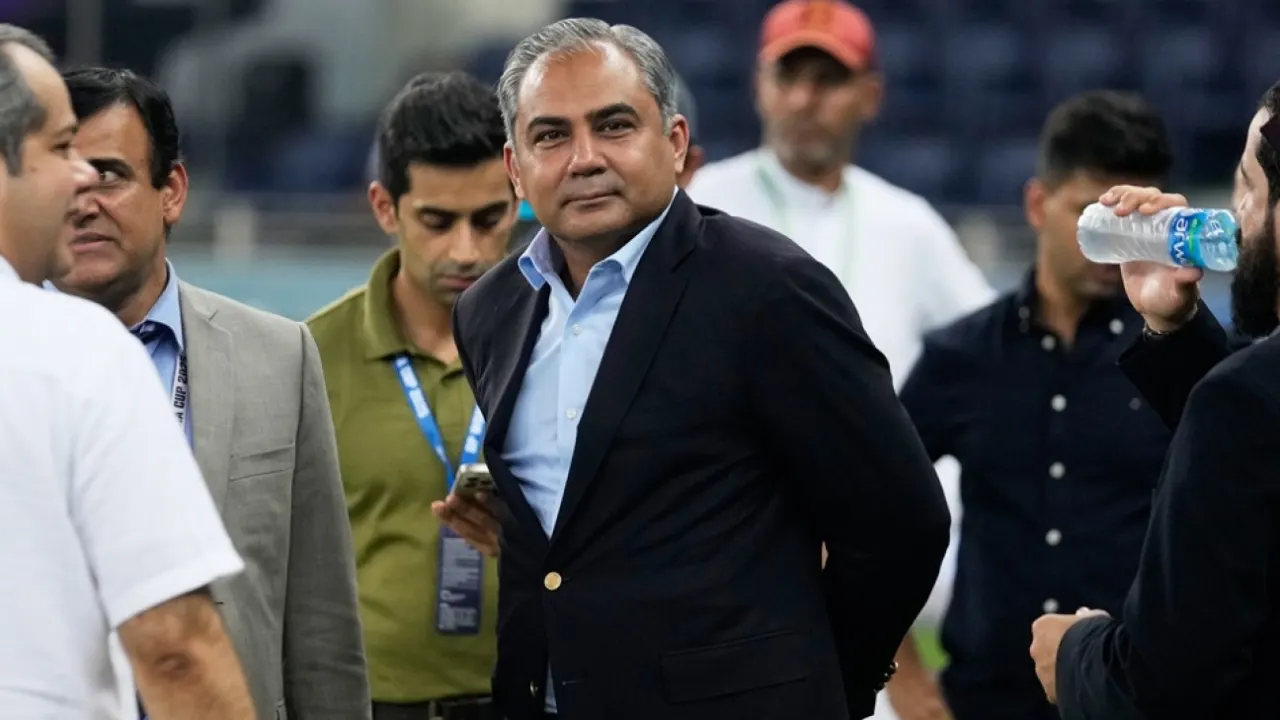
Pakistan’s participation at the upcoming Men’s T20 World Cup 2026 has been thrown into uncertainty after the PCB chairman Mohsin Naqvi said a final decision would be made after talking to Pakistan’s government. Speaking shortly after the ICC officially removed Bangladesh from the T20 World Cup owing to their refusal to play in India, Naqvi accused the ICC of “double standards” favouring India, and termed what happened to Bangladesh “an injustice”.
“Our stance on World Cup participation will be what the government of Pakistan instructs me,” he said. “The Prime Minister is not in Pakistan right now. When he returns, I’ll be able to give you our final decision. It’s the government’s decision. We obey them, not the ICC.”
Over the past week or so, Pakistan has firmly thrown its support behind Bangladesh in their dispute with the ICC demanding a venue outside of India to play their T20 World Cup matches. At an ICC meeting last week, the PCB was understood to be the only board to back the BCB in their stance. The tournament is jointly hosted by India and Sri Lanka, but Bangladesh’s games were all scheduled in India. Bangladesh, however, have said it is no longer safe for them to play in India after the BCCI, on January 3, instructed Kilkata Knight Riders to release Mustafizur Rahman rom their IPL 2026 squad.
Though no reason was stated for that directive, it came amid deteriorating relations between India and Bangladesh. On January 4, the BCB wrote to the ICC after consultation with the government that the Bangladesh team would not travel to India for its T20 World Cup matches due to security concerns, a stance it stuck to through several subsequent discussions with the ICC.
The ICC has repeatedly refused Bangladesh’s request, and earlier this week gave them an ultimatum demanding them to accept the schedule as it was, or face being removed from the tournament. On Saturday, with Bangladesh sticking to their position, the ICC formally announced Bangladesh would not be part of the T20 World Cup, and would be replaced instead by Scotland.
Naqvi was critical of the decision, calling it an injustice to Bangladesh. “I think Bangladesh has been hard done by,” he said. “You can’t have double standards. You can’t say for one country [India] they can do whatever they want and for the others to have to do the complete opposite. That’s why we’ve taken this stand, and made clear Bangladesh have had an injustice done to them. They should play in the World Cup, they are a major stakeholder in cricket.”
While there have been local, unverified reports that the PCB would refuse to participate in the World Cup in solidarity with Bangladesh should they be removed, the PCB has declined to confirm to ESPNcricinfo when approached. Naqvi’s comments to the media on Saturday was the first time anyone at the PCB has directly addressed the issue, where he repeatedly said the decision was no longer in the hands of the PCB.
“If the government of Pakistan says we mustn’t play, then maybe the ICC will bring in a 22nd team (after Scotland). It’s up to the government.”
No specific reason was given by Naqvi other than to support Bangladesh, as to why government permission would now be required for an event that starts in two weeks. Last year, both BCCI and PCB, with the approval of ICC, signed up to a hybrid model agreement by which both countries would play each other on neutral territory for all global events in the 2024-27 rights cycle.
Pakistan play all their games in Sri Lanka for this event (which already was a co-hosted event) and are scheduled to play the opening game of the tournament, against Netherlands on February 7. They are scheduled to play India on February 15 in Colombo in their group stage clash.
[Cricinfo]

Engineers draw red line as CEBEU warns of union action over appointed date

Navam Perahera and sacred relics exhibition at Gangaramaya

CID sleuths still plodding on with their probe into controversial Grade 6 English module

Anusha Palpita remanded over alleged illicit assets

26th Edition: Journalism Awards for Excellence 2024

From colour to contour: Ramani Fernando on what next in 2026

‘Dates have the highest sugar content to fight Coronavirus’

Sunday Island 27 December – Headlines

#SundayIsland 17th December – Headlines

Sunday Island – 28th March

Sunday Island Headlines – 21 March

Sunday Island – 21st February – Headlines
-

 Features6 days ago
Extended mind thesis:A Buddhist perspective
-

 Opinion5 days ago
American rulers’ hatred for Venezuela and its leaders
-
 Business3 days ago
CORALL Conservation Trust Fund – a historic first for SL
-

 Opinion3 days ago
Remembering Cedric, who helped neutralise LTTE terrorism
-

 Opinion2 days ago
A puppet show?
-

 Opinion5 days ago
History of St. Sebastian’s National Shrine Kandana
-

 Features4 days ago
The middle-class money trap: Why looking rich keeps Sri Lankans poor
-
 Features2 days ago
‘Building Blocks’ of early childhood education: Some reflections