
Sports
“We can be competitive if we put up 250-260 in the ODIs and 150-160 in T20Is” – Athapaththu


The Commonwealth Games are a little over a month away, and Sri Lanka captain Chamari Athapaththu is under no illusions as to how important the upcoming limited-overs series against India is in terms of preparation, especially for a side that is high on potential, but rather light on experience.
“We have to play the Commonwealth Games in July, we’re leaving on the 25th. This series against India is very important for us in that sense, as we haven’t played any games in the last two years,” Athapaththu said on the eve of the first T20I in Dambulla.
“We have a lot of good, young players but the thing is they don’t have much experience. This is an opportunity for them to showcase their skills.”
This was Athapaththu’s first media engagement following Sri Lanka’s tour of Pakistan – the team’s first bilateral tour in over two years. The tour was a rough one, with an understandably rusty Sri Lankan outfit stumbling through most of it on spin-friendly tracks, which their batters struggled to come to terms with. They, however, did end it on a high note, with a consolation win in the final of three ODIs, having earlier been swept 3-0 in the T20I series.
While the defeats were no doubt frustrating for a competitor as fierce as Athapaththu, she was more than happy to outline the positives her young side was able to take away from the tour.
“Those three matches in Karachi – and it wasn’t even the main ground that we played on – I think they knew that our batters perform better on wickets that have good pace and bounce, especially me. So the wickets they had prepared were quite slow and low. It took us too long to adapt to the conditions. That said, we learned a lot from the series. Particularly how to adapt to conditions quickly, and how to tackle spinners more effectively.”
With India up next, Athapaththu knows that things won’t be getting any easier. However, she’s hopeful that more familiar home conditions could see her side put up more of a fight.
“In our home conditions, we know what to expect, what the ball is likely to do. There’s also going to be quite a bit of wind in Dambulla, so knowing which way it blows and so on, that knowledge is going to be quite important in taking on a side as good as India. Using the conditions to our advantage is going to be crucial.”
This is an Indian side that, while no doubt formidable, is also going through a transition of their own – albeit to a far lesser extent. Former captain Mithali Raj is now retired, while veteran seamer Jhulan Goswami has also been left out for the series; the pair has 433 ODIs and 157 T20Is of experience. India’s spinners, meanwhile, haven’t been the most impactful in recent times.
Athapaththu therefore believes that the key difference between the two sides in the upcoming games could come down to their respective batters – of which India’s are more experienced and more proven in their ability to score rapidly.
“If you look at the Indian team, about six-seven players play in the some of the best women’s leagues in the world such as the WBBL, The Hundred and the Women’s IPL. So they have a lot more experience at the highest level than some of our players. But the last time India came to Sri Lanka we beat them in an ODI.
“The most important thing is our batting. If our batters can score put up scores of 250-260 in the ODIs, and around 150-160 in the T20s, I think we can be competitive. If you look at the bowlers of both sides, I think it’s around the same level, but it’s in the batting that they have an advantage. They have a lot of players that can score quickly and players that have a lot of experience. Our team, our experience in terms of players who are able to score fast, is quite low. That’s probably where our weakness lies, but if our players play to their potential then they can beat any side in the world on their day.”
Much of the responsibility therefore will fall on Athapaththu’s shoulders. In Pakistan, it was her match-winning turn in the final ODI, where she picked up two wickets to go with her century, that set up Sri Lanka’s win. Prior to that, Athapaththu’s tour had been an underwhelming one by her high standards, with her highest score being 37. It’s safe to say, an on-song Athapaththu is Sri Lanka’s best chance of victory, something she too is acutely aware of – though she is confident that with added experience that burden will slowly be lifted.
“To be honest, the batting unit now is quite youthful,” Athapaththu said. “So the longer I’m out there batting with them, the more valuable it is for them and the team. In the Pakistan series, I was sadly unable to give my best, especially because of the tough conditions. By the time I adjusted to the wickets it was a bit too late, which is why I was only able to really make a noteworthy contribution to the team in the final game.
“From the batting side especially, I think my batting is quite valuable to the side. There are not many experienced batters in the side, but there are a few experienced players in the bowling unit. So I look forward to giving my best for the side in this series.”
Sri Lanka’s batting struggles have largely centred around their inability to rotate strike effectively, leading to an unwanted tendency to rack up large numbers of dot balls – a trait the men’s team also shares, but has more recently been working their way through. Athapaththu revealed that discussions surrounding the issue have been had, and that plans are in place to address the matter.
“If you look at our team, each player’s potential and skills differ. Harshitha Madavi, more than hitting sixes , her skill lies in finding the gaps for boundaries and scorings ones and twos. We need to identify which players can keep the scoreboard ticking with singles and which are more adept at hitting boundaries and sixes.
“We’ve worked on this and we’ve set targets so as to reduce the number of dot balls; for example in the ODIs we want to score at least 100 singles. But it’s important to increase the boundary percentage as well, and that responsibility needs to be taken on by the players who are capable of doing that. I’m not saying you’ll see over night, but I think we will get there eventually.”
Among those Athapaththu is hopeful of making a major contribution in the upcoming tour, she makes a point to name check a couple: Kavisha Dilhari and Harshitha Madavi. Twenty-one and 23 years of age respectively, the pair has rightly been identified as the future of the Sri Lankan women’s team.
Madavi, like Athapaththu, took a while to get acclimatised to the Pakistani pitches, but ended the tour with scores of 41 and 75 – the latter a part of a critical 152-run stand with her captain, that laid the platform for victory in the third ODI. Dilhari, meanwhile, with her excellent fielding, impactful offbreaks, and crucial ability to find boundaries, is an allrounder with the potential to go right to the top of the game – and scores of 28, 32 and 49* in the three ODIs, showed that she might very well be growing into that pivotal No.4 role left vacant by the retirement of former captain Shashikala Siriwardene.
“Kavisha Dilhari is a very talented cricketer, and one that I think can make a big impact against India. I think a lot of other countries also speak about and recognise her talents. Losing Shashikala’s skills was definitely a loss for the side, but I can see that little by little Kavisha is starting to settle into that role. Her maturity also belies her age.
“Harshitha is a good cricketer, she has represented Sri Lanka for the last few years. She is very talented. She will be our next captain. She’s young but she’s playing very good cricket. This tour is important for her. India is a good side, a good experienced team, and we have to play our best cricket against the best teams.”
“I hope they can bring their best into this series. If they perform, I’m sure we can win.”
Of the others, Athapaththu also spoke of young Vishmi Gunaratne, at 16 the youngest player in the squad, and the uncapped pair of Kaushani Nuthyangana and Rashmi de Silva.
“Vishmi is a very promising player for us in the future. We have a lot of belief she’ll do very well for the team, especially going by her track record at school, domestically and club level.
“Prasadani Weerakody is not in the side, and that has opened the door for Kaushani. She’s a very talented keeper and can bat at the top of the order as well. Obviously not everyone can play every game, but I hope she takes the opportunity when it arrives.
“Rashmi is our new legspinner, and she’s really good. The last couple of years we had been on the look out for a good legspinner. Rashmi has played well domestically, and I hope she’ll continue that in this series well.
“In the last couple of years we tried to go with more senior players, but that didn’t really work out for us. So now we’re trying to bring a few new faces into the team, and hopefully they’ll play good cricket in the next couple of years.”
(Cricinfo)


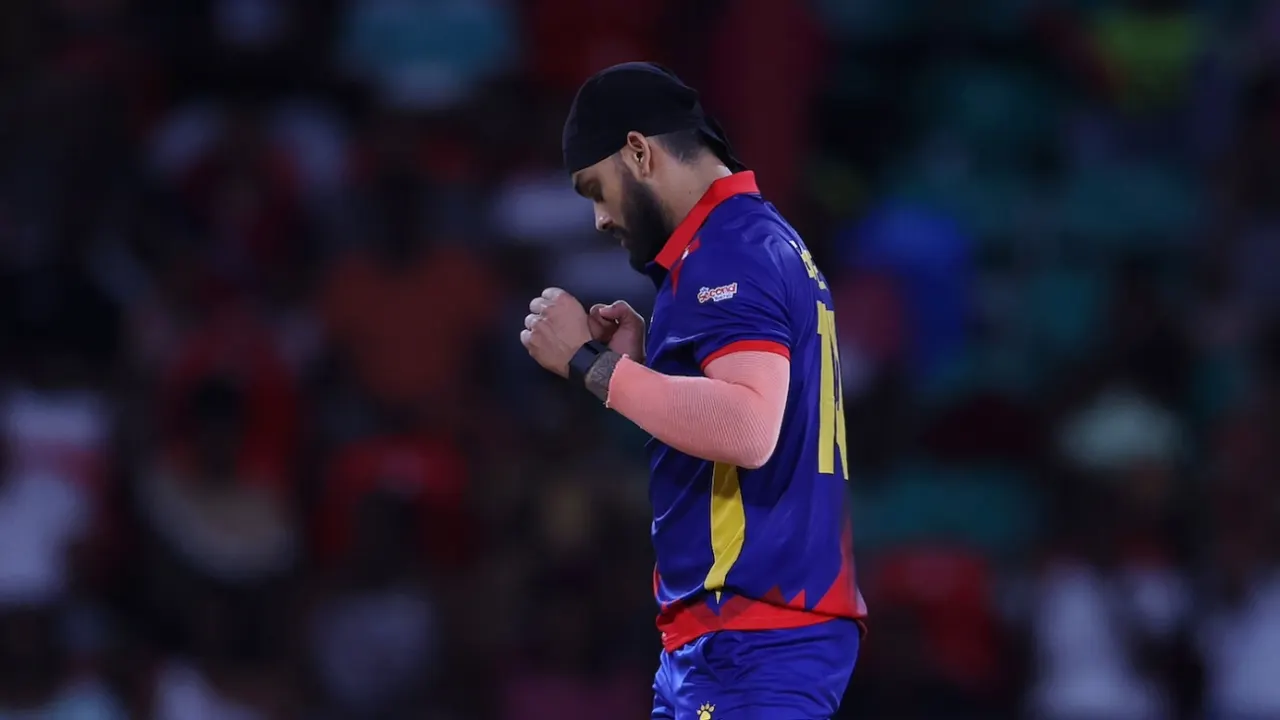
Spinners Kushal Bhurtel and Lalit Rajbanshi shared seven wickets between them to give Nepal a winning start to their cricket campaign in the Asian Games, in Nishin. They restricted Afghanistan to 102 for 7 in 20 overs, after which Nepal chased the target with five wickets and 16 balls to spare.
This was Afghanistan’s first defeat in the competition after they had also started with a win against Japan on Thursday.
After opting to bat, Afghanistan were reduced to 16 for 3 in the fifth over, with left-arm fingerspinner Rajbanshi accounting for all three wickets in his three overs in the powerplay. Faisal Ahmadzai, who was making his T20I debut for Afghanistan, scored 30 off 33 balls and Najibullah Zadran chalked up an identical score to help their team recover briefly.
Bhurtel, the legspinner, though ran through the middle order, bagging figures of 4 for 21 in his four overs. Apart from Najibullah and Ahmadzai, no other Afghanistan batter passed 20.
Bhurtel then fell for a duck in the first over of Nepal’s chase and by the seventh over, they were wobbling at 31 for 3. Sundeep Jora (34) and former captain Rohit Paudel (33 not out) then stabilised the chase and put Nepal back on the path to victory. Paul remained unbeaten, along with Gulsan Jha, to get the job done for Nepal in the 18th over.
Scores: Nepal 103 for 5 in 17.2 overs (Sundeep Jora 34, Rohit Paudel 33*, Dipendra Singh Airee 15; Fairdoon Dawoodzai 1-10, Abdollah Ahmadzai 1-15, Arab Gull 1-13) beat Afghanistan 102 for 7 in 20 overs (Faisal Khan Ahmadzai 30, Najibullah Zadran 30, Nangeyahlia Khan 17*; Kushal Bhurtel 4-21, Lalit Rajbanshi 3-13) by five wickets
[Cricinfo]

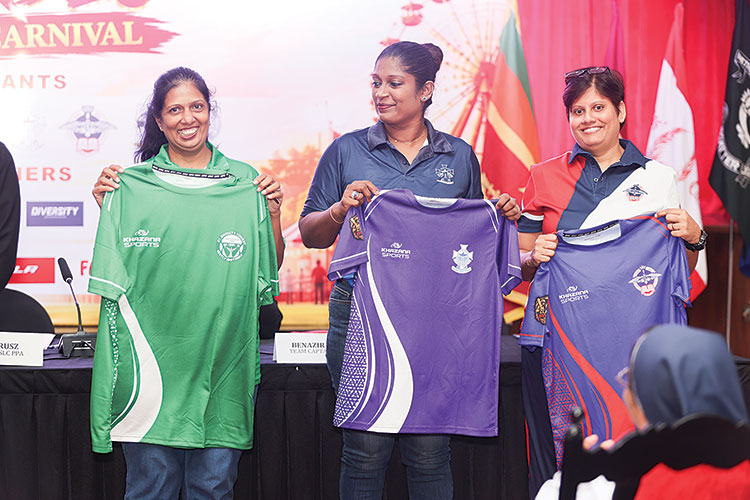
The St. Lawrence’s Convent Past Pupils Association will bring together former students from several leading schools for a day of cricket and camaraderie when the ‘Clash of the Sisters ’26’ takes place at the Wesley College Grounds, Campbell Park, on Sunday, October 4.
The tournament will feature a series of fast-paced 10-over softball cricket matches, with past pupils renewing old friendships while representing their respective schools in a spirit of friendly rivalry.
The women’s competition will feature teams representing St. Lawrence’s Convent, St. Bridget’s Convent, Holy Family Convent, St. Anne’s BMV Wattala, Ave Maria Convent Negombo, Ladies’ College, Musaeus College and Methodist College.
A men’s invitational exhibition match will also be staged, with the Old Wesleyites Sports Club taking on the S. Thomas’ College OBA.
Organisers are also planning a carnival atmosphere away from the cricket, with food stalls, games, entertainment and other activities lined up for alumni, families and visitors.
The event is being organised by the St. Lawrence’s Convent Past Pupils Association 2026/27 with the aim of bringing together different alumni communities and strengthening ties between past pupils through sport.
With eight schools involved in the women’s competition and an exhibition fixture adding further interest, organisers expect the event to provide a lively mix of cricket, fellowship and school spirit.
by Rex Clementine
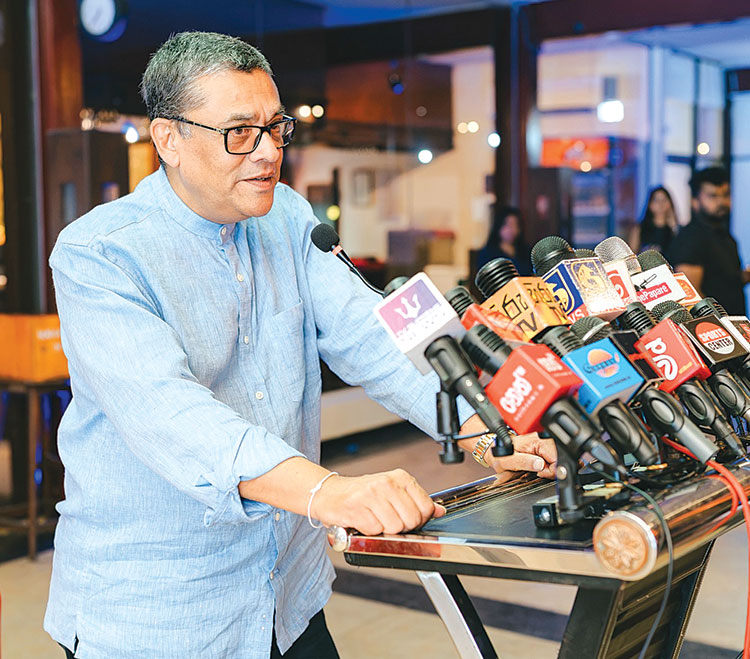
Former Sri Lanka captain Ranjan Madugalle urged the next generation of cricketers to wear the national colours with passion and pride, reminding youngsters that there is no greater honour in the game than representing their country.
The ICC’s Chief Match Referee was speaking at a ceremony at the P. Sara Oval where Tamil Union’s players and coaching staff were felicitated following their triumph in the domestic T-20 competition a fortnight ago.
“I hear that four players from this team will be travelling to Japan tomorrow to represent Sri Lanka at the Asian Games. That’s a very good achievement for any club and I urge you to play with passion and be committed. There is no bigger honour than representing your country,” Madugalle said.
Madugalle, who charmed cricket lovers with his elegant stroke play during his playing days, held the gathering spellbound with an eloquent address that also took him on a nostalgic trip down memory lane.
“I have many fond memories of P. Sara Oval. I walked into this ground as an 11-year-old to watch the Royal-Thomian. I played our inaugural Test here, but above all, my most memorable moment at this ground was when we won our maiden Test against India in 1985.”
The P. Sara Oval occupies a special place in Sri Lankan cricket history. It hosted the country’s inaugural Test against England in 1982 and, three years later, the island’s maiden Test victory when Sri Lanka stunned India.
Madugalle also paid tribute to several Tamil Union stalwarts who had played an influential role in his cricketing journey.
“This club has several stalwarts of the game and there are three people I looked up to. One was Sathi Coomaraswamy, who invited me into the dressing room when I was a kid and ignited the passion in me for the game. Then, of course, there are other gentlemen like Chandra Schaffter and T. Murugaser, who were managers when I was representing the Sri Lankan team.”
Madugalle, a former Head Prefect of Royal College, received a prolonged ovation at the conclusion of his address. Also present was another former Royal Head Prefect, Eran Wickramaratne, who represented Tamil Union in First Class cricket and currently heads Sri Lanka Cricket.
Tamil Union’s championship winning players and coaching staff were felicitated during the ceremony, while club patron Chandra Schaffter made a personal donation of Rs. 1.5 million to the players.
SLC officials, Tamil Union members and several former presidents of the club, including S. Skandakumar, Dinal Philips, A.R. Rasiah, Selva Perumal, Kandos Kandasamy and N. Vasanthakumar, were among those present.
Tamil Union enjoyed a remarkable run in this season’s T-20 competition, winning nine matches on the trot before overcoming SSC in the final. The side was captained by wicketkeeper batter Minod Bhanuka.
The club had further reason to celebrate with four of its playersl Tharindu Rathnayake, Vijayakanth Viyaskanth, Binura Fernando and Sineth Jayawardene selected to represent Sri Lanka at the Asian Games in Japan.

Lalit Rajbanshi, Kushal Bhurtel set up Nepal’s opening win

‘Vision’ Programme Marks Two Years

Costa Rica minister fired for unapproved meeting with Trump in US

At least 41 die as boat capsizes in DRC’s Lake Tanganyika

Showers will occur at times in the Western, Sabaragamuwa, Southern, Central and North-western provinces

Sajith vows to scrap 22A under future govt.

‘Dates have the highest sugar content to fight Coronavirus’

Sunday Island 27 December – Headlines

#SundayIsland 17th December – Headlines

Sunday Island – 28th March

Sunday Island Headlines – 21 March

Sunday Island – 21st February – Headlines
-

 News7 days ago
Shanakiyan urges urgent action over reported death sentence for Lankan in Saudi Arabia
-

 News6 days ago
Namal Rajapaksa Buddhist gambit fails, bail denied
-

 Features6 days ago
Why the spelling Sri Lankan names in English vary
-

 Features6 days ago
Three bands, a new identity: Sri Lankan wolf snake recognised as distinct species
-

 Business6 days ago
SLIIT holds largest-ever convocation
-

 News6 days ago
Vehicle prices drop by up to Rs. 1 mn, says importers’ body
-

 News6 days ago
Govt monitors reported Saudi death sentence – Foreign Ministry
-

 Business6 days ago
All-new Bolero MaXX Pik-Up unveiled in Lanka