
Opinion
Waste management and reuse of landfill

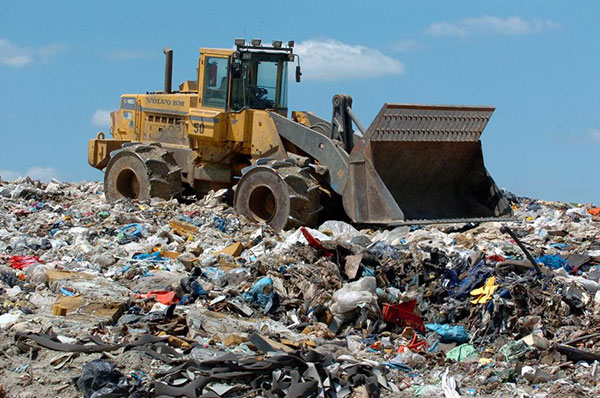
‘Locked down’ due to Covid-19 and going through some of my old collections, I came across an interesting publication as titled above. As this subject is relevant today, concerning climate change and renewable sources of energy, I quote the 11 suggestions made in the introduction, for the information of the authorities interested.
1. Total landfill management concept – With available space for landfills declining daily and concerns over population and dwindling natural resources; a Total Landfill Management Concept covering handling, recycling, composting, extraction and use of gases and maintenance and re-use of sanitary landfills is becoming vital.
2. Landfill gas – Anaerobic decomposition of organic solid waste in the landfill environment produces landfill gas [LFG]. LFG mainly consists of methane and carbon dioxide, both of which are odorless, Trace concentrations of other volatiles, often maladdress or toxic gases, are also found in LFG. LFG can migrate through soil into structures located on or near landfills. Since methane presents a fire or explosive threat, LFG must be controlled to protect property, and public health and safety. Also, many jurisdictions require landfill owners/operators to reduce reactive organic gas emissions to improve regional air quality, Thus, engineered solutions are needed to efficiently and safely monitor, collect, and process landfill gas.
3. Solid waste management planning – As existing landfills near capacity, as less land becomes available for the siting of new municipal solid waste [MSW] landfills, and regulatory agencies adopt stricter rules on waste disposal, or jurisdictions are facing the need to have a solid waste management plan. Unlike plans in the past, these plans are focusing on more than just collection and disposal of MSW, such as recycling, resources recovery, waste-to-energy and incineration, and examine other methods for reducing waste at the beginning of the cycle – i.e. less packaging, requiring biodegradable wrappings [bottle bills etc.
4. Waste composition studies – Waste composition studies are performed for a number of reasons, one of which is the most common – as a start towards recycling programs. Waste composition studies can assist solid waste management departments
5. Recycling – With available space in landfills declining daily, and concerns over population and dwindling natural resources growing, many communities are looking for recycling as one way to ease the strain created by increasing solid waste. Assisting communities in determining the most economically feasible and efficient method of handling recyclable materials. Several steps are involved in determining what recyclables exist in the waste stream. Evaluating the market to discover what are the current and projected needs for recyclables, comprehensive planning so implementation of a recycling plan goes smoothly and fits in with the overall goals of the community, and siting design of the recycling facility.
6. Material Recovery Facilities [MRFs] – Material recovery facilities, also sometimes called separation facilities, can be multi-million dollar installations with sophisticated, automated sorting, baling, crushing , wash-down machines or an empty building renovated with a conveyor and magnetic separator. The size and types of equipment of a MRF is determined by the usage – is the facility only used by the residents of a town, by a large city or country, or is it regional?. Much of what a MRF accepts is dictated by supply and demand and recycler’s requirements. One of the keys for designing a MRF is to design the flexibility as the demand for different types of recyclable grows.
7. Patented Technology for Conversion of Non-Organic Waste [Plastics etc] into Composite Structural Material – This process uses polypropylene, plastic and similar waste materials combined with chain fibers from biomass [wood, straw etc] to produce lightweight composites, which can be used for earth filling, building construction etc. The chemical and mechanical action of the process leads to steam explosion of the biomass material, through exposing more surface area to the melting polymers which promotes entanglement and adhesion. This allows for use of 65% biomass, 25% polypropylene,1 to 2% Epolene and 2 to 3% fly ash. Together, these longer chain fibers create an improved matrix with more flexibility at lower costs due to the wide variety of biomass which may be used. By using more fiber and less polymers, a lighter weight composite results and particle size is larger due to the chain fibers. Where waterproofing and external use are the prime concerns or where Maximum strength is desired, more plastic and finer particles can be incorporated. Color can be added to assimilate natural woods such as redwood or yellow pine.
8. Transfer Stations – The siting, design and permitting of a transfer station, or a network of transfer stations in densely populated areas, can be difficult. Emotionally-charged issue for a community. Environmental , financial, legal, noise, traffic, aesthetics, public resistance, and health and safety concerns are some of the issues that must be dealt with when siting and designing a transfer station. Other considerations include hauling distances, collection vehicle arrival times and discharges rates, the needed tipping floor and loading area, etc. As the transfer station is one component in a solid waste management program, other vehicles, such as combining a waste transfer station with a recycling/or resource recovery facility must be taken into account.
9. Composting- Composting is becoming an important part of the recycling programme. Communities are finding it a useful tool to both keep yard waste out of the land fill, and to promote natural, and economic fertilisation of vegetable and flower gardens in urban and suburban areas. A plant of the solid waste management plan being conducted, strategy. The USEPA has conducted studies to determine if different types of composts [yard wastes, sewage, sludge, water waste sludge, food waste] can be processed for land cultivation and land reclamation purposes
10. Landfill Engineering – Landfill engineering assignments typically involve many elements, including – Siting of new landfills, – Geological and hydrogeological investigations. Environmental studies [ecology. Wetland, etc], Concept designs – Design [including leachate and landfill gas migration control and cap and cover plans]; – Operation plan – Preparation of permitting application packages and negotiations with regulatory officials. Environmental impact assessments and preparation of environmental impact reports. Closure and post-closure plans and Remedial action investigations and design.
11. Landfill Gas -Landfill gas [LFG] migration investigations, control and recovery design and continuing monitoring is absolutely necessary.
G. A. D. SIRIMAL
Boralesgamuwa



Walking through Pettah market in Colombo, I have noticed something both obvious and troubling. Shop after shop sells bags, shoes, electronics, even sarees, and yet all shops are owned and run by men. Even businesses catering exclusively to women, like jewelry stores and bridal boutiques, have men behind the counter. This is not just my observation but it’s a reality where most Sri Lankans have observed as normal. What makes this observation more important is when we examine the demographics where women population constitute approximately 52% of Sri Lanka’s population, but their representation as business owners remains significantly low. According to the Global Entrepreneurship Monitor 2023 report, Sri Lanka’s Total Early Stage Entrepreneurial Activity rate for women is just 8.2%, compared to 14.7% for men.
Despite of being the majority, women are clearly underrepresented in the entrepreneurial aspect. This mismatch between population size and economic participation create a question that why aren’t more women starting ventures? The answer is not about capability or intelligence. Rather, it’s deeply in social and cultural barriers that have been shaping women’s mindsets for generations. From childhood, many Sri Lankan girls are raised to believe that their primary role is as homemakers.
In families, schools, and even universities, the message has been same or slightly different, woman’s success is measured by how well she manages a household, not by her ability to generate income or lead a business. Financial independence is rarely taught as essential for women the way it has been for men. Over time, this messaging gets internalised. Many women grew up without ever being encouraged to think seriously about ownership, leadership, or earning their own money. These cultural influences eventually manifest as psychological barriers as well.
Years of conditioning have led many skilled women to develop what researchers call “imposter syndrome”, a persistent fear of failure and feel that they don’t deserve success kind of feeling. Even when they have the right skills and resources, self-doubt holds them back. They question whether they can run a business independently or not. Whether they will be taken seriously, whether they are making the right choice. This does not mean that women should leave their families or reject traditional roles. But lack of thinking in a confident way and make bold decisions has real consequences. Many talented women either never start a business or limit themselves to small, informal ventures that barely survive. This is not about men versus women. It’s about the economic cost of underutilising 52% of the population. If our country is genuinely serious about sustainable growth. we must build an inclusive entrepreneurial ecosystem through confidence building programs, better finance access to women, and a long term societal mindset shift. Until a young girl walking through Pettah can see herself as a future shop owner rather than just a customer, we will continue to waste our country’s greatest untapped resource.
Harinivasini Hariharasarma
Department of Entrepreneurship
University of Sri Jayewardenepura

Some essential points made to indicate its future in Power Generation
The hard facts are that:
1) Coal supplies cannot last for more than 70- 100 years more at most, with the price rising as demand exceeds supply.
2) Reactor grade Uranium is in short supply, also with the price rising. The cost is comparable to burning platinum as a fuel.
3) 440 standard Uranium reactors around the world are 25-30 years old – coming to the end of their working life and need to be replaced.
4) Climate Change is increasingly making itself felt and forecasts can only be for continuing deterioration due to existing levels of CO2 being continuously added to the atmosphere. It is important to mention the more serious problems associated with the release of methane gases – a more harmful gas than CO2 – arising from several sources.
5) Air pollution (ash, chemicals, etc.) of the atmosphere by coal-fired plants is highly dangerous for human health and should be eliminated for very good health reasons. Pollution created by India travels to Sri Lankans by the NE monsoon causing widespread lung irritations and Chinese pollution travels all around the world and affects everybody.
6) Many (thousands) of new sources of electric power generation need to be built to meet increasing demand. But the waste Plutonium 239 (the Satan Stuff) material has also to be moved around each country by lorry with police escort at each stage, as it is recovered, stored, processed and formed into blocks for long term storage. The problem of security of transport for Plutonium at each stage to prevent theft becomes an impossible nightmare.
The positive strengths to Thorium Power generation are:
1) Thorium is quite abundant on the planet – 100 times more than Uranium 238, therefore supplies will last thousands of years.
2) Cleaning or refining the Thorium is not a difficult process.
3) It is not highly radioactive having a very slow rate of isotope decay. There is little danger from radiation poisoning. It can be safely stored in the open, unaffected by rain. It is not harmful when ingested.
4) The processes involved with power generation are quite different and are a lot less complex.
5) Power units can be quite small, the size of a modern detached house. One of these can be located close to each town, thus eliminating high voltage cross-country transmission lines with their huge power losses (up to 20%).
6) Thorium is ‘fertile’ not fissile: therefore, the energy cycle has to be kick-started by a source of Neutrons, e.g., fissile material, to get it started. It is definitely not as dangerous as Uranium.
7) It is “Fail – Safe”. It has walk-away safety. If the reactor overheats, cooled drain plugs unfreeze and the liquid drains away to storage tanks below. There can be no “Chernobyl/ Fukoshima” type disasters.
8) It is not a pressurized system; it works at atmospheric pressure.
9) As long as reactor temperatures are kept around 600 oC there are little effects of corrosion in the Hastalloy metal tanks, vessels and pipe work. China, it appears, has overcome the corrosion problem at high temperatures.
10) At no stage in the whole chain of operations is there an opportunity for material to be stolen and converted and used as a weapon. The waste products have a half- life of 300 years, not the millions of years for Plutonium.
11) Production of MEDICAL ISOTOPE Bismuth 213 is available to be isolated and used to fight cancer. The nastiest cancers canbe cured with this Bismuth 213 as Targetted Alpha therapy.
12) A hydrogen generation unit can be added.
This information obtained from following YouTube film clips:
1) The Liquid Fluoride Thorium Reactor – what Fusion wanted to be…
2) An unbiased look at Molten Salt Reactors
3) LFTR Chemical Processing by Kirk Sorensen
Thorium! The Way Ahead!
Priyantha Hettige

There are three key issues regarding foreign degrees:
Recognition: Is the awarding university recognized by our UGC?
Authenticity: Is the degree genuine or bogus?
Quality: Is it a standard, credible qualification?
1. The Recognition Issue (UGC Role)
The UGC addresses the first issue. If a foreign university is listed in the Commonwealth Universities Yearbook or the International Handbook of Universities, the UGC issues a letter confirming that the university is recognized. However, it is crucial to understand that a recognized university does not automatically imply that every degree it issues is recognized.
2. The Authenticity Issue (Employer Role)
The second issue rests with the employer. It is the employer’s responsibility to send a copy of the foreign degree to the issuing university to get it authenticated. This is a straightforward verification process.
3. The Quality Assurance Gap
The third issue
—the standard and quality of the degree—has become a matter for no one. The UGC only certifies whether a foreign university is recognized; they do not assess the quality of the degree itself.
This creates a serious loophole. For example:
Does a one-year “top-up” degree meet standard criteria?
Is a degree obtained completely online considered equivalent?
Should we recognize institutions with weak invigilation, allowing students to cheat?
What about curricula that are heavy on “notional hours” but light on functional, practical knowledge?
What if the medium of instruction is English, but the graduates have no functional English proficiency?
Members of the UGC need to seriously rethink this approach. A rubber-stamp certification of a foreign university is insufficient. The current system ignores the need for strict quality assurance. When looking at the origins of some of these foreign institutions (Campuchia, Cambodia, Costa Rica, Sudan..) the intentions behind these “academic” offerings become very clear. Quality assurance is urgently needed. Foreign universities offering substandard degrees can be delisted.
M. A. Kaleel Mohammed
757@gmail.com
( Retired President of a National College of Education)

Prime Minister Attends the 40th Anniversary of the Sri Lanka Nippon Educational and Cultural Centre

Navy’s latest addition P 628 sails for Colombo from Baltimore

Commander of the Navy attends International Fleet Review

Prime Minister attends 169th birth anniversary celebration of Lord Robert Baden-Powell

Coal ash surge at N’cholai power plant raises fresh environmental concerns

Akuregoda double murder: Suspected gunman in custody a duly discharged ex-soldier

‘Dates have the highest sugar content to fight Coronavirus’

Sunday Island 27 December – Headlines

#SundayIsland 17th December – Headlines

Sunday Island – 28th March

Sunday Island Headlines – 21 March

Sunday Island – 21st February – Headlines
-

 Features2 days ago
Why does the state threaten Its people with yet another anti-terror law?
-

 Features2 days ago
Victor Melder turns 90: Railwayman and bibliophile extraordinary
-

 Features1 day ago
Reconciliation, Mood of the Nation and the NPP Government
-
 Features2 days ago
Victor, the Friend of the Foreign Press
-

 Latest News3 days ago
New Zealand meet familiar opponents Pakistan at spin-friendly Premadasa
-

 Latest News3 days ago
Tariffs ruling is major blow to Trump’s second-term agenda
-

 Latest News3 days ago
ECB push back at Pakistan ‘shadow-ban’ reports ahead of Hundred auction
-

 Features2 days ago
Barking up the wrong tree