
Foreign News
Vladimir Putin set to transfer Sergei Shoigu from Russian defence ministry

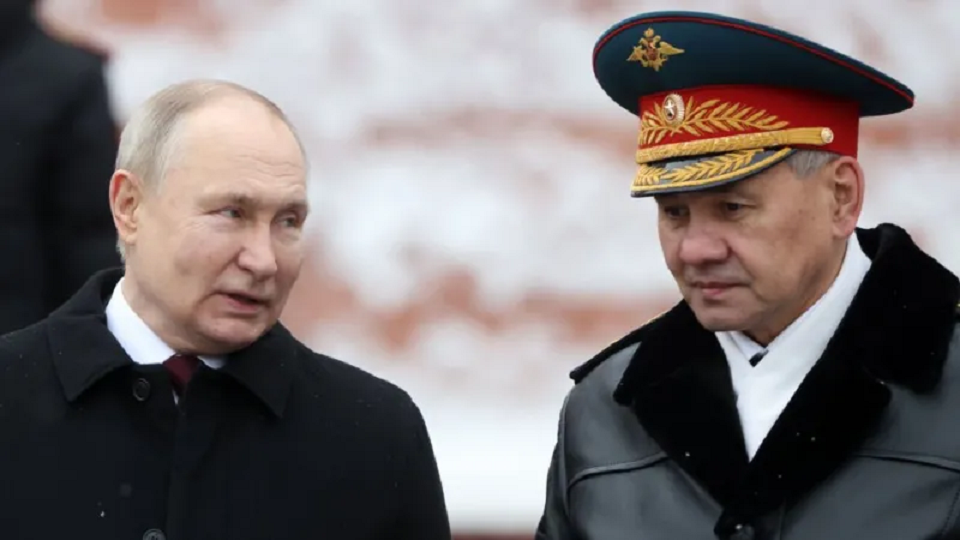
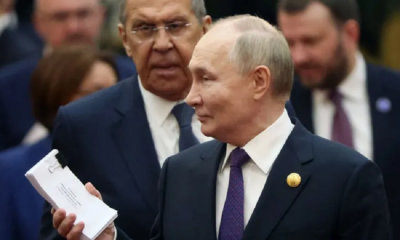
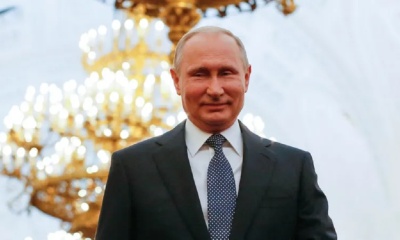
Russian President Vladimir Putin is set to replace his long-standing ally Sergei Shoigu as defence minister, the Kremlin has announced.
The 68-year-old has been in the role since 2012 and is to be appointed the head of Russia’s Security Council.
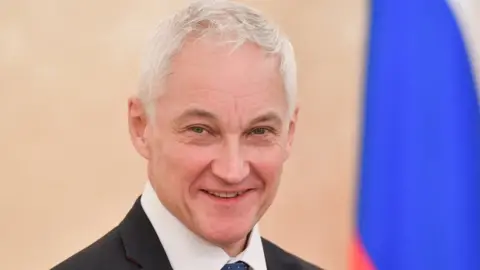
Papers published by the upper chamber of the Russian parliament said Shoigu will be replaced by Deputy Prime Minister Andrei Belousov.
Mr Shoigu has played a key role in Russia’s war with Ukraine.
Russian government papers show Mr Putin wants Mr Shoigu to take over from Nikolai Patrushev on the powerful security council.
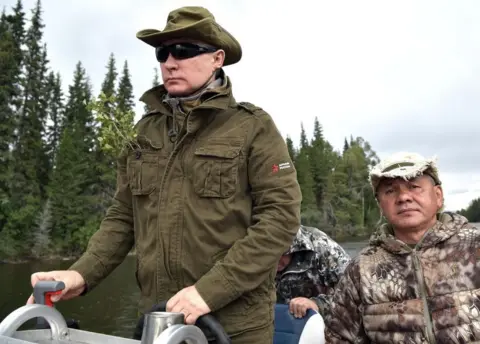
Mr Shoigu has close links with President Putin, often taking him on fishing trips in his native Siberia. He was given the defence portfolio despite having no military background, which rankled with some of his top brass. A civil engineer by profession, Mr Shoigu rose to prominence as the head of the emergencies and disaster relief ministry in the 1990s.
He often looked out of his depth as defence minister, especially after Russia’s full-scale invasion of Ukraine more than two years ago, BBC Europe analyst Danny Aeberhard says.
In 2023, Mr Shoigu became embroiled in a public feud with Wagner mercenary chief Yevgeny Prigozhin over Russia’s conduct of the war. Prigozhin, who led a short-lived mutiny against Moscow, accused Mr Shoigu of being a “dirtbag” and “elderly clown” in audio messages that went viral.
The mercenary chief died in a plane crash while flying from St Petersburg to Moscow in August 2023. The Kremlin denied it was to blame.
Mr Shoigu’s suggested replacement, Mr Belousov, is an economist with little military experience and will come as a surprise to some. But in the view of other analysts, the move indicates that President Putin is seeking to align the Russian economy more closely with the war effort.
Kremlin press spokesman Dmitry Peskov said the proposed appointment of a civilian showed the role of defence minister called for “innovation”. He said Russia was becoming more like the Soviet Union in the mid-1980s, when a high proportion of GDP went on military spending.
As a result, it was necessary to make sure that military expenditure was better integrated into Russia’s overall economy, he added. “The one who is more open to innovations is the one who will be victorious on the battlefield,” he said, according to Reuters.
BBC Russia editor Steve Rosenberg said the replacement of Mr Shoigu did not come as a surprise, since his position had become weaker and there had been talk for some time that he could lose his job. Russia’s campaign in Ukraine has been plagued by military setbacks and big losses in men and materiel.
Having an economist as defence minister reflects the changing priorities of the Kremlin, Steve Rosenberg says. The Russian economy is on a war footing now, so it is vital that the defence ministry has enough money to fund the war.
According to unnamed government officials quoted by independent Russian website The Bell, Mr Belousov is seen as a “hard-line defender of the state, who believes that Russia is encircled by enemies”.
Like President Putin, he is close to the Russian Orthodox church. He is said to be a keen martial arts enthusiast who practised karate and the Russian combat sport sambo in his youth.
Before becoming deputy prime minister, he worked for several years as an aide to Mr Putin. Before that, he was economic development minister.
He was reportedly the only member of the president’s economic entourage to support the annexation of Crimea in 2014.
Mr Putin was sworn in as president for a fifth time on Tuesday after winning Russia’s recent election with 87% of the vote and without facing any credible opponents. He has led Russia since May 2000.
Among cabinet members to keep their positions is veteran Foreign Minister Sergei Lavrov.
(BBC)







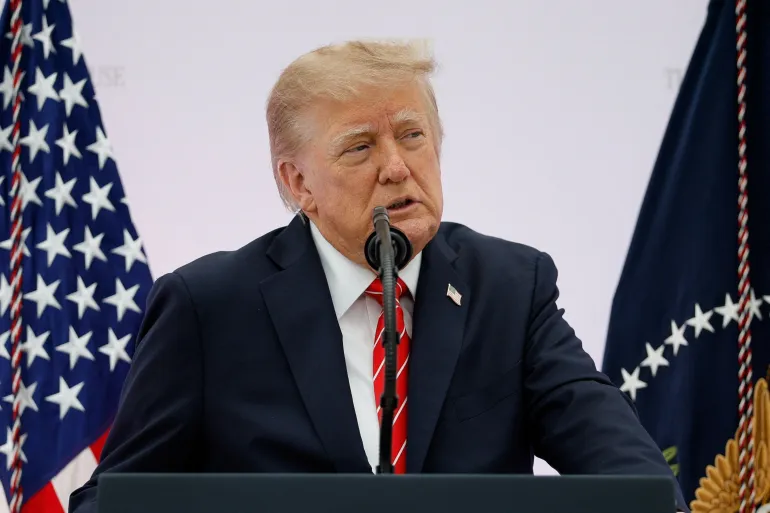
United States President Donald Trump has said the US will not attack Iran before the November 3 midterm elections.
The US president said late on Thursday: “we are having productive discussions with the Islamic Republic of Iran,” in a post on Truth Social. “We will not be attacking Iran at any time prior to the midterm elections to be held in the United States on November 3rd.”
Oil prices fell early on Friday as Middle East supply concerns eased somewhat after tensions in the energy-rich Gulf region had mounted in recent weeks.
The possibility of renewed fighting had appeared to drive up oil prices in trading on Thursday. Some analysts believe Trump’s comments were an attempt to try and bring prices back down.
Iran’s Foreign Minister Abbas Araghchi said Tehran is reviewing the US response to its seven day plan to reopen the Strait of Hormuz, and that Iran will respond within the “next few days”.
He added that negotiations are continuing through mediators, Iran’s Tasnim news agency reported.
Iranian media reported “massive explosions” in the southern Strait of Hormuz on Friday, with Fars citing unnamed military sources as saying tankers using “unauthorised” routes may have struck sea mines.
On Tuesday, US Vice President JD Vance said Iran must make a “meaningful” reduction in its uranium enrichment capacity as part of an agreement to end the war. Experts say this demand may signal a softening of Washington’s earlier insistence that Tehran abandon enrichment altogether.
On Monday, Iranian President Masoud Pezeshkian said negotiations with Washington were “futile”, accusing the US of using negotiations to attack Iran.
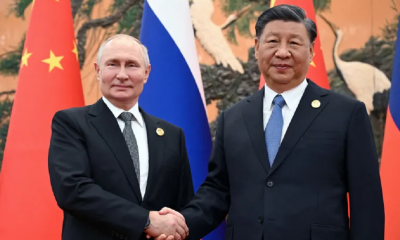
Russian President Vladimir Putin told Pezeshkian that Russia will “do everything” to help end the US-led war on Iran, Russian news agencies reported on Thursday.
[Aljazeera]
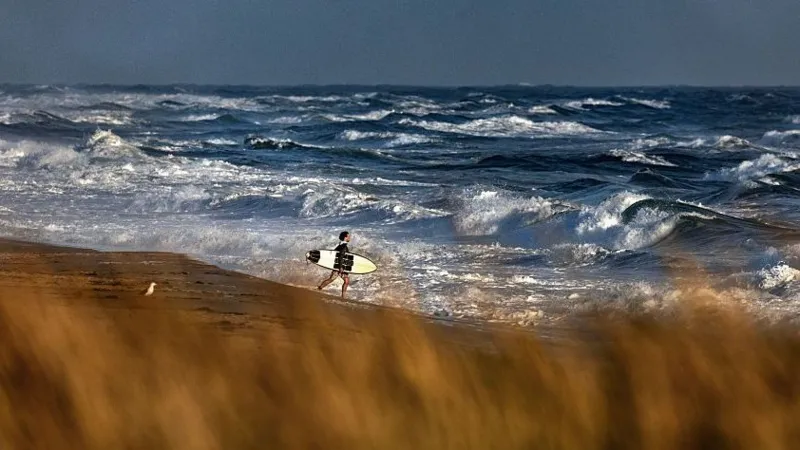
US authorities have found debris from a medical transport aircraft that went missing with six people on board.
The Federal Aviation Administration told the BBC it had lost contact with the Gulfstream G-100 plane just after 01:00 local time (05:00 GMT) on Saturday, while it was travelling from Bermuda to Boston, Massachusetts.
The search for survivors continues off the coast of Nantucket, a Massachusetts island, the US Coast Guard said.
Authorities have notified the next of kin of those on the flight, four Canadian nationals and two Bermudian nationals.
“Search crews located a debris field confirmed to be from the aircraft off the coast of Nantucket,” the US Coast Guard said in an update on Saturday night. It added that ships, helicopters and planes were involved in searches that would through continue the night.
The plane departed from Bermuda’s L.F. Wade International Airport at 23:40 local time, according to flight data from FlightAware, and was due to land at Boston’s Logan International at 01:30 EDT (05:30 GMT).
According to the tail number released by the Coast Guard, the plane belonged to Latitude Air Ambulances, a company that provides international medical flights for patients returning home.
Among those on board were two pilots and two medical staff, both Canadian, Clarence Togeretz, director of flight operations at Latitude, told CBC News.
The crew flew to Bermuda to collect a patient and their relative, who are not Canadian, Togeretz said.
FlightAware’s tracker shows the aircraft significantly dropped in altitude before its communications went dark, plummeting from around 7,300m (24,000ft) to 3,300m (11,000ft).
Radio transmissions shows trouble with communications between the air traffic controller and the pilot, the Boston Globe reported based on transmissions provided by LiveATC.net.
“You’re coming in blind? Is that what you said?,” the air traffic controller asked. “Are you declaring an emergency, or no?”
The pilot’s response was inaudible.
“You’re coming in a little weak so I didn’t hear what your response was, if you were declaring an emergency or not,” the air traffic controller said, according to the Globe.
The air traffic controller later confirmed the pilot had declared an emergency.
An area fire dispatcher asked emergency crews just after 01:00 EDT to prepare to meet a plane with an “electrical issue”.
The dispatcher later said “the aircraft has lost radio and radar”.
The Coast Guard said it would provide an update on Sunday morning local time.
[BBC]
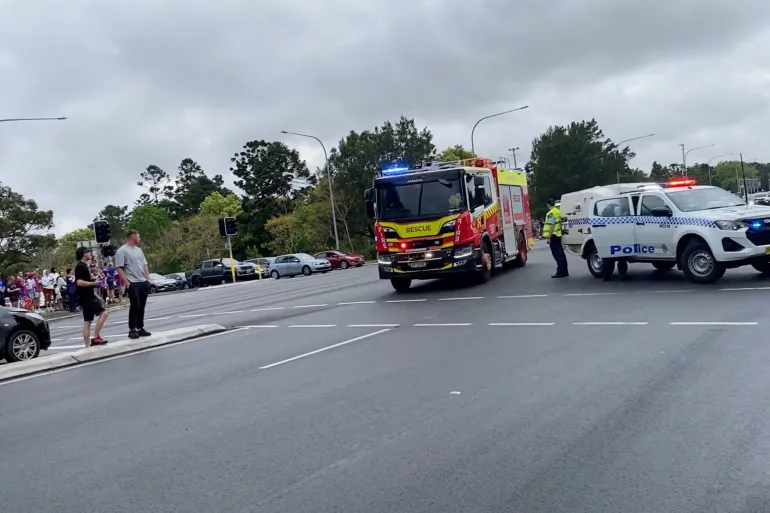
A car has crashed into a crowd of rugby league supporters in the eastern Australian city of Newcastle, injuring 10 people, including three children.
New South Wales police said on Saturday that two of the injured – a five-year-old girl and a 67-year-old man – were in a critical condition and the other eight were in stable condition in hospital.
Police said they had arrested the 18-year-old man driving the vehicle and were investigating what happened. They said the crash was not believed to be related to “terrorism”.
The crowd had gathered to farewell the local rugby league side, the Newcastle Knights, ahead of their grand final against the Sydney Roosters on Sunday.
Newcastle Lord Mayor Gavin Morris said the driver, a rugby league fan, had lost control of his vehicle and had been taken into custody.
“He was revving the car, he was excited, he was a supporter, he was there for the joy of the moment,” Morris told the national broadcaster ABC.
“Somehow he lost control of the car … and he’s gone into the crowd,” he added.
Prime Minister Anthony Albanese said: “My thoughts are with everyone injured or involved in the horrible incident this morning in Newcastle.”
“Rugby league brings people together, and this should have been a weekend of excitement and pride for Newcastle fans,” he wrote in a social media post.
[Aljazeera]

Afghanistan fast bowlers hit back after Bangladesh’s strong start

Sri Lanka chose to bat first in Rawalpindi

Sutherland and Litchfield lead Australia to quick and convincing win in ODI series opener

USS Tulsa departs Colombo

Appointments for 1,540 Grama Niladhari Officers

Trump says US will not strike Iran before midterm elections

‘Dates have the highest sugar content to fight Coronavirus’

Sunday Island 27 December – Headlines

#SundayIsland 17th December – Headlines

Sunday Island – 28th March

Sunday Island Headlines – 21 March

Sunday Island – 21st February – Headlines
-

 Features6 days ago
The first woman in the foreign service or Ceylon Overseas Service it was then called
-

 News5 days ago
Geneva takes up Sallay’s case and govt. ignores opportunity to answer accusations
-

 Editorial7 days ago
Fuelling discontent and protest
-

 Foreign News6 days ago
Ten injured after car crashes into rugby supporters in Australia
-

 News6 days ago
Nearly 20 Iranian tankers stranded off Lanka amid US sanctions
-

 Latest News7 days ago
Tharindu Rathnayake, bowlers secure Asian Games Bronze for Sri Lanka
-

 Features5 days ago
Sri Lanka Cricket Bill: Governance reform is not yet a cricket strategy
-

 Features4 days ago
Preventing grievances from becoming communal