
Foreign News
Vladimir Putin set to transfer Sergei Shoigu from Russian defence ministry

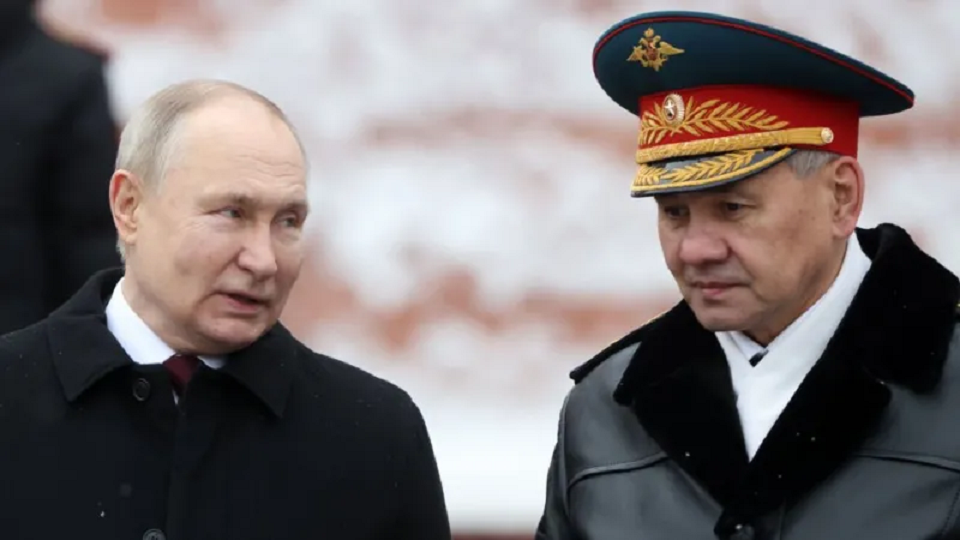
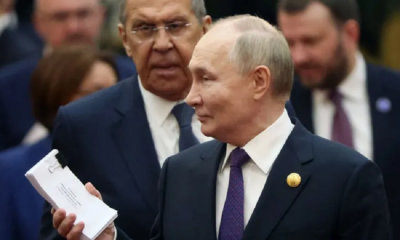
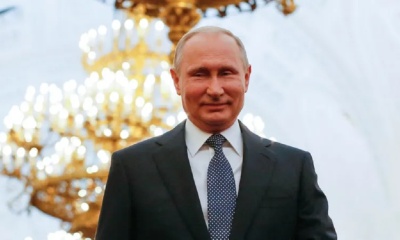
Russian President Vladimir Putin is set to replace his long-standing ally Sergei Shoigu as defence minister, the Kremlin has announced.
The 68-year-old has been in the role since 2012 and is to be appointed the head of Russia’s Security Council.
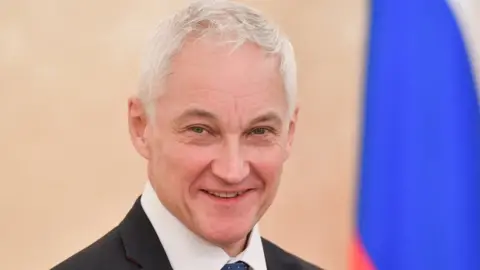
Papers published by the upper chamber of the Russian parliament said Shoigu will be replaced by Deputy Prime Minister Andrei Belousov.
Mr Shoigu has played a key role in Russia’s war with Ukraine.
Russian government papers show Mr Putin wants Mr Shoigu to take over from Nikolai Patrushev on the powerful security council.
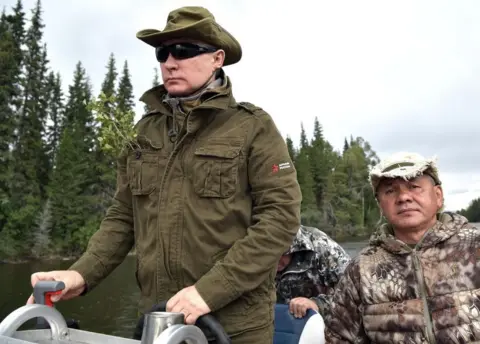
Mr Shoigu has close links with President Putin, often taking him on fishing trips in his native Siberia. He was given the defence portfolio despite having no military background, which rankled with some of his top brass. A civil engineer by profession, Mr Shoigu rose to prominence as the head of the emergencies and disaster relief ministry in the 1990s.
He often looked out of his depth as defence minister, especially after Russia’s full-scale invasion of Ukraine more than two years ago, BBC Europe analyst Danny Aeberhard says.
In 2023, Mr Shoigu became embroiled in a public feud with Wagner mercenary chief Yevgeny Prigozhin over Russia’s conduct of the war. Prigozhin, who led a short-lived mutiny against Moscow, accused Mr Shoigu of being a “dirtbag” and “elderly clown” in audio messages that went viral.
The mercenary chief died in a plane crash while flying from St Petersburg to Moscow in August 2023. The Kremlin denied it was to blame.
Mr Shoigu’s suggested replacement, Mr Belousov, is an economist with little military experience and will come as a surprise to some. But in the view of other analysts, the move indicates that President Putin is seeking to align the Russian economy more closely with the war effort.
Kremlin press spokesman Dmitry Peskov said the proposed appointment of a civilian showed the role of defence minister called for “innovation”. He said Russia was becoming more like the Soviet Union in the mid-1980s, when a high proportion of GDP went on military spending.
As a result, it was necessary to make sure that military expenditure was better integrated into Russia’s overall economy, he added. “The one who is more open to innovations is the one who will be victorious on the battlefield,” he said, according to Reuters.
BBC Russia editor Steve Rosenberg said the replacement of Mr Shoigu did not come as a surprise, since his position had become weaker and there had been talk for some time that he could lose his job. Russia’s campaign in Ukraine has been plagued by military setbacks and big losses in men and materiel.
Having an economist as defence minister reflects the changing priorities of the Kremlin, Steve Rosenberg says. The Russian economy is on a war footing now, so it is vital that the defence ministry has enough money to fund the war.
According to unnamed government officials quoted by independent Russian website The Bell, Mr Belousov is seen as a “hard-line defender of the state, who believes that Russia is encircled by enemies”.
Like President Putin, he is close to the Russian Orthodox church. He is said to be a keen martial arts enthusiast who practised karate and the Russian combat sport sambo in his youth.
Before becoming deputy prime minister, he worked for several years as an aide to Mr Putin. Before that, he was economic development minister.
He was reportedly the only member of the president’s economic entourage to support the annexation of Crimea in 2014.
Mr Putin was sworn in as president for a fifth time on Tuesday after winning Russia’s recent election with 87% of the vote and without facing any credible opponents. He has led Russia since May 2000.
Among cabinet members to keep their positions is veteran Foreign Minister Sergei Lavrov.
(BBC)

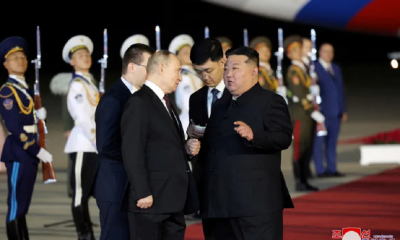




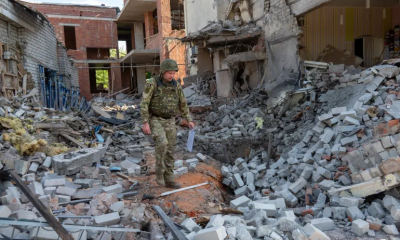



Sustained heavy gunfire and loud explosions have been heard in Niger near the international airport outside the capital, Niamey.
Multiple eyewitness accounts and videos showed air defence systems apparently engaging unidentified projectiles in the early hours of Thursday.
The situation later calmed down, reports say, with an official reportedly saying the situation was now under control, without elaborating.
It is not clear what caused the blasts, or if there were any casualties. There has been no official statement from the military government.
The gunfire and blasts began shortly after midnight, according to residents of a neighbourhood near the Diori Hamani International Airport, the AFP news agency reports. They said calm returned after two hours.
The airport houses an air force base and is located about 10km (six miles) from the presidential palace.
Niger is led by Abdourahamane Tiani who seized power in a 2023 coup that ousted the country’s elected civilian president.
Like its neighbours Burkina Faso and Mali, the country has been fighting jihadist groups who have carried out deadly attacks across the region.
It is also a major producer of uranium.
A huge uranium shipment destined for export has been stuck at the airport amid unresolved legal and diplomatic complications with France after the military government nationalised the country’s uranium mines.
“The situation is under control. There is no need to worry,” the Anadolu news agency quoted a Foreign Affairs ministry official as saying, without elaborating.
The official told the agency they were trying to determine whether the gunfire was linked to the uranium shipment.
[BBC]

A South Korean court has sentenced former First Lady Kim Keon Hee to one year and eight months in prison after finding her guilty of accepting bribes from the Unification Church, according to South Korea’s official Yonhap news agency.
The Seoul Central District Court on Wednesday cleared Kim, the wife of disgraced ex-President Yoon Suk Yeol, of additional charges of stock price manipulation and violating the political funds act.
Kim was accused of receiving bribes and lavish gifts from businesses and politicians, as well as the Unification Church, totaling at least $200,000.
The prosecution team had also indicted Unification Church leader Han Hak-ja, now on trial, after the religious group was suspected of giving Kim valuables, including two Chanel handbags and a diamond necklace, as part of its efforts to win influence with the president’s wife.
Prosecutors in December said Kim had “stood above the law” and colluded with the religious sect to undermine “the constitutionally mandated separation of religion and state”.

Prosecutor Min Joong-ki also said South Korea’s institutions were “severely undermined by abuses of power” committed by Kim.
The former first lady had denied all the charges, claiming the allegations against her were “deeply unjust” in her final testimony last month.
But she has also apologised for “causing trouble despite being a person of no importance”.
[Aljazeera]
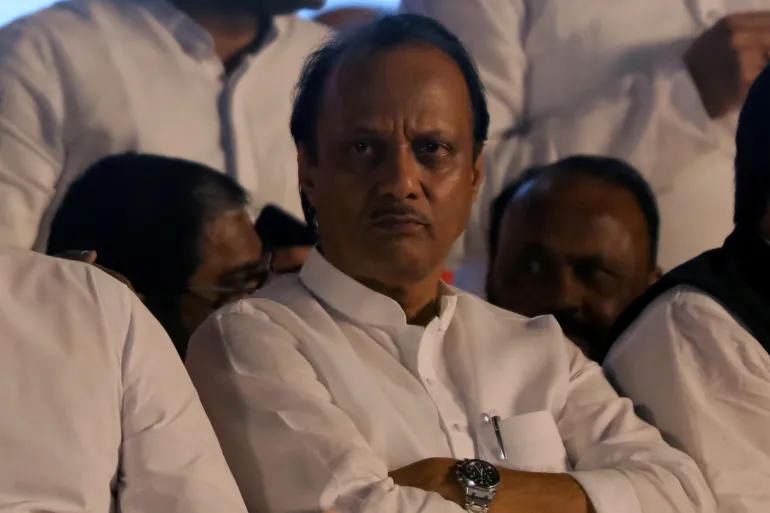
A plane crash has killed the deputy chief minister of India’s Maharashtra state, Ajit Pawar, the country’s aviation regulator has said.
The plane, which took off from the state capital, Mumbai, on Wednesday, crash-landed at the airport in Pawar’s constituency of Baramati, according to the Directorate General of Civil Aviation (DGCA).
Two members of the prominent politician’s staff and two crew members were also reported to have been killed.
The cause of the crash has not yet been officially confirmed.
Flightradar24, an online flight tracking service, said the aircraft was attempting a second approach to Baramati airport when it crashed.
The Times of India newspaper quoted DGCA officials as saying the aircraft, a Learjet 45 operated by a company called VSR, crashed at about 8:45am local time (03:15 GMT).
The daily said Pawar, the nephew of veteran politician Sharad Pawar, who founded the Nationalist Congress Party (NCP), was on his way to attend a public rally for the district council elections.
A witness quoted by the newspaper said the aircraft exploded moments after hitting the ground.
“When we rushed to the spot, the aircraft was on fire. There were four to five more explosions. People tried to pull the passengers out, but the fire was too intense,” said the witness.

Pawar, 66, built his political base through the grassroots cooperative movement. He was a key figure in state politics and served as the second-highest elected official in Maharashtra, as part of the larger federal governing coalition led by Prime Minister Narendra Modi.
He wielded considerable influence in the state’s vibrant sugar belt and was known for his ability to mobilise rural voters.
[Aljazeera]

Showers will occur at times in the Eastern, Northern, North-Central and Uva provinces and in Matale and Nuwara-Eliya districts

Tobacco and alcohol claim 22,000 lives annually

Development Officers hunger strike drags on for fourth day

IMF urges Lanka to diversify trade amidst global tariff risks

Shocking 10,455 complaints of Children’s rights violations lodged with NCPA last year

Sea Street gold prices gallop

‘Dates have the highest sugar content to fight Coronavirus’

Sunday Island 27 December – Headlines

#SundayIsland 17th December – Headlines

Sunday Island – 28th March

Sunday Island Headlines – 21 March

Sunday Island – 21st February – Headlines
-
 Business4 days ago
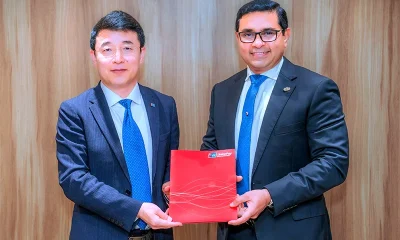
ComBank, UnionPay launch SplendorPlus Card for travelers to China
-
 Business5 days ago
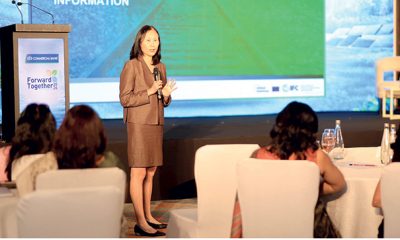
ComBank advances ForwardTogether agenda with event on sustainable business transformation
-
 Opinion5 days ago
Conference “Microfinance and Credit Regulatory Authority Bill: Neither Here, Nor There”
-
 Business1 day ago
Climate risks, poverty, and recovery financing in focus at CEPA policy panel
-

 Opinion4 days ago
Luck knocks at your door every day
-

 Business6 days ago
Dialog Brings the ICC Men’s T20 Cricket World Cup 2026 Closer to Sri Lankans
-
 News5 days ago
Rising climate risks and poverty in focus at CEPA policy panel tomorrow at Open University
-

 Business1 day ago
Bourse positively impacted by CBSL policy rate stance