
News
Vietnamese Leader offers to share its experience with Sri Lanka in sustainable agriculture and climate resilience

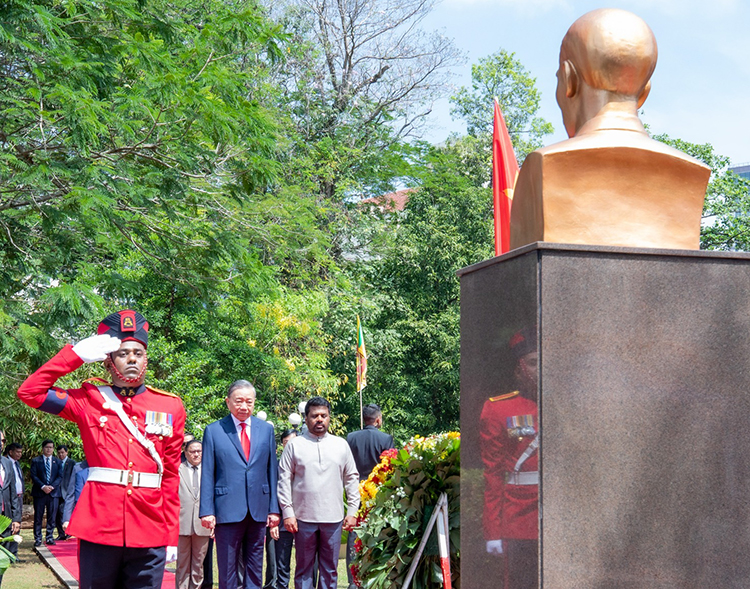
Viet Nam is ready to share its experience in fostering investment and in sustainable agriculture with Sri Lanka, its President Tô Lâm, who is also the General Secretary of the Communist Party of Viet Nam, said in his address to Parliament.
“In services and industries, Vietnam opened its door to investment, developed its infrastructure, built industrial and economic zones, promoted trade, and participated more deeply in regional and global value chains,” Tô Lâm said detailing steps taken by the South East Asian nation.
Viet Nam is ready to share its experience with Sri Lanka in sustainable agriculture and climate resilience, he said, stressing the need for self-reliance.
“From our experience, we understand that ensuring farmers’ livelihood, developing rural infrastructure, modernising agricultural production, promoting deep processing, reducing food harvest loss, building brands, and responding to climate change are all very important questions for sustainable development.
“Agriculture is near and dear to both of our countries. Vietnam stands ready to share its experience with Sri Lanka.
“Agricultural cooperation, beyond creating more economic values, will also help safeguard food security and livelihood for the rural people, facilitate climate adaptation, and promote inclusive growth.”
The transcript of President Tô Lâm’s speech is reproduced below:
Today, I am very honored to speak in front of the Sri Lankan Parliament, the highest member of the Sri Lankan Parliament. I would like to convey to you, Honorable Speaker, Parliamentarians, and the people of Sri Lanka as a whole, our finest salutations, best wishes, and sincerest fraternity. I wish to extend my heartfelt gratitude to the Parliament, Government, and people of Sri Lanka for their gracious, generous, and brotherly reception according to the Vietnamese delegation.
Allow me also to applaud you for the efforts that the State, Parliament, Government, and people of Sri Lanka have made and the outcome you have achieved in bolstering national stability, fostering recovery and development. Vietnam is confident that, given the long-standing tradition of your civilization, the strategic location you occupy the Indian Ocean, the willpower of your people, and the resolve of your leaders, Sri Lanka will continue to take steps after steady steps forward in the making of a nation of peace, stability, prosperity, and happiness. Ladies and gentlemen, Sri Lanka has a special place in the historic memory and living heart of the people of Vietnam.
President Ho Chi Minh had stayed here on three separate occasions in his years of revolutionary activism. His statue in Colombo inaugurated in 2013 has become a stirring symbol of the fondness that the people of Sri Lanka harbor for the people of Vietnam. To the people of Vietnam, beyond the footsteps of a national leader on the journey for his people’s independence, this is also the natural crossing of paths between fellow nations with a love for freedom, peace, humanity, and justice.
To quote President Ho Chi Minh, if a nation is independent but their people do not get to enjoy happiness and freedom, then that independence means nothing. This is deeply resonant with your people’s aspiration for a nation of independence, peace, stability, and for a better life for all of your citizens. Geographically distant, though Vietnam-Sri Lanka might be, yet close together are our histories, our cultures, and our aspirations for development.
Both nations hold a long-standing tradition, a rich identity, and attach great importance to benevolence, tolerance, and harmony. Buddhism and oriental cultural values have helped nurture in each of our nations a love for peace and for the fellow man and a sense of community. Ever since the establishment of diplomatic relations on the 21st of July 1970, relations between Vietnam-Sri Lanka have had more than half a century to grow.
Last year we celebrated 55 years of diplomatic relations. President Anura Kumara Dissanayake paid a state visit to Vietnam and attended the UN International Day of Vesak in Ho Chi Minh City. These events show that the relationship between our two countries has been built through not only diplomatic tacks, but also mutual understanding, trust, and heartfelt sincerity between our two peoples.
Today, before the Parliament of Sri Lanka, allow me to speak to you about Vietnam’s developmental journey, especially over the past 40 years of Doi Moi. Honorable Delegates, Ladies and Gentlemen, Forty years ago, when the Doi Moi process began, in 1986, Vietnam was facing innumerable adversities. The country had just come out of years of war.
Our infrastructure ravaged, our economy in stagnation, the people’s lives in great deprivation, and resources for national development extremely limited. That was the backdrop against which Vietnam chose Doi Moi. Doi Moi, first of all, meant a new way of thinking.
We were aware that to develop our countries, we need to look straight into the truth, evaluate reality as it stood, boldly change institutions that are no longer suitable, rouse the people’s creativity, harness the role of the businesses, open our door to reintegrate with the world, and build a socialist state under the rule of law, by, of, and for the people. From a centrally planned, subsidized economy, Vietnam has since gradually built a socialist-oriented market economy, making full use of the role of economic sectors, ensuring the role of the state as the governor to guide and enable development while respecting the market principle, encourage competition, innovation, and international integration. In the agricultural sector, Vietnam further empowered farmers, unleashed productive forces, ensured food security, and gradually moved away from food shortage to food self-sufficiency, and after that to an important agricultural exporter in the world.
In services and industries, Vietnam opened its door to investment, developed its infrastructure, built industrial and economic zones, promoted trade, and participated more deeply in regional and global value chains. In its foreign relations, Vietnam perseveres with foreign policy in light of independence, self-reliance, self-empowerment, peace, friendship, cooperation and development, diversification, and multilateralization of international relations to be a friend, trusted partner, respectable, and responsible member of the international community. From this reality, Vietnam has achieved important gains, a story told through social and economic development figures.
From food shortage, being one of the poorest 20 countries in the world, Vietnam has become a top rice exporter in the world, one of the largest 32 economies in the world. Its GDP in 2025 was US$514 billion. Per capita income exceeded US$5,000.
Vietnam is one of the top 15 trading economies and investment destinations in the world. It is a member of more than 20 free trade agreements, connecting Vietnam to more than 60 key economies around the world. All the same, we are well aware that Vietnam still has many adversities ahead.
Labour productivity ought to be raised still. Growth quality must be improved. Climate change, ageing population, strategic competition, digital transformation, energy transition, and the tunnels of global trade are all giving us new issues to solve.
The outcomes we have achieved do not lend themselves to complacency. On the contrary, the more Vietnam develops, the more we understand that development is a continuous journey of adaptation, of self-adjustment, self-improvement, self-advancement. From the journey, Vietnam has derived a number of lessons that we believe may be of use for fellow developing countries.
First, to be true to national independence and self-reliance, while actively and proactively integrate with the world and understand that attracting foreign investment and developing trade must go hand-in-hand with building internal capability. Independence and self-reliance are the foundations on which each nation shall defend their legitimate interests and choose their own pathway to develop appropriately to their own conditions. But self-reliance does not mean autarky.
It means having the resolve and capability and confidence to work with all partners on the basis of equality, mutual respect, and benefit. Vietnam always considers internal power to be decisive, while external assets are an important factor. Internal power means our people, our institutions, our culture, our tradition, our people’s aspirations and creative minds.
External assets mean knowledge, markets, technologies, investments, managerial know-hows, from and cooperation with the international community. The power of development lies in the degree these two forces can be brought together in harmony. International cooperation opens up a vast door, but power from within plays a decisive role still.
Drawing in foreign investment is necessary but insufficient. Sustainable development calls for bolstering the capability of domestic firms and the quality of the workforce, building supportive industries, advancing governance, and fostering innovation and the capability to participate more deeply in the global value chain. Vietnam is making all efforts to transition away from capital, labor, and resource-intensive growth towards growth anchored in productivity, science, technology, innovation, digitalization, green transition, and workforce quality.
Second, advance the role of the law, the parliament, and national governance in enabling growth. Innovation must begin from thoughts and institutional advancement. Sustainable development requires a stable, transparent, and fair legal foundation that is adaptive to change.
If the government is to open a new path ahead through policies, the government must ensure that this path is illuminated by the law, accountability, and the will of the people. In Vietnam, the National Assembly plays a very important role in institutionalizing a line of action for growth, issuing laws, making decisions on matters important to the country, monitoring the operation of the state, and conveying the aspiration of the people. As I speak before the Parliament of Sri Lanka today, it becomes all the clearer to me the role that legislative bodies play in building trust, advancing reforms, and ensuring inclusive growth.
A policy on the mark can give changes to an entire sector. Then, a correct developmental thought may open up a new path for an entire nation. In Vietnam, Doi Moi does not just mean altering a number of discrete economic policies, but means changing the way we look at development and the role of the state, the market, the people, and the businesses.
We are, at the same time, both doing and reviewing, both piloting and upskilling, without haste, without going to extremes, but instead persevere with Doi Moi. Vietnam’s lesson is that all must stem from national realities, that we must respect objective laws and principles, while at the same time learning from international experiences, with selective eyes mindful of Vietnam’s particular conditions. Third, to put the people at the heart of the purpose and driver of development.
Development does not merely mean GDP growth, but rather it must be measurable by a better life for the people, by the opportunities for children to be educated, by stable jobs for our workers, by the safety of our community, by the trust that the people have vested in us. The people are the roots of all things. With that in mind, Vietnam always attaches economic development with poverty reduction, social welfare, education, healthcare, rural development, and quality of life improvement.
The people are not simply beneficiaries, but are also actors delivering innovation, they are participants and masters of the development process. An economy may enjoy a short period of growth, but a nation can only enjoy sustainable development when the people feel they are truly the beneficiaries, the participants and masters of that development process. Fourth, to view agriculture, farmers, and the countryside as a vital foundation for stability and development.
For many developing countries, agriculture, beyond one among many economic sectors, is also inseparable from food security, the livelihood of millions, social stability, community culture, and crisis resilience. Much of Vietnam’s doi moi began from agriculture and the countryside. From our experience, we understand that ensuring farmers’ livelihood, developing rural infrastructure, modernizing agricultural production, promoting deep processing, reducing food harvest loss, building brands, and responding to climate change are all very important questions for sustainable development.
Dear friends, the world is changing rapidly. Science, technology, artificial intelligence, digital transformation, energy transition, climate change, sustainable supply chain shift, and strategic competition are creating both opportunities and challenges for all states. The 14th National Party Congress of the Communist Party of Vietnam set the target for Vietnam, as such, to become a developing country with modern industries and upper middle income by 2030, and to become a developed, high-income country by 2045.
To these ends, Vietnam is accelerating institutional reforms, developing its workforce, building a cohesive and modern infrastructural system, driving science, technology, innovation, digital transformation, green transition, elevating national competitiveness, securing macroeconomic stability, taking better care of the people’s living standard, and building a Vietnamese culture that is both advanced and rich with its unique national character. We are aware that a great aspiration must be actualized by concrete actions, which is to say stronger reforms, more effective governance, broader delivery of democracy, deeper all-nations solidarity, and more substantive international cooperation. These matters are not particular to Vietnam alone.
They are questions universal to a great many developing countries, including both Vietnam and Sri Lanka. How, then, goes the question, shall we drive faster but more sustainable growth, be more modern but more inclusive, engage in deeper integration but still upholding national independence, self-reliance, and identity? Dear friends, each country possesses their own history, culture, conditions, resources, and choices. What we would like to share, then, is the path that Vietnam has tread, its successes and not-quite-successes, with an open mind and willingness to learn.
Regarding our bilateral relations, it is our hope to work together with Sri Lanka to open up a new chapter of cooperation that is deeper, more substantive, and more effective. I am delighted to inform you, parliamentarians, and the people of your country, that grounded in the political trust, traditional friendship, and growing needs for cooperation, Vietnam and Sri Lanka have reached an agreement to upgrade relations to a comprehensive partnership. This is an important milestone opening up a new, better-rounded, more substantive, and more effective cooperation space between our two countries.
Through this new framework of relationship, we are better positioned to deepen political, defense, security, economic, trade, investment, agricultural, educational, cultural, scientific, technological, digital transformation, tourism, cooperation, and multilateral collaboration. In this spirit, I would like to propose the following lines of action between our two countries. First, bolster political trust and parliamentary cooperation.
Our two countries should maintain the exchange of visits at the highest and all other levels, augment cooperation between organs within our respective parties, states, governments, parliaments, and localities, and make good use of consultation, dialogue, joint committees, and other bilateral cooperation channels. I would like to stress that our two parliaments may also engage in more experience exchange concerning legislation, oversight, administrative reform, digital transformation in parliamentary affairs and lawmaking to support sustainable development, protect vulnerable groups, drive gender equality, and create opportunities for youth. Vietnam hopes that our two parliaments will facilitate the work of the parliamentary friendship groups as a bridge to foster closer, more concrete ties between our two countries.
Second, we will ensure a greater shift in economic, trade, and investment cooperation. There is much room for economic cooperation between our two countries to grow. Our markets, products, geographical locations, and capabilities are mutually complementary.
Vietnam may be a bridge for Sri Lanka to strengthen cooperation with the ASEAN and Southeast Asia, while Sri Lanka may also provide an important link for Vietnam to expand cooperation with South Asia and the Indian Ocean region. Our two countries have agreed on a bilateral trade target of $1 billion in bilateral trade in the near future, providing concrete incentives to this end, facilitating trade, promoting B2B links, exchanging trade missions, attending each other’s trade fairs and conferences, connecting supply to demand, and considering the possibility of a more conducive legal framework for investment and trade. Beyond a figure, the $1 billion target stands for a new confidence in, driver of, and space for cooperation between our two business communities.
I call on our respective competent authorities to work more closely together to translate existing agreements into substantive programs, projects, and outcomes for our peoples and businesses. We may give priority to agriculture, food processing, manufacturing, renewables, electronics and auto parts, pharmaceuticals, hospitals, telecommunications, logistics, infrastructure, tourism, services, and IT. These are sectors you have expressed an interest in investment from and cooperation with Vietnam.
Third, accelerate cooperation in agriculture, food security, and rural development. Agriculture is near and dear to both of our countries. Vietnam stands ready to share its experience with Sri Lanka in accordance with the spirit of the 2025 Joint Statement.
I trust that agricultural cooperation, beyond creating more economic values, will also help safeguard food security and livelihood for the rural people, facilitate climate adaptation, and promote inclusive growth. Fourth, develop new engines for cooperation, maritime economy, logistics, digital transformation, AI, and green growth. Sri Lanka occupies a strategic location in the Indian Ocean.
It is an important hub for international maritime routes. Meanwhile, Vietnam is a littoral state in Southeast Asia, currently engaging in a strategy of sustainable maritime economy development. We can work together in logistics, ports, transport, maritime trade, marine environment protection, disaster response, and the development of the blue ocean economy.
We can also drive cooperation in digital transformation, e-commerce, AI, digital public service, education, digital health care, renewables, and green finance. Our two countries have pledged to work together in harnessing new technologies, including artificial intelligence, e-commerce, and digital transformation to foster sustainable development and elevate public service quality. Currently, these are areas unfettered by geographical distance.
Intellect, technology, innovation, and data may well become new bridges to link Vietnam and Sri Lanka together. Fifth, foster educational, cultural, tourism, and people-to-people connections. Relations between two countries may only be truly solid once it is nurtured not only by agreements and texts, but also by mutual understanding, exchanges, and sympathy between the peoples.
Vietnam and Sri Lanka are well positioned to develop cultural, Buddhism, heritage, maritime, and ecotourism. We have reached a common understanding on the importance of air connectivity, encourage air carriers to early open direct flight, while driving measures to facilitate travel, business, and people-to-people links. We should also enhance exchange of students, scholars, researchers, artists, and young entrepreneurs, expand scholarship eligibility, advance collaboration between our respective universities and research institutes, and organize Vietnam Cultural Weeks in Sri Lanka, and vice versa.
We treasure your willingness to share with us your experience in archaeology and cultural heritage preservation. We also look forward to fostering collaboration in the studies of Buddhism, culture, and history between our two countries. I also count on the Parliament, Government, and people of Sri Lanka to continue giving attention to and support for the Vietnamese community in Sri Lanka, for them to lead a stable life, integrate well into the local society, and make positive contributions to the friendship between our two nations.
Sixth, work closely together at regional and international forums. In a turbulent world, developing countries must strengthen solidarity, cooperation, and a shared voice. Vietnam and Sri Lanka both attach importance to multilateralism, international law, the role of the United Nations, the Non-Aligned Movement, and regional cooperation mechanisms.
Our two countries should continue to work in matters of common concern, such as peace, stability, security and safety of navigation, combating transnational crime, terrorism, cybercrime, and illegal migration, participation in UN peacekeeping, climate adaptation, climate finance for developing countries, and the delivery of the Sustainable Development Goals. The 2025 Joint Statement also reaffirmed the importance of peace, stability, security, and freedom of navigation, and the respect for international law, especially the 1982 UN Convention on the Law of the Sea. Vietnam welcomes Sri Lanka’s strategy of fostering cooperation with Southeast Asia and the ASEAN.
Vietnam is ready and willing to be a bridge for Sri Lanka to expand cooperation with the ASEAN, and conversely, hopes that Sri Lanka would continue to be a bridge between Vietnam and South Asia and the Indian Ocean region. Vietnam is deeply conscious of the value of peace precisely because we had undergone wars. We are conscious of the value of independence because we had to fight a protracted war to reclaim and defend that independence.
We are conscious of the value of development because we began our journey from a place of poverty. And we are conscious of the value of friends because it was in our toughest years that we had received such invaluable support, solidarity, and affection from the progressive peoples of the world, including the people of Sri Lanka. Today, Vietnam hopes to translate traditional friendship into an engine for growth in its own right, political trust into concrete economic cooperation, cultural exchanges into profound mutual understanding, shared aspirations into substantive projects, programs, and gains giving real benefits to our two peoples.
I am confident that the foundation of more than half a century of diplomatic relations, the commonalities in history, culture, and the aspiration to grow the resolve of our leaders and the support of our two peoples will usher in a new developmental period for the relationship between Vietnam and Sri Lanka, deeper, more concrete, and more effective. Mr. Speaker, honourable parliamentarians, dear friends, from Hanoi to Colombo, from the East Sea to the Indian Ocean, we share the same faith that peace is the foundation, the people the centre, development our target, and friendship the most solid bridge connecting our two nations. May the Parliament of Sri Lanka remain a symbol of the will, the wisdom, and the aspiration of the people of Sri Lanka.
May peace, stability, sustainable development, and prosperity be to the state government and people of Sri Lanka. May the bond of friendship and cooperation between Vietnam and Sri Lanka continue to flourish in the interest of our two peoples for peace, stability, prosperity in the region and the world. Thank you very much for your kind attention.




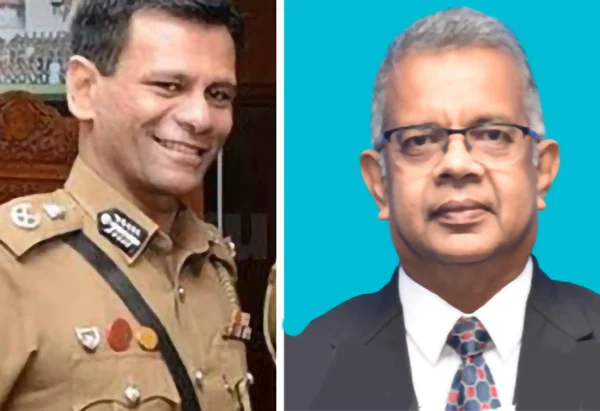
Senior DIG among those slated for transfer
By Shamindra Ferdinando
The National Police Commission (NPC) is expected to take up Police Headquarters recommendation to transfer a group of police officers responsible for a major ‘Ice’ bust at the Colombo port recently.
NPC sources told The Island that recommendation in respect of transfers was received last week. Sources said that though the NPC was scheduled to meet today (01), whether IGP Priyantha Weerasooriya’s recommendation would be discussed and decided today was not known.
Members of the NPC are retired High Court Judge Lalith Ekanayake (Chairman), K. Karunaharan, Dilshan Kapila Jayasuriya, A.A.M. Illiyas and Jayantha Jayasinghe
The IGP directed the Special Investigation Unit (SIU) to probe those who carried out the 31 August, 2026 raid that resulted in the detection of 463 kgs of ‘Ice’ concealed in a container that arrived from Pakistan.
The US Embassy declined to comment on the probe though it declared that the largest ever narcotics detection was made on intelligence made available by the US Drug Enforcement Administration (DEA).
The officers investigated for what an authoritative Headquarters source called shortcomings and lapses on the part of the raiding party, belonged to the Central Crime Investigation Bureau (CCIB). Senior DIG Ranmal Kodituwakku who, on behalf of the CCIB, received information directly from the DEA, is among those Police Headquarters wanted to transfer.
CCIB carried out the raid after having obtained a search order from the Aluthgama Magistrate court. Among the suspects taken in this connection are three Pakistani nationals.

* First Reading of the Budget on 7 October
The Committee on Parliamentary Business has decided that the Second Reading of the Appropriation Bill for the year 2027 (Budget Speech/presentation of Budget proposals) will take place on 12 November, followed by the Second Reading debate from 13 November to 14 December.
Secretary General of Parliament Kushani Rohanadeera said this had been decided at a meeting of the Committee on Parliamentary Business held recently under the chairmanship of Speaker Dr. Jagath Wickramaratne.
Accordingly, the Appropriation Bill was scheduled to be presented to Parliament for its First Reading on 7 October, the Secretary General said.
It was also decided that the Second Reading of the Appropriation Bill (Budget Speech) would be delivered by President Anura Kumara Dissanayake, in his capacity as the Minister in charge of Finance, on Thursday, 12 November, 2026.
Thereafter, the Second Reading debate will be held for seven days, from 13 November to 20 November. Accordingly, the vote on the Second Reading will be held at 6.00 pm on 20 November.
Thereafter, the Committee Stage debate will be held for 19 days, from 21 November to 14 December , with the vote on the Third Reading of the Budget scheduled for 6.00 pm on 14 December.
During this period, the Budget debate will be held every day, including Saturdays, except on public holidays and Sundays. Parliament is scheduled to meet at 9.30 am on each of these days.
From 9.30 am to 10.00 am each day, time will be allocated for the Parliamentary business specified under Standing Order 22(1) to (6). Thereafter, five Questions for Oral Answers will be taken up from 10.00 am to 10.30 am, followed by one question under Standing Order 27(2) from 10.30 am to 11.00 am.
Accordingly, the debate is scheduled to be held from 11.00 am to 6.00 pm on all days, except the two days on which votes are scheduled to be taken, Motions at the Adjournment Time will be taken up for debate from 6.00 pm to 6.30 pm, based on a 50:50 time allocation between the Government and the Opposition, the Secretary General stated.
It was also approved that during the Second Reading debate, 60% of the debate time will be allocated to the Government and 40% to the Opposition, while during the Committee Stage debate, 40% will be allocated to the Government and 60% to the Opposition.
Furthermore, if a division is called for on an Expenditure Head, relating to a Ministry, the relevant vote will be held at 6.00 pm at the conclusion of the proceedings on the respective day.
News
CB Governor confident over timely disbursement of next IMF tranche; hands post-2027 programme decisions to govt.


By Sanath Nanayakkare
Central Bank Governor Dr. Nandalal Weerasinghe addressed queries on the nation’s IMF bailout programme yesterday and indicated that Sri Lanka expects to reach a Staff-Level Agreement with the Fund shortly, clearing the path for the next tranche of funding under the $3 billion EFF arrangement before the end of the year.
Answering questions on Sri Lanka’s economic path, after the current programme expires in March 2027, Dr. Weerasinghe clarified that seeking a follow-up IMF arrangement was entirely a policy decision for the government rather than the Central Bank, maintaining the institutional boundary between Central Bank operations and political decision-making.
The Governor remained firm in his projection that the national economy would expand by around 4 percent throughout 2026, demonstrating economic resilience, even amid external volatilities, such as high oil prices.
Dr. Weerasinghe expressed confidence in the domestic economy’s underlying momentum. While international financial institutions and multilateral agencies had pegged Sri Lanka’s growth prospects at more conservative levels, typically around 3.0 to 3.5 percent, he emphasised that CBSL’s projections are grounded in continuous analysis of real-time indicators.
“When you compare with several other agencies, their growth projections hover around 3 to 3.5 percent. However, the economy is already growing at around 4 percent. In our projections, the economy will maintain this growth rate of around 4 percent throughout the year,” Governor Weerasinghe said.
He noted that despite mid-year quarter adjustments due to volatile oil prices, real economic indicators, including steady credit expansion across the commercial banking sector and sustained industrial and service activity, indicate that the growth trajectory remains firmly on track above the 4 percent benchmark.
Reiterating the Central Bank’s primary mandate, Dr. Weerasinghe noted that monetary policy actions remained focused on anchoring inflation and curtailing excess demand to prevent runaway price spikes.
On inflation targeting, the Governor mentioned that CBSL had submitted a technical recommendation to the Ministry of Finance to maintain an inflation target of 5 percent (+ or – 2 percent band) over the next three-year horizon.
Responding to inquiries on differing target forecasts announced by external agencies such as the IMF, Dr. Weerasinghe underscored that the Central Bank’s recommendations stem strictly from domestic technical and empirical evaluations.
“Our recommendation is based on pure technical and empirical analysis considering the country’s specific situation. We have recommended maintaining a 5 percent target for the next three years, and the government has accepted this recommendation,” he added.
Regarding foreign exchange management, the Governor noted that the Central Bank continues its active market intervention strategy aimed at smoothing out undue exchange rate volatility rather than resisting natural market trends.
Dr. Weerasinghe concluded that while the short-to-medium-term outlook remained assured, the combination of a steady 4 percent growth target and proactive fiscal measures would firmly anchor macroeconomic stability through 2026 and beyond.

Sri Lanka bowl first in semi final clash against India

Trump hints US could strike Iran, warns time coming

Showers or thundershowers will occur at most part of the island after 1.00 p.m.

US-assisted ‘Ice’ detection: NPC to examine IGP’s move to transfer drug-busting team

2027 Budget to be held from 12 Nov. to 14 Dec.

CB Governor confident over timely disbursement of next IMF tranche; hands post-2027 programme decisions to govt.

‘Dates have the highest sugar content to fight Coronavirus’

Sunday Island 27 December – Headlines

#SundayIsland 17th December – Headlines

Sunday Island – 28th March

Sunday Island Headlines – 21 March

Sunday Island – 21st February – Headlines
-

 Editorial5 days ago
Birth of a bad law
-

 Features6 days ago
Beyond traditional jobs: Why Sri Lanka needs to facilitate the gig economy
-

 News3 days ago
Police remove Thileepan statue in Jaffna
-
 Latest News6 days ago
Kusal, Wellalage star as Sri Lanka defend 322 in Headingley thriller
-
 News5 days ago
TIN mandatory for key transactions from Nov. 1
-

 Features3 days ago
The 22nd Amendment, constitutional recovery and illiberal slippage
-

 Features3 days ago
Of foreigners as CEOs of Lankan ventures
-

 News3 days ago
Sajith rejects Jt. Opp. protest sabotage claim; SJB TU chief demands remedial action