
Editorial
Verdict in the ballot box


This newspaper is being printed on Friday night according to our normal schedule and subscribers would have received it while the voting is in progress. Even if it was printed a day later on Saturday night, it would not have been possible to report any result as the counting would have been going on when we went to press. It may have been possible to report voting trends if available and generally report how polling went on countrywide, hopefully without violent incidents. All citizen would fervently hope that the contest itself would be as peaceful as the run up has been up to the time of writing. So this comment is being written virtually blindfolded, as it were, if we may borrow that expression.
When campaigning ended at midnight last Wednesday, the widely held perception was that the fight was between three contestants, Anura Kumara Dissanayake, MP, Opposition Leader Sajith Premadasa, MP, and incumbent President Ranil Wickremesinghe in alphabetical order. How the race would eventually end is hard to call. The general opinion is that none of the front runners will be able to clear the 50 percent plus one vote barrier of total number of ballots cast and we will see a preference vote count for the first time since the executive presidency was created. The leading contenders, as is to be expected, are all blowing their own trumpets predicting victory for themselves.
Wickremesinghe is campaigning on a platform of continuity. He has been credited for restoring a degree of normalcy from the chaos of the Aragalaya period. By his own admission much more remains to be done and he is marketing himself as the man to do it. Many UNPers, such as those who have supported that party for generations and say their blood runs green, blame Wickremesinghe for the split in the party. Its dismal performance at the last parliamentary election in August 2020 can be easily attributable to the fact that while RW conceded the presidential ticket to Premadasa in 2019, he held on to the party leadership. Older leaders may remember this as a case of history repeating itself. When Dudley Senanayake lost to Mrs. Bandaranaike in 1970, he made JR Jayewardene the leader of the opposition but retained UNP leadership.
The result of the split was that the majority of the UNP MPs elected at the parliamentary election in 2015 went along with Premadasa and were elected on his Samagi Jana Balavegaya (SJB) ticket in August 2020. The fact that Wickremesinghe fared as badly as he did at that election was because most UNP voters went with the SJB and he was left with only the rump. The Pohottuwa, as the Rajapaksa’s Sri Lanka Podujana Peramuna (SLPP) is popularly known, has suffered a fate very similar to RW with a large number of its MPs defecting to the RW camp for Saturday’s race, while a lesser number have plumped for Premadasa. It is not rocket science that all these realignments target the parliamentary election that will quickly follow the presidential contest. Individual MPs are joining whatever camp that best serves their re-election interests.
The NPP/JVP or Malimawa (Compass) as it prefers to project itself has demonstrated awesome organizational skills during this presidential election campaign. It has established links within many segments of the population including doctors, lawyers, businessmen, academics, retired policemen and servicemen (including flag rank officers) with anecdotal evidence suggesting that it has won over people who would normally not vote for a party with the JVPs violent history and Marxists roots. This has been possible due to their ability to project that the JVP today is not what it was at a time when many of those who will vote on Saturday were not even born.
It is obvious that as former Ratnapura district MP Thalatha Atukorale, elected on the SJB ticket last time round, said when she resigned her parliamentary seat to link up with Wickremesinghe, that had there been no split in the UNP, the greens would have been in much better shape to take on the challenge from the NPP/JVP. She accused Premadasa of lacking patience to achieve his ambition of becoming president. Whether the various defectors, many of them bad eggs, can deliver votes to Wickremesinghe and Premadasa as they claim is debatable. The voters, hopefully, will decide for themselves which candidate they would prefer. They are able to wean the grain from the chaff of the barrage of propaganda that has hit them this past several weeks.
Our popular columnist, Rajan Philips, writing on this page has made many interesting points on various election related issues. These include what RW, the most experienced politician in the country today, would do if he is not elected. Would he fade gracefully into the sunset or would he remain to fight another day in the forthcoming parliamentary election? There have been many projections by pollsters, both local and foreign, on the outcome of the election. Astrologers too have had their say in television talk shows. The verdict will be in the ballot boxes on Sept. 21 and we should know by Monday, even if a preference vote count must happen, who Sri Lanka’s ninth president will be. Will he too, like many of his predecessors, welsh on the promise of abolishing the executive presidency?


Monday 2nd February, 2026
Ranil Wickremesinghe, following his fortuitous elevation to the presidency in 2022, famously likened the unnervingly daunting task of saving a nosediving economy to Grusha crossing a collapsing rope bridge across an abyss, carrying a baby, in The Caucasian Chalk Circle. Thankfully, he completed that perilous journey, and handed over the baby to his successor President Anura Kumara Dissanayake. One can only hope that the baby will be safe.
As if the task of looking after one baby were not enough, President Dissanayake and Prime Minister Dr. Harini Amarasuriya have embarked on a journey across a different rope bridge, carrying another baby—educational reforms. There was absolutely no need for them to do so in a hurry. The critics of the government’s desperate efforts to impose its educational reforms on other key stakeholders, especially teachers, as a fait accompli, have pointed out that the JVP-led NPP is trying to implement what one of its predecessors crafted. Claiming that the government is seeking credit for Wickremesinghe’s educational reforms, a trade unionist has said President Dissanayake is strutting around, in Ranil’s trousers. The problem is not who is wearing whose trousers; it is that they are shoddily tailored and being worn the wrong way, back to front and inside out with waistband at the wrong level.
The ongoing controversy over educational reforms has taken a dramatic turn, with former Director General of the National Institute of Education (NIE) Prof. Gunapala Nanayakkara implying that some NIE bigwigs took the incumbent government for a ride. On Friday, speaking at a seminar, organised by the United Republic Front, on the educational reforms, Prof. Nanayakkara said the educational reforms the NPP government was trying to implement were based on the so-called Sedera proposals, and they had failed for want of proper leadership. Neither the Education Ministry nor the National Education Commission nor the NIE had provided proper leadership for the educational reforms, he said, revealing something that must have made the bigwigs of the incumbent government and its apologists see red.
Prof. Nanayakkara disclosed that in 2022 and 2023, the NIE had crafted hundreds of modules at a cost of Rs. 223 million. Those who were responsible for the module project faced an audit query; they were required to furnish proof of official approval for the project, Prof. Nanayakkara said, claiming that the NIE officials had craftily smuggled those modules into the current educational reform package in a bid to obtain cover approval. They had also prepared a PowerPoint presentation of the educational reforms, but it had left everyone none the wiser, he noted. This may be the reason why the government has not been able to meet the Opposition’s demand that a comprehensive document on its educational reforms be made public.
Interestingly, if Prof. Nanayakkara’s aforesaid claim is true, then one can argue that the modules at issue were prepared during the previous government, and therefore the Opposition, which bashes the incumbent government for a link to an adult website in the Grade 6 English module, is barking up the wrong tree. Or, is it possible that some modules were prepared during the current dispensation? The Education Ministry should reveal when the modules were prepared.
Prof. Nanayakkara’s claims are of crucial importance; they have shed light on another dimension of the educational reforms controversy. A separate probe should be conducted into the preparation of so many modules at a staggering cost, allegedly without formal authorisation. The government, however, cannot claim the assertion that some NIE bureaucrats took it for a ride in extenuation of its culpability, for it plunged head first into implementing the ill-conceived education reforms and has defended them ardently both in and outside Parliament. Now that it has given its imprimatur to the education reforms and started implementing them, there is no way it can disown the reform baby, as it were, much less absolve itself of the blame for them by throwing some NIE officials under the bus.
Past several months have seen some former ministers and ex-state officials being remanded and denied bail ‘to prevent interference with evidence-gathering processes and the intimidation of witnesses. Some of the offences they are charged with were allegedly committed years ago during previous governments. It is while in power that transgressors can cover their tracks by suppressing or eliminating evidence and influencing or intimidating witnesses. Those who are facing legal action for corruption must have resorted to such tactics while their parties were in power. The venal state officials accused of having aided and abetted such alleged transgressions for personal gain, too, must have done likewise. It is therefore doubtful whether holding them on remand for extended periods at present serves the intended purpose.
Politicians and officials should be arrested and remanded immediately after their transgressions come to light if interference with evidence and the intimidation of witnesses are to be prevented. If investigations had been launched into numerous corrupt deals exposed during the Mahinda Rajapaksa government, it would have been possible to bring those responsible for them to justice. Most members of that administration have got away with their corrupt deals.
Various international organisations campaigning against corruption, money laundering, etc., particularly Transparency International, the National Anti-Corruption Commission of Australia, and the United Nations Office on Drugs and Crime, have stressed the importance of swift probes. They have pointed out that investigating corruption immediately after instances thereof come to light is essential for multiple reasons. Early investigations help preserve evidence and deter concealment, which is very common in Sri Lanka. Corrupt politicians are known to hide documents, destroy records or influence witnesses, especially when they are in power. Evidence can be made to disappear making it harder for investigators to get at the truth if investigations are delayed. Equally, prompt investigations are a prerequisite for maintaining public trust in institutions, such as the Commission to Investigate Allegations of Bribery or Corruption, and the rule of law. Protracted delays in conducting investigations invariably create the impression that the system is corrupt, ineffective and biased. Early action increases the chances of successful prosecution and deterrence.
It is against this backdrop that several damning allegations of corruption against the incumbent government should be viewed. The JVP/NPP came to power, promising what it described as ‘a system change’ to eliminate bribery and corruption and other such social evils. But it is apparently emulating its predecessors in handling allegations against its senior members. It vilifies whistle-blowers, denies allegations and delays investigations. Worse, the CID is headed by a prominent member of the Retired Police Collective of the NPP, and its integrity is therefore compromised.
A huge stock of coal imported for power generation has been found to be substandard. The low calorific value of the coal has resulted in low power output per tonne, and engineers have warned that the use of low-quality coal could damage the machinery of the Norochchoalai power plant. Staggering losses the Ceylon Electricity Board has suffered by importing substandard coal are expected to be passed on to the public in the form of tariff hikes. The government is accused of having interfered with the tender process to facilitate the registration of the company which supplied the low-quality coal. What needs to be done immediately is to probe the allegation that the bidding process was delayed to enable the supplier concerned to be registered. A delay in launching an investigation into the alleged coal procurement racket will help the culprits cover their tracks.
A Parliamentary Select Committee (PSC) probe has been launched into the green-channelling of as many as 323 red-flagged freight containers through the Colombo Port in January 2025. The uninspected cargo may have included narcotics and lethal weapons, the Opposition has claimed. It has been alleged that the high-risk containers were released at the behest of a powerful minister. So, one can argue that the government helped cover his tracks before launching a parliamentary probe. Only the naïve will expect a PSC, dominated by the NPP MPs and headed by a minister, to reveal anything that is detrimental to the interests of the NPP government.
Keheliya Rambukwella was arrested over a procurement racket in the Health Ministry while he was a minister in the previous government. True, that beleaguered administration had to throw him to the wolves for want of a better alternative. But the fact remains that his arrest and remand helped protect the evidence-gathering process, among other things. Why no arrests have been made over the release of 323 high-risk containers without Customs inspection, and the procurement of substandard coal, under the ‘clean’ NPP government, is the question.
Saturday 31st Junuary, 2026
The government has ignored the ultimatum given by the Government Medical Officers Association (GMOA). Its intransigence will only drive the protesting doctors to intensify their trade union action, causing more suffering to patients.
The government has launched a propaganda campaign to turn public opinion against the GMOA by claiming that the doctors are demanding pay hikes with no heed for the economic difficulties caused by Cyclone Ditwah. It has stretched the truth to bolster its claims, suppressing the fact that the protesting doctors have softened their stand and expressed their willingness to give up their trade union action if the government addresses the issues the resolution of which does not cost the state coffers anything. According to media reports, their demands include the establishment of a special service minute for doctors, enhancing the disturbance, availability, and transport allowance, converting the extra duty allowance into a fixed one, and the implementation of a written agreement with the Health Minister on resolving issues regarding a research allowance and transport.
What the government should do to prevent disruptions to the health sector is to bring the GMOA to the negotiating table forthwith and work out a compromise formula. But it has succumbed to the arrogance of power, which drives strong governments to bulldoze their way through. Health Minister Dr. Nalinda Jayatissa has told the doctors that it’s his way or the highway.
The government is apparently cherishing the delusion that since it has a steamroller majority in Parliament, it can do as it pleases, and others have to obey its dictates. Let it be warned that it is inviting trouble. Mandates come with short lifespans, and hubris and downfall are neighbours. Its efforts to neutralise the GMOA have galvanised other health sector trade unions into joining forces; they know that if the government succeeds in flooring the GMOA, so to speak, they will have no chance whatsoever of winning their demands. It is popularly said in this country that “one who lays one’s hands on the gourd does not spare the pumpkin”. In fact, that seems to be the government’s strategy. It is dealing with protesting trade unions in such a way as to deter others from launching labour struggles. It has chosen to ignore a hunger strike by the Development Officers (DOs), attached to the state-run schools; they demanding that they be absorbed into the teacher service. The protesters campaigned hard for the JVP/NPP in the 2024 elections, expecting their fair demand to be met. These graduates have worked as teachers for about seven years, and there is no reason why the government cannot appoint them as teachers; they can be further trained, if need be, after being appointed as teachers. The DOs have received the typical karapincha (curry leaves) treatment from the government they helped elect—they have been used and discarded. The government has shown a callous disregard for not only their career prospects but also their dear lives. The DOs were informed yesterday evening that they could meet President Anura Kumara Dissanayake on Tuesday (03 Feb). But NPP MP Chandna Sooriyaarachchi revealed to the media yesterday that all arrangements had been made for a competitive examination to be held soon!
The GMOA used to give short shrift to other health sector trade unions, and go to the extent of being critical of their labour struggles. It was labouring under the misconception that the state health institutions could operate without other categories of workers. They even sought to establish what may be described as a health sector trade union hierarchy modelled on the four-varna caste system, and place themselves at the top. Now, they have realised the need to cooperate with other trade unions instead of confronting them.
If the health sector trade unions close ranks, they will stand a better chance of winning their demands, and labour unions in other sectors will follow suit to boost their bargaining power. The government continues to provide its political opponents and trade unions with rallying points. Governments intoxicated with power think no end of themselves and behave like aggressive drunkards in shebeens only to receive sobering knocks in elections.

Our focus is on economic stability through fiscal discipline, sustainable debt management, and reforms that enhance productivity and growth – PM

Spotless England meet unbeaten Australia in Under-19 World Cup semi-final

Kamindu in, Dhananjaya out as Sri Lanka flip-flop with T20 World Cup selection

China executes four more Myanmar mafia members

No decision yet on ICC meeting to discuss Pakistan boycott

Shoulder injury casts doubt over Eshan Malinga’s T20 World Cup

‘Dates have the highest sugar content to fight Coronavirus’

Sunday Island 27 December – Headlines

#SundayIsland 17th December – Headlines

Sunday Island – 28th March

Sunday Island Headlines – 21 March

Sunday Island – 21st February – Headlines
-
 Business5 days ago
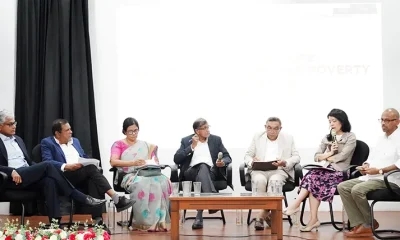
Climate risks, poverty, and recovery financing in focus at CEPA policy panel
-
 Opinion4 days ago
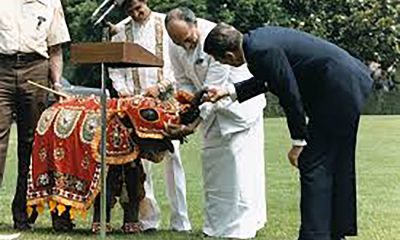
Sri Lanka, the Stars,and statesmen
-

 Business3 days ago
Hayleys Mobility ushering in a new era of premium sustainable mobility
-
 Business3 days ago
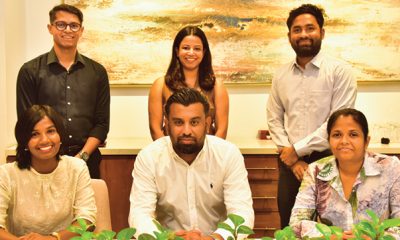
Advice Lab unveils new 13,000+ sqft office, marking major expansion in financial services BPO to Australia
-
 Business3 days ago
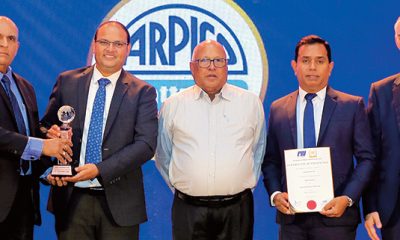
Arpico NextGen Mattress gains recognition for innovation
-
 Business2 days ago
Altair issues over 100+ title deeds post ownership change
-
 Business2 days ago
Sri Lanka opens first country pavilion at London exhibition
-

 Editorial3 days ago
Govt. provoking TUs