
Business
Vallibel One reports strong FY24/25 with Rs.122.8bn trurnover and Rs.16.02bn PAT


Vallibel One PLC (CSE: VONE), Sri Lanka’s leading diversified holding company, announced its consolidated financial results for the financial year ended 31 March 2025, reporting robust performance across all key metrics.
The Group recorded consolidated revenue of Rs. 122.8 billion, reflecting a marginal year-on-year increase from Rs. 122.3 billion, driven by continued expansion across its finance, tile, aluminium, and consumer segments. The Group reported a profit after tax (PAT) of Rs. 16.02 billion and EBITDA of Rs. 34.5 billion, with net profit attributable to equity holders rising 19% to Rs. 11.76 billion, compared to Rs. 9.89 billion in the previous year.
In Q4 alone, Vallibel One posted a PAT of Rs. 5.92 billion, a 30% increase compared to Rs. 4.55 billion in Q4 FY2023/24. Profit before tax stood at Rs. 7.94 billion, with gross margins sustained at 44% for the year.
Earnings per share (EPS) rose significantly to Rs. 10.34, compared to Rs. 8.69 a year ago, reflecting strong shareholder returns. Net asset value per share improved to Rs. 95.74 from Rs. 80.88, with total equity rising to Rs. 158.3 billion, up from Rs. 139.2 billion in FY2023/24. Total assets increased to Rs. 406.8 billion, compared to Rs. 346.6 billion in the previous year, driven by strategic investments and asset revaluations.
The finance sector, led by LB Finance PLC, recorded a profit after tax of Rs. 10.86 billion for FY 2024/25, marking a 12% year-on-year increase compared to FY 2023/24. This performance was driven by a 3% increase in net interest income and an impairment reversal of Rs. 261 million, in contrast to a charge of Rs. 270 million in the previous year. The cost-to-income ratio remained at a commendable 33%, positioning it among the best in the industry. The total asset base expanded by 19% year-on-year to Rs. 241.9 billion, while the lending portfolio grew significantly by 23%, rising from Rs. 162.5 billion to Rs. 199.3 billion.
The Aluminium sector, driven by Swisstek Aluminium, delivered a remarkable financial turnaround recording a profit after tax of Rs 417.9 million compared to a loss of Rs. 335.5 million in the previous year. This was accompanied by a 66% revenue growth and a more than doubled gross profit.
Delmege demonstrated strong revenue growth, increasing from Rs. 11.7 billion in FY 2023/24 to Rs. 15.4 billion in FY 2024/25, while profit before tax rose by 69% year-on-year to reach Rs. 1.49 billion. The Group’s total asset base also expanded significantly, rising to Rs. 15.6 billion in FY 2024/25 from Rs. 11.8 billion in FY 2023/24.
The Packaging sector, led by Unidil Group reported a profit after tax of Rs. 744 million for FY 2024/25, a 4% increase from the previous year, including first four months operational losses from its new offshore subsidiaries in Kenya.
Sri Lankan operations delivered a strong PAT of Rs. 814 million, up 14%, highlighting continued domestic strength. Despite early losses in Kenya, the Group remains confident in long-term growth in East Africa.
This strong performance across diverse sectors underscores Vallibel One’s resilience, strategic agility, and unwavering focus on long-term value creation, positioning the Group for continued growth both locally and internationally. (Vallibel One)

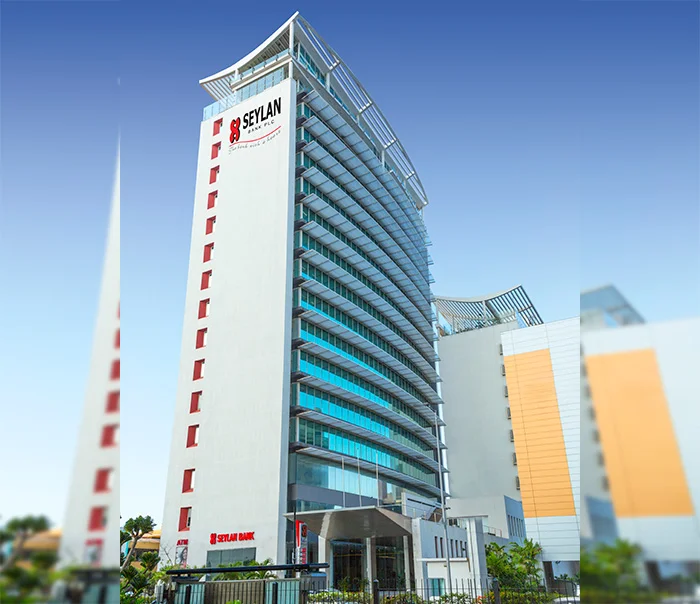
Seylan Bank PLC has delivered a resilient financial performance for 2025, surpassing market forecasts and signaling a steady recovery in its underlying credit profile, according to a recent equity research update by First Capital Holdings PLC.
The bank recorded a net profit of LKR 12.2 billion for the full year 2025, marking a significant 20.3% year-on-year increase. Performance in the final quarter was particularly notable, with net profit reaching LKR 3.8 billion, a 9.4% rise compared to the same period in 2024. This result exceeded analysts’ expectations by 5.4%, underscoring the bank’s strengthening fundamentals.
Core banking operations remained a primary driver of growth. Net interest income (NII) expanded by 18.3% year-on-year to LKR 11.3 billion in 4Q2025. This was supported by an 8.3% increase in interest income and a marginal contraction in interest expenses, reflecting highly favorable funding dynamics.
Total operating income surged by 51.1% in the final quarter, a sharp jump largely attributed to the absence of International Sovereign Bond (ISB) restructuring losses that had impacted the previous year’s performance. Fee and commission income also saw robust growth of 21.8%, fueled by increased activity in cards, remittances, and international trade.
A standout highlight for the period was the aggressive expansion of the bank’s loan book, which grew by 29.6% year-on-year to reach LKR 599.8 billion by the end of 2025. The deposit base also grew by 13.3%.
Asset quality showed marked improvement as the bank successfully navigated the tail-end of the economic recovery. The Stage 3 loan ratio, a key indicator of credit risk, fell to 1.03% in 4Q2025, down significantly from 2.10% a year earlier. This was further bolstered by a 95.1% contraction in impairment charges on loans and advances, reflecting a move toward more stable provisioning.
Seylan Bank’s capital and liquidity positions remain a source of strength, staying comfortably above regulatory requirements. The bank’s Total Capital Ratio stood at a healthy 17.89%, while the liquidity coverage ratio remained elevated at nearly 230%, providing ample buffers to support future lending.
Looking ahead, First Capital projects a more moderated pace of growth as the broader economic momentum eases and the monetary easing cycle reaches its trough. Nevertheless, analysts remain optimistic, projecting net profits to rise to LKR 15.9 billion in 2026 and LKR 18.4 billion in 2027.
While the bank’s estimated fair value for 2026 has been revised to LKR 140 per share to reflect market re-rating trends, the stock still offers a compelling total return of approximately 37%. A newly introduced 2027 fair value of LKR 155 implies an even higher potential return of 52%. Citing these strong fundamentals and the significant upside potential, the First Capital report maintains a “Buy” recommendation on Seylan Bank.
By Sanath Nanayakkare

In a significant moment reflecting renewed confidence in Sri Lanka’s economic recovery and forward-looking national strategy, the Bank of Ceylon (BOC) formally presented its 2025 Annual Report to His Excellency President Anura Kumara Dissanayake. The occasion reaffirmed the Bank’s role as the nation’s leading financial institution and a key pillar of economic stability.
The report was officially handed over by Chairman Mr. Kavinda De Zoysa and General Manager/Chief Executive Officer Mr. Y. A. Jayathilaka, who outlined the Bank’s performance, resilience, and strategic direction during a pivotal phase for Sri Lanka’s financial sector.
BOC’s 2025 Annual Report highlights a strong financial performance, with PBT reaching Rs. 120.8 billion, reinforcing its position as one of the most profitable single entities in the country. Beyond profitability, the Bank made a substantial contribution to the national economy, remitting approximately Rs. 77 billion in taxes underscoring its vital role in supporting fiscal stability and national development.
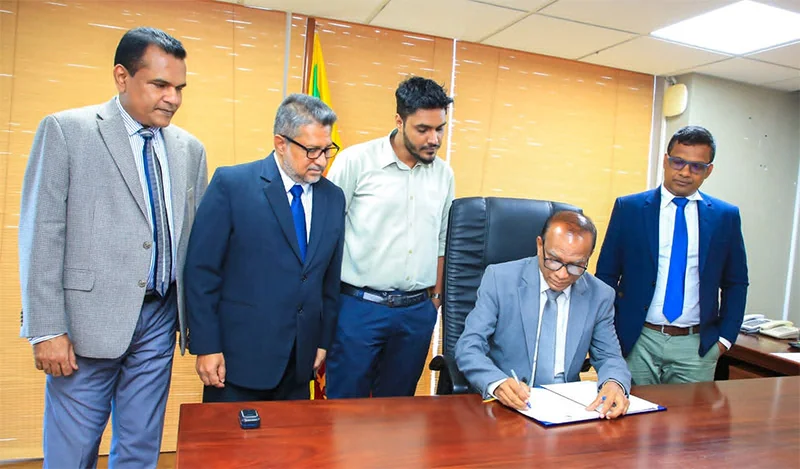
Despite a reshuffle at the helm of energy sector, the government has moved swiftly to reassure markets, investors, and industry stakeholders that policy continuity—not disruption—will define the road ahead.
Newly appointed Power and Energy Minister Anura Karunathilake, assuming duties at a moment of heightened scrutiny, made it clear that the administration’s core commitment remains unchanged: uninterrupted supply of electricity and fuel, regardless of political transitions.
His remarks come at a critical juncture for the country’s energy economy—still recovering from past volatility, navigating global price pressures, and attempting to build investor confidence in long-term infrastructure and generation projects.
Addressing journalists following his appointment, Karunathilake struck a notably measured tone, signaling stability rather than reformist disruption.
“The national energy policy is anchored in long-term objectives. There is no shift in direction,” he said, in what analysts interpret as a deliberate message to both domestic and foreign investors wary of policy reversals.
Energy economists note that Sri Lanka’s power and fuel sectors remain deeply sensitive to political signals. Even minor uncertainty can ripple through procurement cycles, independent power producer (IPP) negotiations, and fuel hedging strategies.
By emphasizing continuity, the government appears intent on avoiding the stop-start policy cycles that have historically plagued the sector.
The transition follows the resignation of former Minister Eng. Kumara Jayakody and Ministry Secretary Prof. Udayanga Hemapala on April 17, a move widely viewed as an attempt to ensure the independence of an ongoing Presidential Commission probing coal procurement processes.
From a governance perspective, the resignations may serve to reinforce institutional credibility—particularly at a time when transparency in energy procurement is under intense public and political scrutiny.
Karunathilake acknowledged opposition criticism regarding transparency but responded with a firm challenge: present concrete evidence to investigative authorities rather than litigating issues through media narratives.
Perhaps the most market-sensitive assurance came in the Minister’s outright rejection of imminent power cuts.
Energy supply stability remains a cornerstone of economic recovery. From export manufacturing to tourism and digital services, uninterrupted electricity is non-negotiable.
Karunathilake indicated that groundwork laid by his predecessors—including generation planning and fuel supply arrangements—has already mitigated immediate risks.
“If those plans are implemented effectively, there will be no need for power cuts,” he said, positioning his role as one of policy support and execution oversight rather than structural overhaul.
Industry observers point out that this continuity is crucial. Any disruption in electricity supply could directly impact industrial output, SME operations, and investor sentiment—particularly as Sri Lanka courts foreign direct investment in energy-intensive sectors.
On the fuel front, the minister acknowledged the reality that global price movements—exacerbated by geopolitical tensions in the Middle East—remain beyond Sri Lanka’s control.
For businesses, especially logistics operators, fisheries, and agriculture, fuel price predictability is as critical as supply continuity. Sudden spikes can erode margins and disrupt planning cycles.
Karunathilake’s assurance that supply will remain uninterrupted, regardless of external shocks, is therefore likely to be welcomed by key economic sectors.
By Ifham Nizam

Advisory for Severe Lightning issued for the Western, Sabaragamuwa, Central, North-western, North-central, Southern, Uva provinces, and Ampara and Batticaloa districts

Will another film star be able to sway the election in India’s Tamil Nadu?

‘Team audit’ done, Kirsten hopes Sri Lanka keep ‘progressing and improving’

Nuwan Thusara withdraws lawsuit against Sri Lanka Cricket

Compensation payments and reconstruction activities related to the Ditwah relief measures must be expedited with special attention at the district level – PM

South Korean fighter jets collided due to pilots taking pictures, report finds

‘Dates have the highest sugar content to fight Coronavirus’

Sunday Island 27 December – Headlines

#SundayIsland 17th December – Headlines

Sunday Island – 28th March

Sunday Island Headlines – 21 March

Sunday Island – 21st February – Headlines
-
 News2 days ago
Rs 13 bn NDB fraud: Int’l forensic audit ordered
-

 Business6 days ago
Harnessing nature’s wisdom: Experts highlight “Resist–Align” path to resilience
-

 Opinion4 days ago
Shutting roof top solar panels – a crime
-

 News6 days ago
Gratiaen Trust announces longlist for the 33rd Annual Gratiaen Prize
-

 News5 days ago
From Nuwara Eliya to Dubai: Isha Holdings markets Agri products abroad
-

 Latest News7 days ago
Singapore Zoo’s first Sri Lankan leopard cubs make their public debut
-
 News5 days ago
Heroin haul transported on 50-million-rupee contract
-

 News3 days ago
Church calls for Deputy Defence Minister’s removal, establishment of Independent Prosecutor’s Office