
News
Vaccination: No major side effects reported so far – Sudarshini


by Shamindra Ferdinando
Primary Health Care, Epidemics and COVID Disease Control State Minister Dr Sudarshini Fernandopulle yesterday said that those who had received the Oxford-AstraZeneca vaccine hadn’t so far reported major side effects.
The vaccination programme was continuing quite successfully, Dr. Fernandopulle said, as the total number of persons vaccinated by 2 pm, on Monday reached 60,000.
The State Minister said so in response to The Island query whether hospitals and other locations where frontline health workers received vaccine reported post-vaccination problems.
President Gotabaya Rajapaksa last Thursday (28) received the first 500,000 doses of a COVID-19 vaccine from India, which has donated the shots to eight countries in the region. The Oxford-AstraZeneca vaccine was manufactured by the Serum Institute of India.
The government earlier announced approximately 150,000 health workers and 115,000 selected military and police personnel would be immunized at six hospitals in Colombo and its suburbs.
Asked whether India had sent medical personnel along with the consignment of Oxford-AstraZeneca vaccine in case of emergency, Dr. Fernandopulle, who had been also at the BIA with President Rajapaksa to receive the Indian consignment, emphasized as expected from any vaccine, fever, body aches and pain at the injections sites had been reported. “Our doctors and other medical personnel are capable of handling emergency and ready to face any eventuality,” Dr. Fernandopulle said, adding that there was no requirement to bring in doctors from India.
Responding to another query, the State Minister pointed out Sri Lanka had the experience in managing very efficient childhood vaccination programme. Dr. Fernandopulle gave the required leadership in the absence of health minister Pavitra Wanniarachchi receiving treatment for Covid-19.
According to the State Minister, those who had received the first dose could take the second in four weeks. Sri Lanka launched its vaccination programme on January 29. Asked whether the vaccination programme covered the entire country, lawmaker Fernandopulle said it was being implemented in MOH areas in all provinces. “Hospital workers have to get the second dose from the same place and very often it is the place of work,” Dr. Fernandopulle said.
Dr. Fernandopulle received the new appointment several weeks ago as the government battled uphill battle to bring the epidemic under control.
The State Minister urged the public to strictly follow health guidelines though the vaccination programme was underway. Protection provided to medical staff engaged in Covid-19 control efforts would certainly enhance confidence among the public, Dr. Fernandopulle said.
At one point the Government Medical Officers’ Association (GMOA) warned of government hospitals as well as military-run facilities that accommodated the affected persons being overwhelmed.
Dr. Fernandopulle said that the situation would continue to improve as the government brought the first round of vaccination programme to a successful conclusion.


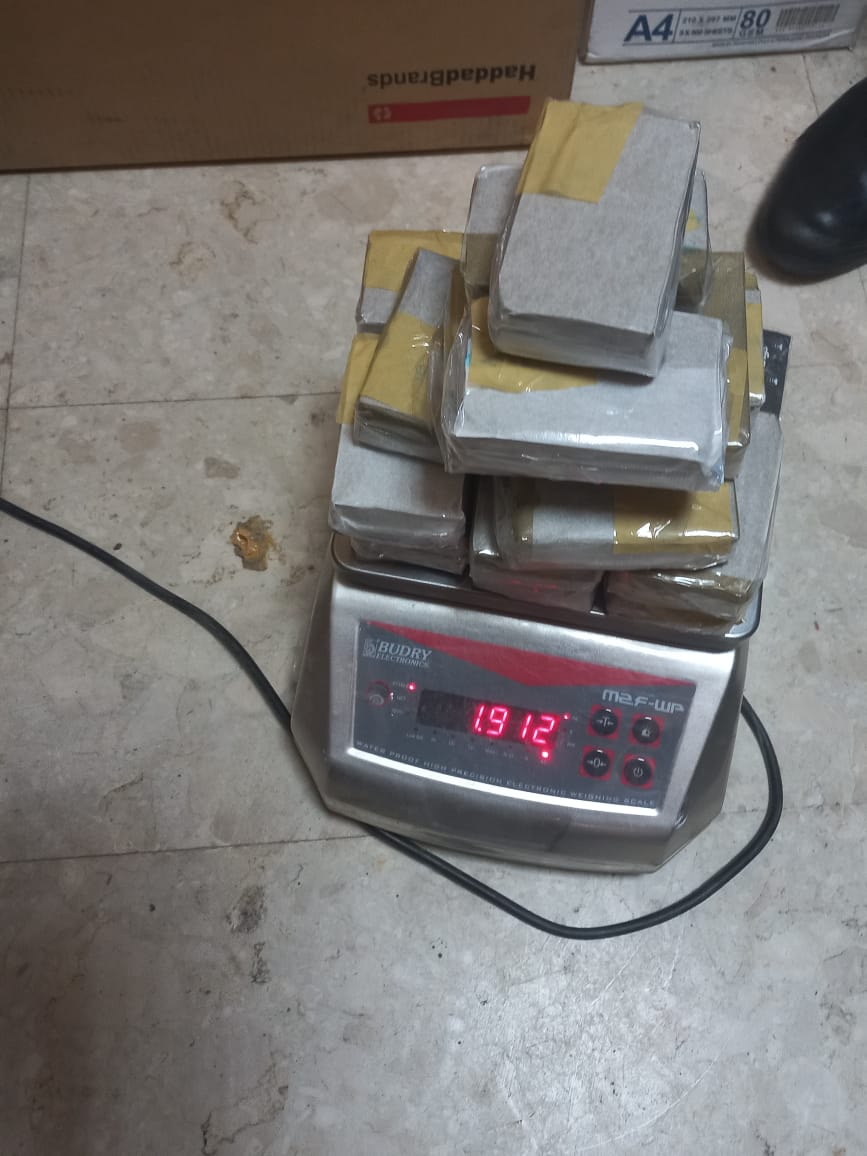
Three Sri Lankan male passengers who arrived from Muscat by flight no. OV 437 on Saturday (24) have been arrested by officers attached to the NCU at BIA as they were found to be carrying 12,306 grams of Cannabis class narcotics (suspected as Hashish & Kush) valued at 123 million rupees.
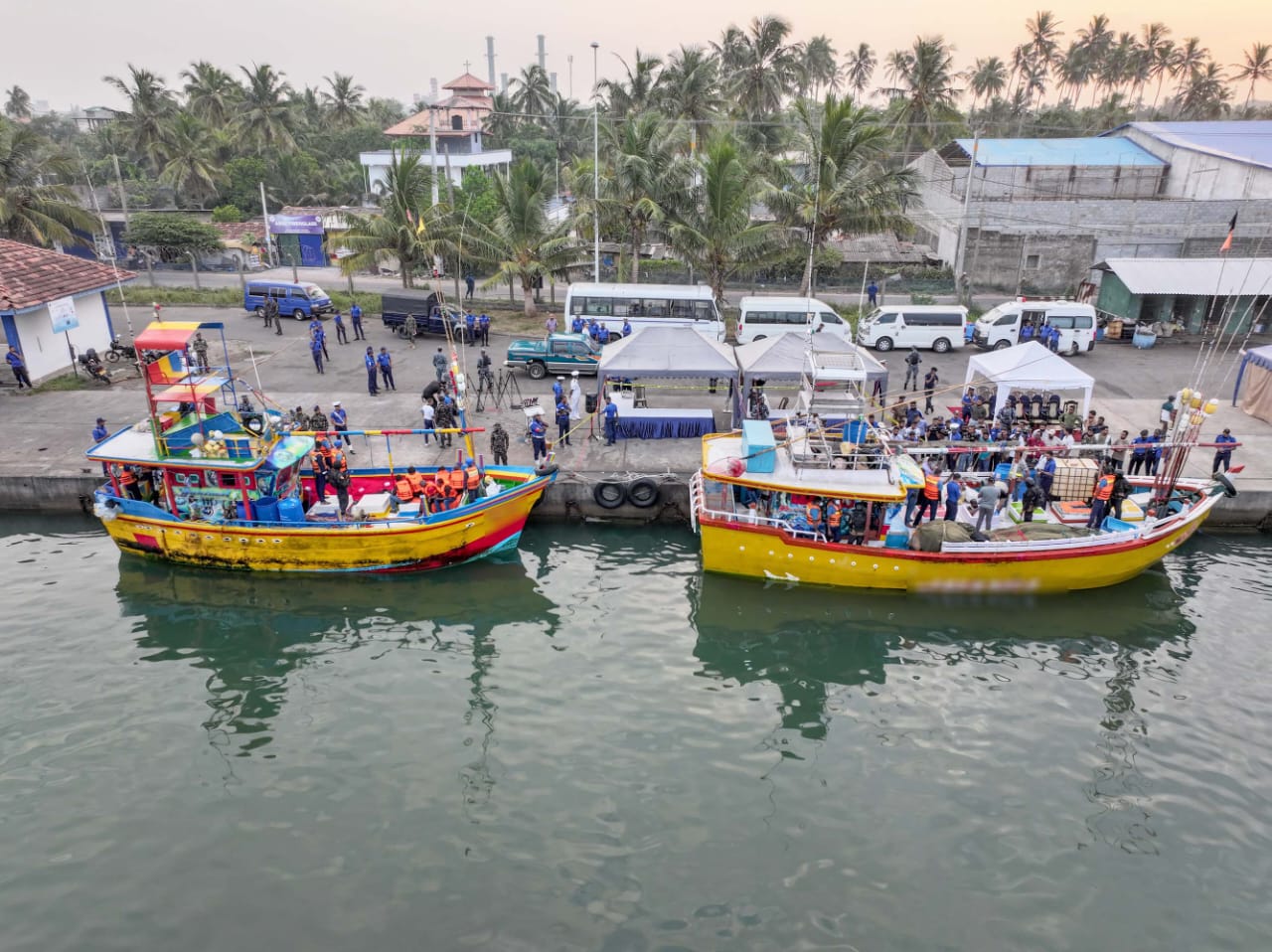
Building on its success in seizing major narcotic stocks in 2025, the Navy continued to support the “A Nation United” National Mission in 2026. In continuation of these efforts, during an
operation conducted on the high seas south of Sri Lanka, the Navy apprehended eleven (11) suspects aboard two local multi-day fishing trawlers suspected of drug smuggling.
Based on shared information, by the Sri Lanka Navy and Police, this special operation was conducted off the southern coast, deploying the Navy‟s Offshore Patrol Vessels. The operation
resulted in the interception of a multi-day fishing trawler suspected of smuggling narcotics, and the apprehension of five (05) suspects on board.
During further operations in the same area, naval units seized another multi-day fishing trawler (01), along with communication equipment and six (06) additional suspects, also believed to be involved in drug smuggling.
This morning (25 Jan 26), the two intercepted fishing trawlers, along with fourteen (14) sacks laden with suspected narcotics and the suspects, were brought to the Dikovita Fisheries Harbour.
An expert examination by the Police Narcotic Bureau confirmed that the fourteen (14) sacks contained more than 184 kilograms of heroin and over 112 kilograms of ‘Ice’ (crystal methamphetamine).
The Deputy Minister of Defence, Major General (Retd) Aruna Jayasekara, the Commander of the Navy, Vice Admiral Kanchana Banagoda, and the Inspector General of Police, Priyantha Weerasuriya, inspected the narcotics at the Dikovita harbour.
The Deputy Minister of Defence said that the current administration has initiated several projects for national development. As a flagship initiative, under the directives and guidance of the President, and under the supervision of the
Ministry of Defence, well-coordinated anti-narcotic raids have been launched.
This effort, part of “A Nation United” National Mission, involves the tri-forces, police, and all intelligence agencies working together under a coordinated plan to ensure that drug smugglers have no opportunity to bring narcotics into the country, he opined. He further stated that despite the national disaster situation, the state machinery, including the tri-forces, the police, and the public at large, remains united in rebuilding the nation, no room will be left for drug trafficking, which poses a severe threat to national security and public safety. Those
who engage in or support drug trafficking, under the cover of fishing activities, will find no escape, he added.
The Deputy Minister also reaffirmed that the tri-forces, police, and all law enforcement agencies are fully committed to their duty of suppressing this menace.
The Deputy Minister of Defence reported that, throughout 2025, a series of highly successful operations were conducted leading to numerous arrests. This was achieved through close coordination and mutual cooperation among the tri-services, the police, the Special Task Force, Police Narcotics Bureau, local law enforcement and international agencies. He noted that this
same spirit of cooperation and commitment has continued into 2026, resulting in the seizure of a large stockpile of drugs.
On behalf of the Honourable President, he extended gratitude to all who contributed to these efforts, specifically acknowledging the Commander of the Navy, the Inspector General of Police, the Police Narcotic Bureau, and the crews of the Navy’s Offshore
Patrol Vessels.
Moreover, the Deputy Minister declared that drug smuggling has become a national crisis, fueled by youth involvement and social crime. With borders secured under the “Nation United” National Mission, he warned traffickers to cease operations and urged users to abandon the destructive habit.
The Deputy Minister urged the public to report suspected drug smugglers to law enforcement via the hotlines 1818 or 1997 and also commended the role of media institutions and journalists in raising public awareness about the dangers of narcotics through responsible reporting.
Meanwhile, the two (02) multi-day fishing trawlers, along with a haul of narcotics, eleven (11) suspects, and communication equipment, were handed over to the Police Narcotic Bureau for
further investigation and legal proceedings.
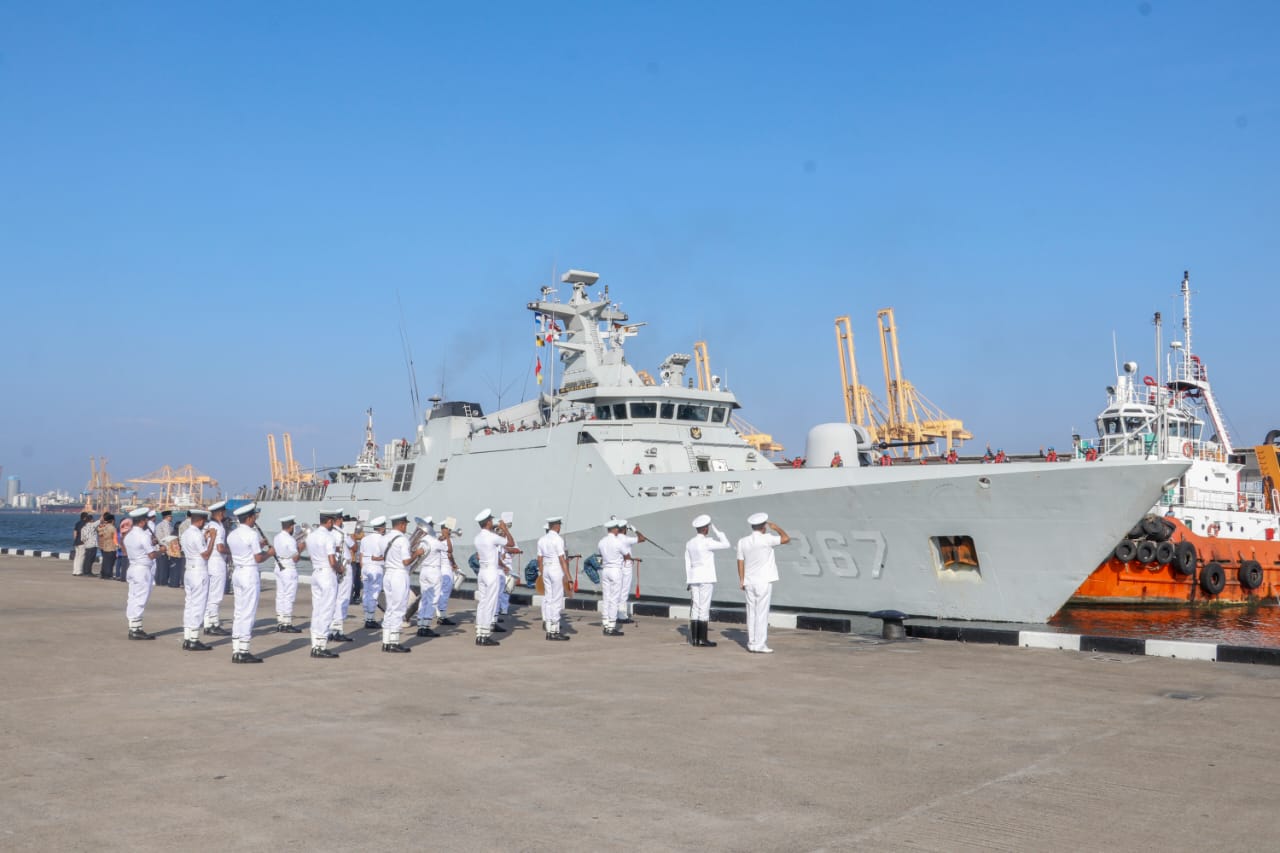
The Indonesian Naval Ship ‘KRI SULTAN ISKANDAR MUDA – 367’, which arrived in Sri Lanka for logistics replenishment and a goodwill mission, departed the island on 23 Jan 26.
The Sri Lanka Navy bade a customary farewell to the departing ship at the Port of Colombo, following naval traditions.
During the stay in Sri Lanka, crew members of the ship visited some popular tourist destinations within the city of Colomb

Three arrested with narcotics valued at Rs123 million at BIA

Navy intercepts 02 narcotics-laden trawlers with 11 suspects in southern seas

Indonesian Naval Ship ‘KRI SULTAN ISKANDAR MUDA – 367’ departs island

U19 World Cup: Japan defeat Tanzania by nine wickets

U19 World Cup: Ambrish’s four-fer powers India to third straight win

Josh Hoey breaks world 800m short track record with 1:42.50 in Boston

‘Dates have the highest sugar content to fight Coronavirus’

Sunday Island 27 December – Headlines

#SundayIsland 17th December – Headlines

Sunday Island – 28th March

Sunday Island Headlines – 21 March

Sunday Island – 21st February – Headlines
-

 Features7 days ago
Extended mind thesis:A Buddhist perspective
-
 Opinion6 days ago
American rulers’ hatred for Venezuela and its leaders
-

 Business19 hours ago
ComBank advances ForwardTogether agenda with event on sustainable business transformation
-
 Opinion4 days ago
Remembering Cedric, who helped neutralise LTTE terrorism
-
 Business4 days ago
CORALL Conservation Trust Fund – a historic first for SL
-

 Opinion3 days ago
A puppet show?
-

 Opinion6 days ago
History of St. Sebastian’s National Shrine Kandana
-
 Opinion19 hours ago
Conference “Microfinance and Credit Regulatory Authority Bill: Neither Here, Nor There”