
News
US urged not to proceed with resolution based on unverified ‘desk-reviewed’ info, etc.

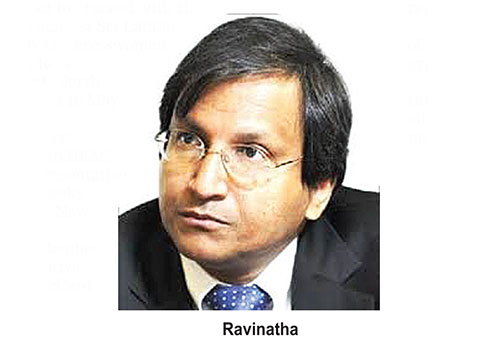
Amb. Aryasinha cites Gash, Smith:
Following Gen. Chagie Gallage’s strong condemnation of what he called a sininster US move to harass Sri Lanka further, as reported by The Island recently, the Sri Lankan government has formally requested the US House Foreign Affairs Committee (HFAC) not to proceed with H. RES. 413 against Sri Lanka moved by Congresswoman Deborah Ross (Democrat/North Carolina) on 18 May 2021.
In a letter addressed to HFAC Chair Representative Gregory Meeks (Democrat/New York) and Ranking Member Representative Michael McCaul (Republican/Texas), Sri Lanka’s Ambassador to the USA Ravinatha Aryasinha said, “Sri Lanka vehemently opposes the contents of the resolution which contains allegations relating to Sri Lanka that are inaccurate, biased and unsubstantiated, raising grave suspicion regarding the intention of the resolution”.
The letter was accompanied by a detailed analysis of the resolution, which laid out paragraph by paragraph, its prejudicial nature.
The Ambassador observed that the proposed resolution which equates the LTTE – proscribed by the US since 1997 and named by the FBI in 2008 as “among the most dangerous and deadly extremists in the world” – to an ‘armed independence organization’, exposes the resolution’s origins and purpose.
The Resolution encourages separatism and questions even the nature of the Sri Lanka State, by references to ‘Traditional Tamil Homelands’. This not only misrepresents established historical facts, and present-day realities, but also contributes to supporting the dismemberment of Sri Lanka, which is the ultimate goal of the LTTE and its supporters.
Ambassador Aryasinha said the resolution’s willful ignorance of the USA’s own security concerns about the LTTE and its front organizations and efforts at glorification of terrorism, will give inspiration to rump elements of the LTTE and its numerous front organizations within the US and across the world, as well as to other terrorist organizations.
Observing that the USA had been “a consistent defense partner of Sri Lanka, including in Sri Lanka’s war against terror”, the Ambassador said “the resolution which is at significant variance with stated U.S. policy, across Administrations – both Democratic and Republican, may lead to an erroneous conclusion that the House supports armed acts to achieve political goals. This would undermine the US Administration’s own foreign policy foundation of being rooted in democratic values, and negatively impact the warm bilateral relations between Sri Lanka and the USA”.
It asserts that the Sri Lanka Government, having struggled for nearly 30 years to defeat LTTE terrorism, consistent with its constitutional duties to protect its citizens regardless of race, religion, language, caste, sex, political opinion or place of birth, launched a humanitarian operation to protect and liberate all Sri Lankans. It also outlined the measures taken by the Government since the defeat of terrorism in May 2009, to address the needs of 300,000 internally displaced who had been used as human shields by the retreating LTTE, to rebuild and develop infrastructure in the conflict affected areas and to restore livelihood opportunities to many, including to over 12,000 ex-LTTE combatants – also comprising 596 child soldiers, who were rehabilitated and reintegrated into the society.
Ambassador Aryasinha recalled that following the ending of the conflict, the then government in 2013 conducted Northern Provincial Council elections, ensuring democratic freedoms and rights to the people of the North. He noted that since 2017, all minority parties in Parliament, including the TNA, supported the deferral of elections, through a ruling that required electoral reform prior to holding PC elections, which never materialized. For nearly 3 years, the HRC or Western countries having not taken issue with the delay of elections to Provincial Councils, including that of the Northern Province, however, presently have projected it as a major issue, at a time the current government has taken the initiative to appoint a Parliamentary Committee to make recommendations on this matter.
Noting that reports on Sri Lanka cited in the Resolution, including the OISL Report of 2015, constituted a mere subjective narrative of events including “desk-reviewed” information, the Ambassador said that these documents failed to reveal sources and were not verifiable. On the contrary, there was an abundance of verifiable evidence that has been ignored, contained in, interalia, the Lessons Learnt Reconciliation Commission (LLRC), the ‘Paranagama Commission’, reports from the UN and international agencies including the UNDP, UNICEF and the ICRC, as well as information presented before the UK House of Lords by Lord Naseby challenging among other things the vastly exaggerated civilian casualty figures. Expert opinions including by international legal luminaries, as well as dispatches in real time by Colonel Anton Gash, Military
Attaché of the British High Commission in Colombo and statements by Lt. Col. Lawrence Smith who had served as Defense Attaché of the US Embassy during the last phase of the conflict, also contested this narrative.
Ambassador Aryasinha also observed that, having had Sri Lanka co-sponsor UN Resolution 30/1 in October 2015 and extracted a commitment that Sri Lanka will initiate an accountability mechanism which would include foreign judges and lawyers, which was unconstitutional, for 5 years neither the UN bodies nor the US and other proponents of this resolution, pressed the previous government to carry out its promises.
He said, calling for an “international mechanism” at this juncture is sinister, at a time the present Government has provided a credible transparent domestic process to address the concerns raised, by in January 2021 instituting a Presidential Commission of Inquiry (PCOI), which had on 4 March 2021 “invited any person, persons or organizations to submit written representations or information or any other material which relates to the above for the Commission to inquire”. The Commission has been conducting hearings since April and heard testimony from witnesses.




Trade unions of the Ceylon Electricity Board (CEB), backed by the powerful Ceylon Electricity Board Engineers’ Union, have warned of accelerated trade union action following the collapse of crucial discussions held on Monday (16) with the CEB Chairman, who also serves as Secretary to the Ministry of Power and Energy.
The issue is expected to take centre stage at today’s press conference, with unions signalling that a token strike, possibly a 12-hour countrywide action, could be staged next week unless authorities urgently intervene.
The meeting earlier this week ended without what union representatives described as any “positive or constructive outcome.”
Trade union leaders expressed disappointment that their key concerns had not been substantively addressed during discussions with the Chairman.
At the heart of the dispute is the unions’ demand for a collective agreement in accordance with Section 18(j) of the Sri Lanka Electricity Act No. 36 of 2024. Trade union representatives maintain that the law provides for structured engagement between management and employees and that a formal collective agreement is necessary to ensure transparency and industrial stability within the institution.
The unions also submitted what they termed a reasonable proposal to safeguard the CEB Employees’ Provident Fund (EPF), voicing concerns over the long-term security of workers’ retirement benefits.
However, according to trade union sources, those proposals were not adequately taken up during the discussions.
A senior electrical engineer told The Island that further internal consultations were being held to decide the next course of action. “There is growing frustration among employees. The issues raised are fundamental and relate directly to statutory compliance and the financial security of staff,” he said.
The Island learns that unless there is meaningful engagement from the authorities, the proposed token strike could mark the beginning of more stringent industrial action.
Energy sector observers warn that any escalation of trade union unrest at the CEB could have serious implications for the country’s power sector stability at a critical time.Further developments are expected following today’s media briefing.
By Ifham Nizam

Prime Minister Dr. Harini Amarasuriya yesterday (19) revealed allowances and benefits provided to Members of Parliament at present.She did so while responding to a question raised by Samagi Jana Balawegaya MP Chaminda Wijesiri.
According to the disclosure:
An MP receives a monthly allowance of Rs. 54,285, with an entertainment allowance of Rs. 1,000 per month.
Driver allowance is Rs. 3,500 per month; however, if the MP is provided with a driver by the Ministry of Public Security and Parliamentary Affairs, no driver allowance is paid.
Telephone allowance is Rs. 50,000, while transport allowance is Rs. 15,000 per month.
Office allowance amounts to Rs. 100,000.
MPs attending parliamentary sessions receive Rs. 2,500 per day, while Rs. 2,500 per day are given for MPs attending committee meetings on non-sitting days.
Meanwhile, Members of Parliament also receive a fuel allowance based on the distance from their elected district to Parliament.
For national list MPs, this is calculated as 419.76 liters of diesel per month, paid at the approved market rate on the first day of each month.Dr. Amarasuriya also emphasised that these allowances are structured to cover official duties and transportation costs.

Former OIC of the Cyber Crime Investigation and Intelligence Analysis Unit of the CID, M.M.U. Subhasinghe, yesterday expressed his regret in writing to civil activist and comedian Natasha Edirisooriya at the Supreme Court regarding her arrest under the International Covenant on Civil and Political Rights (ICCPR) Act.
The Attorney General’s Department, appearing on behalf of the respondents, informed the court that the IGP would issue a set of guidelines via a circular to all police officers to prevent unlawful arrests under this Act in the future. It was further noted that the circular would be issued within two weeks, and the petitioner, Natasha Edirisooriya, has examined and agreed to these guidelines.
These submissions were made yesterday before a three-judge bench of the Supreme Court, led by Chief Justice Preethi Padman Surasena, during the hearing of the Fundamental Rights (FR) petition filed by Edirisooriya challenging her unlawful arrest.
Following these developments, the court ordered the respondents to inform the court via a motion within two weeks of issuing the IGP’s circular and ordered the conclusion of the case proceedings.
Natasha Edirisooriya was present in open court yesterday. Addressing her, Chief Justice Surasena stated that the court appreciates the manner in which the legal proceedings were brought to a conclusion.
The letter expressing regret stated: “As the arresting officer, considering the totality of circumstances, I wish to express deep regret to you for the arrest on 27th May 2023 and your incarceration in remand custody till 5th July 2023 consequent thereto. I also extend my deep regret regarding the damage that may have been caused to your reputation and dignity, and mental and emotional trauma caused by the arrest and incarceration.”
The respondents agreed to express this regret and issue the circular based on the specific conditions put forward by Edirisooriya in consultation with her counsel Suren Fernando and the legal team.
By AJA Abeynayake

Mystery donor gives Japanese city $3.6m in gold bars to fix water system

Trump directs US government to prepare release of files on aliens and UFOs

‘Best time to crush’ Australia, says Oman captain Jatinder Singh

Fairly heavy showers likely in the Eastern province and in Matale, Badulla, Mullaitivu and Polonnaruwa districts

CEB trade unions hint at stringent industrial action after talks fail

PM reveals allowances and perks available to MPs

‘Dates have the highest sugar content to fight Coronavirus’

Sunday Island 27 December – Headlines

#SundayIsland 17th December – Headlines

Sunday Island – 28th March

Sunday Island Headlines – 21 March

Sunday Island – 21st February – Headlines
-
 Life style6 days ago
Marriot new GM Suranga
-

 Business5 days ago
Ministry of Brands to launch Sri Lanka’s first off-price retail destination
-

 Features6 days ago
Monks’ march, in America and Sri Lanka
-
 Features6 days ago
The Rise of Takaichi
-

 Features6 days ago
Wetlands of Sri Lanka:
-

 News5 days ago
Thailand to recruit 10,000 Lankans under new labour pact
-
 News5 days ago
Massive Sangha confab to address alleged injustices against monks
-
 Sports1 day ago
Old and new at the SSC, just like Pakistan