
News
US State Dept: Gotabaya administration has followed pro-business policies

The administration of President Gotabaya Rajapaksa has largely promoted pro-business positions including announcing tax benefits for new investments to attract foreign direct investment (FDI,) US Department of States’ 2021 Investment Climate Statement said.
As outlined in its election manifesto, the Rajapaksa government’s economic goals, include positioning Sri Lanka as an export-oriented economic hub at the center of the Indian Ocean, improving trade logistics, attracting export-oriented FDI, and boosting firms’ abilities to compete in global markets. However, COVID-19 and the subsequent lockdowns brought new economic challenges, forcing the government to adapt policies to the situation on the ground.
Given below are excerpts of thes tatement: “After 30 years of civil war, Sri Lanka is transitioning from a predominantly rural-based economy to a more urbanized economy focused on manufacturing and services. Sri Lanka’s export economy is dominated by apparel and cash-crop exports, mainly tea, but technology service exports are a significant growth sector. Prior to the April 21, 2019, Easter Sunday attacks, the tourism industry was rapidly expanding, with Lonely Planet naming Sri Lanka its top travel destination in 2019. However, the attacks led to a significant decline in tourism that continued into 2020 due to COVID-19 and the government’s related decision to close its main international airport for commercial passenger arrivals in March 2020. The airport reopened for limited commercial passengers in January 2021, but newly reimposed travel restrictions are resulting in severe contractions for both the tourism and apparel export sectors with potential follow-on impacts in related sectors including services, construction, and agriculture. Tourism revenue dropped 73 percent year-over-year (YoY) in 2020 while apparel exports dropped 15.6 percent in the same period. However, official figures for migrant labor remittances, another significant source of foreign exchange, increased to $7.1 billion in 2020 due to the collapse of informal money transfer systems during the pandemic, despite the job losses to Sri Lankan migrant workers, especially in the Middle East.
“In April 2020, the Ministry of Finance restricted imports of luxury and semi-luxury consumer products such as consumer durables, motor vehicles, and the import of certain agricultural products as a means of saving foreign reserves and creating employment in labor intensive agriculture. With a debt-to-GDP ratio now above 100 percent (of which 60 percent is foreign debt), Sri Lanka is facing a potential liquidity crisis, exacerbated by declining export receipts due to the pandemic. Exports of goods fell 15.6 percent to $10 billion in 2020, down from $12 billion in 2019. Exports of services fell roughly 60 percent to $3 billion in 2020 down from $7.5 billion in 2019.
“FDI in Sri Lanka has largely been concentrated in tourism, real estate, mixed development projects, ports, and telecommunications in recent years. With a growing middle class, investors also see opportunities in franchising, information technology services, and light manufacturing for the domestic market. The Board of Investment (BOI) is the primary government authority responsible for investment, particularly foreign investment, aiming to provide “one-stop” services for foreign investors. The BOI is committed to facilitating FDI and can offer project incentives, arrange utility services, assist in obtaining resident visas for expatriate personnel, and facilitate import and export clearances. However, Sri Lanka’s import regime is one of the most complex and protectionist in the world. Sri Lanka ranks 99th out of 190 countries on the World Bank’s Doing Business Index and ranks very poorly in several areas, including contract enforcement (164 out of 190); paying taxes (142/190); registering property (138/190); and obtaining credit (132/190). Sri Lanka ranks well in protecting minority investors, coming in at 28/190 in 2020.
Sri Lanka’s GDP contracted 3.6 percent to approximately $81 billion in 2020 due to COVID-19, an improvement on the International Monetary Fund (IMF) projection for a 4.6 percent contraction. FDI fell to approximately $550 million in 2020, significantly less than the $1.2 billion in 2019 and $2.3 billion in 2018. The IMF projects a four percent growth in 2021.”



Former first lady Shiranthi Rajapaksa, wife of former President Mahinda Rajapaksa was produced before the Hulftsdorp court, after being arrested by officers of the Commission to Investigate Allegations of Bribery or Corruption (CIABOC) and produce
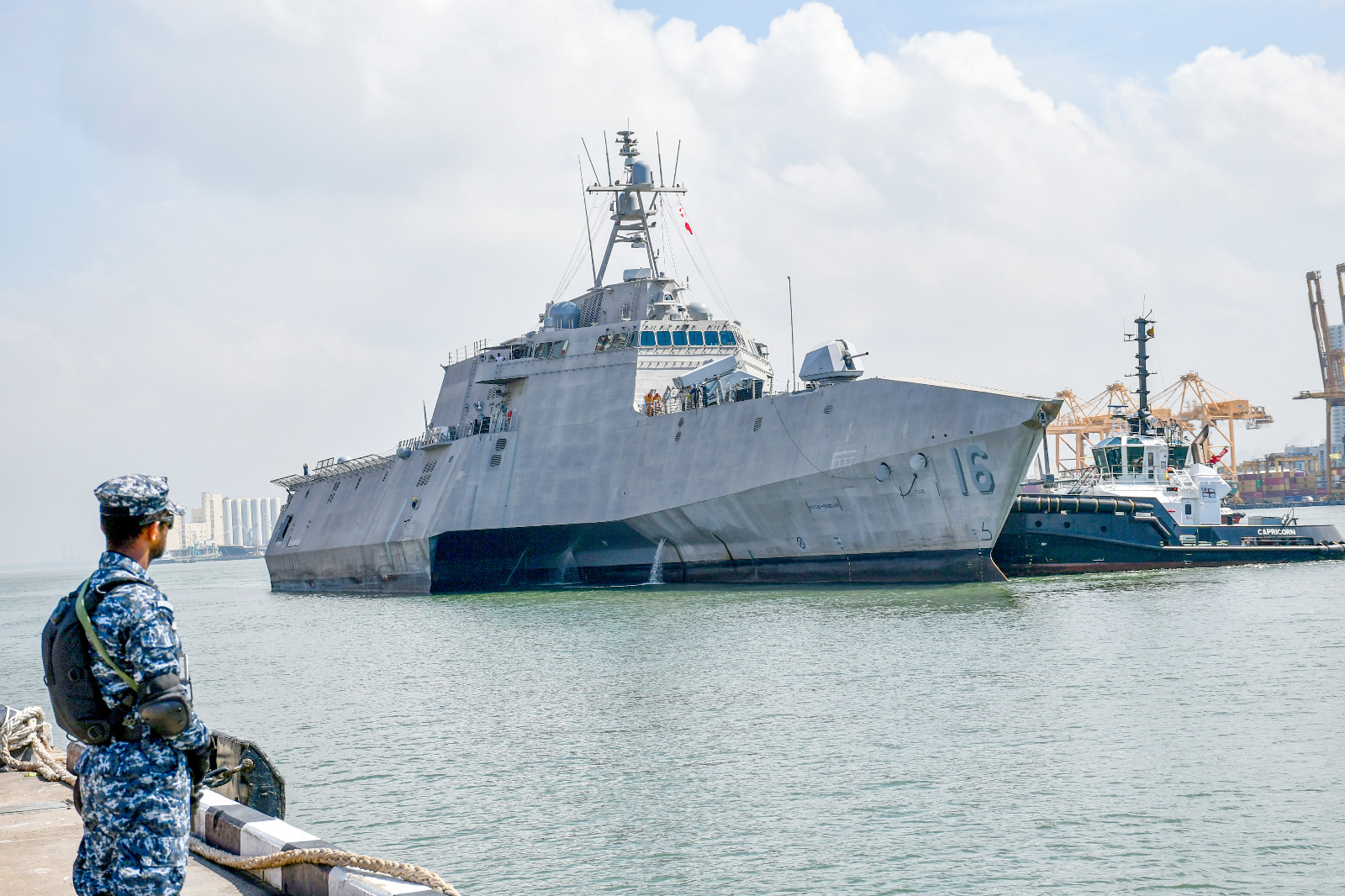
The U.S. Navy ship USS Tulsa (LCS 16) arrived at the Port of Colombo this morning, 7 October 2026 for replenishment purposes.
The visiting ship was welcomed by the Sri Lanka Navy in accordance with naval traditions.
The 127.7-metre-long platform is a Littoral Combat Ship commanded by Commander BM Wanier. Commissioned on 16 February 2019, USS Tulsa has since been in service with the US Navy.
The ship previously made a port call in Sri Lanka on 27 August 2025.
Govt. tells fuel distributors to maintain stocks to ensure uninterrupted supplies
by Saman Indrajith and Norman Palihawadane
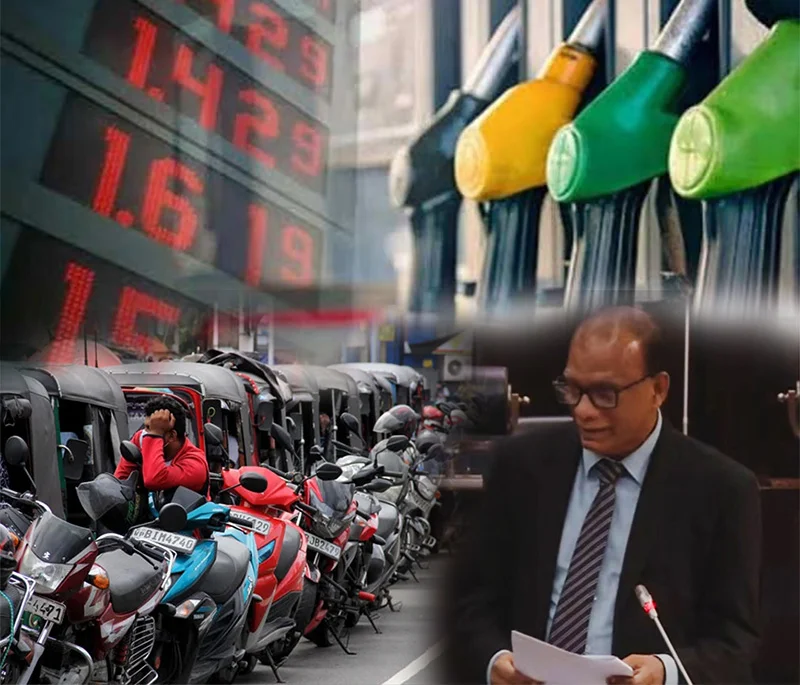
The government had instructed private fuel distributors to maintain minimum stocks and ensure uninterrupted supplies to the market, Energy Minister Anura Karunathilaka told Parliament yesterday (06).
Karunathilaka said the Ministry of Energy Secretary had notified the relevant companies of the requirement, following a reduction in supplies by some private distributors, amid higher international fuel prices.
The Minister said private companies had informed the government that they were facing losses because international prices had risen while fuel was being sold, locally, at prevailing prices. As a result, some companies had reduced the volumes released to the market.
The reduced supplies had increased the burden on the Ceylon Petroleum Corporation (CPC), whose share of the diesel market had risen from about 54% to 82%, the Minister said.
“The CPC currently holds an 82% share of the market,” he said, adding that it had increased its supplies, compared with February, to compensate for the reduction by private distributors.
Karunathilaka said the government could not, under the existing agreements with private companies, specify the quantities they should supply to individual filling stations. However, it could require them to maintain minimum stocks in the country.
The Minister said the Energy Ministry had already instructed companies that had failed to maintain the required stocks to take steps to prevent supply disruptions.
The Minister attributed the queues reported at some filling stations to reduced supplies from private distributors, as well as normal variations in fuel distribution. He also said demand for CPC fuel had increased because private companies generally did not provide fuel to dealers on credit, while the CPC offered a three-day credit facility.
“We expect that, as the Ceylon Petroleum Corporation takes on this additional burden, the problem will ease to some extent by Wednesday or Thursday,” Karunathilaka said.
He said instructions had also been issued to increase supplies to CPC filling stations. A special discussion on the issue is scheduled for today (07), with officials of the Energy Ministry and CPC expected to participate,
along with President Anura Kumara Dissanayake.
Meanwhile, Petroleum Dealers’ Association officials have called for an early solution to the supply issue. Association Chairman D.V. Shantha Silva said queues had been reported at many filling stations, mainly those operated by private distributors.
He said the situation was not due to an overall shortage of fuel, but was linked to reduced orders by Lanka IOC, Sinopec and R.M. Parks amid concerns over losses incurred on fuel sales.
The Ceylon Petroleum Private Tanker Owners Association has urged motorists to refrain from panic buying, saying there was no nationwide disruption to fuel supplies.
The government earlier increased fuel prices and introduced a per-litre diesel subsidy following concerns raised by distributors over rising international prices.

Former first lady Shiranthi Rajapaksa arrested by CIABOC

U.S. Navy ship USS Tulsa arrives in Colombo for replenishment visit

Smriti Mandhana appointed India captain across formats

Ronaldo apologizes for Portugal walkout; says Jesus broke promise

Showers in the Western, Sabaragamuwa, Central, Uva, North-western and Southern provinces and in Anuradhapura and Mannar districts

Fuel crunch looms

‘Dates have the highest sugar content to fight Coronavirus’

Sunday Island 27 December – Headlines

#SundayIsland 17th December – Headlines

Sunday Island – 28th March

Sunday Island Headlines – 21 March

Sunday Island – 21st February – Headlines
-

 News7 days ago
US-assisted ‘Ice’ detection: NPC to examine IGP’s move to transfer drug-busting team
-

 Editorial6 days ago
Colombo Port drug bust: The plot thickens
-

 Editorial7 days ago
Drug busting, transfers and trust deficit
-

 Features4 days ago
The first woman in the foreign service or Ceylon Overseas Service it was then called
-
 News7 days ago
Sri Lankan facing death penalty in Saudi Arabia: Mano G appeals to Crown Prince
-

 Editorial5 days ago
Fuelling discontent and protest
-

 News3 days ago
Geneva takes up Sallay’s case and govt. ignores opportunity to answer accusations
-

 Latest News5 days ago
Tharindu Rathnayake, bowlers secure Asian Games Bronze for Sri Lanka