
Latest News
US Senate votes to pass Iran war powers resolution, in blow to Trump


The United States Senate has passed a bill to pause President Donald Trump’s military campaign against Iran and seek congressional approval before any further action is taken.
On Tuesday, the chamber voted 50 to 48 to pass the resolution, which had been approved in the House of Representatives earlier in the month.
Republicans hold a majority in the Senate, but four conservatives crossed party lines to approve the resolution, along with nearly all the chamber’s Democrats, save one.
Tuesday’s vote marked the first time a war powers resolution had successfully passed both chambers of Congress. But the effort is likely to be symbolic, as Trump is expected to veto the measure.
Tuesday’s breakaway Republicans included Bill Cassidy of Louisiana, Lisa Murkowski of Alaska, Susan Collins of Maine and Rand Paul of Kentucky. A further two Republicans did not vote: Mitch McConnell of Kentucky and Dave McCormick of Pennsylvania.
The lone Democrat to side with Republicans on the matter was Pennsylvania’s John Fetterman.
Speaking on the chamber floor, top Democrat Chuck Schumer noted that Tuesday’s vote marked the 10th time the Senate had taken up a war powers resolution, to rein in Trump’s military campaign against Iran.
“For years Trump promised to put maximum pressure on Iran, but he ended up delivering maximum confusion, maximum chaos, maximum cost to the American people with his disastrous war,” Schumer said.
“ Time after time, the vast majority of Senate Republicans sided with Trump and his war, instead of the American people. The American people have paid the price for Trump’s historic blunder in Iran. It’ll go down in the history books as one of the worst foreign policy forays America has ever made.”
On February 28, Trump joined Israel in launching attacks against Iran, triggering a region-wide war that has continued through this month.
It was also the second time since returning to office for a second term that Trump involved US military forces in a war against Iran. In June 2025, Trump had also sent bombers to attack three key sites associated with Iran’s nuclear enrichment programme.
Trump has said the latest war was necessary to prevent Iran from developping a nuclear weapon, an ambition it has long denied.
But critics have characterised the February strikes as an unprovoked act of aggression that has threatened to further destabilize the Middle East.
[Aljazeera]

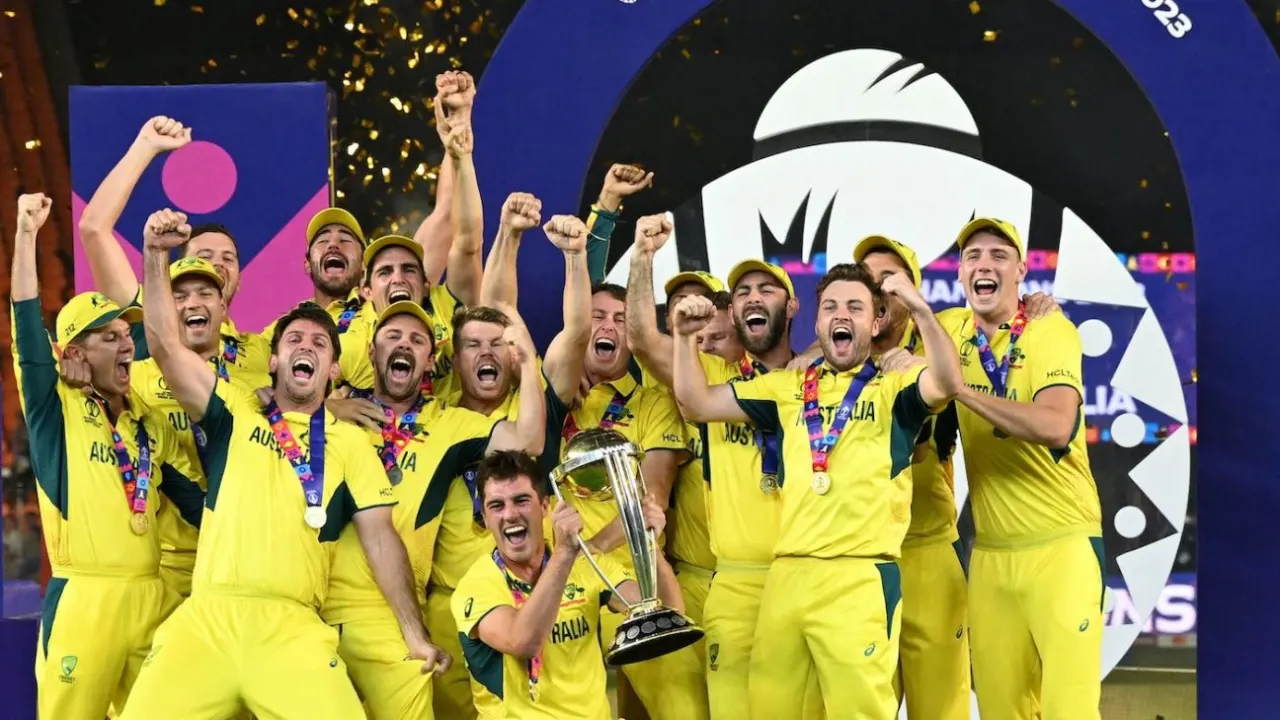
The 2027 ODI World Cup, to be co-hosted by South Africa, Zimbabwe and Namibia, will be a 14-team event but will include a Super Series round before the group stages, and a new Super 7 before the semi-finals.
The new structure, announced by the ICC on Wednesday following the body’s Annual Conference in Edinburgh over the weekend, was introduced, the ICC said, to “enhance consequence” in the early stages.
Teams qualifying 12th to 14th will play the Super Series round. One team from the three will progress to the Group round, becoming one of 12 teams split across two groups. The top three from each group along with the next-best-ranked team across both groups will then qualify for the Super 7, from which the top four go through to the semis.
A 14-team event in 2027 means the ICC sticks to a decision made in June 2021 to expand the marquee 50-team event, after 10-team events in the 2019 and 2023 editions. But the introduction of the round-robin Super Series from which one team goes through, means 12 teams will play in what becomes the meat of the tournament, the group round where 30 games take place. In the original format of this event, two groups of seven would lead to a Super 6 stage, before the semis and final.
The restructure comes after concerns were expressed about the possibility of too many dead rubbers and resulting empty stadia at the ICC’s annual conference. Prompted by the number of foregone conclusions at the recent T20 World Cup and to ensure more jeopardy in the early stages of the tournament, the ICC have decided to introduce a knockout phase earlier, rather than change the number of teams.
“The structure has been designed to strengthen the competitive narrative across every stage of the event, with matches from Round 1 and Round 2 carrying higher consequence with a highly competitive Super 7 stage witnessing 7 qualifying teams going through a round-robin stage to qualify for the semi-finals,” the ICC said.
The game has gone back and forth on the size and format of its marquee event for a number of years now; 14 teams split into groups played the 2015 World Cup (and 16 in 2011) before the move to a 10-team event in which each side played the others. In that time the T20 World Cup has become the ICC’s primary vehicle for growth but calls to expand the 50-over version have never gone away.
The final structure of the tournament, and exact fixtures, will be confirmed at an ICC meeting in September, where the next FTP will also be tabled. The initial distribution of fixtures at the 2027 World Cup is not expected to change significantly, with South Africa set to stage the majority of fixtures, Zimbabwe around ten, and a handful in Namibia.
The ICC’s release made no reference to whether the entry or qualification process to the event changes. As things stand the 14-team tournament has 10 automatic qualifiers: the two Full Members among three co-hosts, South Africa and Zimbabwe, and the eight highest teams on the ODI rankings.
The remaining four teams will be decided by a global qualifier, which is currently scheduled to be a 10-team event contested between the next two highest-ranked teams, four teams from the World Cup Cricket League 2 and four teams from a qualifier playoff. A date for the global qualifier has not been set but Cricinfo understands it will take place in the first third of 2027 and is likely to be held in Namibia or South Africa.
[Cricinfo]
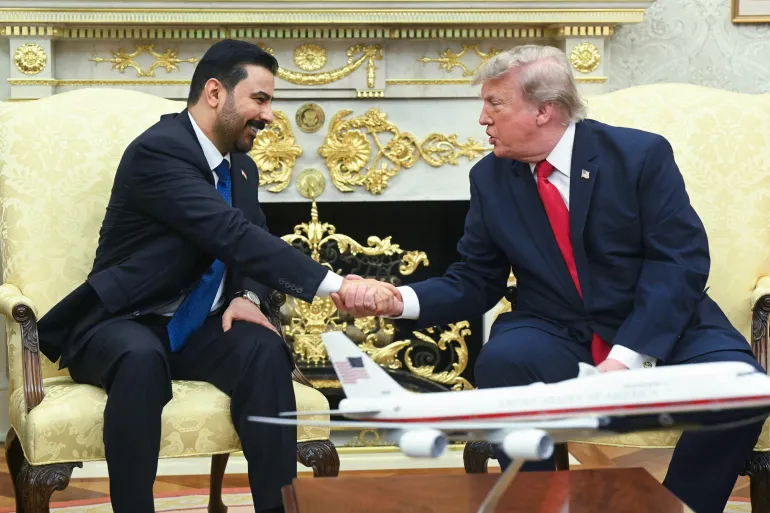
United States President Donald Trump and Iraqi Prime Minister Ali al-Zaidi have met at the White House in Washington, DC, with both leaders pledging to deepen economic ties and boost Iraq’s oil output.
The meeting on Tuesday came after Trump threw his support behind al-Zaidi, a businessman with no history in politics, and publicly opposed Iraq’s former Prime Minister Nouri al-Maliki for the prime ministerial role earlier this year.
Al-Maliki, a divisive figure seen as having close ties to Iran, subsequently dropped out of contention in April.
The Iraqi government had previously said it expected several oil and gas agreements to be signed during al-Zaidi’s visit to the US, with Trump also vowing a raft of deals during the Oval Office meeting.
He called al-Zaidi “a fantastic champion, a new champion”.
“Iraq has tremendous potential because of their oil and because of other things, but because of their oil, and we’re going to be doing a lot of deals,” Trump said.
“We’re going to create a lot of jobs for both countries, and we’re going to be taking out a lot of oil. A lot of oil is coming out,” he said.
Al-Zaidi, meanwhile, said the “visit was not like any other visit”, calling it the beginning of an “economic partnership”.
He said US-Iraqi relations were shifting from militaristic to economic.
Both he and Trump said the remaining US forces in Iraq, believed to number fewer than 2,000, would completely withdraw from Iraq by September 30. That is the same date al-Zaidi pledged that armed factions active across Iraq would disarm.
Iraq has long contended with the competing influences of Tehran and Washington in its domestic politics, with tensions over the continued US troop presence, deployed amid the conflict with ISIL (ISIS), and the pull of Iran-aligned armed groups.
In his first speech in parliament as prime minister, al-Zaidi vowed to disarm the country’s varied paramilitary groups, which have wielded power since the 2003 US-led war on Iraq.
He has not said how he will achieve the ambitious goal. Shortly before his departure, the Islamic Resistance in Iraq, an umbrella group of Iran-backed armed groups in the region, including Iraq, said it would reject any outcomes of al-Zaidi’s visit.
Iraq has also been one of several fronts in the US-Israeli war with Iran that began on February 28, with the conflict looming and its recent escalation looming large during al-Zaidi’s visit.
Iraq’s economy has also been particularly hard hit by Iran’s effective closure of the Strait of Hormuz, with about 90 percent of its 3.4 million barrels per day of fossil fuel exports passing through the water.
The recent fighting has thrown into question the future of a memorandum of understanding (MoU), which in June beckoned in a temporary end to the fighting, the opening of the Strait of Hormuz, and the lifting of a US naval blockade on Iran.
Speaking to reporters at the White House, al-Zaidi also said that Iraq needs a “fair share” from the Organization of the Petroleum Exporting Countries (OPEC).
Iraq has been pushing for a higher quota on its oil production, with al-Zaidi saying the need is a direct result of the destruction caused by the war against ISIL, over which Iraq officially declared victory in 2017.
“The damage suffered by Iraq exceeds $400bn, and to this day, some Iraqis still have destroyed homes and are living in camps,” he said. “I have a plan to return them to their homes, and that is why I want a fair share for Iraq in OPEC.”
[Aljazeera]
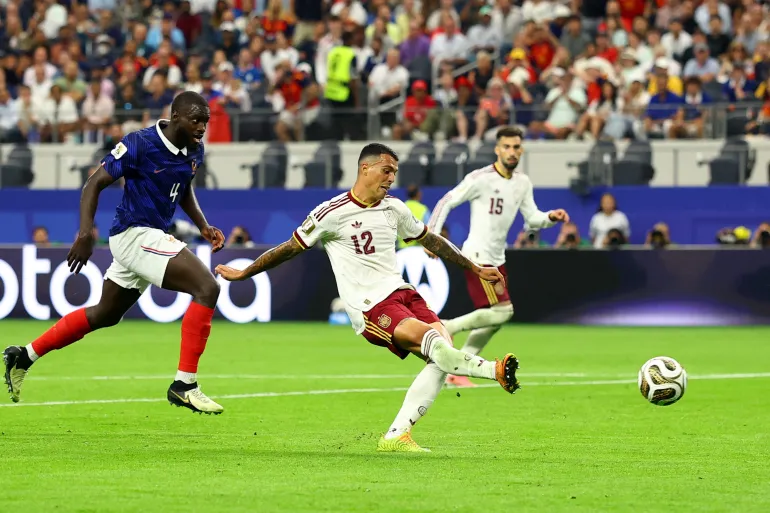
Spain snuffed out France’s dream of a third World Cup triumph, taming their galaxy of forwards to win 2-0 and progress to a final against England or Argentina.
Didier Deschamps’ men were hot favourites for the trophy after a string of breathtaking displays in the United States but they met their match against the slick European champions at the semifinal stage on Tuesday.
Mikel Oyarzabal opened the scoring for the 2010 winners with an emphatic penalty in the first half in Arlington, Texas, and Pedro Porro doubled their lead in the second half.
Shell-shocked France could not find a way back into the match despite their wealth of attacking riches.
The game at the Dallas Stadium caught fire midway through the first half when Salvadoran referee Ivan Barton pointed to the penalty spot after a reckless challenge by France left-back Lucas Digne on Spain winger Lamine Yamal.
Oyarzabal hammered the ball past France goalkeeper Mike Maignan for his fifth goal of the World Cup to leave France trailing for the first time in the tournament.

Minutes later they suffered another blow when centre-back William Saliba had to leave the pitch after a recurrence of his lower back injury, replaced by Crystal Palace defender Maxence Lacroix.
Spain went agonisingly close to extending their lead after some dazzling one-touch football but Dayot Upamecano’s challenge denied Fabian Ruiz.
France finished the half without a single shot on target, and just two attempts overall.
Deschamps threw on Desire Doue for Bradley Barcola in the 57th minute in a bid to supercharge his attack but a minute later they were 2-0 down after a stunning team goal for Luis de la Fuente’s men.
Defender Porro delivered a sharp pass to the feet of Dani Olmo on the edge of the box and collected the return ball before coolly slotting past Maignan.
(Aljazeera)

ICC adds Super Series and Super 7 twist to 2027 ODI World Cup

Trump meets Iraq PM at White House, promises ‘a lot of deals’

A few showers may occur in the Western, Sabaragamuwa and North-western provinces and in Kandy, Nuwara-Eliya, Galle and Matara districts

Negombo Prison riot: No convicts among 21 inmates killed

2026: 128 elephants killed in first four-and-a-half months

Sigiriya Jungles marks 10 years with community medical camp

‘Dates have the highest sugar content to fight Coronavirus’

Sunday Island 27 December – Headlines

#SundayIsland 17th December – Headlines

Sunday Island – 28th March

Sunday Island Headlines – 21 March

Sunday Island – 21st February – Headlines
-
 News6 days ago
Herath warns prospective migrant workers not to get fleeced by racketeers
-

 Features4 days ago
Prison riots and politics: NPP’s biggest challenge and Sri Lanka’s biggest opportunity
-

 Editorial5 days ago
What’s the world coming to?
-
 Foreign News5 days ago
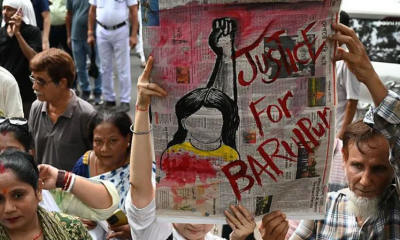
Tensions erupt in Indian state after 11-year-old raped and murdered
-

 Features6 days ago
Devanesan Annan – in Memoriam
-

 News7 days ago
Negombo Prison riot: Ensuring protection of prisoners fundamental responsibility of the state – UN
-
Editorial6 days ago
Punishment in hellholes
-
 News6 days ago
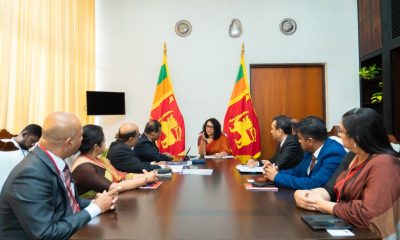
Representatives of the Organization of Professional Associations (OPA) of Sri Lanka meet the Prime Minister