
Foreign News
US school teacher shot by six-year-old student awarded $10m


A jury in the state of Virginia in the United States has awarded $10m to a former teacher who was shot by a six-year-old student.
The jury on Thursday sided with former teacher Abby Zwerner’s claim, made in a civil lawsuit, that an ex-administrator at the school had ignored repeated warnings that the six-year-old child had a gun in class.
Zwerner, 28, was shot in January 2023 as she sat at a reading table in her first-grade classroom and spent nearly two weeks in the hospital, required six surgeries and still does not have the full use of her left hand.
The bullet fired by the six-year-old narrowly missed her heart and remains in her chest.
Zwerner, who did not address reporters outside the court after the decision was announced, had sought $40m in damages against Ebony Parker, a former assistant principal at Richneck Elementary School in the city of Newport News, Virginia.
One of her lawyers, Diane Toscano, said the verdict sent a message that what happened at the school “was wrong and is not going to be tolerated, that safety has to be the first concern at school”.
Zwerner’s lawyers had claimed that Parker, the assistant principal at the time, had failed to act in the hours before the shooting after several school staff members told her that the student had a gun in his backpack.
“Who would think a six-year-old would bring a gun to school and shoot their teacher?” Toscano had asked the jury earlier.
“It’s Dr Parker’s job to believe that is possible. It’s her job to investigate it and get to the very bottom of it.”
Parker did not testify in the lawsuit.
The mother of the student who shot Zwerner was sentenced to four years in prison after being convicted of child neglect and firearms charges.
No charges were brought against the child, who told authorities he got his mother’s handgun by climbing onto a drawer to reach the top of a dresser, where the firearm was in his mother’s purse.
Newtown Action Alliance, an advocacy organisation that supports reforms aimed at addressing gun violence, said that the case points to the need for greater regulations over the storage of firearms in homes with children.
“Abby Zwerner was shot by her 6-year-old student using a gun from home,” the group said in a social media post, adding that “76 percent of school shooters get their guns from their homes or relatives”.
Zwerner no longer works for the school district and has said she has no plans to teach again. She has since become a licensed cosmetologist.
While accidents involving young children accessing unsecured firearms in their homes are common in the US, school shootings perpetrated by those under 10 years old are rare.
A database compiled by US researcher David Riedman has registered about 15 such incidents since the 1970s.
[Aljazeera]

Foreign News
Naqvi casts uncertainty on Pakistan’s participation in T20 World Cup after Bangladesh ouster
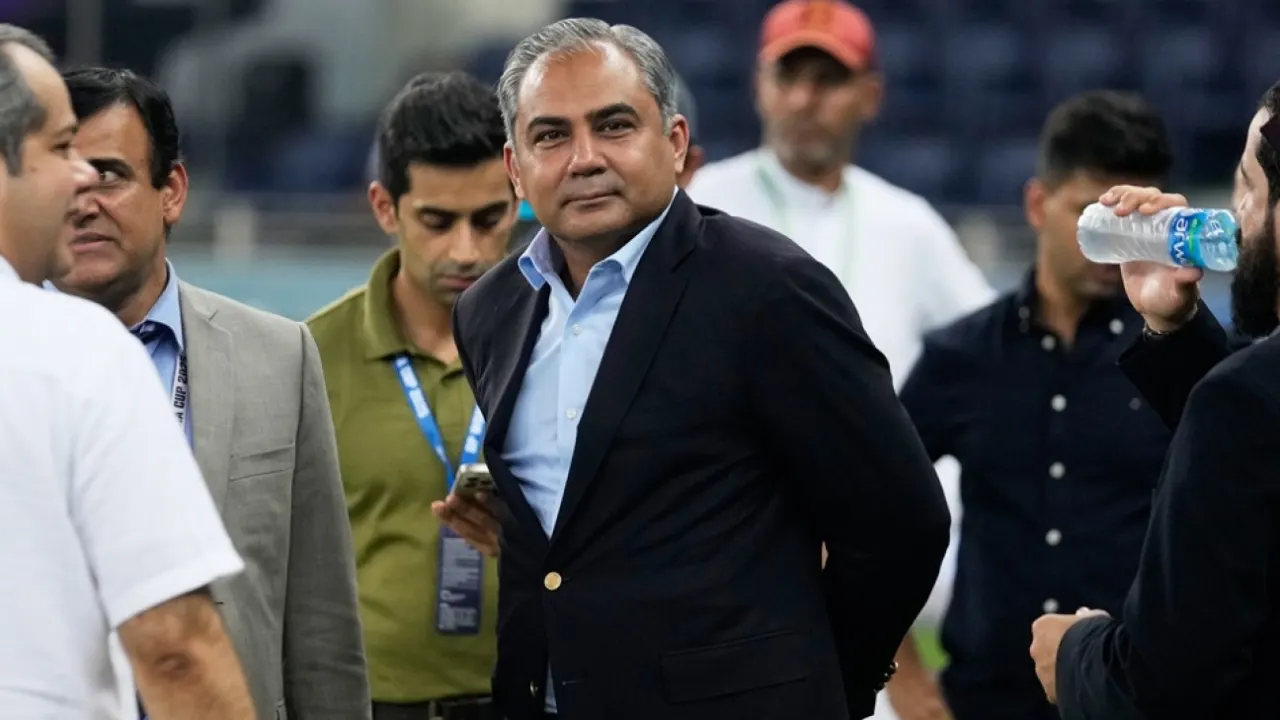
Pakistan’s participation at the upcoming Men’s T20 World Cup 2026 has been thrown into uncertainty after the PCB chairman Mohsin Naqvi said a final decision would be made after talking to Pakistan’s government. Speaking shortly after the ICC officially removed Bangladesh from the T20 World Cup owing to their refusal to play in India, Naqvi accused the ICC of “double standards” favouring India, and termed what happened to Bangladesh “an injustice”.
“Our stance on World Cup participation will be what the government of Pakistan instructs me,” he said. “The Prime Minister is not in Pakistan right now. When he returns, I’ll be able to give you our final decision. It’s the government’s decision. We obey them, not the ICC.”
Over the past week or so, Pakistan has firmly thrown its support behind Bangladesh in their dispute with the ICC demanding a venue outside of India to play their T20 World Cup matches. At an ICC meeting last week, the PCB was understood to be the only board to back the BCB in their stance. The tournament is jointly hosted by India and Sri Lanka, but Bangladesh’s games were all scheduled in India. Bangladesh, however, have said it is no longer safe for them to play in India after the BCCI, on January 3, instructed Kilkata Knight Riders to release Mustafizur Rahman rom their IPL 2026 squad.
Though no reason was stated for that directive, it came amid deteriorating relations between India and Bangladesh. On January 4, the BCB wrote to the ICC after consultation with the government that the Bangladesh team would not travel to India for its T20 World Cup matches due to security concerns, a stance it stuck to through several subsequent discussions with the ICC.
The ICC has repeatedly refused Bangladesh’s request, and earlier this week gave them an ultimatum demanding them to accept the schedule as it was, or face being removed from the tournament. On Saturday, with Bangladesh sticking to their position, the ICC formally announced Bangladesh would not be part of the T20 World Cup, and would be replaced instead by Scotland.
Naqvi was critical of the decision, calling it an injustice to Bangladesh. “I think Bangladesh has been hard done by,” he said. “You can’t have double standards. You can’t say for one country [India] they can do whatever they want and for the others to have to do the complete opposite. That’s why we’ve taken this stand, and made clear Bangladesh have had an injustice done to them. They should play in the World Cup, they are a major stakeholder in cricket.”
While there have been local, unverified reports that the PCB would refuse to participate in the World Cup in solidarity with Bangladesh should they be removed, the PCB has declined to confirm to ESPNcricinfo when approached. Naqvi’s comments to the media on Saturday was the first time anyone at the PCB has directly addressed the issue, where he repeatedly said the decision was no longer in the hands of the PCB.
“If the government of Pakistan says we mustn’t play, then maybe the ICC will bring in a 22nd team (after Scotland). It’s up to the government.”
No specific reason was given by Naqvi other than to support Bangladesh, as to why government permission would now be required for an event that starts in two weeks. Last year, both BCCI and PCB, with the approval of ICC, signed up to a hybrid model agreement by which both countries would play each other on neutral territory for all global events in the 2024-27 rights cycle.
Pakistan play all their games in Sri Lanka for this event (which already was a co-hosted event) and are scheduled to play the opening game of the tournament, against Netherlands on February 7. They are scheduled to play India on February 15 in Colombo in their group stage clash.
[Cricinfo]
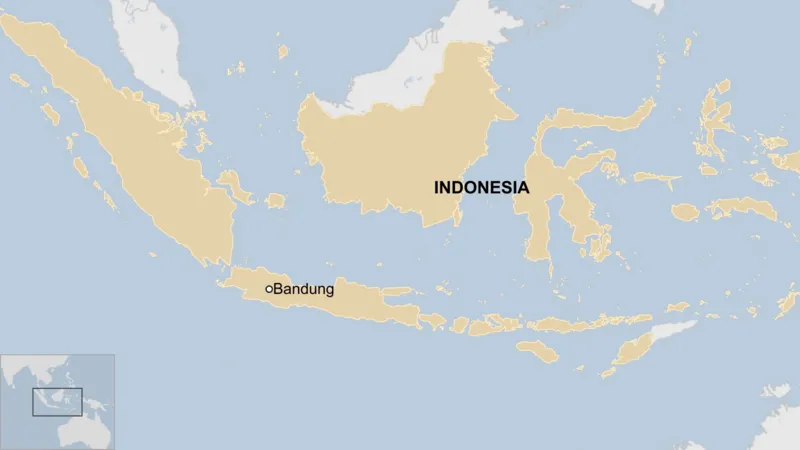
At least seven people have died and more than 80 others are missing after a landslide hit Indonesia’s West Java province, officials said.
The landslide occurred in the West Bandung region, south-east of the capital Jakarta, following days of intense rainfall.
More than thirty homes were destroyed after “landslide material buried residential areas, causing fatalities and affecting local residents”, Indonesia’s disaster mitigation agency said in a statement.
Flooding, landslide and extreme weather alerts have also been issued for the broader region.
The landslide hit the village of Pasirlangu around 02:30AM on Saturday [24] (19:30 GMT).
Two dozen people were evacuated safely from the affected region, according to Abdul Muhari, communication chief of the National Search Agency.
Images shared by local news outlets showed homes buried under mud and debris.
[BBC]

Former Canadian Olympic snowboarder and alleged drug kingpin Ryan Wedding has been arrested in Mexico and will be extradited to the US after years on the run, FBI Director Kash Patel has said.
Wedding, who had been on the FBI’s Ten Most Wanted Fugitives list, is accused of running a transnational drug trafficking operation that moved tonnes of cocaine across international borders.
Wedding, 44, was also wanted on murder charges. US officials had said they believed Wedding was living in Mexico under the Sinaloa drug cartel’s protection.
The head of Canada’s federal police force, which assisted in the investigation, spoke alongside Patel on Friday to praise the law enforcement operation.
Wedding is accused of running a vast drug trafficking operation responsible for importing some 60 metric tonnes of cocaine a year.
The organisation operated across North America, as well as several countries in Latin America and the Caribbean, and was also the largest supplier of cocaine to Canada, bringing in an estimated $1bn a year.
Before he was arrested, Wedding was accused of killing a federal witness in a case against him. Officials say he has also ordered the murders of several others.
Wedding is now facing a slew of felony charges, including witness tampering and intimidation, murder, money laundering and drug trafficking.
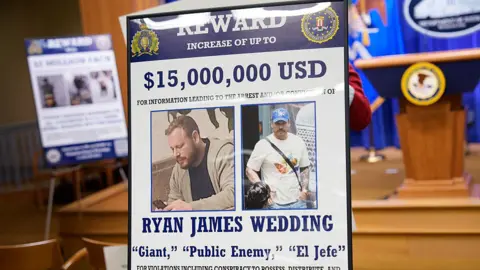
The FBI had previously placed a $15m (£11m) reward for information leading to his arrest. Patel declined to comment on whether anyone would be claiming the reward money.
US officials have released limited details regarding how Wedding was captured, except to say that his arrest took place on Thursday night in Mexico City.
Mexico’s top security official, Omar García Harfuch, said in a post on X that Patel had visited Mexico City on Thursday, and departed with two fugitives on the FBI’s 10 Most Wanted list.
He did not name the men arrested, but said one was a “Canadian citizen who voluntarily surrendered” at the US embassy in Mexico.
The Associated Press, citing an unnamed Mexican Security Cabinet member, reported that Wedding is the Canadian who turned himself in at the US embassy.
In his remarks at a news conference, Patel described Wedding as a “modern-day Pablo Escobar”, referring to the Colombian cartel leader. US officials have also compared him to Mexican drug dealer Joaquín “El Chapo” Guzmán.
“When you go after a guy like Ryan Wedding, it takes a united front,” Patel said, thanking Canadian and Mexican authorities for their help in the investigation.
Patel also thanked the FBI Hostage Rescue Team, who participated in taking Wedding into custody.
In an interview with Vanity Fair, Patel praised the team, which had also been involved in the capture of Venezuelan President Nicholas Maduro weeks earlier.
“This was a complex, high-stakes operation with zero margin for error,” Patel told the magazine.
“I was on the ground with our team in Mexico and witnessed extraordinary teamwork, precision, and trust between our agents and partners in Mexico.”
Wedding’s aliases include “El Jefe,” “Giant,” “Public Enemy,” “James Conrad King,” and “Jesse King”, the FBI said. He has reportedly had plastic surgery to change his appearance while on the run.
Officials allege that he launched his criminal enterprise following his release from a US federal prison in 2011, where he was serving a sentence for cocaine distribution.
Authorities allege he has ordered dozens of murders across the globe, including in the US, Canada and Latin America.
It is unclear to whom the medals belong. Wedding competed for Canada in the 2002 Olympic Games in Salt Lake City, but did not win any medals. He came in 24th place in the men’s giant parallel slalom ski event.
In November, the FBI seized his rare 2002 Mercedes CLK-GTR, which had been valued at $13m.
Patel also spoke about the recent arrest of another man in Mexico who had been on the FBI’s most wanted list.
American man Alejandro Castillo was wanted for the murder of his ex-girlfriend. According to the FBI, he has been in hiding in Mexico for nearly 10 years, and will now be extradited back to North Carolina for trial.
(BBC)

Three arrested with narcotics valued at Rs123 million at BIA

Navy intercepts 02 narcotics-laden trawlers with 11 suspects in southern seas

Indonesian Naval Ship ‘KRI SULTAN ISKANDAR MUDA – 367’ departs island

U19 World Cup: Japan defeat Tanzania by nine wickets

U19 World Cup: Ambrish’s four-fer powers India to third straight win

Josh Hoey breaks world 800m short track record with 1:42.50 in Boston

‘Dates have the highest sugar content to fight Coronavirus’

Sunday Island 27 December – Headlines

#SundayIsland 17th December – Headlines

Sunday Island – 28th March

Sunday Island Headlines – 21 March

Sunday Island – 21st February – Headlines
-

 Features7 days ago
Extended mind thesis:A Buddhist perspective
-

 Opinion6 days ago
American rulers’ hatred for Venezuela and its leaders
-
 Business15 hours ago
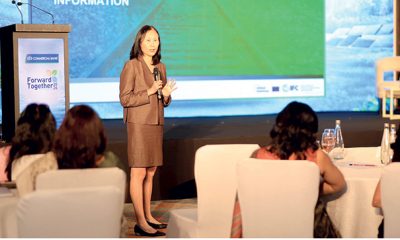
ComBank advances ForwardTogether agenda with event on sustainable business transformation
-
 Business4 days ago
CORALL Conservation Trust Fund – a historic first for SL
-
 Opinion4 days ago
Remembering Cedric, who helped neutralise LTTE terrorism
-
 Opinion3 days ago
A puppet show?
-

 Opinion6 days ago
History of St. Sebastian’s National Shrine Kandana
-

 Features5 days ago
The middle-class money trap: Why looking rich keeps Sri Lankans poor