
Latest News
US Navy acoustic system detected Titan sub’s likely implosion


A top secret United States Navy acoustic detection system picked up a sound “anomaly” in the North Atlantic that was likely the fatal imploion of the Titan submersible that was lost with five people on board while on an expedition to the wreck of the Titanic.
According to a senior military official, the Navy went back and analysed acoustic data after the Titan submersible was reported missing on Sunday and found an anomaly “consistent with an implosion or explosion in the general vicinity of where the Titan submersible was operating when communications were lost”.
The Navy passed the information on to the US Coast Guard, which continued its serch for the Titan because the Navy did not consider the data to be definitive, the senior Navy official told the Associated Press news agency on Thursday.
The Wall Street Journal was the first to report the Navy’s involvement and the detection of the acoustics from the deep sea, the latest piece in the jigsaw regarding the fate of the Titan and its five occupants following the discovery of debris on Thursday that was consistent with the missing vessel operated by OceanGate Expeditions.
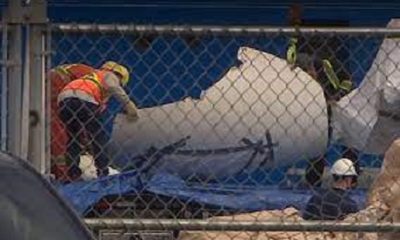
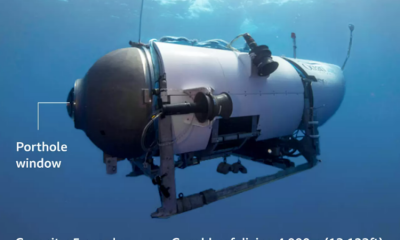
Remotely operated underwater vehicle (ROV) found five major fragments of the 6.7-metre (22-foot) Titan submarine in a debris field on the seabed some 488 metres (1,600ft) from the bow of the wreck of the Titanic, which rests 4km (around 2.5 miles) beneath the surface of the ocean, in a remote corner of the North Atlantic, US Coast Guard Rear Admiral John Mauger told reporters.
“The debris field here is consistent with a catastrophic implosion of the vehicle,” Mauger said.
The fragments found included the Titan’s tail cone and two sections of the pressure hull. No mention has been made of whether human remains were sighted.
The five onboard the Titan were OceanGate’s founder and chief executive officer Stockton Rush, who was piloting the vessel; a United Kingdom billionaire businessman and explorer Hamish Harding, 58; Pakistani-born businessman Shahzada Dawood, 48, and his 19-year-old son, Suleman, both UK citizens; and French oceanographer and renowned Titanic expert Paul-Henri Nargeolet, 77, who had visited the wreck dozens of times.
Al Jazeera’s Gabriel Elizondo, reporting from Boston in the US, said the US Navy was now collecting debris in order to analyse what remained of the Titan as part of a wider investigation into how the accident occurred.
According to Elizondo, the US Navy confirmed on Thursday evening that “a top-secret acoustic detection system” had picked up sounds “similar to what would have been an implosion on Sunday near where the Titan went missing”.
(Aljazeera)




The Rose Bowl, which has been awarded to the winner of ODI series between the women’s teams of Australia and New Zealand since 1985, has now been expanded to include T20Is as well.
New Zealand’s three match T20I tour of Australia, which begins on Sunday at the North Sydney Oval, will be the first T20I edition of the Rose Bowl. The teams will get to face off again for the trophy in March 2027 when they meet again for three ODIs, also in Australia.
For Rose Bowl series that include matches in both white-ball formats, the trophy will go to the team with the most wins overall. In case of a drawn series, the current holder will retain the trophy.
“The Rose Bowl is a prestigious trophy that holds a lot of meaning to current and past players, and it’s a series we’ve always taken a lot of pride in competing in,”Catherine Campbell, NZC’s chief cricket operations officer and a former New Zealand player, said. “With so much T20I cricket now being played, this is a brilliant opportunity to keep the Rose Bowl relevant and to build on the history between us and our Australian rivals.”
New Zealand captain Melie Kerr was excited by the broadening of opportunities to compete for the Rose Bowl.
“We’re all aware of what the Rose Bowl represents and the importance it holds in the White Ferns whakapapa [genealogy],” said Kerr. “Great players and teams have fought for it over the years and we’d love the opportunity to claim our own piece of that history.”
Australia have held the Rose Bowl continuously since wresting it back from New Zealand in 2000. Since that 3-0 win, Australia have won 18 times with one series – in 2008-09 – shared 2-2. Overall, Australia have won 26 of the 31 ODI series played for the Rose Bowl, with New Zealand winning three times and three series drawn.
North Sydney will host all three T20Is of the upcoming Rose Bowl series, on October 18, 20 and 22.
[Cricinfo]
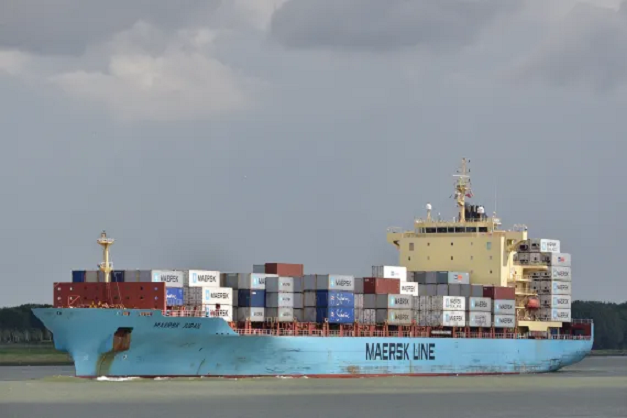
US President Donald Trump claims the US Navy’s “effective” blockade has stopped all Iranian ships from crossing the Strait of Hormuz.
Iran’s Islamic Revolutionary Guard Corps (IRGC) navy says a supertanker carrying more than two million barrels of crude oil has struck a sea mine while attempting to cross the Strait of Hormuz through an “unauthorised” route.
The collision caused a huge explosion and a major fire on board the vessel, the IRGC said in a statement reported by semi-official Tasnim news agency.
It alleged that the tanker had turned off all tracking and radar systems, attempting to pass through the strait using deception and with US military support.
‘The Strait of Hormuz is closed’, the IRGC navy warned, adding that vessels violating Iranian regulations would face severe consequences for relying on US backing.
[Aljazeera]
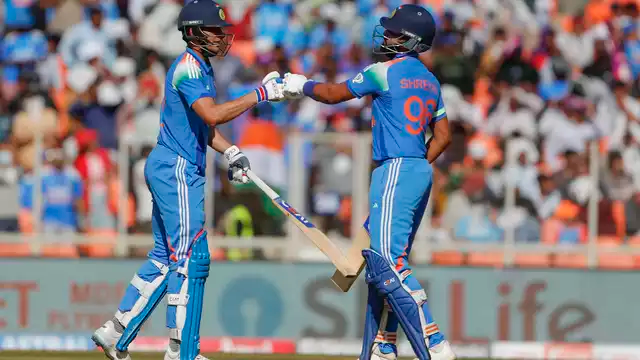
Squad for the first three ODIs: Shubman Gill [C], Rohit Sharma, Virat Kohli, Shreyas Iyer [VC], KL Rahul [WK], Nitish Kumar Reddy, Axar Patel, Naman Dhir, Anshul Kamboj, Gurnoor Brar, Ruturaj Gaikwad, Arshdeep Singh, Ishan Kishan [WK], Mohammed Siraj, Prasidh Krishna*, Kuldeep Yadav
Squad for fourth and fifth ODIs: Shreyas Iyer [C], Rohit Sharma, Virat Kohli, Tilak Varma, Ishan Kishan [WK, VC], Nitish Kumar Reddy, Axar Patel, Naman Dhir, Auqib Nabi, Gurnoor Brar, Ruturaj Gaikwad, Arshdeep Singh, Kumar Kushagra [WK], Mohammed Siraj, Yash Thakur, Kuldeep Yadav
[Cricbuzz]

Rose Bowl expanded to include Australia vs New Zealand T20Is

Trump claims US Navy blockade stops Iranian ships in Hormuz

Showers above 75 mm are likely at some places in the Western, Sabaragamuwa, Central and North-central provinces and in Trincomalee and Mullaitivu districts

Cut power bills by 3-5%, don’t hike them, consumers demand

Asgiri Mahanayake calls for immediate release of Gnanasara Thera

Lanka Air Force joins multinational exercise in India

‘Dates have the highest sugar content to fight Coronavirus’

Sunday Island 27 December – Headlines

#SundayIsland 17th December – Headlines

Sunday Island – 28th March

Sunday Island Headlines – 21 March

Sunday Island – 21st February – Headlines
-

 News6 days ago
Sri Lanka escalates anti-graft drive with Shiranthi’s jailing
-

 Latest News5 days ago
Farhan and Sadaqat help Pakistan seal series in style
-

 News6 days ago
Iranian ships stranded, Lanka fears US sanctions
-

 Latest News4 days ago
Nissanka’s return headlines Sri Lanka’s Test squad against Pakistan
-

 Features5 days ago
Intake 16: 45 years of duty and honour
-

 News5 days ago
Malwathu Chapter issues statement on talks with President over Gnanasara Thera’s robes
-

 News5 days ago
CP alleges NPP has taken the blame for illegal US sanctions on Iranian vessels
-

 News6 days ago
Navi Pillay’s Lankan affairs in focus as she wins 2026 Nobel Peace Prize