
Latest News
US launches new wave of strikes against Iran after promising to ‘hit them hard’

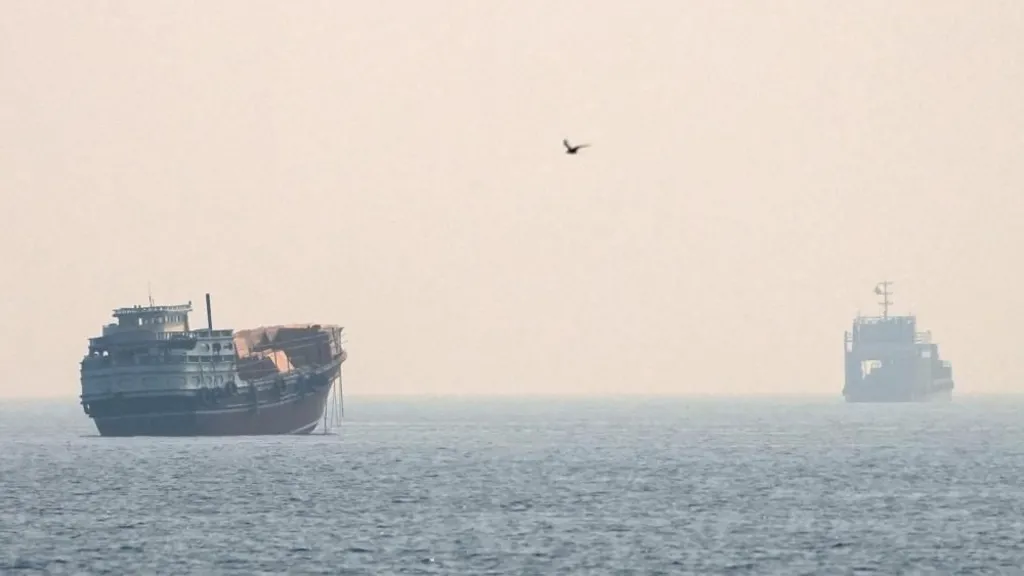
The US has launched a new round of strikes on Iran after President Donald Trump signalled he’d “hit them hard again tonight” following an overnight exchange of attacks on Tuesday.
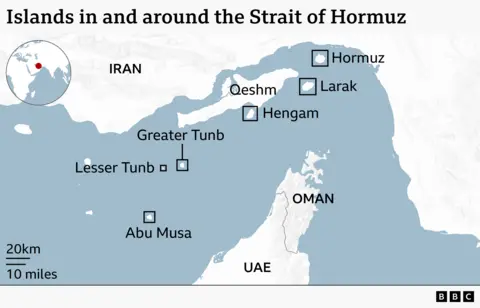
Explosions have been reported by Iranian state media in parts of the country’s south, including Sirik and Bandar Abbas – port cities on the Strait of Hormuz.
After the latest strikes, Trump said in a post on Truth Social: “This is in retribution for yesterday’s bombing of ships by Iran. If it happens again, it will get much worse!”
Iran has not yet commented, but senior officials earlier warned any attack from the US would be met with an “immediate response”.
US Central Command (Centcom) said the strikes were carried out to “further degrade Tehran’s ability to threaten freedom of navigation” in the vital waterway.
In a statement it added: “The United States is holding Iran accountable for recent unjustified aggression against commercial shipping and civilian crews freely navigating a vital international waterway.”
Several explosions have also reportedly been heard in other parts of the Iranian coast, including the cities of Konarak and Chabahar.
Iranian state TV reported eight explosions in Bandar Abbas, and said two missiles had hit the ports of both Sirik and Jask – also in southern Iran.
It added that two projectiles hit the island of Abu Musa, which has been the subject of a longstanding ownership dispute between Iran and the United Arab Emirates.
Air defence systems have been activated in Bandar Abbas, according to reports in Iranian state media.
The extent of damage from the US strikes is not yet known, but Iranian media has reported power cuts in Chabahar and a fire at an Islamic Revolutionary Guard Corps (IRGC) barracks in Bushehr.
Two of three power lines cut off in Chabahar had been restored quickly and a third would be operational soon, the Iranian Students’ News Agency said.
On Tuesday, the US military said it had launched “powerful” strikes in response to attacks on three tankers in the strait.
On Wednesday, Iran said it targeted US military sites in Bahrain and Kuwait in retaliation.
Tuesday into Wednesday saw the worst exchange of strikes between the US and Iran since the deal – known as a memorandum of understanding (MoU) – was signed on 17 June.
Trump said on Wednesday that the ceasefire agreement signed last month with Iran is “over”, and added the US “hit them very
hard last night” and will “probably hit them hard again tonight”.
In response, Iran’s Foreign Minister Abbas Araghchi said in a post on X: “We do not answer vulgarity with vulgarity, but with action: fearlessly and with great valour.”
The deal between the US and Iran included 14 points, among them a 60-day period for a ceasefire during which negotiations should continue, the safe passage of vessels through the Strait of Hormuz and the US lifting sanctions on Iran.
The 60-day-period for negotiations is not yet up, but Trump has said he saw further talks as “a waste of time”.
These are not the first strikes since the MoU was signed.
The US launched a series of strikes on Iran on 26 June after an Iranian projectile hit a cargo ship in the Strait of Hormuz.
Further US strikes took place on 27 June, following an attack on a tanker. But later that month both sides had agreed to “stand down”.

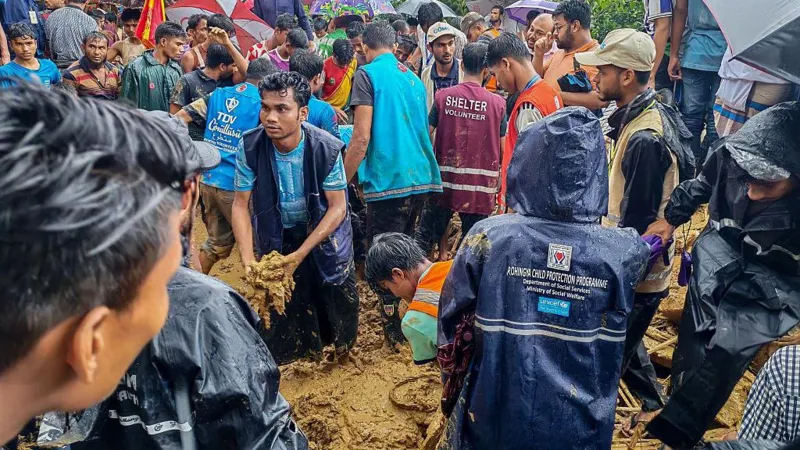
Seven students and a teacher have been killed in Bangladesh after a landslide hit a girls’ school inside a refugee camp
The Islamic study centre in the coastal city of Cox’s Bazar was buried by mud and debris on Wednesday afternoon, sparking frantic search and rescue efforts. It is unclear how many people were inside the school.
The country has been battered by monsoon rains since Sunday, with several deadly landslides reported in Cox’s Bazar.
More than one million Rohingya people live there in what is the world’s largest refugee settlement, having fled a deadly military crackdown in Myanmar.
Rescuers pulled 13 people from the mud that engulfed their school hut, eight of whom died, the Refugee Relief and Repatriation Commissioner Mohammed Mizanur Rahman said.
“Some of them are seven, eight, 11 or 12 years old,” Panna Akhter, a local district officer, told BBC Bangla.
The other five children were taken to hospital for treatment.

Earlier, officials said other landslides had killed at least eight Rohingya refugees, including five children, since Sunday.
Thousands of Rohingya, one of Myanmar’s many ethnic minorities, were killed and more than 700,000 fled to neighbouring Bangladesh during an army crackdown in Myanmar in 2017
The group, which is primarily Muslim, are denied citizenship by the government of Myanmar, a Buddhist-majority country.
Many face poor living conditions in Bangladesh, living in makeshift homes of tarpaulin and bamboo on steep hillsides.
More rain is forecast for the coming days, with authorities issuing warnings for more landslides and floods, and evacuating families in high risk areas.
(BBC)

Pakistan is searching for a Boeing cargo aircraft missing over the Arabian Sea with five crew members on board.
The Karachi-bound 737-400 plane operated by a Pakistani carrier took off from Sharjah in the United Arab Emirates and lost contact with air traffic control about 9:18pm (16:18 GMT) on Tuesday after reporting a navigational system fault, the Pakistan Airports Authority said.
Minutes later, data from Flightradar24, a global flight-tracking service, showed the plane losing nearly 1,525 metres (5,000ft) of altitude in less than a minute before climbing about 1,830 metres (6,000ft) in the next 30 seconds. It then entered a final, near-vertical descent from a height of 11,140 metres (36,550ft).
Its last transmitted position placed it at 335 metres (1,100ft), descending at 22,400 feet per minute, or about 400 kilometres per hour. All contact was lost about 155 nautical miles (287km or 178 miles) west of Karachi.
Security sources told Al Jazeera a Pakistani navy ship, a merchant vessel operated by the Pakistan National Shipping Corporation and two navy aircraft are taking part in the search.
No wreckage or survivors have been found so far.
“We continue to pray, earnestly, for the safety of our colleagues,” K2 Airways, the Karachi-based private cargo airline that operated the flight, said in a statement on Wednesday, adding that it was fully cooperating with authorities on the search.
It was the only plane in the K2 Airways fleet.
If a crash is confirmed, the incident would mark Pakistan’s first major civilian air disaster since May 2020 when a Pakistan International Airlines plane crashed short of the runway in Karachi, killing 97 of the 99 people on board.
The 27-year-old K2 Airways’ 737-400 has flown for six operators.
Delivered to Russia’s Aeroflot as a passenger aircraft in 1999, it later flew for Garuda Indonesia before being converted into a freighter in 2012 for Belgium’s TNT Airways.
Aircraft tracking records show it was withdrawn from service in June 2023 and parked in France for about 10 months.
Irish company AerCap reactivated the aircraft in April 2024 before placing it back into storage, first in Jakarta and later in Karachi, where it remained for nearly six months before entering service with K2 Airways in December 2024.
In a statement, Pakistani Prime Minister Shehbaz Sharif expressed grief over the incident and offered his sympathies to the families of the missing crew members.
(Aljazeera)

India’s slump in T20 form gathered pace in startling fashion at Trent Bridge as they hurtled to a record-breaking defeat in the third T20I. Set a target of 202 after Phil Salt’s gritty 44-ball 70, India barely managed to score as many between them – 76 their second-lowest total in T20Is – as England’s 90mph new-ball pairing of Jofra Archer and Josh Tongue shared seven wickets
The margin of defeat, a fourth in a row for the two-time reigning T20 world champions, was by far India’s heaviest in the format. Having arrived in Ireland 10 days ago with a record of 16 T20I series/tournaments in a row unbeaten, they must now win the next two games against England to avoid making it two consecutive series losses.
The evening had started positively. Shreyas Iyer again won the choice at the toss and this time opted for a chase – but the move backfired even more spectacularly than in Manchester. England patched together a total of 202 despite Salt rarely looking fluent and India puncturing their progress with regular wickets; Prince Yadav impressed with his variations and temperament to pick up 2 for 32, with the highest partnership of the innings 47 between Salt and Sam Curran, who ran hard for 41 off 24.
But any thought that India might be in the game was exploded in the first few overs as they collapsed to 52 for 5. The end was swift, as none of their batters managed to score more than 13, and the innings lasted barely half of the allotted overs.
While England had – in relative terms – opted to come out of the blocks like Aesop’s tortoise, India were intent on haring after their target. But they only succeeded in running into trouble. Vaibhav Sooryavanshi slashed his second ball over the head of deep third and then struck his third into the crowd at deep midwicket, either side of Abhishek Sharma carving a Tongue full toss over cover. India had hit three sixes in the first nine balls of the innings; England at the same point had scored a single.
But the risk inherent in playing such shots against the pace of Archer and Tongue soon became apparent. Abhishek spooned a top edge to point – giving Tongue his maiden T20I wicket – then Sooryavanshi was hurried by an Archer bouncer and gloved his fifth ball behind. Ishan Kishan struck the fourth six of the innings in the next over – England didn’t hit as many until the 15th – but then pulled straight to deep backward square leg; one ball later, Shreya Iyer picked out the same fielder with a flick from the other end.
Axar Patel, up the order at No. 5, then went dot, four, six, out – nicked off for Archer’s third – to leave India five down after five overs and as good as out of the contest.
So well were things rolling for England that even when they executed poorly – such as Jos Buttler’s stumping of Tilak Varma – the outcome was still favourable. Varma was beaten in the flight by Will Jacks, but it seemed Buttler had dropped the ball in the process of breaking the bails. Replays, however, showed that he just managed to hold it in his fingertips long enough for the dismissal to count.
In their panic India had thrown Harshit Rana up the order, too, and left Shivam Dube down at No. 8. Dube only lasted four ball, as Tongue returned to beat him for pace with another short one to make it 63 for 7. He added the wicket of Harshit, too, thanks a flying catch at backward point from Tom Banton, giving Tongue his best figures (4 for 28) in T20s. Remarkably, despite being a Notts player, this was Tongue’s home “debut” Trent Bridge. He’ll doubtless be looking forward to his next outing.
England scored their first run from the ninth ball of the innings, with Salt initially playing out a maiden from Arshdeep. They were 7 for 0 off two before Buttler finally kickstarted things, crunching six boundaries from his next 14 balls to suggest this was a typically true Trent Bridge surface after all. Buttler didn’t make it out of the powerplay, but 36 off 22 represented his best return in 11 T20I knocks.
England were 49 for 1 after six, with Salt still single-figures. Their momentum was checked by Prince’s second intervention in the ninth, Harry Brook miscuing a pull, and Salt had puttered along to 17 off 19 by the end of the over. Then he began to open up, pulling a Varun Chakravarthy half-tracker over the ropes and adding back-to-back fours – though Prince really should have prevented the second, indicative of a scruffy all-round effort in the field by India.
Two wickets in two balls from Harshit meant England were increasingly reliant on Salt taking his innings deep. A partnership of 47 off 26 with Curran ensued, featuring plenty of hard running as Salt moved to a 36-ball half-century – his joint-second slowest in T20Is. Arshdeep was then flicked into the crowd at deep backward square, before Salt dumped Axar over long-on for a third six. But he was gone next ball, just as he hoped to cash in on his hard work: Axar taking pace off to induce a top edge to point.
Back in the side for Ravi Bishnoi as India’s one change from Old Trafford, and playing only his second T20I, Prince immediately proved himself to the manor born. Asked to close out the powerplay, he served up the perfect leg-stump yorker first ball to dispatch Buttler; in his second over, he struck second ball, following up a slower delivery that Brook had pumped over cover with a short one with extra mayo that caught the splice of the bat. His third was a little more expensive, featuring boundaries from Salt and Curran, but he returned to produce a brilliant 19th over, conceding just seven runs – though he missed out on a third wicket when Harshit put down a straightforward chance at deep midwicket.
Scores:
England 201 for 7 in 20 overs (Phil Salt 70, Jos Buttler 36, Harry Brook 16, Jacob Bethell 13, Sam Curran 41*, Will Jacks 14; Harshit Rana 2-40, Axar Patel 1-49, Prince Yadav 2-32) beat India 76 in 11.4 overs (Abhishek Sharma 10, Vaibhav Sooriyavanshi 13, Ishan kishan 13, Axar Patel 10; Josh Tongue 4-28, Jofra Archer 3-29, Will Jacks 1-05, Adil Rashid 2-14) by 125 runs
[Cricinfo]

Eight killed after landslide hits girls’ school in Bangladesh

US launches new wave of strikes against Iran after promising to ‘hit them hard’

Pakistan searches for Boeing cargo plane missing over Arabian Sea

President chairs 2027 Pre-Budget talks on Agriculture Ministry

Committee Appointed to investigate unrest at Negombo Prison

Archer, Tongue hand India their biggest T20I defeat

‘Dates have the highest sugar content to fight Coronavirus’

Sunday Island 27 December – Headlines

#SundayIsland 17th December – Headlines

Sunday Island – 28th March

Sunday Island Headlines – 21 March

Sunday Island – 21st February – Headlines
-

 News4 days ago
Singapore-based Buddhist monk marks nearly four decades of humanitarian service
-

 News5 days ago
Freedom 250: US Embassy celebrates America’s 250th Independence Day through magic of American cinema
-

 News6 days ago
CIABOC to question Harak Kata on Rs. 200 mn bribery allegation
-
 News6 days ago
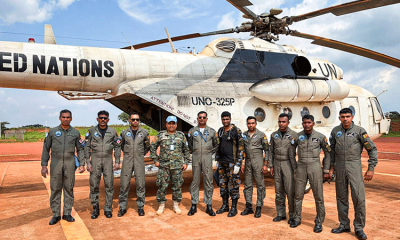
SLAF conducts successful rescue mission under UN command in Central African Republic
-

 News3 days ago
AI concerned over proposed SL military deployment in Haiti
-

 Business6 days ago
‘Dialog Air Fibre powers a new era of Ultra Fast Home WiFi’
-
 News6 days ago
UNEP support pledged to strengthen Sri Lanka’s Environmental Priorities
-

 Features4 days ago
The NPP’s New Challenge: Balancing Easter Lawfare and Economic Welfare