
News
US backs Lankan journalists vis-a-vis Online Safety law

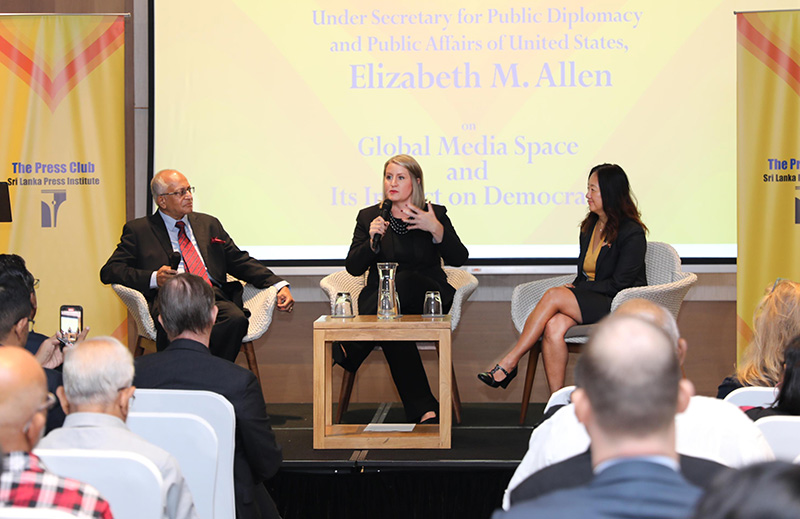
Under Secretary of State for Public Diplomacy Elizabeth Allen on Monday (19) declared US support for journalists here against the backdrop of enactment of ‘Online Safety Bill’
She spokes about press freedom and related issues at the Sri Lanka Press Institute Press Club.
A statement issued by the US Embassy quoted Allen as having said the U.S. Embassy is all in on supporting your incredible work. Sure, we might bump heads over a story now and then, but above all, we’re your biggest fans. We’re all in on programmes that hone your skills because we believe in your right to pursue journalism freely and fearlessly.
I want to thank you for protecting the rights and freedoms of journalists here in Sri Lanka and around the world, ensuring all citizens enjoy the right to express their ideas and opinions openly and freely. Even in difficult times, you continue to press forward and ask difficult questions. Your commitment to seeking out the truth and shouting it from the rooftops remains a democratic staple, and I truly appreciate what you do.
It’s only fitting that I begin my remarks this afternoon by telling a story that I think is relevant in light of today’s topic about the media’s role in a democracy.
Over a century ago, American media coined the term “muckraker” for journalists who delved into societal issues, exposing corruption.
Although the term carried a somewhat negative connotation, labeling these journalists as mere “gossip mongers,” today, we honor them as the pioneers of investigative journalism.
These muckrakers played a pivotal role in ushering in the Progressive Era, a time of significant social and political reform in American history.
Even President Theodore Roosevelt referred to them as “muckrakers,” criticizing their focus on society’s flaws through figures like Lincoln Steffens, whose work shed light on corruption and spurred a nationwide call for accountability and reform.
Steffens’ book ‘The Shame of the Cities,’ published in 1904, made him renowned for uncovering corruption within American cities, highlighting the nefarious links between political leaders, businesses, and organized crime.
His fearless journalism raised critical awareness about the urgent need for governmental and corporate accountability. Steffens wasn’t acting as a public relations officer for the government; his role was to uncover the truth; however unpleasant it might be.
Faced with the stark realities Steffens presented, American officials and the public were compelled to confront a pivotal question: ‘Is this the kind of country we aspire to be?’ The resounding answer was no.
Steffens’ work didn’t just expose wrongdoing; it sparked a nationwide demand for reform and played a crucial role in fostering a dialogue about the essential role of investigative journalism in ensuring power remains accountable.
This story showcases how freedom of the press and freedom of expression are not just fundamental human rights, they are also vital contributors to a country’s development and growth.
This brings me to my main point: how the global media space supports democracy and fosters peaceful, just, and inclusive societies.
In my mind, the correlation is obvious: When a government constricts the rights and freedoms of its citizens, the future and the development of the country will naturally suffer.
Globally, we’re witnessing serious and escalating challenges to media freedom. The United States stands firmly for the freedom of expression, advocating for press freedom both online and offline, and ensuring the safety of journalists and media workers worldwide. Unfortunately, these essential freedoms are under threat globally, including concerns raised here in Sri Lanka.
When governments intensify efforts to withhold information from the public by restricting internet access and censoring content, we must speak up. Notably, when Sri Lanka’s Parliament passed the Online Safety Bill in January, the United States voiced concerns over its potential effects on freedom of expression, innovation, and privacy.
It’s common to hear arguments against unfettered freedom of expression. Critics claim the media is biased, aiming to embarrass governments and undermine public trust. Others worry that without checks, freedom of expression may fuel the spread of misinformation. Some argue that an unchecked press can incite tension and compromise security. And there’s concern that continuous reports on corruption, violence, and political strife can tarnish a nation’s image, deterring investment and hampering development.
However, the media’s bias should lean towards the public’s interest, acting as a guardian to ensure that leaders fulfill their duties. This principle holds in Sri Lanka, the United States, and globally.
The challenge of negative press, often labeled as “fake news” or “biased journalism,” is not new. For generations, governments and the media have navigated a complex, sometimes adversarial relationship. This dynamic isn’t unique to any one nation; in the United States, for instance, presidents from both major political parties have experienced their share of friction with the press. This tension, a hallmark of democratic societies, plays a crucial role in fostering transparency and encouraging effective governance. It’s a familiar scene: politicians and journalists engage in heated exchanges, especially when leaders feel their actions are misrepresented, leading to accusations of inaccuracies and biased reporting.
The press’s duty is to deliver facts as they stand, shedding light on the government’s achievements as well as spotlighting areas where policies or programs fall short. This transparency not only informs the public but also strengthens the nation as it encourages constructive action and improvement.
And suppressing voices only complicates matters further. Attempting to conceal issues rather than addressing them is akin to hiding a broken tool rather than fixing it. True progress comes from collaborative dialogue, even if it means embracing the messiness of public discourse.”

Latest News
Flood warning issued to the Divisional Secretariat Divisions of Ganga Ihala Korale, Udapalatha, Doluwa, Udunuwara, Yatinuwara, Gangawata Korale, Harispattuwa, and Pathadumbara


Due to heavy rainfall received in the upper catchment areas of the Mahaweli River over the past few hours, there is a risk of minor flooding in the low-lying areas surrounding the Mahaweli River within the Divisional Secretariat Divisions of Ganga Ihala Korale, Udapalatha, Doluwa, Udunuwara, Yatinuwara, Gangawata Korale, Harispattuwa, and Pathadumbara.Residents living in the above mentioned areas and motorists using roads passing through these areas are urged to exercise extreme caution and remain highly vigilant regarding the prevailing situation.
Furthermore, residents living in close proximity to the Mahaweli River in these areas are advised to remain highly alert to the situation and take all necessary precautions to protect themselves from any potential flooding.The relevant disaster management authorities are requested to take all necessary measures in response to this situation.
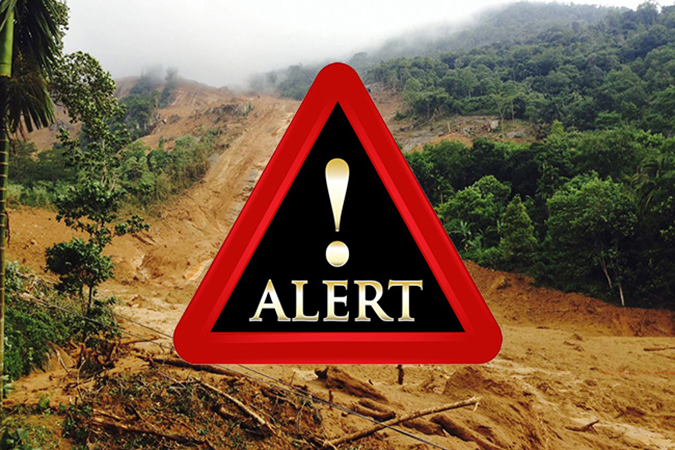
The National Building Research Organisation [NBRO] has issued landslide Red Alerts to the districts of Kandy, Kegalle and Nuwara Eliya effective from 14:00 hrs on 20.09.2026 To 14:00 hrs on 21.09.2026
Accordingly,
LEVEL III [RED] Land Slide early warnings have been issued to the Divisional Secretaries Divisions and surrounding areas of Pasbage Korale in the Kandy district, Dehiowita, Aranayake, Deraniyagala, Mawanella and Yatiyanthota in the Kegalle district and Kothmale West, Kotmale East, Ambagamuwa and Norwood in the Nuwara Eliya district
LEVEL II [AMBER] Land Slide early warnings have been issued to the Divisional Secretaries Divisions and surrounding areas of Padukka in the Colombo district, Nagoda, Thawalama and Neluwa in the Galle district, Bulathsinhala, Palindanuwara, Walallawita and Agalawatta in the Kalutara district, Ganga Ihala Korale in the Kandy district, Bulathkohupitiya and Kegalle in the Kegalle district, Akuressa and Pitabeddara in the Matara district, Thalawakele in the Nuwara Eliya district and Pelmadulla, Ratnapura, Ayagama, Kuruwita and Ratnapura in the Ratnapura district.
LEVEL I [YELLOW] Land Slide early warnings have been issued to the Divisional Secretaries Divisions and surrounding areas of Seethawaka in the Colombo district, Niyagama and Baddegama in the Galle district, Mirigama in the Gampaha district, Ingiriya in the Kalutara district, Udapalatha and Yatinuwara in the Kandy district, Galigamuwa, Warakapola and Ruwanwella in the Kegalle district, Kotapola, Pasgoda and Athuraliya in the Matara district, and Eheliyagoda, Kalawana and Elapatha in the Ratnapura district.
News
Development projects can deliver results to the people more quickly when the political authority and the public service work together towards a common goal – PM
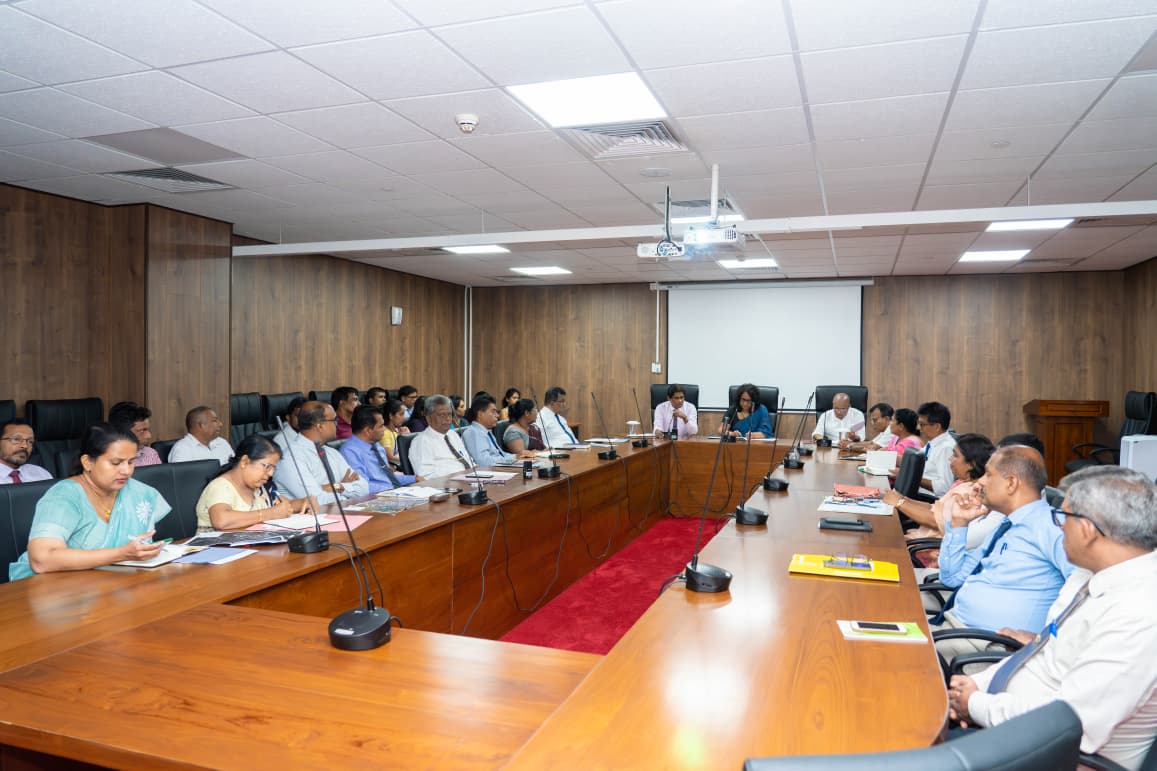
Prime Minister Dr. Harini Amarasuriya stated that development projects can deliver results to the people more quickly when the political authority and the public service work together towards a common, people-oriented objective.
The Prime Minister made these remarks while participating in a discussion held on Friday [September 18] at the Western Province Council Auditorium to review the progress of the development project to rehabilitate Rathmalana Kandawala Road and the drainage system on either side of the road, within the Dehiwala–Mount Lavinia Municipal Council limits in the Colombo District.
The project, which commenced on September 10, 2026, is scheduled to be completed before June 30, 2027. Implemented by the Provincial Road Development Authority (PRDA), the project includes the construction of a bridge at a cost of Rs. 64 million, the rehabilitation of the drainage system at a cost of Rs. 930 million, and the rehabilitation of the road at a cost of Rs. 115 million.
The Prime Minister also paid special attention to the progress of the responsibilities assigned to the Western Province Council, the Irrigation Department and the Ratmalana Divisional Secretariat in accordance with decisions taken at the previous committee meeting. Attention was also given to the current status of the plans being carried out by the Sri Lanka Land Development Corporation (SLLRDC), as well as the construction and maintenance activities being undertaken by the Provincial Road Development Authority (PRDA).
Commending the expedite and commendable progress of the project, the Prime Minister particularly appreciated the commitment demonstrated by officials of the relevant government institutions to work in close coordination with one another and in collaboration with the political authority.
The Prime Minister also emphasised the importance of taking measures well in advance to control flooding and minimise its impact on Colombo and several other districts in view of the rainy weather that may affect the Western Province during the latter part of this year.
The meeting was attended by the Chairman of the Colombo District Coordinating Committee and Member of Parliament Lakshman Nipuna Arachchi, Chairperson of the Ratmalana Divisional Coordinating Committee and Member of Parliament Samanmalee Gunasinghe, Chairman of the Roads Sub-Committee of the Colombo District Coordinating Committee Dewananda Suraweera, Mayor of the Dehiwala–Mount Lavinia Municipal Council Parakum Shantha, Chief Secretary of the Western Province K.G. Pradeep Pushpakumara, along with a number of government officials.
[Prime Minister’s Media Division]

Flood warning issued to the Divisional Secretariat Divisions of Ganga Ihala Korale, Udapalatha, Doluwa, Udunuwara, Yatinuwara, Gangawata Korale, Harispattuwa, and Pathadumbara

Landslide Red Alerts issued to the districts of Kandy, Kegalle and Nuwara Eliya

Shafali dazzles with 49-ball unbeaten 100 and India march into Asian Games final

Development projects can deliver results to the people more quickly when the political authority and the public service work together towards a common goal – PM

Landslide Early Warnings issued to the Districts of Colombo, Galle, Kalutara, Kandy, Kegalle, Matara, Nuwara Eliya and Ratnapura

Chamari Athapaththu’s unbeaten 83 leads Sri Lanka into final

‘Dates have the highest sugar content to fight Coronavirus’

Sunday Island 27 December – Headlines

#SundayIsland 17th December – Headlines

Sunday Island – 28th March

Sunday Island Headlines – 21 March

Sunday Island – 21st February – Headlines
-

 Opinion7 days ago
From Galkissa (Mount Lavinia) to Tambuttegama
-

 News4 days ago
US embassy won’t comment on IGP’s probe into joint drug raid
-

 Features6 days ago
The emptying university: why are academics leaving?
-

 Features7 days ago
Sri Lanka’s university crisis: Brain drain and union action demand urgent reform
-

 News3 days ago
Bid for Basil’s extradition nears final stage: Police
-

 Business4 days ago
All-new Bolero MaXX unveiled in Sri Lanka
-

 Opinion7 days ago
Ashraff: From the SLMC towards the National Unity Alliance
-

 Editorial7 days ago
Muscle flexing, astroturfing and dog-and-pony shows