
Latest News
US and China agree to slash tariffs for 90 days


The US and China have agreed a deal that will significantly cut the import tariffs, or taxes, both sides have imposed on one another for a 90-day period.
US Treasury Secretary Scott Bessent said both countries would lower their reciprocal tariffs by 115% for 90 days.
The announcement came after the two countries held talks in Switzerland, the first between the two countries since US President Donald Trump had levied steep tariffs on Chinese imports.
The huge tariffs caused turmoil in the financial markets and sparked fears of a global recession.
President Trump had imposed a 145% tariff on Chinese imports, while Beijing responded with a 125% levy on some US goods.
However, the US tariffs on Chinese imports will now be cut to 30% for 90 days, while Chinese tariffs on US imports will be cut to 10% for the same period of time. The pause will begin on 14 May.
The US measures still include an extra component aimed at putting pressure on Beijing to do more to curb the illegal trade in fentanyl, a powerful opioid drug.
The imposition of the tariffs had raised the prospect of trade between the two countries slumping, with US ports reporting a sharp drop in the number of ships scheduled to arrive from China.
Meanwhile Beijing has become increasingly concerned about the impact the tariffs could have on its economy. Factory output has already slowed and there are reports some firms were having to lay off workers as production lines of goods bound for the US began to grind to a halt.
Announcing the agreement, Bessent said: “The consensus from both delegations this weekend is neither side wants a decoupling.
“What had occurred with these very high tariffs was the equivalent of an embargo, and neither side wants that.
“We do want trade, we want more balanced trade, and I think that both sides are committed to achieving that.”
China’s commerce ministry said the agreement reached with the US was an important step to “resolve differences” and “lay the foundation to bridge differences and deepen co-operation”.
News of the agreement boosted stock markets, with Hong Kong’s benchmark Hang Seng Index ending the day up 3%. China’s Shanghai Composite Index had closed before details of the deal came out, and ended 0.8% higher.
European stocks rose in early trade and early indications were that the main US stock markets will open up by 2-3%.
[BBC]


The Under-19 World Cups come thick and fast: once every two years. Soon enough, most of the players appearing in today’s final will graduate, their cricket limited by franchises and passports rather than age limits. But for now, India and England’s roads at this World Cup finally converge.
Both teams are unbeaten in the tournament so far. England stormed into the final after their captain, Thomas Rew, starred with a 110 that took them to a 27 run victory against defending champions Australia.
India were faced with a tall task of chasing down a record setting 311, against Afghanistan. However, India’s batters – led by a swashbuckling century by opener Aaron George raced to the target with 53 balls and seven wickets to spare, to lay down the marker on a Harare pitch that should continue to have plenty in it for the batters.
India and England have met once in the recent past: they faced off in a warm-up match right before the tournament proper. In the rain interrupted encounter, James Rew starred with a 66-ball 71* to take England home. This time around, there will be plenty more stakes involved for either side. They might as well be facing each other for the first time.
Aaron George was having an underwhelming Under-19 World Cup at the top of the order for India. His scores at the tournament had been 7, 23, and 16 when he came out to bat against Afghanistan. Under the spotlight, though, he put in his most impressive showing of the tournament. He led the chase with poise, being the last wicket to fall with just 11 runs left to knock off. By then, he had peppered the Afghan bowlers around the ground for 15 fours and two sixes during a classy 104-ball 115. He might revel under the spotlight some more in the final.
Thomas Rew has led England from the front in more ways than one. He is the fourth highest run-getter in the tournament, with 299 runs at an average of 74.75 and an equally impressive strike rate of 101.01. His footwork has been a class above his fellow England batters against spin especially, and if the Harare surface decides to spin and bounce, he will be keen to take off from where he left during his century against Australia in the first semi-final.
The Harare Sports Club has served up fast-paced pitches in the tournament so far. The semi-final between India and Afghanistan was a belter in particular, with the ball coming onto the bat and seeing an aggregate of 621 runs scored between both sides at a run rate of 6.81. If the final happens on a similar surface, conditions will favour the batters again.
The weather today [Friday] has a chance of light rain: the match will begin at 9.30am local time; shower and thunder might roll in after 5pm. The temperature will hover around the mid-20s (Celsius) throughout.
[Cricinfo]
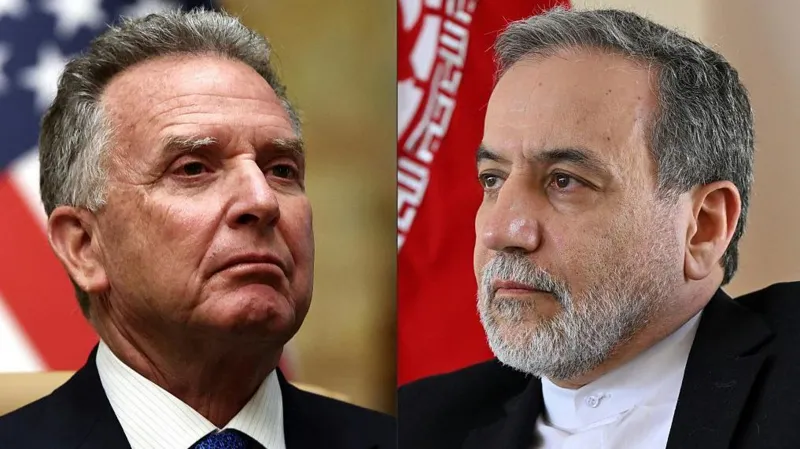
Senior US and Iranian officials are expected to meet in Oman later for direct talks amid a crisis that has raised fears of a military confrontation between the two countries.
The discussions come after a US military build-up in the Middle East in response to Iran’s violent repression of nationwide anti-government protests last month, that human rights groups say killed many thousands of people.
Uncertainty over the location and scope had threatened to derail the talks, which are part of a diplomatic effort by regional mediators to de-escalate tensions.
Both countries remain far apart in their positions. The hope is that, if successful, the discussions could lead to a framework for negotiations.
The US, which is demanding Iran freezes its nuclear programme and discards its stockpile of enriched uranium, had said the talks should also involve Iran’s ballistic missiles, the country’s support for regional armed groups and its treatment of its citizens.
Iran, however, has said the discussions will be limited to its nuclear programme, and it is unclear if these differences have been resolved.
In recent weeks, President Donald Trump has threatened to bomb Iran if it does not reach a deal. The US has sent thousands of troops and what Trump has described as an “armada” to the region, including an aircraft carrier along with other warships as well as fighter jets.
Iran has vowed to respond to an attack with force, threatening to strike American military assets in the Middle East and Israel.
The Iranian delegation will be led by Foreign Minister Abbas Araghchi, who last week said his country’s armed forces were “with their fingers on the trigger”, while the US will be represented by special envoy Steve Witkoff and Trump’s son-in-law, Jared Kushner.
[BBC]
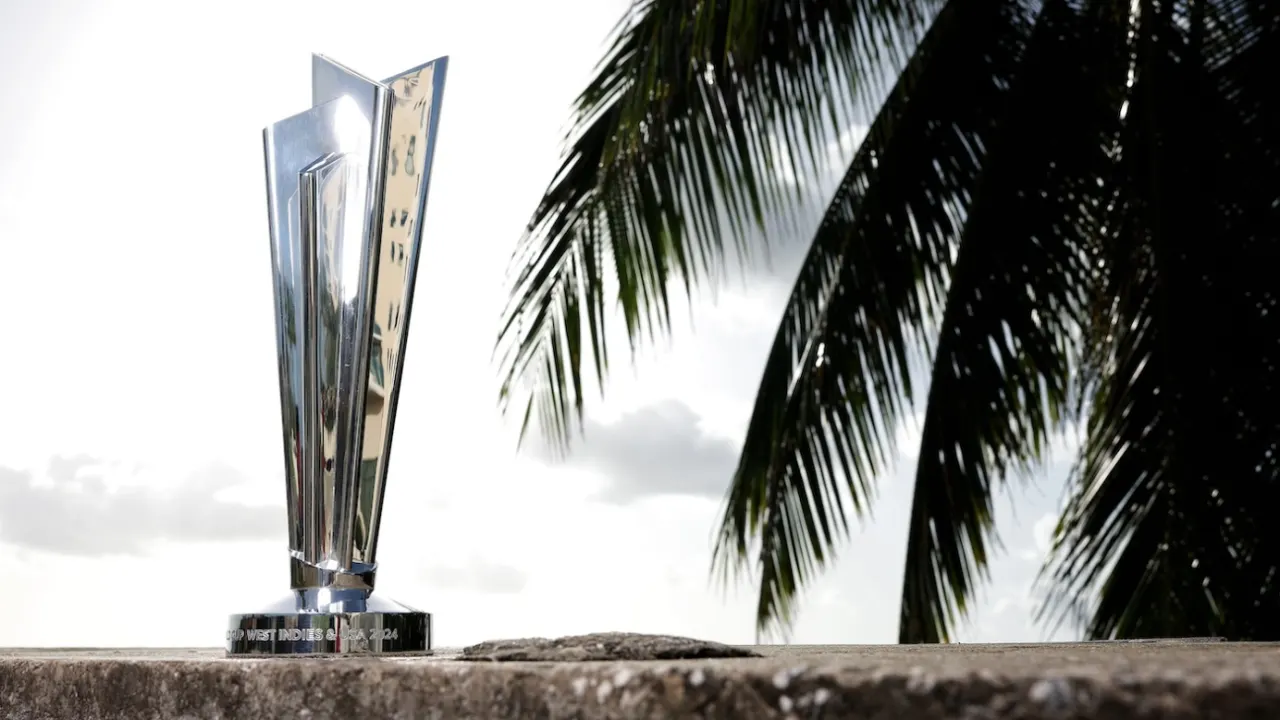
The ICC and PCB are engaged in back-channel communications as the global governing body tries to find a way for its showpiece group match at the 2026 T20 World Cup between Pakistan and India to go ahead.
On instructions from their government, Pakistan will not take the field against India in Colombo on February 15, though they will play their other matches. The Pakistan Prime Minister Shehbaz Sharif said the decision was to show solidarity with Bangladesh, who were excluded from the T20 World Cup because they did not want to play in India, one of the co-hosts along with Sri Lanka.
Though the PCB has not publicly commented on the boycott of the group match against India, the ICC responded to the decision – originally conveyed by the Government of Pakistan on its ‘X’ account – saying it expected the PCB to “explore a mutually acceptable resolution, which protects the interests of all stakeholders.”
That resolution has been the subject of calls and meetings between Imran Khwaja, the ICC deputy chair, and Mubashir Usmani of the Emirates Cricket Board, who is also on the ICC Board. They have been in communication with PCB chairman Mohsin Naqvi and Salman Naseer, who is the PSL head but also a senior advisor to Naqvi.
The efforts had begun a week before the boycott was announced, when Naqvi had first raised doubts over Pakistan’s participation in the T20 World Cup and said it would depend on the government. Naqvi travelled to the UAE that week as part of a state visit but is believed to have sought advice from officials there and met Khwaja on that trip. With Khwaja back in Singapore, where he is based, and Naqvi in Pakistan, discussions have since continued.
Initially the PCB was informed of potential sanctions Pakistan could face should they withdraw from the tournament entirely, though its response was that the issue is not about financial consequences. After the decision to exclude Bangladesh was taken, Naqvi criticised it, accusing the ICC of “double standards” and of doing an “injustice” to Bangladesh.
Since the announcement of the boycott, however, contact from the ICC has focused on addressing PCB’s grievances so that the game goes ahead. Khwaja has stepped in as a mediator in other recent disputes involving the PCB, BCCI and the ICC.
[Cricinfo]

India chase sixth Under-19 World Cup title, England their first since 1998

Meet the women protecting India’s snow leopards

Louvre Museum crown left crushed but ‘intact’ after raid

US and Iran talks to begin as fears of direct conflict continue

INS GHARIAL makes port call in Colombo

ICC-PCB in back-channel talks to resolve India boycott at T20 World Cup

‘Dates have the highest sugar content to fight Coronavirus’

Sunday Island 27 December – Headlines

#SundayIsland 17th December – Headlines

Sunday Island – 28th March

Sunday Island Headlines – 21 March

Sunday Island – 21st February – Headlines
-

 Business6 days ago
Hayleys Mobility ushering in a new era of premium sustainable mobility
-

 Business3 days ago
SLIM-Kantar People’s Awards 2026 to recognise Sri Lanka’s most trusted brands and personalities
-
 Business6 days ago
Advice Lab unveils new 13,000+ sqft office, marking major expansion in financial services BPO to Australia
-
 Business6 days ago
Arpico NextGen Mattress gains recognition for innovation
-

 Business5 days ago
Altair issues over 100+ title deeds post ownership change
-

 Editorial6 days ago
Govt. provoking TUs
-

 Business5 days ago
Sri Lanka opens first country pavilion at London exhibition
-

 Business4 days ago
All set for Global Synergy Awards 2026 at Waters Edge