
Life style
Upali returns with Sinhala adaptation of Murdoch classic

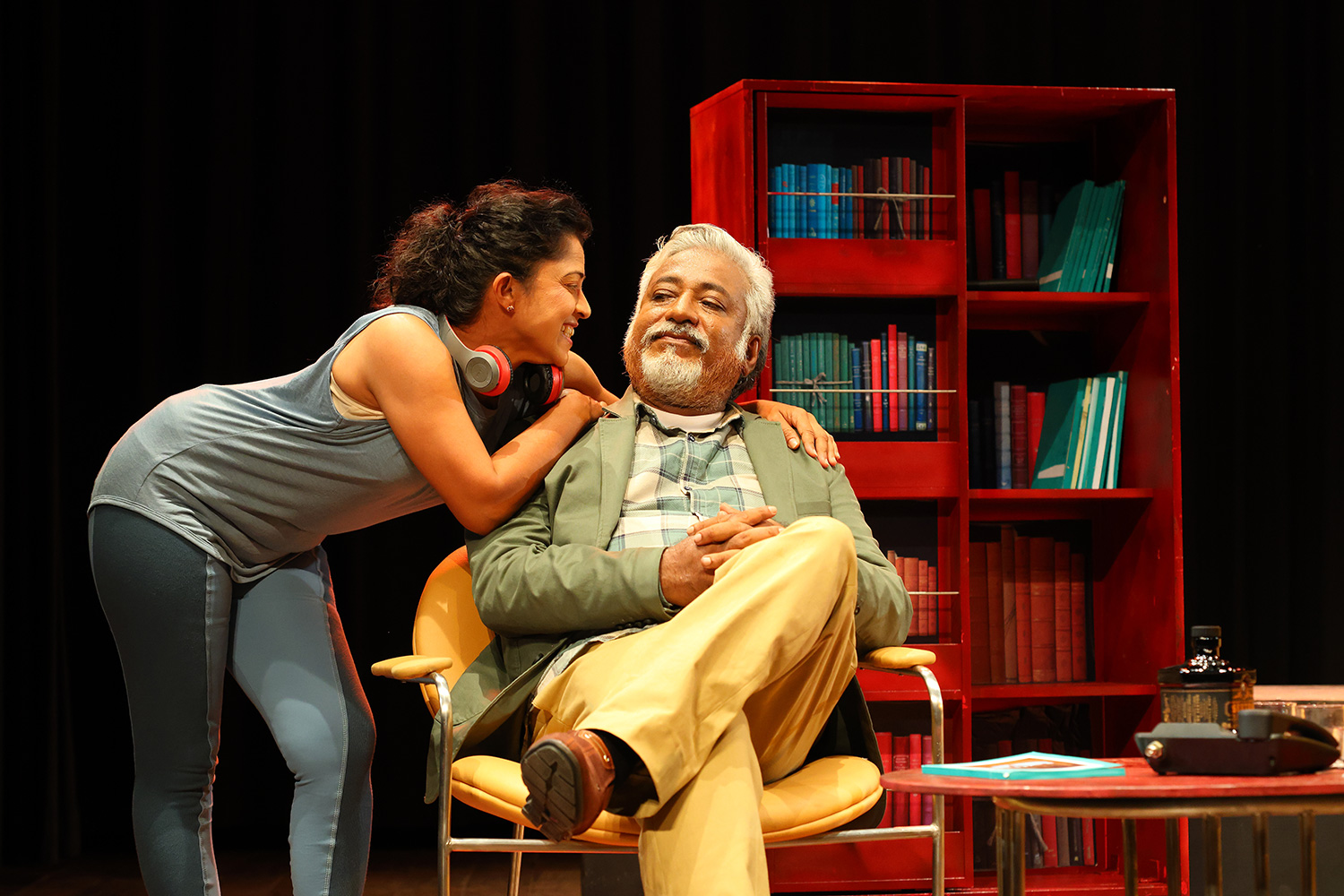
EMD Upali, a familiar name in both the Colombo Bar and the Sinhala stage, is gearing up to unveil his latest theatrical venture, Pavul Kana Minihek, the Sinhala adaptation of Iris Murdoch’s acclaimed novel The Black Prince. The play goes on board on December 6 at 7 pm at the open-air theatre of the Sudarshi Hall, Colombo.
Though not physically tall, he stands tall in fame. Upali’s open, friendly nature and ever-present smile make him a respected figure in both legal and theatrical circles. The veteran director is also remembered for introducing the late Jackson Anthony to the stage through his 1983 hit Methanin Maruwenu, a production that went on to win national acclaim.
But his journey began much earlier. As an undergraduate at the University of Colombo, he created Methanin Maruwenu for an inter-faculty drama competition in 1981 and walked away with the Best Director award. The reworked version won him another Best Director title at the 1983 State Drama Festival. Two years later, he repeated the feat with Piyambana Assaya.
Academic commitments kept him away from the stage until 1995, when he returned with Eva Balawa, a Sinhala adaptation of J.B. Priestley’s An Inspector Calls.
“Lucien de Zoysa first staged the English version at the Lionel Wendt in memory of his son Richard,” Upali recalls. “I adapted it into Sinhala using the script by my guru and friend, Upali Attanayake. Eva Balawa went on to win four State Awards, including Best Director (Adaptation).”
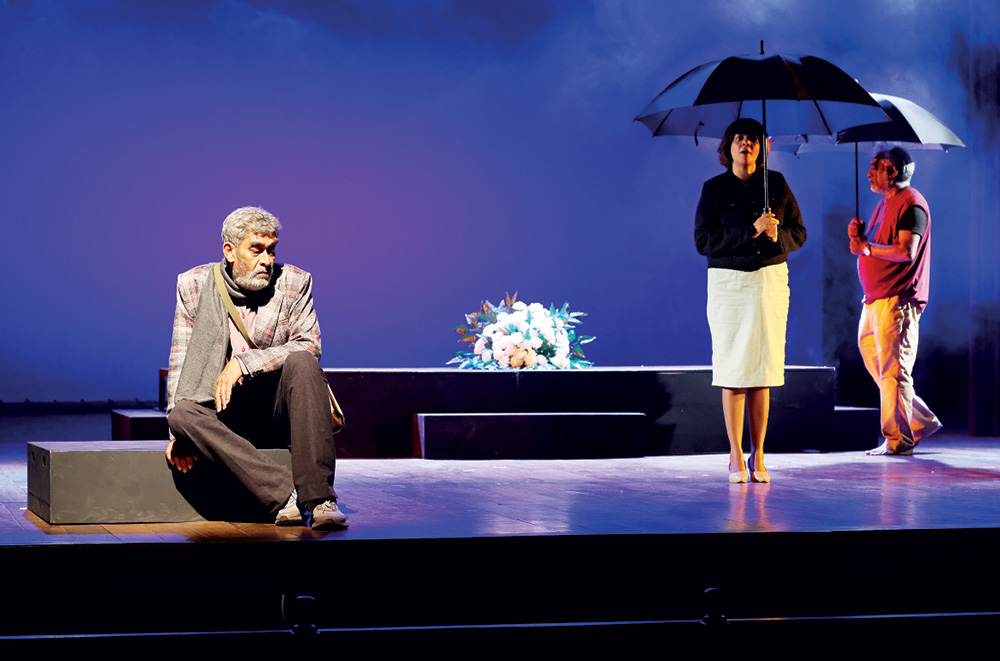





He followed this success with Chara Purusha (2000), adapted from Gogol’s The Government Inspector; Wana Tharavi, his staging of Ibsen’s The Wild Duck during the Ibsen Centenary celebrations; and Chekhov’s The Cherry Orchard as Idamedi Wikine in 2014.
Pavul Kana Minihek is Murdoch’s philosophical and psychologically charged masterwork, adapted from Prof. J.A.P. Jayasinghe’s Sinhala translation. Produced by Jude Srimal, the play features Sampath Perera as Bradley Pearson alongside theatre stalwarts Lakshman Mendis, Nilmini Sigera, Madani Malwage, Jayanath Bandara, Mihiri Priyangani and Chanu Disanayake. Music is by Theja Buddika Rodrigo.
Behind the curtain sits an equally seasoned crew: production designer Pradeep Chandrasiri, costume designer Ama Wijesekara, lighting designer Ranga Kariyawasam, make-up artist Sumedha Hewavitharana and stage manager Lakmal Ranaraja.
Murdoch’s philosophical depth, Upali notes, is central to both the novel and the play.
“Murdoch’s background in philosophy flows through the narrative,” he says. “The Black Prince grapples with the pursuit of truth, through erotic love, through art, through suffering. She was a Platonist, and that worldview shapes the protagonist Bradley Pearson’s journey.”
Murdoch’s novel, published in 1973, won the James Tait Black Memorial Prize and was shortlisted for the Booker Prize before being adapted for the stage in 1989.
“We condensed the play into a sharp, two-hour production,” Upali says. “With Pradeep Chandrasiri’s design, we recreated both Bradley’s and Arnold Baffin’s homes on stage. Our approach was minimalistic, but every decision was grounded in careful experimentation.”
Upali is candid about the realities surrounding Sinhala theatre especially when adapting world-class works.
“The biggest challenge is funding,” he says. “A proper production costs at least five million rupees. Institutions like the British Council or Goethe-Institut help occasionally, but not enough.”
He points to recent successes such as Nuga Gahak, Kanchuka Dharmasena’s Sinhala adaptation of Tim Crouch’s The Oak Tree, staged with the help of the British Council, and Rajitha Dissanayake’s Ape Gedarata Gini Thiyaida, supported by the Sunera Foundation.
“We must be happy some people get sponsorships. It’s rare. But if we create good theatre, audiences still come.”
The director laments Sri Lanka’s lack of proper theatrical infrastructure.
“In Sri Lanka, theatre is treated as a ahikuntika kalawa, a gypsy art,” he says. “Actors and crew load a bus with props, travel, perform once and return. In developed countries, theatres run the same play for months, sometimes years.”
Venues remain limited and expensive. Lionel Wendt is booked out months ahead; most other halls lack even basic acoustics.
“Many places are just meeting halls. Audiences beyond the middle rows can’t hear the actors. These shortcomings drain the cultural life of the nation.”
With auditorium rentals running between Rs. 75,000 and Rs. 100,000 a day, directors often wait months for dates.
“A play must be staged at least once a month to stay alive,” he remarks. “Theatre isn’t something you can store on a chip.”
Sri Lanka also lacks full-time theatre companies. “Our actors must juggle movies, teledramas, TV ads, political stages, news anchoring — everything,” Upali notes. “They have to. There’s no other income.”
Hiring them for a single performance can cost Rs. 300,000. Full production ranges from Rs. 2 million to Rs. 5 million.
“When we began, even films didn’t cost this much.”
Meanwhile, audiences are shrinking. “We are living in a TikTok world,” he says with a wry smile. “People want instant gratification. Sitting through a two-hour play is becoming harder and harder.”
Yet despite the odds, Upali remains committed to the stage and to bringing global literature to Sinhala audiences.
“I believe in theatre,” he says simply. “And I believe our audiences still care, even in a distracted world.”
Pavul Kana Minihek
opens this week and promises to remind us of that serious theatre still has a place, and a voice, in Sri Lanka.
(Pix by Hemantha Chandrasiri)

Ramani Fenando’s new Image and Etiquette Academy
In a world where first impressions speak before words, Sri Lanka’s beauty icon Ramani Fernando has taken a bold step beyond the salon chair to shape confidence from within. Her newly launched Etiquette and Image Academy is designed to refine not only appearance, but presence, poise and personal power.
Step into a space where confidence meets sophistication, Ramani Fernando Academy is redefining how Sri Lankans approach personal branding ,offering a unique blend of ettiquette, style and communication mastery.
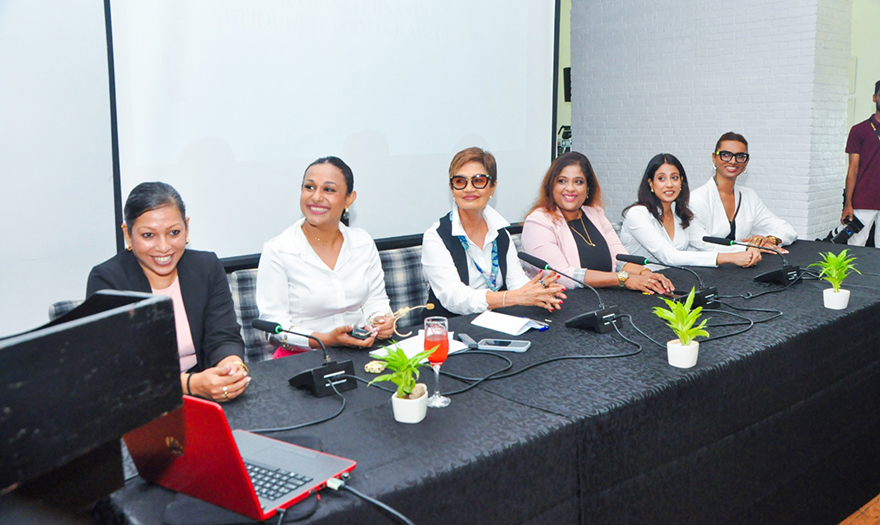
Her newly launched personal branding and EtiquetteAcademy was unveiled in a simple ceremony at the Galle Face hotel. This marks a bold and timely step into the realm of confidence leadership, presence and modern social grace.
Colombo’s social elite, corporate leaders, fashion insiders and longtime clients gathered in celebration of a vision that seeks to shape not just appearance but cofidence building.
Ramani, in her opening speech, said “our courses are carefully designed to meet with international standards, ensuring participants recieve training that meets both local and global expectations.
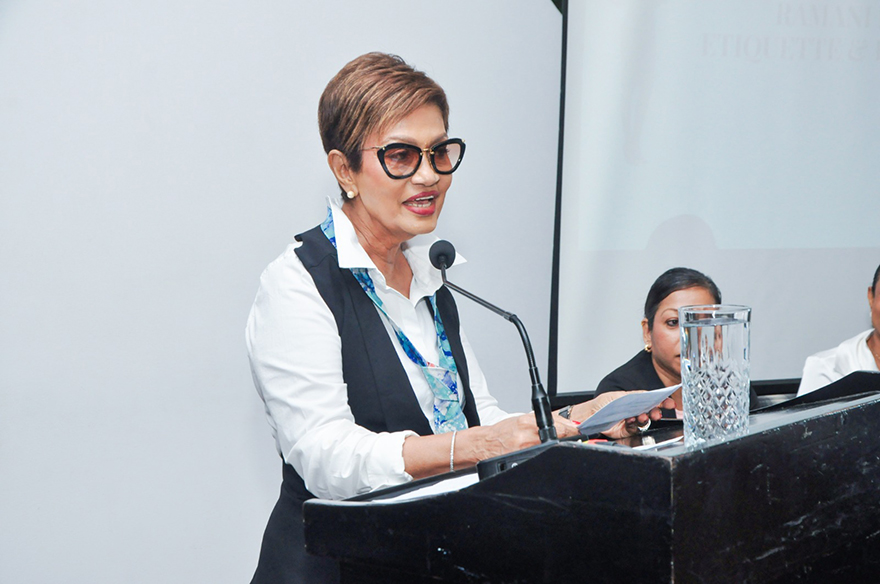
Ramani Fernando – shaping confidence

Professional face of etiquette training
Faith Launders who is the Director of Etiquette and Protocol in the Academy pointed out this personal branding and etiquette programmes will help participants cultivate grace, confidence and refined personal style through expert guidance. A former Miss Sri Lanka beauty queen, with experience in aviation, will contribute a creative and professional lens to the Academy’s curriculam.
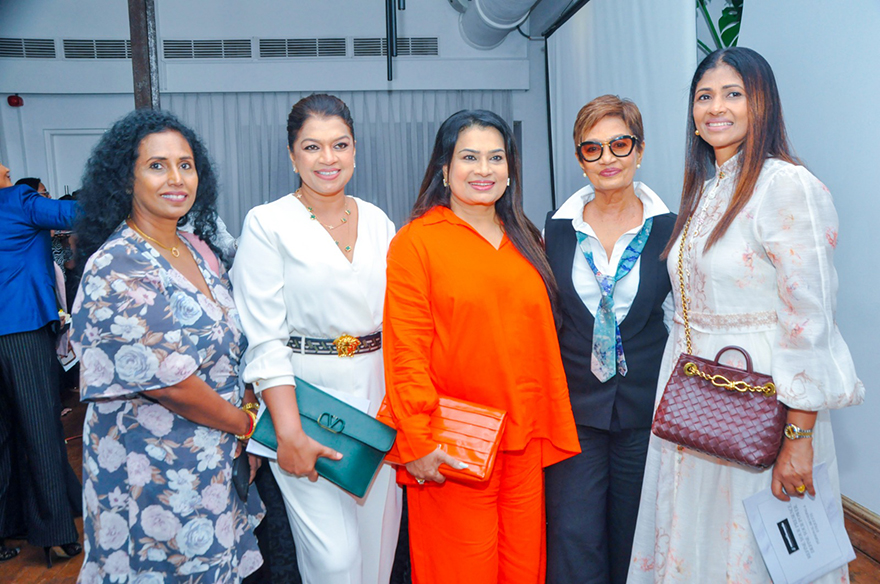
Invitees from the world of fashion gathered to celebrate the occasion

Carolyn Jurie

Chalana at the helm of beauty
She brings professionalism, poise and a strong commitment to cultivate confidence and promote refined social skills among students. Known for her approachable style and inspiring presence, she strives to create an inclusive learning space where students can transform into confident individuals to navigate life with dignity and elegance.
For decades, Ramani has been a transformative force in Sri Lanka’s beauty industry.
and now this venture signals a natural evolution from external refinement to the art of personal distinction.
The programme blends traditional etiquette with contemporary relevance, offering personal branding and professional image building both in social and corporate etiquette. These are some of the programmes:
= Communication skills and body language, grooming, style and wardrobe alignment.
= Digital image and social media conduct.
= Platforms or in social events the ability to command attention with confidence has to become an important tool.
In today’s hyper connected world, impressions are formed in seconds often long before a handshake, whether in boardrooms, diplomatic circles or in the media.
The teaching staff consists of industry experts trainers amd adminitrators led by othe senior professionals
The Managing Director, Lakmini Lenagala, Training and Administrative Manager, Ramono, Navaratnarajah, Personal Assistant, Merisha Aserappa and Chalana Munasinghe are all industry professionals who have experience, theoretical knowledge and practical skills.
They are experienced instructors with hands on expertise in grooming, etiquette, image building and communication.
While the vision of the Personal Branding and Etiquette Academy belongs to Ramani Fernando, its strength lies in the collective expertise of the professionals who bring the programmes to life.
By bringing together specialists from diverse fields, the Academy offers participants a rare opportunity to refine every dimension of their public and private persona under one roof.
Sessions cover skin care, hair, make up, wardrobe planning and colour coordination.
Communication and public speaking recognising that presence is also conveyed though voice and expression, the Academy offers training in articulation tones, posture and body language.
The training also includes table manners, event conduct, professional courtesy and cross cultural awareness. This Etiquette Academy us designed for both women and men offering guidance on grooming, communication, professional conduct and social confidence.
The Academy acts as a transformative space – one that equips individuals not merely to succeed but to stand out with authencity and grace. The institution reflects Ramani Fernando’s belief that true elegance is a way of being not simply a way of dressing!.
By Zanita Careem
Pix by Thushara Athapatu
World Wildlife Day 2026:
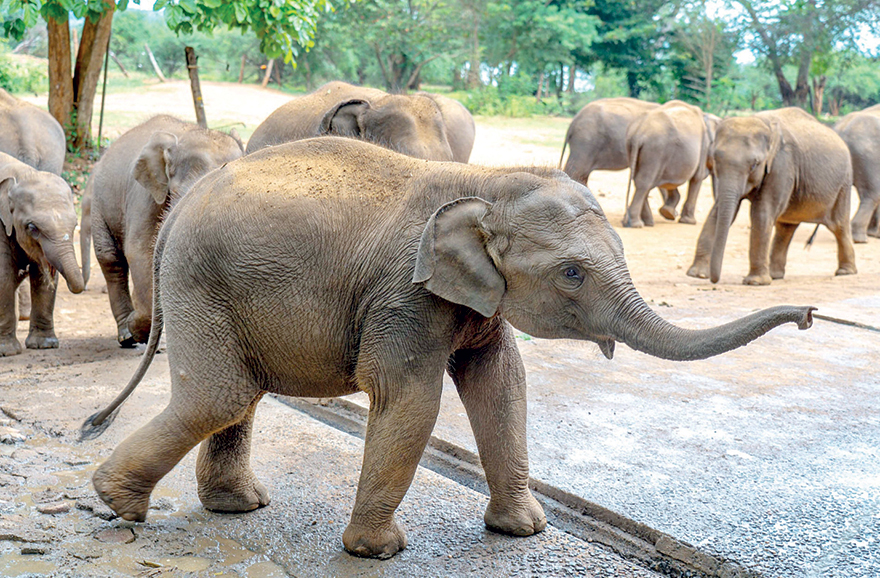
He arrived at the Elephant Transit Home in Udawalawe on March 23, 2024, barely eight months old. Kalo had spent an unknown number of days trapped at the bottom of an abandoned well near Galenbidunuwewa in Sri Lanka’s Anuradhapura District, separated from the herd he had lost. When wildlife officers from the Department of Wildlife Conservation pulled him out, they found a frightened calf, but also something else: resilience.
Today, nearly two years after his rescue, Kalo is no longer the fragile elephant calf who arrived at the Transit Home alone. He is growing steadily, eating well, and has fully integrated into a group of calves preparing for eventual release. His progress is measured not only in size, but in behaviour like social bonding, herd interaction, and independent foraging skills that will determine his readiness for life beyond human protection. Since his arrival, Kalo has grown from 125 kilograms to over 300 kilograms. The wounds he sustained before rescue have fully healed, and he is no longer on any specific medical treatment instead routine management only. He is, by every measure, active, playful, and thriving.
The Elephant Transit Home, also known as Ath Athuru Sevana, has operated within Udawalawe National Park since 1995. It is not an orphanage in the traditional sense. There are no rides, no performances, no human dependency. Human contact is limited strictly to feeding and veterinary care. The rest of the time, the calves are left to bond with one another.
That philosophy is intentional. Elephants are deeply social animals, and calves that grow too attached to humans struggle to survive in the wild. The daily play, the hierarchy, and the formation of peer bonds are all part of a structured rehabilitation process designed to prepare them for rewilding.
Since its establishment, more than 200 orphaned elephants have passed through the Elephant Transit Home. Over 100 have been successfully released back into the wild. In July 2025 alone, six young elephants were returned to Udawalawe National Park during the facility’s 26th release. If all continues as planned, Kalo will follow that path in 2029.
On May 8, 2024, less than two months after Kalo’s rescue, Sun Siyam Pasikudah formalised its long-term commitment to his care through the CarePhant initiative under Sun Siyam Care. The resort pledged ongoing monthly contributions to support Kalo’s nutrition, veterinary care, and daily rehabilitation needs through to his planned release.
Sun Siyam Care is the group’s overarching sustainability programme that integrates environmental stewardship, biodiversity conservation, community engagement, and long-term socio-economic value creation across all Sun Siyam Resorts in the Maldives and Sri Lanka. Through Sun Siyam Care, we invest in initiatives that protect marine and terrestrial ecosystems, reduce waste and single-use plastics, improve resource efficiency, support renewable energy and local sourcing, and promote awareness and participation among guests and communities alike. Kalo’s journey from rescue to rewilding is one example of how Sun Siyam Care extends beyond hospitality, connecting responsible tourism with meaningful environmental and wildlife conservation impact.
“We are delighted to embark on the CarePhant project and become stewards of Kalo’s well-being. Sri Lanka’s elephants are not just a conservation issue; they are part of the living identity of this island, and we feel a genuine responsibility to play our part in protecting them,” said Arshed Refai, General Manager, Sun Siyam Pasikudah.
For Chaminda Upul Kumara, Sustainability Project Manager at Sun Siyam Resorts, the commitment reflects the deeper purpose of Sun Siyam Care. “Conservation is not a single moment. It is a process that requires patience and consistency. With Kalo, we committed to being part of that journey from rescue to release. Every month of support is an investment in his return to the wild,” said Upul.
In the month that marks World Wildlife Day, observed on 03rd March, Kalo’s story serves as a reminder that conservation is not abstract. It is individual. It is long term. And it depends on partnerships between public institutions and responsible private sector actors. In a landscape where habitat loss and human–elephant conflict continue to threaten Sri Lanka’s wild elephant population, sustained commitments like CarePhant demonstrate how responsible tourism can contribute to tangible, measurable conservation outcomes.
Sun Siyam Pasikudah, which holds Travelife Gold Certification and operates under the broader Sun Siyam Care sustainability framework, integrates conservation, local sourcing, and community engagement into its daily operations. The CarePhant project builds on that foundation by linking responsible hospitality directly to wildlife protection.
Three years from now, in 2029, Kalo is expected to walk beyond the protective boundaries of the Elephant Transit Home and into Udawalawe National Park as a young wild elephant. Every veterinary check, every month of nutritional support, and every bond formed within his herd brings him closer to that moment.
“When Kalo walks back into the forest in 2029, it will mark the completion of a journey that began in crisis but was sustained through commitment,” added Arshed Refai. “We are proud that Sun Siyam Care is part of that long-term promise.”
Until then, Kalo continues doing what young elephants at Ath Athuru Sevana are meant to do: growing, learning, and preparing quietly for a life in the wild.

The High Commission of the Islamic Republic of Pakistan and the Pakistani community based in Sri Lanka celebrated the 86th National Day of Pakistan with traditional flavour and resolve to make Pakistan a strong, vibrant and progressive democratic welfare state.
The day commemorates a defining moment that led the foundation for the creation of Pakistan.
The ceremony commenced with the raising of their national flag, fluttering proudly against the morning sky, symbolising faith, unity and discipline, the ideals upon which the nation was built. Dignitaries, members of the diplomatic corps, community leaders and guests gathered in silence as the national anthem resonated creating an atmosphere charged with emotion and national pride .
Cultural elegance added a distinctive charm to the occasion, with traditional attire and warm exchanges reflecting the rich heritage of Pakistan. Guests were later invited to partake in light refreshments, providing an opportunity for cordial interacton and celebration.
Acting High Commissioner of Pakistan, Zunaira Latif unfurled the Pakistani flag to the tune of Pakistan’s national anthem in a ceremony held at the Pakistan High Commission
The National Day of Pakistan is celebrated on 23rd March every year in remembrance of the historic 1940 resolution passed in Lahore, calling for a separate homeland for Muslims of the subcontinent that ultimately led to the creation of Pakistan on August 14, 1947.
Special messages by the President and the Prime Minister of Pakistan were readout, in which both the leaders highlighted the importance of the day and paid tributes to Quaid-e-Azam Muhammad Ali Jinnah.
The Acting High Commissioner of Pakistan in her message on the occasion said that Pakistan and Sri Lanka continue to maintain their traditionally close and mutually beneficial relations, based on mutual respect and trust. She said that the strength of the Pakistan – Sri Lanka relationship lies in diversified engagement in many fields such as trade, defence, science, culture, and education. She also extended sincere greetings and best wishes on behalf of the government and people of Pakistan to the government and people of Sri Lanka.

Sameer Rizvi arrives in the IPL to guide Delhi Capitals home in low-scoring chase

Trump to give primetime address on Iran war as questions swirl over his next move

PM opens ‘Silver Age Center,’ an Elder Care, Training and Research Centre built with modern facilities in Kataragama

Heat Index at Caution Level in the Western, Sabaragamuwa, Southern, Eastern, North-western, Northern and North-central provinces and in Monaragala district

Atmospheric conditions will be favorable for afternoon thundershowers in most parts of the island over the next few days from today (02 April)

Sri Lanka cannot procure Russian oil before US sanctions return – Champika

‘Dates have the highest sugar content to fight Coronavirus’

Sunday Island 27 December – Headlines

#SundayIsland 17th December – Headlines

Sunday Island – 28th March

Sunday Island Headlines – 21 March

Sunday Island – 21st February – Headlines
-

 Features5 days ago
A World Order in Crisis: War, Power, and Resistance
-

 News6 days ago
Energy Minister indicted on corruption charges ahead of no-faith motion against him
-

 Sports6 days ago
SLC to hold EGM in April
-

 Opinion6 days ago
When elephants fight, it is the grass that suffers
-

 Latest News7 days ago
A strong Technical and Vocational Education and Training (TVET) system equips individuals with practical, relevant, and future-oriented skills helping to innovate responsibly towards a greener and sustainable future – PM
-

 Features6 days ago
Lest we forget
-

 News2 days ago
Tariff shock from 01 April as power costs climb across the board
-
 Business6 days ago
Pan Asia Bank empowers export sector as Strategic Partner of NCE Export Awards