
News
UNP takes up cudgels on behalf of Sallay

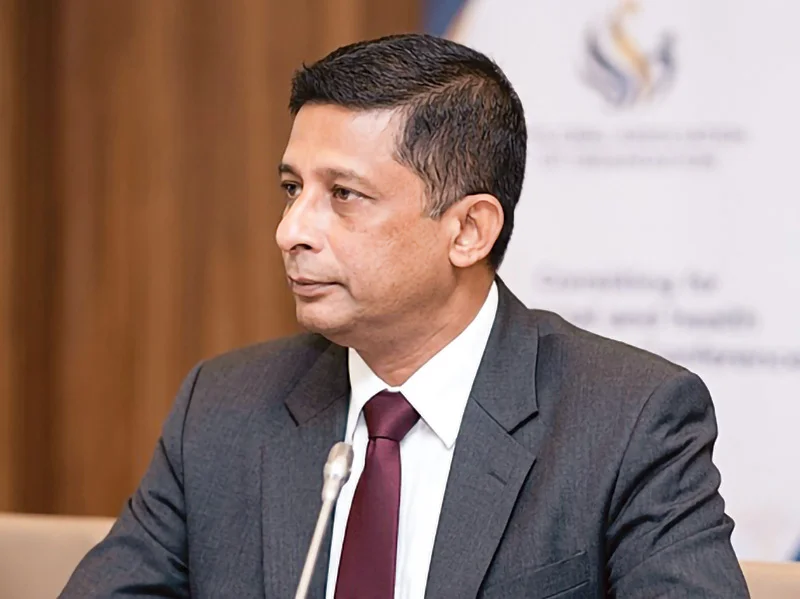
The UNP has suggested that a parliamentary delegation visit Maj. Gen. (retd.) Suresh Sallay to take stock of the situation.
The UNP has said that such a step will be appropriate as ill-treatment of the one-time State Intelligence Chief, arrested under the Prevention of Terrorism Act (PTA), in connection with the Easter Sunday carnage, has received the attention of the public here as well as the international community.
“The issue today is not whether he is involved in or responsible for the allegations being charged against him. The issue today is how an arrested person is being treated,” the UNP declared.
The text of the statement: “Former Chief of State Intelligence Major General Sallay has been arrested and is currently admitted to the Colombo National Hospital due to his health condition.
Major General Sallay’s wife and son have now publicly disclosed the facts regarding his medical condition. Based on the details they have revealed, it can be concluded that the health condition of the former Chief of State Intelligence is not good.
After working in Malaysia, Major General Suresh Sallay served the country as the Chief of State Intelligence during the administrations of former Presidents’ Gotabaya Rajapaksa and Ranil Wickremesinghe. During that period, at no time were allegations levelled against Mr. Sallay like the ones being levelled today.
The issue today is not whether he is involved in or responsible for the allegations being now levelled against him. The issue today is how an arrested person is being treated.
According to the information received since the hospitalisation of Major General Sallay, it indicates that he has been treated in the most inhumane manner. The torture and inhuman treatment of an arrested person is completely contrary to Article 11 of the Constitution. It is also a violation of the International Covenant on Civil and Political Rights (ICCPR) of 1966.
An arrested person should be treated in a manner that is consistent with Article 11 of the Constitution and the above international covenant. Otherwise, the problem will not end here. This incident has already reached the attention of the international community.
Section 9(b)(1) of the PTA states that it is the responsibility of the Magistrate “to ensure that the suspect is entitled to the protection provided by the Convention for the Prevention of Torture and Other Cruel, Inhuman or Degrading Treatment or Punishment, No. 22 of 1994.”
Accordingly, any interrogation conducted in violation of the Act and the Constitution can be considered as Contempt of Court and legal liability will be incurred in this regard.
The United National Party strongly condemns the treatment of Major General Sallay in violation of the Constitution and international conventions.
Since this is an issue that has reached the attention of the international community, it is appropriate to send a Parliamentary team to examine the treatment of Sallay.
We also see the dangerous situation here. If the treatment of Sallay is normalised, the same situation will be applicable to opposition groups as well. It is a very dangerous trend.
At a time when the NPP government is making a huge effort to control the Buddhist religion, this trend may also be implemented against Buddhist monks. All these situations have received the close attention of the United National Party.
The UNP states that any action taken against Major General Suresh Sallay must be in accordance with the Constitution and international conventions. The United National Party is very vigilant about the way the government is acting in this regard.”


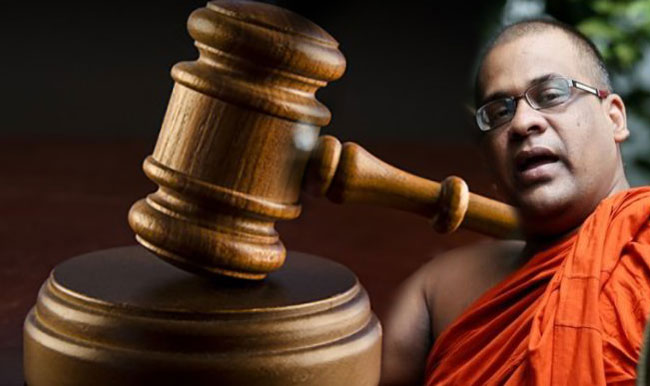
Ven. Galagoda Aththe Gnanasara Thero was not at his temple in Rajagiriya when prison officials visited the premises yesterday to take steps following the Supreme Court ruling that nullified the presidential pardon granted to him, police sources said.
Prison officials who visited the temple on Nawala Road, Rajagiriya, were reportedly informed by those present that the Thero’s whereabouts were unknown. The development comes a day after the Supreme Court declared former President Maithripala Sirisena’s 2019 pardon of Gnanasara Thero null and void.
The three-member Supreme Court bench comprising Justices Janak De Silva, Dr. Sobhitha Rajakaruna and Sampath B. Abayakoon held that the pardon was arbitrary, violated the public trust and principles of natural justice, and was made beyond the proper exercise of the President’s constitutional discretion.
The case arose from Gnanasara Thero’s conduct at the Homagama Magistrate’s Court in January 2016 during proceedings relating to the disappearance of journalist and political cartoonist Prageeth Eknaligoda.
The Court of Appeal convicted him on four counts of contempt of court in 2018 and imposed concurrent prison terms amounting to six years. He had served about nine months when Sirisena granted him a presidential pardon on May 23, 2019.
The Supreme Court found that although Article 34 empowers the President to grant pardons, that power is held in trust for the people and is subject to constitutional limitations and judicial review. The Court concluded that Sirisena had effectively acted on the recommendation of the Additional Secretary (Legal) without demonstrating that he had independently considered the relevant material.
Justice De Silva held that the pardon was “arbitrary”, violated public trust and the rules of natural justice, and was ultra vires the President’s powers. The Court consequently found that the decision violated the fundamental right to equality guaranteed by Article 12(1) of the Constitution.
The ruling effectively restores the legal position under the original conviction, leaving Gnanasara Thero without the benefit of the 2019 pardon. The Supreme Court also clarified that a pardon does not erase a conviction or sentence, but merely relieves an offender from serving the sentence to the extent specified in the pardon.
Gnanasara Thero, the General Secretary of the Bodu Bala Sena, had been convicted over his conduct during proceedings concerning the disappearance of Eknaligoda, who went missing in January 2010 and has not been located.
Sandhya Eknaligoda, Prageeth Eknaligoda’s wife, was among those who challenged the presidential pardon before the Supreme Court, alongside the Centre for Policy Alternatives and its Executive Director Dr. Paikiasothy Saravanamuttu.
The detailed account of the judgment indicates that the Court’s ruling primarily nullified the pardon and restored the legal effect of the original sentence, with the implementation of the sentence falling to the relevant authorities.
Police sources said that the Supreme Court, however, did not permanently close the door on executive clemency. It held that a future President could grant Gnanasara Thero another pardon, provided the power is exercised lawfully and after proper consideration of all relevant material.
The Supreme Court has so far overturned three presidential pardons granted to two former Presidents. In January 2024, the Court declared former President Gotabaya Rajapaksa’s pardon of former MP Duminda Silva unlawful and invalid. In June 2024, it invalidated two pardons granted by former President Maithripala Sirisena to Royal Park murder convict Jude Shramantha Anthony Jayamaha — the first in May 2016, which commuted his death sentence to life imprisonment, and the second in October 2019, which released him from prison. Jayamaha, who was convicted of the murder of 19-year-old Yvonne Johnson, remains at large. Most recently, on September 10, 2026, the Supreme Court declared Sirisena’s 2019 pardon of Ven. Galagoda Aththe Gnanasara Thero null and void, ruling that it was arbitrary and inconsistent with the Constitution.

Parliament is scheduled to debate the Twenty-Second Amendment to the Constitution Bill and the Judicature (Amendment) Bill on September 24 and 25, subject to the Speaker’s announcement following the delivery of the Supreme Court determination on petitions filed against the Bills.
The programme for the Parliamentary Week from September 22 to 25 was decided at a meeting of the Committee on Parliamentary Business held on Thursday (10) under the chairmanship of Speaker Dr. Jagath Wickramaratne.
On each sitting day, Parliamentary Business under Standing Orders 22(1) to 22(6) will be taken up from 9.30 am to 10 am, followed by Questions for Oral Answers from 10 am to 11 am Questions under Standing Order 27(2) will be taken up from 11 am to 11.30 am.
On Tuesday (22), the Orders published in Extraordinary Gazette No. 2497/37 under the Petroleum Resources Act and the Promotion of Export Agriculture (Amendment) Bill will be debated from 11.30 am to 5 pm.
The Tredso Development Foundation (Incorporation) Bill, a Private Member’s Bill, will then be taken up for Second Reading before being referred to the Legislative Standing Committee.
An Opposition motion at the Adjournment Time will follow.
On Wednesday (23), the Chartered Institute of Media Professionals of Sri Lanka Bill will be debated from 11.30 am to 5 pm, followed by Questions at the Adjournment Time.
The Second Reading debate on the 22nd Amendment Bill and the Judicature (Amendment) Bill is scheduled for 11.30 am to 7 pm on Thursday (24) and Friday (25).

Two children aged 11 and 17 were mistakenly killed and their 55-year-old father injured in an early morning hand grenade attack on Sirisangabo Mawatha on Friday. Police investigations later revealed that the attackers targeted the wrong house during an ongoing underworld clash.
Three police teams have been deployed to investigate the attack, which occurred at around 3 am.
According to police, a man who arrived near the house in a three-wheeler knocked on the front door before throwing a grenade into the premises and fleeing.
The victims were identified as 17-year-old Kasun Rashmika and 11-year-old Duminda Gihan. Their 56-year-old father, Nalin Thusantha Perera, was seriously injured and admitted to the Kalubowila Teaching Hospital.
Police said the injured man’s brother was allegedly a close associate of a drug trafficker known as ‘Sando’ and had also been accused of involvement in drug trafficking.
The brother lives in a house adjoining the one targeted in the attack, and police suspect the grenade may have been thrown at the wrong house.
Police are also investigating information that the attack was allegedly carried out at the direction of several overseas-based drug traffickers, identified as Pandithage Shantha Kumara alias ‘Kos Malli’, Samantha Perera alias ‘Chuwa Samantha’, ‘Kudu Avishka’ and ‘I.D.’
Police said the attack was believed to be linked to an ongoing conflict between two underworld factions, which have targeted each other’s associates in shootings and grenade attacks. More than 20 people have reportedly been killed in such attacks.
Security agencies are also investigating alleged links between one faction and overseas-based criminals including Kanjipani Imran, Unakuruwe Shantha, Dubai Gagana and Handaya.
Security agencies have also received information that overseas-based criminals identified as Kanjipani Imran, Unakuruwe Shantha, Dubai Gagana and Handaya are allegedly behind the supply of firearms and drugs to the faction associated with Kos Malli and Chuwa Samantha.

Death toll from Philippines ferry fire rises to 76, with more still missing

Anthropic boss Dario Amodei calls for AI development to slow down

It’s spin vs spin as India and Sri Lanka battle for Asia Cup title

Atmospheric conditions are favorable for afternoon thundershowers in most parts of the Island today [13]

Gnanasara Thero absconding after SC ruling

House to debate 22A, Judicature Bill next week

‘Dates have the highest sugar content to fight Coronavirus’

Sunday Island 27 December – Headlines

#SundayIsland 17th December – Headlines

Sunday Island – 28th March

Sunday Island Headlines – 21 March

Sunday Island – 21st February – Headlines
-

 Sports2 days ago
DDS set to lose Test captaincy
-

 Features6 days ago
After the parade: What a traffic OIC’s walk-out tells us
-

 Editorial6 days ago
Arrests as theatre
-
 News5 days ago
Thailand shuts door on undesirables from Sri Lanka
-

 Latest News6 days ago
Harshitha’s composed knock seals Sri Lanka’s semi-final berth
-

 News6 days ago
‘Choka Malli’ slips out of country before travel ban
-
 Business5 days ago
CEB successor company breaks into top three in competitive BESS tender
-

 News2 days ago
Sri Lanka faces new grid challenge as rooftop solar surges: former CEB GM