
News
UNP-SJB merger imperative, cannot be delayed under any circumstances-Ranil loyalist


‘Our fate shouldn’t depend on disastrous leadership tussle’
By Shamindra Ferdinando
Former parliamentarian and UNP working committee member Ashu Marasinghe yesterday (18) said that the party would be totally eliminated unless the current leadership swiftly reached a consensus with the main Opposition, the SJB.
“We are in such a pathetic situation, immediate amalgamation of the UNP and the SJB is required,” Marasinghe said, urging both UNP leader Ranil Wickremesinghe and SJB leader Sajith Premadasa to take a step back.
In a brief interview with The Island, the ex-MP declared that a section of the decision-making body pushed for merger of the two parties ahead of the general election but was thwarted by a small but influential group consisting of former parliamentarians.
Had Wickremesinghe listened to us, the party could have averted an unprecedented debacle at the general election, theWickremesinghe loyalist said. The dejected politician stressed that the crux of the matter in the run up to both the presidential elections held on Sept. 21 and the general election on Nov. 14 had been whether the UNP and SJB should contest under the ‘elephant’ symbol.
A section of the UNP, in early 2020, secured the Election Commission’s recognition as the SJB.
But, unfortunately, both leaderships had failed to comprehend what Marasinghe called developing ground realities and relentlessly pursued irrational strategies, he said, disclosing how he personally tried to convince the party leader to contest the general election under the ‘elephant’ symbol. Responding to another query, Marasinghe said that former parliamentarians Akila Viraj Kariyawasam, Navin Dissanayake, Rosy Senanayake and Harin Fernando, too, pushed for the ‘elephant’ symbol.
Marasinghe entered Parliament on the UNP National List at the 2015 general election. He contested the 2020 general unsuccessfully. The UNP that obtained 106 seats at the 2015 general election was reduced to just one National List seat at the following election in 2020.
“We had that particular discussion at the Flower Road Office of the leader. However, the group opposed to our proposal succeeded in convincing Wickremesinghe,” Marasinghe said. Pointing out that Wickremesinghe had been able to secure nearly 2.3 mn votes at the presidential and was placed third in that contest, Marasinghe said they could obtain just 500,000 a couple of weeks later. The combined UNP-rebel Pohottuwa faction had been reduced to just five MPs whereas the SJB secured 40 seats though their tally at the previous general election was 54.
The NPP achieved the unthinkable 159 seats – the first 2/3 majority under the PR system that had been introduced in 1989, he said.
Having failed to convince the leader, Marasinghe decided against contesting the general election. “Of course, I exercised my franchise in the Colombo district,” Marasinghe said had they contested under the ‘elephant’ symbol the party could have secured at least one seat each from all electoral districts, in addition to two to three National List slots.
Declaring that they could have obtained two seats in the Gampaha district, the ex-parliamentarian said during the general election campaign not only in Gampaha but in other areas as well, UNPers warned that their support would depend on the merger of the UNP with the SJB or the party fielding candidates under the ‘elephant’ symbol. “I brought this situation to the notice of the party leader, warning him of dire consequences of ignoring stark warning. But, Wickremesinghe didn’t relent,” Marasinghe said.
Acknowledging that the National People’s Power (NPP), under President Anura Kumara Dissanayake’s leadership, had been destined to win the general election comfortably, Marasinghe asserted, however the NPP could have been deprived of the unprecedented 2/3 majority if they contested under the ‘elephant’ symbol instead of the ‘gas cylinder’ of the New Democratic Front (NDF).
The NDF previously had a ‘swan’ symbol and changed it to the ‘gas cylinder’ at the last moment to contest this year’s general election. Field Marshal Fonseka, Maithripala Sirisena and Sajith Premadasa contested the 2010, 2015 and 2019 presidential election, respectively, on the NDF ticket.
At the 2024 presidential election, the SJB leader polled 4.3 mn votes and Wickremeinghe nearly 2.3, therefore they had jointly obtained well over 6 mn votes whereas Dissanayake managed to get only 5.6 mn, Marasinghe said. That should have influenced the UNP and SJB to reach agreement on a common front against the NPP but a section of the party continued to play an agenda of their own much to the disappointment of supporters.
The SJB’s presidential election tally dropped from 4.3 mn to 1.9 mn and Wickremesinghe from 2.3 mn to 500,000 because genuine UNPers hated both parties for their inflexible stand, Marasinghe said. He found fault with former ministers Sagala Ratnayake, Vajira Abeywardena and Manusha Nanayakkara and ex-MP Saman Ratnapriya for not backing desperate efforts to contest under the ‘elephant’ symbol.
The Ceylon Workers Congress (CWC) won a seat in the Nuwara Eliya district on the UNP ticket, Marasinghe said. “The CWC picked our symbol. Thanks to their decision, there is one UNP MP in the new Parliament,” Marasinghe said. The UNP leadership couldn’t absolve itself of the responsibility for the despondent situation the party was in, Amarasinghe said.
Thanking the SLPP party for choosing Wickremesinghe as the President in the wake of ‘Aragalaya,’ and declaration of bankruptcy status, Marasinghe said that 2.3 mn people voted for him because they really appreciated his presidency. “If not for Wickremesinghe, the country could have gone up in flames. That is the truth. The NPP, too, knows that,” he said.
But, Wickremesinghe couldn’t have rightfully earned a fresh presidential term only because the UNP and SJB failed to reach consensus on how to contest the presidential poll, he said. The former parliamentarian claimed that the total number of voters who hadn’t exercised their franchise at the general election increased to 5.3 mn from 3.5 mn primarily due to sizable drop in the support for the UNP and the SJB. “We lost 1.7 mn votes whereas the SJB lost 2.4 mn within the space of just weeks. In a way, we should be grateful that they gave us altogether 46 seats (40+5+ CWC 1 in Nuwara Eliya.”
The NPP benefited immensely from ‘Aragalaya.’ In fact, ‘Aragalaya’ gave them an opportunity to harness anti-Pohottuwa votes though the UNP, too, played a significant role throughout the campaign to drive President Gotabaya Rajapaksa out of office.
When asked whether he was ready to face the consequences for being critical of the top leadership, Marasinghe said that the party was paying a huge price for ill-fated decisions. The NPP proved in style that it could work with minorities without being overwhelmed by them.
Securing 11 seats from Northern and Eastern electoral districts, including Jaffna, underscored the significance of their stand, Marasinghe said. There had been instances when we went to the extent of discussing financial inducements for some, the former MP said, adding that the UNP could afford to take remedial measures before the Election Commission announced Local Government polls early next year followed by the long delayed Provincial Council polls.
Marasinghe insisted that the fate of their party shouldn’t be decided on a leadership tussle, adding that Wickremesinghe shouldn’t have harped on the NPP fielding inexperienced candidates. The UNP leader’s bid to portray them as novice in politics prompted the electorate to ponder what the experienced set of politicians had done.
Marasinghe warned his colleagues they should be prepared to continue in the Opposition perhaps for 10 years if President Dissanayake prudently managed the economy in line with the Economic Transformation Act adopted by the last Parliament. “That is the reality we have to face.”


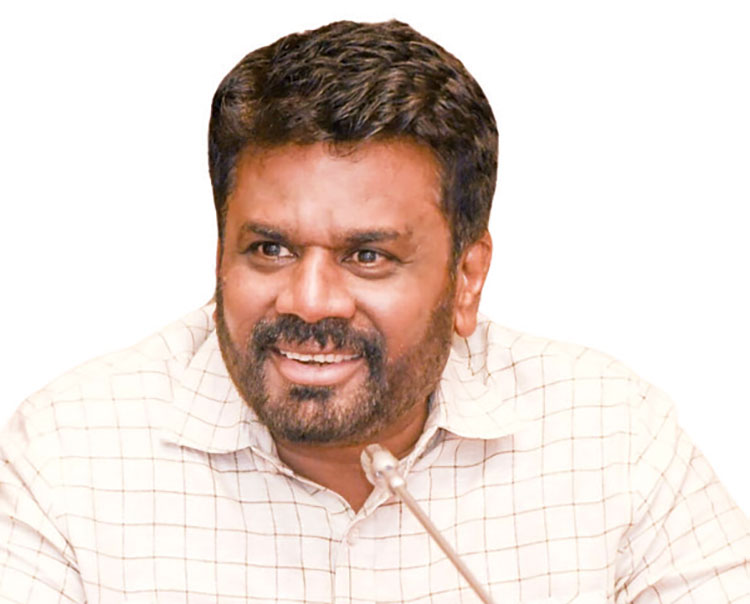
The Presidential Secretariat (PS) yesterday said that prison regulations concerning Buddhist monks serving prison sentences were expected to be adopted within the next two weeks.
The PS said: “Once they come into effect, arrangements will be made for Buddhist monks to be taken outside prison in their robes, based on the recommendation of the relevant Nikaya or chapter.”
The process to amend prison regulations was initiated on 08 October following discussions between President Anura Kumara Dissanayake and the Maha Sangha. The President called the meeting amidst controversy over producing General Secretary of Bodu Bala Sena (BBS) Ven. Galagodaaththe Gnanasara in civilian attire in court.
A special five-member Committee was in the process of studying the current regulations and standing orders under the Prisons Ordinance, the PS said.
The Committee is chaired by Prince Senadheera, Secretary to the Ministry of Buddhasasana, Religious and Cultural Affairs. Its other members are Piyumanthi Peiris, Additional Secretary to the Ministry of Justice, Wasantha Ariyaratne, Additional Secretary to the Ministry of Public Administration, R. M. G. Senaratne, Commissioner-General of Buddhist Affairs, and A.C. Gajanayake, Commissioner-General of Prisons.
The first meeting of the special Committee was held at the Presidential Secretariat on the 9th, chaired by Prince Senadheera. Attorney-at-Law Harshana Nanayakkara, Minister of Justice and National Integration, provided the necessary policy guidance for the Committee’s work.
The proposals concerning Buddhist monks would be presented to the Maha Sangha by the middle of next week to obtain their views and recommendations before their implementation, PS stated.

The Communist Party of Sri Lanka (CPSL) has alleged that the ruling UNP, in a ridiculous bid to whitewash illegal US sanctions on Iranian oil carriers stranded off Sri Lanka, has taken on itself the blame for refusing to supply humanitarian aid to the trapped crews of the oil tankers.
The text of the statement issued by Dr. G. Weerasinghe,
General Secretary, CPSL: “The Communist Party of Sri Lanka condemns the attempts by the USA to prevent essential supplies of food and water to the 19-20 Iranian oil tankers stranded off the coast, which are running short of food, fuel, and fresh water. It urges the Government of Sri Lanka to face up to the criminal actions of the US Government and do its duty under international humanitarian law.
On 30 September 2026, the Wall Street Journal reported that US officials had threatened Sri Lanka with sanctions if it continued supplying the tankers. These tankers (stranded about 24 km off Sri Lanka, within the Exclusive Economic Zone) which already discharged their cargoes, are empty and unable to return to Iran owing to the illegal war being waged against that country by the USA and Israel.
In response to this report, on 4 October, Foreign Minister Vijitha Herath denied that Washington put pressure on the Government of Sri Lanka which, he claimed, always abides by international maritime law. However, he clarified that the Government would enforce US sanctions.
A US Embassy spokesman had earlier stated that Washington is working with allies to cut off “illicit Iranian revenue,” warning that supplying fuel, food, or provisions to sanctioned vessels could expose companies and individuals to US sanctions, including civil or criminal penalties.
Furthermore, from 9-11 September, the US Embassy in Colombo carried out a three-day maritime sanctions compliance workshop. Officers of the Sri Lanka Navy and Coastguard, as well as officials of the Ministry of Defence, Central Bank, Ports Authority and Merchant Shipping Secretariat, participated in this workshop. The officials were warned that any services (including fuel, food, or water) rendered to US-sanctioned vessels, such as the Iranian-linked tankers stranded off Sri Lanka’s coast, could expose companies and individuals to secondary sanctions, civil penalties, or criminal liability.
In fact, it is actions of the USA which are illicit. The US-imposed unilateral and secondary sanctions violate international law, sovereign equality, and the principle of non-intervention. Furthermore, the unprovoked US-Israeli aggression against Iran itself, which had shown no belligerent intent, is illegal in international law. Participation of government officers in the workshop itself is controversial.
According to unofficial reports, Sri Lanka’s national security establishment objected to the demands made by US officials and urged the government to lodge a protest with Washington, pointing out that under UNCLOS Article 98, SOLAS 1974, and the SAR Convention 1979, Sri Lanka is obligated to assist the crews.
However, the response of the National People’s Power (NPP) regime has been to attempt to whitewash the illegal actions of the USA and to take on itself the blame for refusing to supply humanitarian aid to the trapped crews of the oil tankers.
The pusillanimous behaviour of the NPP regime rips aside any pretence that it is in any way progressive or patriotic. Together with its major constituent, the Janatha Vimukthi Peramuna (JVP), it stands exposed as the handmaiden of US President Donald Trump’s reckless, warlike and imperialist foreign policy establishment. It begs the question whether the Government has signed secret war-related deals with the USA and thereby ditched Sri Lanka’s 70-year history of non-alignment.
The Communist Party of Sri Lanka, therefore, condemns these illegal attempts by the USA to prevent Sri Lanka from carrying out its humanitarian duty. It calls upon the Government of Sri Lanka to abide by international humanitarian law, work-out suitable strategies and to supply the stranded crews with essential supplies, including food and water. It also calls upon the Government to reveal any secret deals it has entered with the USA.”
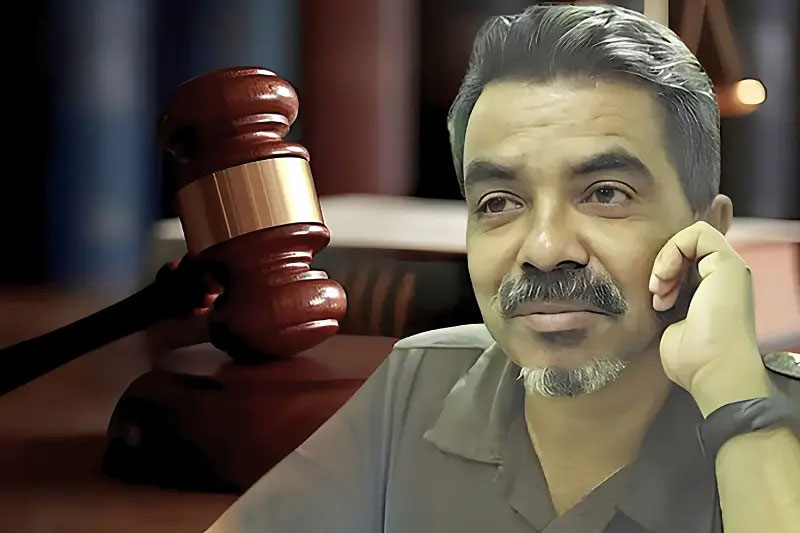
An ex-LTTE cadre Sumathipala Suresh Kumar, alias Thavendran ‘Murali’, has told a three-member bench of the Colombo High Court, hearing the disappearance of media personality Prageeth Ekneligoda, that during the war they discussed plans to assassinate President Mahinda Rajapaksa and a group of government people. The alleged meeting took place in Habarana.
The bench consisted of A.G.U.S. N. K. Seneviratne (Chairperson), Dr. Nalin Hewawasam and Lakmali Hewawasam.Kumar said so giving evidence as the fourth witness on behalf of first, second and sixth accused in this case.
Ekneligoda disappeared on the eve of 2010 January 26 presidential election.
Kumar told court that Ekneligoda proposed to fire a missile at an aircraft carrying President Rajapaksa and other top people. There had been another person, identified as Nadan, there.
Asked by the prosecution whether he served as a leader of LTTE intelligence at the time he met Ekneligoda, Kumar said that he was a prisoner at that time. The witness claimed that he had gone with the Army and it was his first visit to that place where the meeting took place.
When the prosecution proposed that what he said was not true, Kumar denied that.
The nine accused are Army officers and men, including Lieutenant Colonel Shammi Arjun Kumararatne. The others are R.M.P.K. Rajapaksa alias Nathan, W.V. Priyantha Dilanjan Upasena alias Suresh, Seneviratne Mudiyanselage Ravindra Rupasena alias Ranji, Yapa Mudiyanselage Chaminda Kumara Abeyratne, Seneviratne Mudiyanselage Kanishka Gunaratne, Aiyasami Balasubramaniyam, Dangaha Gamaralage Tharanga Prasad Gamage and T.E.R. Peiris.
The fourth witness surrendered to the Army in May 2009 and during investigations it transpired that he was used by Military Intelligence to contact Ekneligoda in a bid to ascertain his intention during the presidential polls campaign.

Showers above 75 mm are likely at some places in the Western, Sabaragamuwa, Central, Southern, Uva and North-Western provinces and in Anuradhapura and Mannar districts.

New prison regulations for monks serving jail terms soon: President’s Office

CP alleges NPP has taken the blame for illegal US sanctions on Iranian vessels

Ex-Tiger witness claims Ekneligoda proposed to fire missile at MR’s plane

Chandrasekaran welcomes Indian stand of Katchatheevu

Alleged killer of couple apprehended

‘Dates have the highest sugar content to fight Coronavirus’

Sunday Island 27 December – Headlines

#SundayIsland 17th December – Headlines

Sunday Island – 28th March

Sunday Island Headlines – 21 March

Sunday Island – 21st February – Headlines
-

 Features4 days ago
The Sri Lankan who made Scottish history
-

 Features6 days ago
Preventing grievances from becoming communal
-

 Sports4 days ago
Nissanka absence opens door for Sri Lanka’s young guns
-

 News5 days ago
Gnansara Thera to be assigned to prison printing section: Officials
-

 News3 days ago
NDB fraud Rs 60mn more than reported
-

 News3 days ago
Removing monk’s robes matter for Sangha to decide: Mahanayake Theras
-

 Features4 days ago
Future of Sri Lanka’s state university system: Should it be shut down and reopened?
-
 News5 days ago
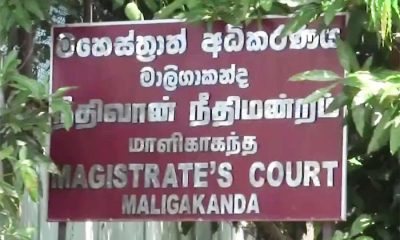
OIC of FCID summoned before Maligakanda Magistrate