
News
UN Commemorates Vesak

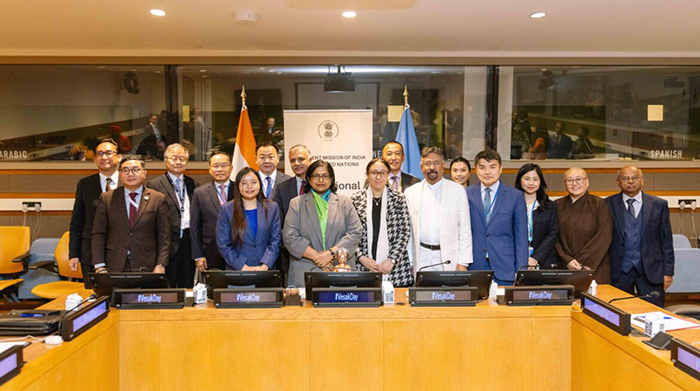
The Permanent Mission of India, with the participation of the Permanent Missions of Bhutan, Cambodia, Japan, Lao PDR, Mongolia, Nepal, Republic of Korea, Sri Lanka, Thailand, and Viet Nam organized a panel discussion on April 30 in the UN to commemorate the International Day of Vesak, a news release from the Indian mission in New York said.
The discussion focused on the theme “Leveraging Buddhist Heritage for Strengthening Global Peace and Cooperation” – deliberating on how the shared Buddhist heritage in the region can help shape international cooperation in today’s era of discord and conflict.
In her welcome remarks, Ambassador Yojna Patel, Charge D’Affaires, recalled the deep civilizational bond among people from the Indian Ocean to the Indo-Pacific through shared traditions of Buddhist art and culture, architecture, flow of ideas and values.
She outlined India’s efforts to revitalize and strengthen the ties through development of the Buddhist tourism circuit, support and collaboration to preserve and restore Buddhist heritage sites, monasteries, conservation of archaeological sites, and pilgrimage infrastructure in neighbouring partner countries leading to an organic evolution of a transnational spiritual corridor.
Vice Chancellor of Nalanda University, Prof. Sachin Chaturvedi delivered the keynote address. By highlighting interdependence and collective welfare as central tenets of Buddhism that are relevant to current global governance, he called for a shift from
sectoral and quantitative development models to integrated, human-centric approaches to achieve Sustainable Development Goals. He linked Buddhist philosophy to ethical development, sustainability, and global systems thinking.
Speakers from participating countries highlighted how Buddhist values remain deeply relevant in today’s complex global landscape. Member States highlighted themes of compassion, moderation and dialogue drawing on their own traditions — from Bhutan’s Gross National Happiness framework to Sri Lanka’s emphasis on peaceful conflict resolution.
Japan, Thailand and Viet Nam stressed the importance of human dignity, while the Republic of Korea highlighted Buddhism’s resonance among younger generations. Mongolia, Lao PDR and Cambodia reaffirmed the values and principles of the Buddha, while Nepal emphasized on “Middle Path” as a framework for moderation and peaceful co-existence.
Collectively, the discussions reaffirmed that Buddhist heritage can serve as a unifying force for fostering trust, people-to-people connections, and cooperative approaches to peace and development.
The United Nations General Assembly adopted resolution 54/115 in 1999, officially recognizing the International Day of Vesak on the first full moon in May every year. This day is commemorated annually at the UN Headquarters to recall the teachings of Lord Buddha and his message of compassion, peace and goodwill.


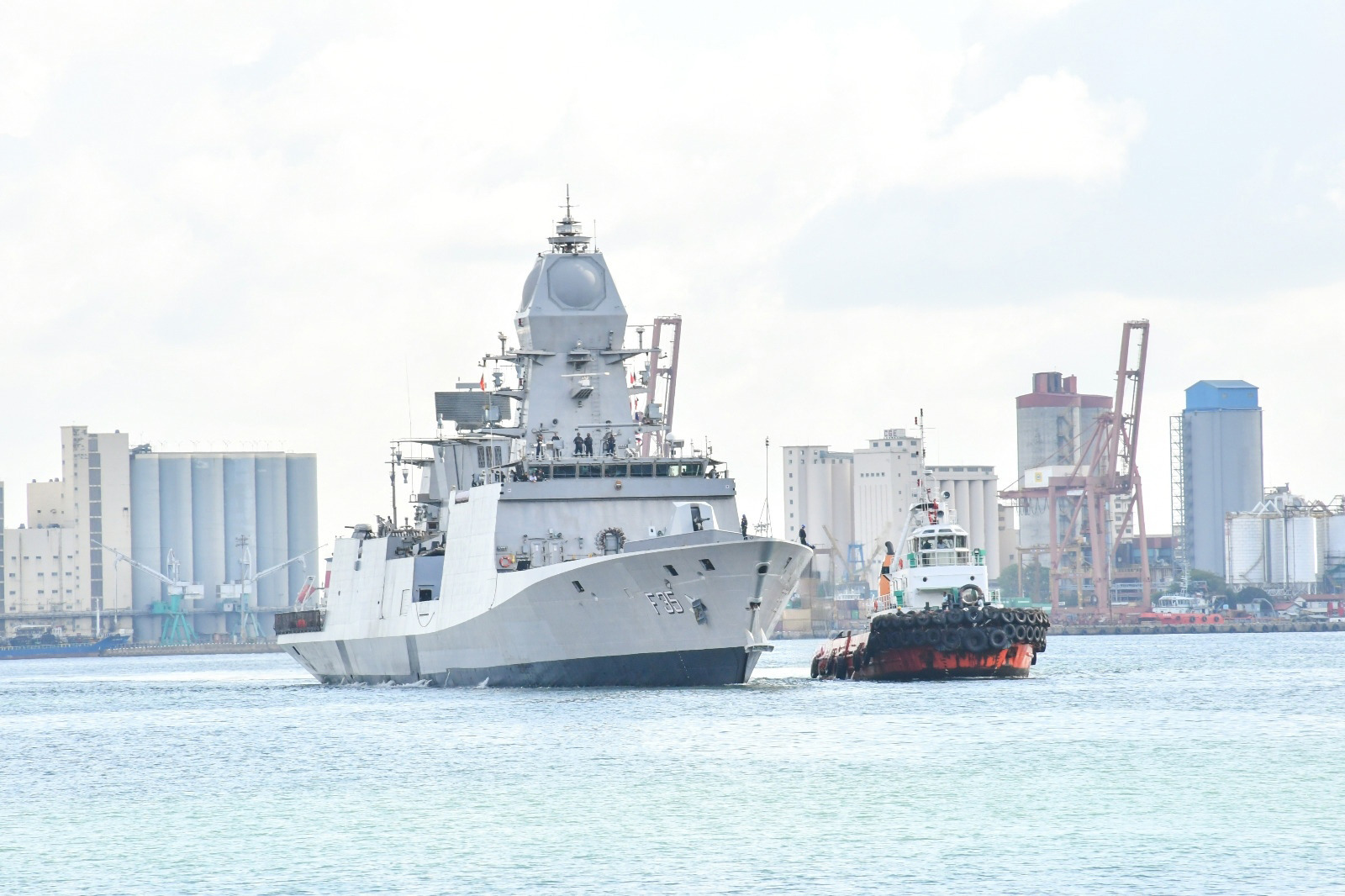
The Indian Naval Ship (INS) Udaygiri arrived at the Port of Colombo on an official visit today, 8 September 2026, where it was received by the Sri Lanka Navy in accordance with time-
honoured naval traditions.
INS Udaygiri is a 149.02m long Frigate, Commanded by Captain Vikas Sood. Meanwhile, the Commanding Officer of the visiting ship is scheduled to call on Commander Western Naval
Area, Rear Admiral Harsha De Silva at the Western Naval Command Headquarters.
Captain Sood served as the Defence Adviser at the Indian High Commission in Sri Lanka from July 2020 to October 2023.
During their stay in the island, the crew of INS Udaygiri will participate in several goodwill events organized by the Sri Lanka Navy to enhance camaraderie between the two forces.
The visiting personnel are also scheduled to visit prominent tourist and cultural locations across the island.
Additionally, Sri Lanka Navy personnel are expected to visit the ship for capability observation and knowledge sharing, and will conduct onboard training during its stay.

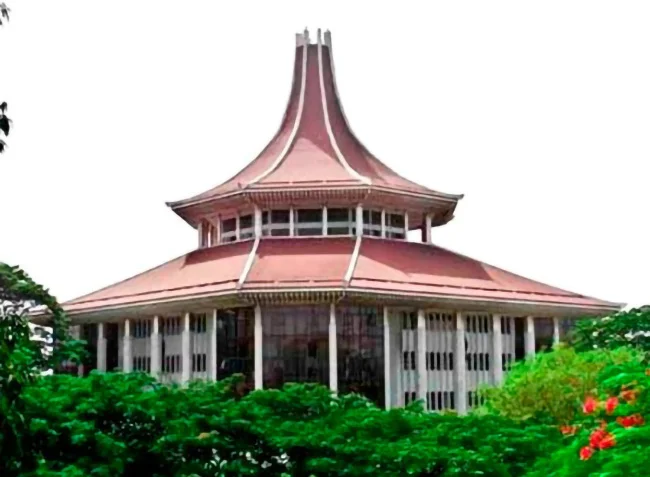
The Supreme Court has been petitioned seeking an explanation as to how eight petitions filed against the 22nd Amendment to the Constitution were not listed for hearing . Two of the petitioners, namely Dias Bandaralage Ajith Shantha Kumara Jayathilaka and Gunathilakage Dakum Dulara Gunathilaka, have requested an opportunity to examine the official Registry and parliamentary records so that all material facts may be objectively established. They said that their petitions that had been registered by the Supreme Court should have been heard along with other petitions.
The Registrar of the Supreme Court, Secretary General of Parliament, Speaker and the Attorney General have been named as the respondents.
The five-member bench that heard the petitions consisted of Chief Justice P. Padman Surasena, Achala Wengappuli, J, Arjuna Obeyesekere, J, Sampath B. Abayakoon, J and K.M.G.H. Kulatunga, J.
The petitioners sought the explanation in the absence of any judicial order dismissing, rejecting, striking out, terminating or otherwise disposing the said petitions. They have requested the disclosure of the complete procedural history of the unlisted cases.
The second petitioner Gunathilaka has referred to a speech by Jaffna District Independent MP Ramanathan Archuna in Parliament, on 21 August, 2026, regarding X-Press Pearl, a container carrier that sank off the port of Colombo, and related matters.
They have sought leave to proceed under Articles 17 and 126 of the Constitution and asked for a full Bench of the Supreme Court, or the widest Bench, constitutionally permissible.
They also requested that the Chief Justice and Achala Wengappuli refrain from participating in the hearing and determination of their application, having regard to the objective-appearance issue arising from their prior constitutional and judicial participation in matters forming part of the factual subject matter now requiring examination.
Meanwhile, General Secretary of Vinivida Foundation, Nagananda Kodituwakku, has requested the Supreme Court Registrar not to proceed with the determination of 22nd Amendment process, pending the hearing of fundamental rights petition filed by Chairman of the Vinivida Foundation lawyer, Sugandhika Fernando, seeking a full bench, excluding Chief Justice Preethi Padman Surasena, to hear the petitions challenging the 22nd Amendment Bill. She also requested that the hearing be suspended immediately until the matter was fully heard and determined.
Among the respondents are Chief Justice Surasena, the first respondent, and Attorney General Parinda Ranasinghe. Justices Yasantha Kodagoda, Shiran Gooneratne, Achala Wengappuli and Priyantha Fernando.
(SF)
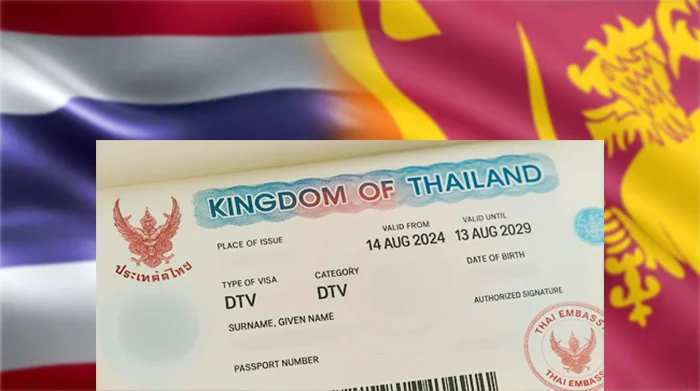
Sri Lankan passport holders travelling to Thailand wouldn’t be eligible for visa-free entry from 15 September, 2026, according to a new visa notice issued by the Royal Thai Embassy in Colombo.
Under the new measures, all Sri Lankan travellers will be required to obtain a Thai visa before departing for Thailand. Visa applications must be submitted online through Thailand’s official e-Visa system.
The Royal Thai Embassy in Colombo has also clarified that it will not accept visa applications submitted in person or in physical form.
According to the Embassy, tourist visa applications submitted by Sri Lankan passport holders are expected to take approximately 3–7 working days, calculated from the date on which all required documents have been duly completed and submitted.
Processing times for Non-Immigrant Visa and DTV (Destination Thailand Visa) applications may take longer.
Foreign nationals residing in Sri Lanka or the Maldives who hold valid work or residence permits may also require additional processing time.
The Embassy has cautioned applicants that it reserves the right to request additional documents or information when necessary. Applicants may also be asked to attend a visa interview on a case-by-case basis.
The new requirement represents a significant change for Sri Lankan travellers, who will need to complete the visa process before travelling to Thailand from September 15 onward.
The Embassy has urged applicants to rely only on its official communication channels for the latest visa requirements, procedures and updates.

Sandhu’s 6 for 7 seals Pakistan’s semi-final spot

INS Udaygiri makes port call in Colombo

Showers in the Uva, Central and Eastern provinces and in Polonnaruwa district

22A: Exclusion of 8 petitions questioned, action filed against SC Registrar, others

Thailand shuts door on undesirables from Sri Lanka

Expertise France and the EU launch media project to strengthen environmental journalism in Sri Lanka

‘Dates have the highest sugar content to fight Coronavirus’

Sunday Island 27 December – Headlines

#SundayIsland 17th December – Headlines

Sunday Island – 28th March

Sunday Island Headlines – 21 March

Sunday Island – 21st February – Headlines
-

 News5 days ago
Denied of promotion to SC despite vacancies, justice Gurusinghe retires
-

 Latest News6 days ago
Grade 5 scholarship exam results released
-

 News5 days ago
22A: SC urged to suspend hearing, appoint full bench
-

 Midweek Review6 days ago
The local and global dynamics of Sri Lanka’s 22nd Amendment
-

 News3 days ago
Namal remanded until Sept. 18 over Airbus deal investigation
-

 Latest News2 days ago
Tharanga creates history with Diamond League crown in Brussels
-
 News5 days ago
Govt. seeks NATO assistance
-

 News6 days ago
40 professional organisations and TU oppose proposed 22A