
News
UK visa applications for some nations, including Lanka, could be restricted: Report


Visa applications from nationalities, thought most likely to overstay and claim asylum in the UK, could be restricted under a new government crackdown, BBC said yesterday.
Under Home Office plans, first reported in the London Times, people from countries such as Pakistan, Nigeria and Sri Lanka may find it more difficult to come to the UK to work and study.
Ministers believe there is a particular problem with those who come to the UK legally on work or study visas and then lodge a claim for asylum – which if granted, would allow them to stay in the country permanently.
A Home Office spokesperson said: “Our upcoming Immigration White Paper will set out a comprehensive plan to restore order to our broken immigration system.”
It is not clear which nationalities are most likely to overstay their visas as the Home Office has not published statistics on exit checks for people on visas since 2020, due to a review into the accuracy of the figures.
Many exits from the UK can go unrecorded, meaning those without a departure record were not necessarily still in the country.
Prof. Jonathan Portes, a senior fellow at the academic think tank UK in a Changing Europe, said the impact that restricting visas would have on the number of asylum applications was “likely to be quite small”.
“I think the impact here is not designed primarily to be about numbers overall, it’s designed to be about reducing asylum claims which are perceived to be abusive,” he told BBC Radio 4’s Today programme.
“When you have someone who comes here ostensibly as a student and then switches quickly to the asylum route… that is an abuse of the system – the government is trying to reduce that.”
Latest Home Office figures show that more than 108,000 people claimed asylum in the UK last year – the highest level since records began in 1979.
In total, 10,542 Pakistani nationals claimed asylum – the most of any nationality. Some 2,862 Sri Lankan nationals and 2,841 Nigerian nationals claimed asylum in the same period.
Latest figures for 2023/24 also show there were 732,285 international students in the UK, with most coming from India (107,480) and China (98,400).
The number of UK work and study visas dropped in 2024, compared to the year before.
Since becoming Prime Minister last year, Sir Keir Starmer has promised to reduce both illegal and legal migration – but has previously declined to offer a net migration target, saying an “arbitrary cap” has had no impact in the past.
Labour’s plans to reduce migration include making it a criminal offence to endanger the lives of others at sea, to target small boat crossings, and cutting demand for overseas hires by developing training plans for sectors that are currently reliant on migrant workers.
Sir Keir has criticised the previous Conservative government, saying it failed to deliver lower net migration numbers “by design, not accident”.
Net migration – the number of people coming to the UK, minus the number leaving – hit a record 906,000 in the year to June 2023, and then fell to 728,000 in the year to June 2024.
New rules introduced by former Prime Minister Rishi Sunak in a bid to reduce migration levels appear to have contributed to the fall.
The previous Conservative government increased the minimum salary for skilled overseas workers wanting to come to the UK from £26,200 to £38,700 and banned care workers from bringing family dependents to the UK.
Labour was already under pressure to make changes to the immigration system – but that pressure may have grown after Reform UK’s successes in last week’s local elections.
Reform won 677 of around 1,600 seats contested on Thursday across a clutch of mainly Tory-held councils last contested in 2021.
In its general election manifesto, Reform said it would implement a freeze on non-essential immigration. Those with certain skills – for example in healthcare – would still be allowed to come to the UK.
Reacting to the results last week, Sir Keir said he shared the “sharp edge of fury” felt by voters leaning away from the major parties, arguing that it would spur him on to “go further and faster” in delivering Labour’s promised changes to immigration and public services.
Enver Solomon, Chief Executive of the Refugee Council, said that “some people on work or study visas may find their lives at risk because the political situation in their home country has changed”, adding that it was right they were “protected from harm and given a fair hearing in the asylum system”.
Plans to tackle overstaying were already being worked on before the local elections.
Full details of the government’s plans are due to be published in a new immigration white paper later in May.
A Home Office spokesperson said: “To tackle abuse by foreign nationals who arrive on work and study visas and go on to claim asylum, we are building intelligence on the profile of these individuals to identify them earlier and faster.
“We keep the visa system under constant review and will where we detect trends, which may undermine our immigration rules, we will not hesitate to take action.
“Under our plan for change, our upcoming Immigration White Paper will set out a comprehensive plan to restore order to our broken immigration system.”


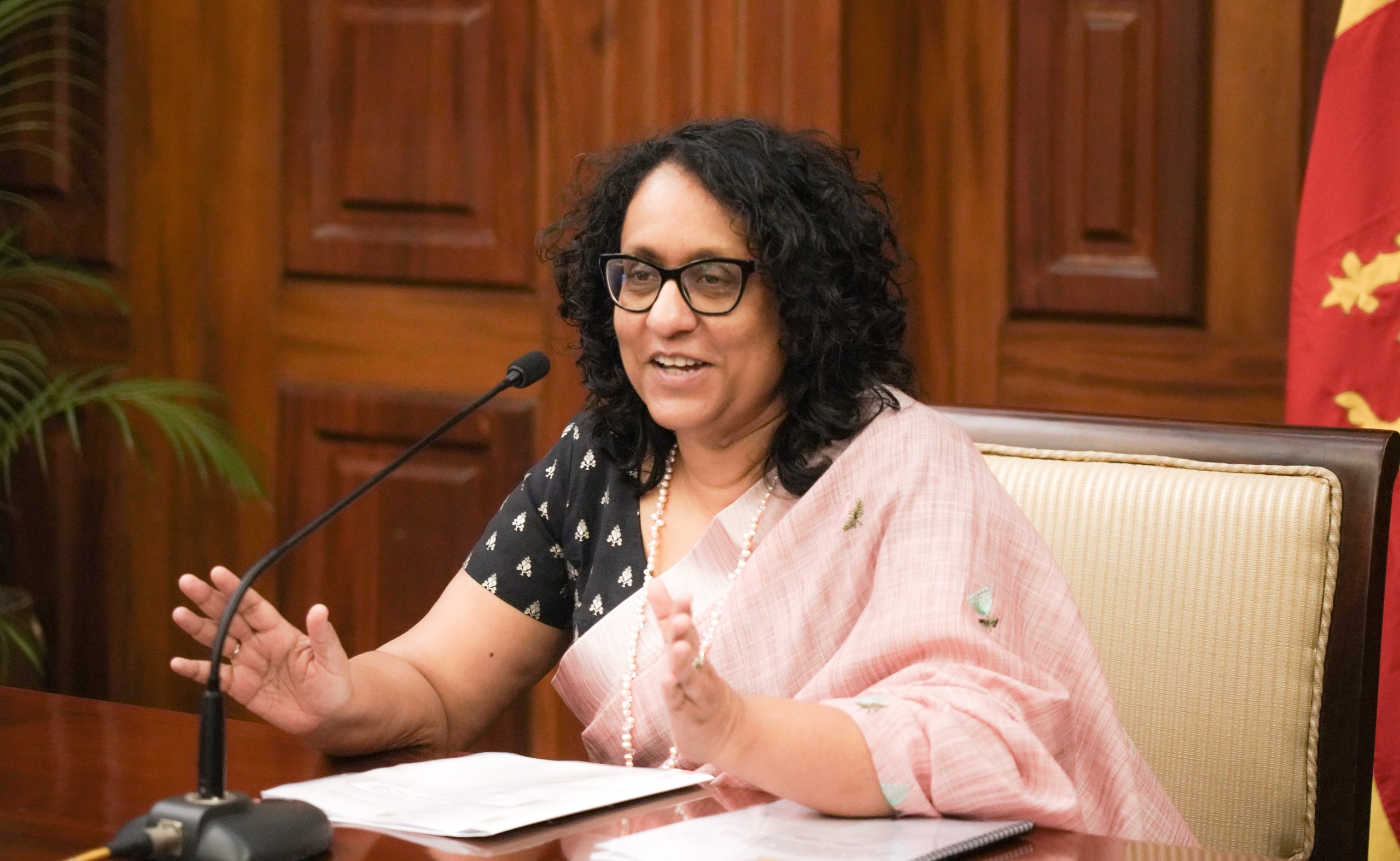
Prime Minister Dr. Harini Amarasuriya emphasized that addressing the drug issue in the country must be treated as a national priority, highlighting that it must deliver results at the ground level.
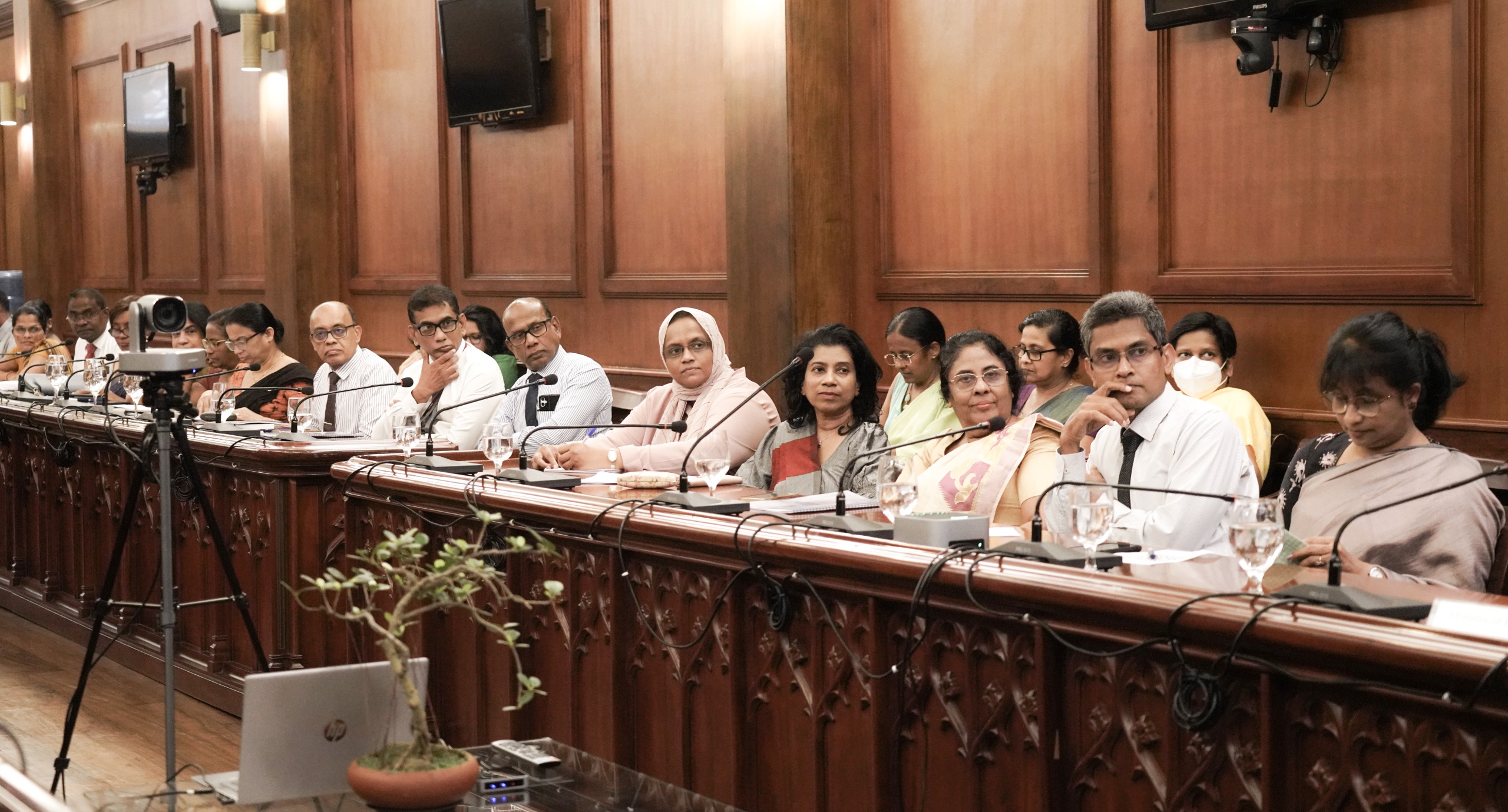
A meeting to brief the Prime Minister on the National Strategic Plan for the Management, Treatment and Rehabilitation of Persons with Substance Use Disorders (SUD) 2026–2030 was held with the participation of officials from the Ministry of Health and Mass Media and other key stakeholders on 13th of March at the Temple Trees.
The discussion focused on the proposed national strategy developed to address the growing health, social and economic challenges associated with substance use disorders in Sri Lanka. The strategic plan aims to strengthen prevention, treatment, rehabilitation and reintegration services through a coordinated and evidence-based national approach.
During the meeting, attention was drawn to existing gaps in early identification of substance use disorders, continuity of care, community-based follow-up and reintegration of recovering individuals into society. The plan proposes several key interventions, including strengthening screening and symptomatic treatment at primary healthcare and outpatient levels, improving hospital-based treatment and follow-up services, expanding residential rehabilitation facilities, and enhancing community-based rehabilitation and relapse prevention programmes.
Special emphasis has also been placed on providing targeted support for vulnerable groups, including children and adolescents, pregnant women, mothers with children and prison inmates.
Speaking on the importance of strengthening the national response to drug issues, the Prime Minister Dr. Harini Amarasuriya noted that the drug menace has evolved into a serious social crisis that threatens social stability and security of families and the nation as a whole highlighting that law enforcement and rehabilitation in this regard must be given equal priority.
The Prime Minister further underscored the importance of including public awareness initiatives and responsible media reporting as key components of the national strategy.
The meeting was attended by the Secretary to the Prime Minister Pradeep Saputhanthri, Secretary to the Ministry of Health Dr. Anil Jasinghe, officials from the Department of Prisons, Bureau of Rehabilitation, Sri Lanka Police Ministry of health, Ministry of Public Security and Parliamentary Affairs, Ministry of Justice and National Integration ,Ministry of Defense, Ministry of Education, Ministry of Women and Child Affairs and other relevant department and ministries.
[Prime minister’s Media Division]


The National Water Supply and Drainage Board (NWSDB) on Friday said the largest groundwater source discovered in Sri Lanka so far had been identified during tube-well drilling near the Pitabeddara Police Station.
Indrajith Gamage, geologist in charge of the Southern Province, said the source recorded a continuous flow of about 10,000 litres (10 cubic metres) per minute, marking the first instance in the country where a groundwater source of that magnitude had been found.
He noted that the previous largest groundwater source was discovered in the Madhu area, which recorded a flow of about 7,000 litres per minute.
According to the NWSDB, the tube well was drilled following geological studies of rock layers and the identification of underground water through fractures in rock strata using specialised technical instruments.
The Board said steps would be taken to distribute water from the newly discovered source to residents facing shortages in Pitabeddara, Morawaka and surrounding areas.

The Ceylon Chamber of Commerce has formally handed over its historical records to the National Archives Department, entrusting over a century of the nation’s commercial history to the country’s official custodians of heritage.
The archive, spanning from the CCC’s founding in 1839 to 1973, includes correspondence, meeting minutes, reports, ledgers, and publications that chronicle the development of trade, enterprise, and industry in Sri Lanka. Together, the records provide a rare and detailed account of the island’s economic evolution and the role of its business community in shaping national progress.

‘Gruesome’ war bets fuel calls for crackdown on prediction markets

Three more Iran football team members change minds over asylum

Trump urges UK and other nations to send warships to Strait of Hormuz

Addressing the drug issue in the country must be treated as a national priority – PM

Showers will occur at several places in the Western, Sabaragamuwa, Central, North-western and Uva provinces and in Galle, Matara, Mannar and Anuradhapura districts after 2.00 pm.

Lanka discovers largest groundwater source

‘Dates have the highest sugar content to fight Coronavirus’

Sunday Island 27 December – Headlines

#SundayIsland 17th December – Headlines

Sunday Island – 28th March

Sunday Island Headlines – 21 March

Sunday Island – 21st February – Headlines
-

 News6 days ago
Repatriation of Iranian naval personnel Sri Lanka’s call: Washington
-
 Features6 days ago
Winds of Change:Geopolitics at the crossroads of South and Southeast Asia
-

 News5 days ago
Prof. Dunusinghe warns Lanka at serious risk due to ME war
-

 Sports4 days ago
Royal start favourites in historic Battle of the Blues
-

 Sports3 days ago
The 147th Royal–Thomian and 175 Years of the School by the Sea
-

 News3 days ago
Historic address by BASL President at the Supreme Court of India
-

 Business4 days ago
BOI launches ‘Invest in Sri Lanka’ forum
-

 News4 days ago
CEBEU warns of operational disruptions amid uncertainty over CEB restructuring