
Opinion
Tyranny in the name of democracy

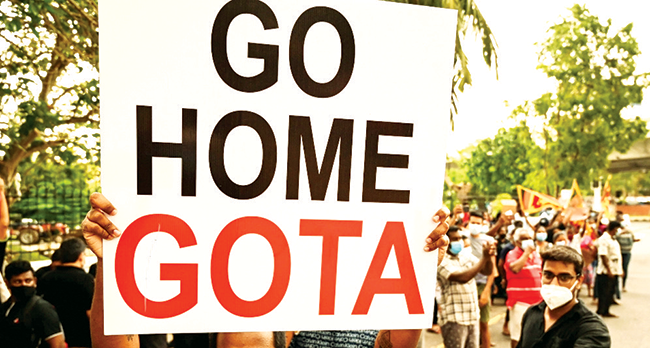
A front-page news item in The Island of 18th July 2022 under the headline, “Don quits FUTA over ‘politicisation’ of union” speaks volumes for the pathetic trend in Sri Lanka, where the leaders of trade unions and various other associations are suppressing the rights of their members and promote agendas and politics of their own personal choice in the guise of protecting democracy. In the article cited above, a female don of undeniable courage has chosen to fight for the preservation of her fundamental rights by resigning from the FUTA (Federation of University Teachers’ Association), which has got embroiled in party politics and is promoting and supporting one political party although its members hold diverse ethnic, religious, political and cultural views.
The BASL (Bar Association of Sri Lanka) with a membership drawn from diverse ethnic, political and social backgrounds, expresses various views like the GMOA (Government Medical Officers’ Association), which has become quiet. There is no verification of opinion prior to the issue of these statements from the members by either one of the heads of these professional associations, but they claim to be defenders of democracy.
On the same playing field are the famous Aragalaya members, who demanded the person of their choice and no other be the President. They are also demanding that their proposals be implemented immediately and that they will not stop the protests unless their demands are met! On the 18th evening on the Ada Derana News one young Aragalaya leader claimed that they would insist that their proposals be implemented and their protests would continue until such time. The proposals include the immediate reduction of gas prices and cost of living! How could the country do so, given the enormity of the economic crisis?
What mandate do they have to speak for the whole country and make such demands? What makes them think their proposals and that of no other is acceptable by the rest of the general public? Are their actions consistent with the concept of democracy which they claim to admire and uphold? The only test that could reflect the majority of public opinion is none other than an election. That is the democratic process recognized universally. Street protests whilst having a great impact on public opinion, does not necessarily reflect the sentiments of the general public.
The self-confidence of the Aragalaya leaders were increased tenfold, by the large numbers that turned up on the 9th of July to oust a democratically elected leader in an undemocratic manner. The public was frustrated by the cost of living, the hardships faced by the lack of fuel and gas. People, rightly, needed a forum to vent their grievances. The Aragala ground that was hitherto known as Galle Face was an ideal site for all ages. For the young, it was a trendy place, with music, street drama and plenty of food and drink (which in fact made one question the veracity of the claims of a food crisis, which most certainly exists in the country). It was “cool” to be seen there, although some of the young really did not understand the true depth of the protest, except the obvious “Gota go Home” with a latte in hand, as manifest when watching many an interview aired at the time. The Aragalaya consisted mainly of the middle-class people who are the worst affected by the fuel shortage, imported goods and the cooking gas scarcity. It was an acceptable site for them too and for the aged who needed comfort which the organisers recognised and provided, such as clean washroom facilities, clean and tidy protest areas and ample food and beverages.
Anti-corruption slogans were mechanically and customarily expressed at the Aragalaya protests, but that alone was not the primary factor for the Argalagaya’s popularity. Corruption existed in each regime with Rajapaksas topping the list of course. If corruption was the sole motive for the protest, Aragalaya would have peaked in 2015 before the end of the MR era where corruption was most rampant. What propelled them on to the Aragala site was the economic woes that punched them in the stomach, with the dollars finally running out after years of reckless spending to keep the voter happy whilst filling one’s own purse. A sea of people marched from the four corners of Sri Lanka to vent, only once the freebees stopped! That’s the unvarnished truth! Had the subsidized fuel, subsidized fertiliser, subsidised food supplies continued, not 10 cats would be on the Aragalaya site demanding Gota, or whoever to go home, corrupt or autocratic!
However unified the Aragalaya guests were in their demand to send Gota home, political ideologies were too diverse for the unified front to hold strong for too long. That is why Aragalaya‘s popularity rose and fell from time to time. Right now, it is divided with some withdrawing support, especially in view of the militant and radical elements that have infiltrated the original group.
How can the Aragalaya leaders demand that the country, the Parliament and the people be dictated by their choice and no other? Do they even realize that numbers on the roads do not necessarily reflect the thought process of an entire nation? A classic example of this phenomenon is the JVP election rallies. Come any election, the JVP by far attracts the highest number of spectators at their rallies. However, on election day, the number of participants does not translate into votes, as seen by the three seats in Parliament.
Let us not forget that democracy must prevail and it can reign supreme only if the political views of all citizens are respected. The Constitution of our country has a process which is approved by the citizens of this country, to choose a leader. In a crisis situation such as the present, where the President has resigned, the Constitution provided for the members of Parliament who have been chosen by their respective constituencies to represent the citizens in Parliament, to do the needful. No one has a right to interfere with the constitutional process or reject its result. It was indeed shocking to see the threats issued by some protesters against the MPs who voted to elect the President. If anyone attempted to deprive the MPs of their right to vote, that is tyranny and cannot be justified on any grounds.
If the peoples’ choice was not reflected in the outcome of the Parliament election of the President, the people have a right to defeat their representatives at the next general election.
If the Aragalaya is genuine, let them focus their energies on implementing the processes already in place such as compelling asset declarations from all Members of Parliament and demanding effective and efficient action be taken by the two AG’s Departments (Auditor General’s and Attorney General’s). There is nothing to prevent a private citizen initiating litigation against corrupt politicians and we have an example of the same when CBK was asked to pay compensation by the Supreme Court for releasing Water’s edge to her cronies. The result was an outcome of a case filed by a private citizen. Let the Argalaya masterminds explore all these avenues and expose those who have been errant!
Let democracy prevail! Leave no room for tyranny to surface in the guise of democracy! The public and the Aragalaya must respect democracy and learn to live with the choice of the majority reflected through a democratic process, until their time comes at the next general election. Do not destabilize the country at this critical juncture – to be like a headless chicken, only to be roasted by an alien chef from a faraway land!
A Realist and true democrat!

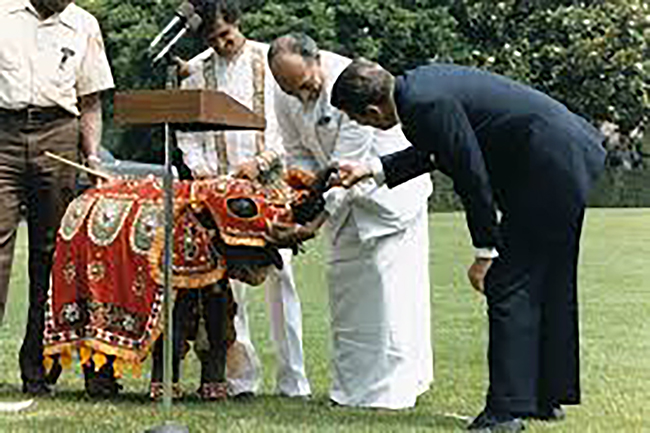
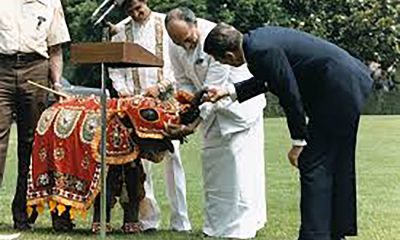
When President J. R. Jayewardene stood at the White House in 1981 at the invitation of U.S. President Ronald Reagan, he did more than conduct diplomacy; he reminded his audience that Sri Lanka’s engagement with the wider world stretches back nearly two thousand years. In his remarks, Jayewardene referred to ancient explorers and scholars who had written about the island, noting that figures such as Pliny the Elder had already described Sri Lanka, then known as Taprobane, in the first century AD.
Pliny the Elder (c. AD 23–79), writing his Naturalis Historia around AD 77, drew on accounts from Indo-Roman trade during the reign of Emperor Claudius (AD 41–54) and recorded observations about Sri Lanka’s stars, shadows, and natural wealth, making his work one of the earliest Roman sources to place the island clearly within the tropical world. About a century later, Claudius Ptolemy (c. AD 100–170), working in Alexandria, transformed such descriptive knowledge into mathematical geography in his Geographia (c. AD 150), assigning latitudes and longitudes to Taprobane and firmly embedding Sri Lanka within a global coordinate system, even if his estimates exaggerated the island’s size.
These early timelines matter because they show continuity rather than coincidence: Sri Lanka was already known to the classical world when much of Europe remained unmapped. The data preserved by Pliny and systematised by Ptolemy did not fade with the Roman Empire; from the seventh century onward, Arab and Persian geographers, who knew the island as Serendib, refined these earlier measurements using stellar altitudes and navigational instruments such as the astrolabe, passing this accumulated knowledge to later European explorers. By the time the Portuguese reached Sri Lanka in the early sixteenth century, they sailed not into ignorance but into a space long defined by ancient texts, stars, winds, and inherited coordinates.
Jayewardene, widely regarded as a walking library, understood this intellectual inheritance instinctively; his reading spanned Sri Lankan chronicles, British constitutional history, and American political traditions, allowing him to speak of his country not as a small postcolonial state but as a civilisation long present in global history. The contrast with the present is difficult to ignore. In an era when leadership is often reduced to sound bites, the absence of such historically grounded voices is keenly felt. Jayewardene’s 1981 remarks stand as a reminder that knowledge of history, especially deep, comparative history, is not an academic indulgence but a source of authority, confidence, and national dignity on the world stage. Ultimately, the absence of such leaders today underscores the importance of teaching our youth history deeply and critically, for without historical understanding, both leadership and citizenship are reduced to the present moment alone.
Anura Samantilleke

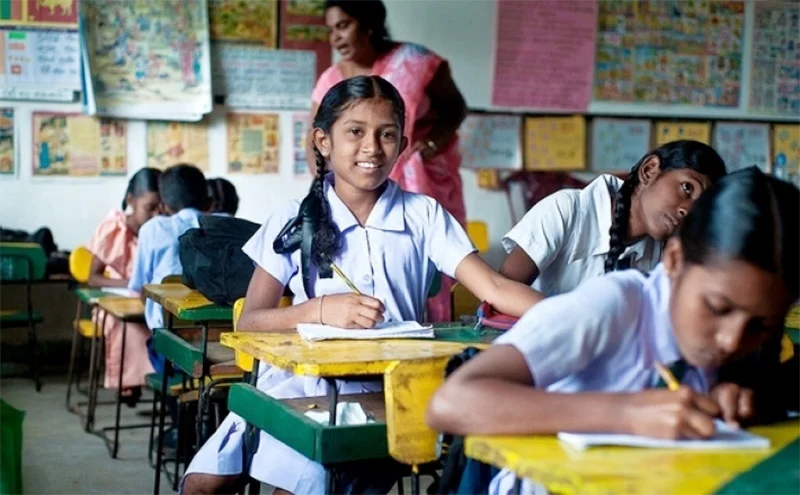
One of the major initiatives of the NPP government is reforming the country’s education system. Immediately after coming to power, the government started the process of bringing about “transformational” changes to general education. The budgetary allocation to education has been increased to 2% of GDP (from 1.8% in 2023). Although this increase is not sufficient, the government has pledged to build infrastructure, recruit more teachers, increase facilities at schools and identified education reforms as an urgent need. These are all welcome moves. However, it is with deep concern that we express our views on the general education reforms that are currently underway.
The government’s approach to education reform has been hasty and lacking in transparency and public consultation. Announcements regarding the reforms planned for January 2026 were made in July 2025. In August, 2025, a set of slides was circulated, initially through unofficial sources. It was only in November 2025, just three months ahead of implementation, that an official policy document, Transforming General Education in Sri Lanka 2025, was released. The Ministry of Education held a series of meetings about the reforms. However, by this time the modules had already been written, published, and teacher training commenced.
The new general education policy shows a discrepancy between its conceptual approach and content. The objectives of the curriculum reforms include: to promote “critical thinking”, “multiple intelligences”, “a deeper understanding of the social and political value of the humanities and social sciences” and embed the “values of equity, inclusivity and social justice” (p. 9). Yet, the new curriculum places minimal emphasis on social sciences and humanities, and leaves little time for critical thinking or for molding social justice-oriented citizens. Subjects such as environment, history and civics, are left out at the primary level, while at the junior secondary level, civics and history are allocated only 10 and 20 hours per term. The increase in the number of “essential subjects” to 15 restricts the hours available for fundamentals like mathematics and language; only 30 hours are allocated to mathematics and the mother tongue, per term, at junior secondary level. Learning the second national language and about our conflict-ridden history are still not priorities despite the government’s pledge to address ethnic cohesion. The time allocation for Entrepreneurship and Financial Literacy, now an essential subject, is on par with the second national language, geography and civics. At the senior secondary level (O/L), social sciences and humanities are only electives. If the government is committed to the objectives that it has laid out, there should be a serious re-think of what subjects will be taught at each grade, the time allocated to each, their progress across different levels, and their weight in the overall curriculum.
A positive aspect of the reforms is the importance given to vocational training. A curriculum that recognises differences in students, whether in terms of their interest in subject matter, styles of learning, or their respective needs, and caters to those diverse needs, would make education more pluralistic and therefore democratic. However, there must be some caution placed on how difference is treated, and this should not be reflected in vocational training alone, but in all aspects of the curriculum. For instance, will the history curriculum account for different narratives of history, including the recent history of Sri Lanka and the histories of minorities and marginalised communities? Will the family structures depicted in textbooks go beyond conventional conceptions of the nuclear family? Addressing these areas too would allow students to feel more represented in curricula and enable them to move through their years of schooling in ways that are unconstrained by stereotypes and unjust barriers.
The textbooks for the Grade 6 modules on the National Institute of Education (NIE) website appear to have not gone through rigorous review. They contain rampant typographical errors and include (some undeclared) AI-generated content, including images that seem distant from the student experience. Some textbooks contain incorrect or misleading information. The Global Studies textbook associates specific facial features, hair colour, and skin colour, with particular countries and regions, and refers to Indigenous peoples in offensive terms long rejected by these communities (e.g. “Pygmies”, “Eskimos”). Nigerians are portrayed as poor/agricultural and with no electricity. The Entrepreneurship and Financial Literacy textbook introduces students to “world famous entrepreneurs”, mostly men, and equates success with business acumen. Such content contradicts the policy’s stated commitment to “values of equity, inclusivity and social justice” (p. 9). Is this the kind of content we want in our textbooks?
The “career interest test” proposed at the end of Grade 9 is deeply troubling. It is inappropriate to direct children to choose their career paths at the age of fourteen, when the vocational pathways, beyond secondary education, remain underdeveloped. Students should be provided adequate time to explore what interests them before they are asked to make educational choices that have a bearing on career paths, especially when we consider the highly stratified nature of occupations in Sri Lanka. Furthermore, the curriculum must counter the stereotyping of jobs and vocations to ensure that students from certain backgrounds are not intentionally placed in paths of study simply because of what their parents’ vocations or economic conditions are; they must also not be constrained by gendered understandings of career pathways.
The modules encourage digital literacy and exposure to new communication technologies. On the surface, this initiative seems progressive and timely. However, there are multiple aspects such as access, quality of content and age-appropriateness that need consideration before uncritical acceptance of digitality. Not all teachers will know how to use communication technologies ethically and responsibly. Given that many schools lack even basic infrastructure, the digital divide will be stark. There is the question of how to provide digital devices to all students, which will surely fall on the shoulders of parents. These problems will widen the gap in access to digital literacy, as well as education, between well-resourced and other schools.
The NIE is responsible for conceptualising, developing, writing and reviewing the general education curriculum. Although the Institution was established for the worthy cause of supporting the country’s general education system, currently the NIE appears to be ill-equipped and under-staffed, and seems to lack the experience and expertise required for writing, developing and reviewing curricula and textbooks. It is clear by now that the NIE’s structure and mandate need to be reviewed and re-invigorated.
In light of these issues, the recent Cabinet decision to postpone implementation of the reforms for Grade 6 to 2027 is welcome. The proposed general education reforms have resulted in a backlash from opposition parties and teachers’ and student unions, much of it, legitimately, focusing on the lack of transparency and consultation in the process and some of it on the quality and substance of the content. Embedded within this pushback are highly problematic gendered and misogynistic attacks on the Minister of Education. However, we understand the problems in the new curriculum as reflecting long standing and systemic issues plaguing the education sector and the state apparatus. They cannot be seen apart from the errors and highly questionable content in the old curriculum, itself a product of years of reduced state funding for education, conditionalities imposed by external funding agencies, and the consequent erosion of state institutions. With the NPP government in charge of educational reforms, we had expectations of a stronger democratic process underpinning the reforms to education, and attention to issues that have been neglected in previous reform efforts.
With these considerations in mind, we, the undersigned, urgently request the Government to consider the following:
* postpone implementation and holistically review the new curriculum, including at primary level.
* adopt a consultative process on educational reforms by holding public sittings across the country .
* review the larger institutional structure of the educational apparatus of the state and bring greater coordination within its constituent parts
* review the NIE’s mandate and strengthen its capacity to develop curricula, such as through appointexternal scholars an open and transparent process, to advise and review curriculum content and textbooks.
* consider the new policy and curriculum to be live documents and make space for building consensus in policy formulation and curriculum development to ensure alignment of the curriculum with policy.
* ensure textbooks (other than in language subjects) appear in draft form in both Sinhala and Tamil at an early stage so that writers and reviewers from all communities can participate in the process of scrutiny and revision from the very beginning.
* formulate a plan for addressing difficulties in implementation and future development of the sector, such as resource disparities, teacher training needs, and student needs.
A.M. Navaratna Bandara,
formerly, University of Peradeniya
Ahilan Kadirgamar,
University of Jaffna
Ahilan Packiyanathan,
University of Jaffna
Arumugam Saravanabawan,
University of Jaffna
Aruni Samarakoon,
University of Ruhuna
Ayomi Irugalbandara,
The Open University of Sri Lanka.
Buddhima Padmasiri,
The Open University of Sri Lanka
Camena Guneratne,
The Open University of Sri Lanka
Charudaththe B.Illangasinghe,
University of the Visual & Performing Arts
Chulani Kodikara,
formerly, University of Colombo
Chulantha Jayawardena,
University of Moratuwa
Dayani Gunathilaka,
formerly, Uva Wellassa University of Sri Lanka
Dayapala Thiranagama,
formerly, University of Kelaniya
Dhanuka Bandara,
University of Jaffna
Dinali Fernando,
University of Kelaniya
Erandika de Silva,
formerly, University of Jaffna
G.Thirukkumaran,
University of Jaffna
Gameela Samarasinghe,
University of Colombo
Gayathri M. Hewagama,
University of Peradeniya
Geethika Dharmasinghe,
University of Colombo
F. H. Abdul Rauf,
South Eastern University of Sri Lanka
H. Sriyananda,
Emeritus Professor, The Open University of Sri Lanka
Hasini Lecamwasam,
University of Peradeniya
(Rev.) J.C. Paul Rohan,
University of Jaffna
James Robinson,
University of Jaffna
Kanapathy Gajapathy,
University of Jaffna
Kanishka Werawella,
University of Colombo
Kasun Gajasinghe, formerly,
University of Peradeniya
Kaushalya Herath,
formerly, University of Moratuwa
Kaushalya Perera,
University of Colombo
Kethakie Nagahawatte,
formerly, University of Colombo
Krishan Siriwardhana,
University of Colombo
Krishmi Abesinghe Mallawa Arachchige,
formerly, University of Peradeniya
L. Raguram,
University of Jaffna
Liyanage Amarakeerthi,
University of Peradeniya
Madhara Karunarathne,
University of Peradeniya
Madushani Randeniya,
University of Peradeniya
Mahendran Thiruvarangan,
University of Jaffna
Manikya Kodithuwakku,
The Open University of Sri Lanka
Muttukrishna Sarvananthan,
University of Jaffna
Nadeesh de Silva,
The Open University of Sri Lanka
Nath Gunawardena,
University of Colombo
Nicola Perera,
University of Colombo
Nimal Savitri Kumar,
Emeritus Professor, University of Peradeniya
Nira Wickramasinghe,
formerly, University of Colombo
Nirmal Ranjith Dewasiri,
University of Colombo
P. Iyngaran,
University of Jaffna
Pathujan Srinagaruban,
University of Jaffna
Pavithra Ekanayake,
University of Peradeniya
Piyanjali de Zoysa,
University of Colombo
Prabha Manuratne,
University of Kelaniya
Pradeep Peiris,
University of Colombo
Pradeepa Korale-Gedara,
formerly, University of Peradeniya
Prageeth R. Weerathunga,
Rajarata University of Sri Lanka
Priyantha Fonseka,
University of Peradeniya
Rajendra Surenthirakumaran,
University of Jaffna
Ramesh Ramasamy,
University of Peradeniya
Ramila Usoof,
University of Peradeniya
Ramya Kumar,
University of Jaffna
Rivindu de Zoysa,
University of Colombo
Rukshaan Ibrahim,
formerly, University of Jaffna
Rumala Morel,
University of Peradeniya
Rupika S. Rajakaruna,
University of Peradeniya
S. Jeevasuthan,
University of Jaffna
S. Rajashanthan,
University of Jaffna
S. Vijayakumar,
University of Jaffna
Sabreena Niles,
University of Kelaniya
Sanjayan Rajasingham,
University of Jaffna
Sarala Emmanuel,
The Open University of Sri Lanka
Sasinindu Patabendige,
formerly, University of Jaffna
Savitri Goonesekere,
Emeritus Professor, University of Colombo
Selvaraj Vishvika,
University of Peradeniya
Shamala Kumar,
University of Peradeniya
Sivamohan Sumathy,
formerly, University of Peradeniya
Sivagnanam Jeyasankar,
Eastern University Sri Lanka
Sivanandam Sivasegaram,
formerly, University of Peradeniya
Sudesh Mantillake,
University of Peradeniya
Suhanya Aravinthon,
University of Jaffna
Sumedha Madawala,
University of Peradeniya
Tasneem Hamead,
formerly, University of Colombo.
Thamotharampillai Sanathanan,
University of Jaffna
Tharakabhanu de Alwis,
University of Peradeniya
Tharmarajah Manoranjan,
University of Jaffna
Thavachchelvi Rasan,
University of Jaffna
Thirunavukkarasu Vigneswaran,
University of Jaffna
Timaandra Wijesuriya,
University of Jaffna
Udari Abeyasinghe,
University of Peradeniya
Unnathi Samaraweera,
University of Colombo
Vasanthi Thevanesam,
Professor Emeritus, University of Peradeniya
Vathilingam Vijayabaskar,
University of Jaffna
Vihanga Perera,
University of Sri Jayewardenepura
Vijaya Kumar,
Emeritus Professor, University of Peradeniya
Viraji Jayaweera,
University of Peradeniya
Yathursha Ulakentheran,
formerly, University of Jaffna.
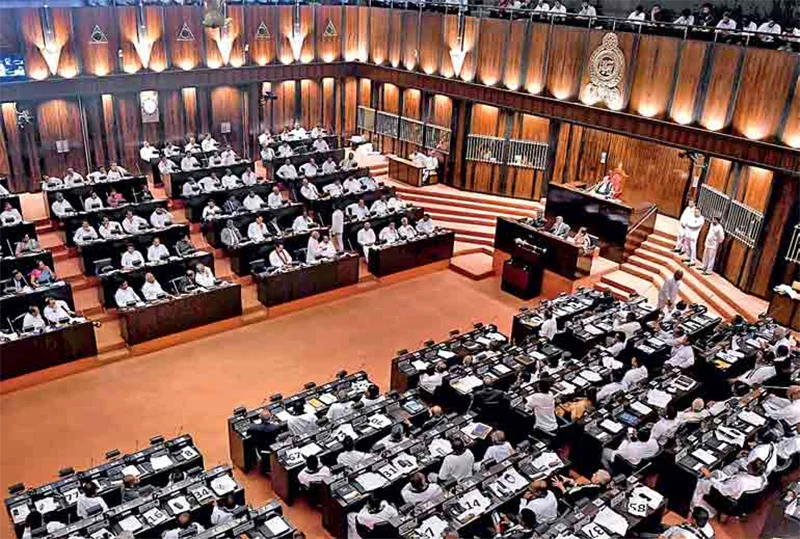
When Vikings arrived in Iceland towards the end of the 8th century, they gathered on a midsummer’s day to hear the laws of the land proclaimed, air grievances, and seek justice. This marked the beginning of the oldest known parliament in the world — the Althing, or Thingvellir — which still operates today.
The word “parliament” later came to describe the after-dinner discussions between monks in their cloisters. Modern parliaments trace their roots to 13th-century England, when King Edward I convened joint meetings of two governing bodies: the Great Council and the Curia Regis, a smaller body of semi-professional advisors.
The British Parliament, often called the “Mother of Parliaments,” consists of the Sovereign, the House of Lords, and the House of Commons. Historically, such law-making institutions are designed to hear diverse views and facilitate informed debate. Access to up-to-date scientific and academic knowledge plays a crucial role in shaping these debates — enabling the UK to remain a world-leading economy with proactive decision-making.
Being an island nation influenced by British democratic traditions, Sri Lanka could also draw inspiration from such processes to remain agile in a fast-changing world.
From Medieval Advice to Modern Science in Governments
Providing advice — especially scientific advice — to lawmakers has evolved dramatically since the 13th century.
In 2020, during the COVID-19 pandemic, then the UK Prime Minister Boris Johnson often appeared alongside the Government Chief Scientific Advisor and the Government Chief Medical Advoser. Professor Jonathan Van-Tam, Deputy Chief Medical Officer at the time, became widely known for explaining complex public health messages using relatable football metaphors.
The Scientific Advisory Group for Emergencies (SAGE) guided the government on pandemic preparedness, supplying expert knowledge for critical decisions. Today, the UK Government Office for Science hosts Chief Scientific Advisers in each government department, typically senior academics from research-intensive universities appointed for three to five years.
Scrutiny and Evidence in Policymaking
The Parliament is the ultimate law-making body in the UK, holding the government accountable through debates and select committee inquiries. These committees — composed of MPs outside government and led by senior members — scrutinise policy decisions and monitor their implementation.
Support structures such as the Parliamentary Office for Science and Technology (POST) conduct ongoing research on topics of policy interest, identified through “horizon scanning” involving both internal and external experts. The Knowledge Exchange Unit maintains links with academic institutions, ensuring access to the latest evidence.
However, policy-making often happens under tight deadlines, reacting to both domestic and global developments. This demands quick access to authoritative expertise and knowledge — a need not always easy to meet.
Thematic Research Leads: A New Approach
To address this, the UK has introduced Thematic Research Leads (TRLs) — mid-career researchers embedded in Parliament three days a week while retaining their academic posts. TRLs act as impartial subject experts, bringing networks of research connections to parliamentary teams.
Their work includes organising expert briefings, running training sessions, hosting roundtables, and even simulating policy scenarios.
During my tenure as TRL for AI and Digital Technologies, I have supported this process in multiple ways.
* Supported multiple select committees by scoping inquiries, preparing briefing notes, and identifying expert witnesses.
* Delivered technical presentations — for example, explaining how social media algorithms operate, drawing directly from academic literature and open-source code.
* Collaborated with other TRLs, such as in crime and justice, to train parliamentary staff on AI’s role in surveillance and criminal justice.
Such efforts deepen Parliament’s technical understanding, enabling more informed, future-ready policy scrutiny.
Lessons for Sri Lanka: Integrating Science into Policymaking Infrastructure
There are few ways in which I believe Sri Lanka can utilise scientific and expert knowledge within the democratic processes.
1. Embed experts in Parliament
– Appoint Chief Scientific Advisors or Thematic Research Leads to bring impartial, up-to-date expertise directly into legislative debates.
2. Scan for niche opportunities
– Proactively identify sectors where Sri Lanka has unique strengths (e.g., agriculture, nanotechnology, AI) and link them to emerging global markets.
3. Build a “College of Experts”
– Create a formal network connecting the Sri Lankan scientific diaspora with local specialists to advise policymakers.
4. Strengthen research–policy links
– Develop units like the UK’s Parliamentary Office for Science and Technology to supply evidence-based briefings and horizon scanning. Then seek to collaborate with similar institutions around the world such as the POST.
5. Upskill policymakers
– Provide MPs and officials with targeted technical training so they can scrutinise policies with confidence and depth.
6. Move from reactive to proactive
– Use foresight tools and expert panels to anticipate global changes rather than only responding to crises.
In a world where artificial intelligence, bioengineering, and climate threats move faster than traditional politics, the ability to turn cutting-edge research into timely policy will decide which countries lead — and which fall behind.
Professor Varuna De Silva is the Chair of AI and Digital Technologies at Loughborough University, UK. He currently serves as the Thematic Research Lead to the UK Parliament, in the area of AI and Digital. He is a graduate of the University of Moratuwa, Sri Lanka, and received his Ph.D. from the University of Surrey in the UK in 2011.
by Professor Varuna De Silva

Shipping giant Maersk to take over Panama Canal ports after court ruling

India face Pakistan for a place in the semi-finals of the Under-19 World Cup

More than 200 killed in mine collapse in DR Congo

US government partially shuts down despite last minute funding deal

Harmanpreet 82* in vain as Gujarat Giants break Mumbai Indians hoodoo and seal Eliminator spot

Myanmar election delivers walkover win for military-backed political party

‘Dates have the highest sugar content to fight Coronavirus’

Sunday Island 27 December – Headlines

#SundayIsland 17th December – Headlines

Sunday Island – 28th March

Sunday Island Headlines – 21 March

Sunday Island – 21st February – Headlines
-
 Business6 days ago
ComBank, UnionPay launch SplendorPlus Card for travelers to China
-
 Business7 days ago
ComBank advances ForwardTogether agenda with event on sustainable business transformation
-
 Business3 days ago
Climate risks, poverty, and recovery financing in focus at CEPA policy panel
-
 Opinion7 days ago
Conference “Microfinance and Credit Regulatory Authority Bill: Neither Here, Nor There”
-
 Opinion2 days ago
Sri Lanka, the Stars,and statesmen
-

 Business22 hours ago
Hayleys Mobility ushering in a new era of premium sustainable mobility
-
 Opinion6 days ago
Luck knocks at your door every day
-
 Business22 hours ago
Advice Lab unveils new 13,000+ sqft office, marking major expansion in financial services BPO to Australia