
Features
Tussle for Independence

Sunday shot story
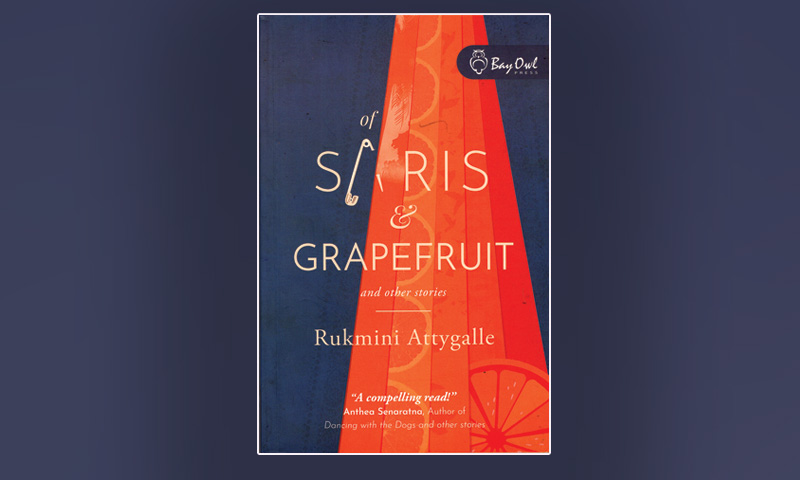
(Excerpted from Saris and Grapefruit, an anthology of short stories by Rukmini Attygalle)
My daughter Kumi felt that she had been tied to my apron strings for far too long. She felt grown up and considered herself to be on the verge of stepping into adulthood. She thought that we, her family, were holding her back, by limiting her independence. She was all of ten years old, although in my mind, it was not so long ago she had two missing front teeth!
We were living in London at the time and Kumi and her friend Nilmini were the only two Sri Lankan children in her class. They had obviously discussed the matter of their independence (apparently a common grievance) – or rather, the lack of it – and, decided to take up the issue with their respective mothers. One night, when Kumi and I were clearing the kitchen after the evening meal (every member of the family had to do certain chores, and it was Kumi’s turn in the kitchen), she broached the subject.
“Amma,” she said trying to sound formal – she hardly ever called me Amma, preferring to call me by some silly meaningless words she coined. “Why does everyone in my family treat me as though I was a small child?”
I knew from the tone of her voice that this was no simple question but a precursor to an emotionally charged argument.
“Do we?” I asked in feigned surprise. “I didn’t realise we did…” “Do you know that Nilmini and I are the only two girls in our class who are not allowed to travel by bus alone?”
“But there is no need for you to travel alone by bus,” I argued. “Your Your father drops you and your sister at school by car, on his way to work, and, after school, the two of you come back together by bus. So, the question of travelling alone does not really arise.” I was of course dodging the issue!
“Oh yes, it does! What about when Akka is ill and she doesn’t go to school? You always make arrangements for me to be picked up by Nilmini’s father or you take time off from work to collect me from school and then we both come home by bus! You don’t, think that I am capable of travelling by bus by myself.” Her voice quivered and I knew that tears were around the corner.
Realising I was in a tight spot I tried to extricate myself as gracefully as I could.
“Well, I suppose with you being the youngest in the family, I didn’t quite realize that you are growing up fast and, can do things for yourself.”
“It’s not just you! It is everybody! Akka always insists on holding my hand when we cross the road as though I am an idiot. My schoolmates cross the road by themselves. Every year a policeman comes to our school to teach us the ‘Green Cross Code’. I know it by heart! I know exactly what I should do and should not do when crossing the road. But what’s the use! I am never allowed to put it into practice. If I refuse to hold Akka’s hand, she grabs my arm so hard it hurts! She is such a Bossy Boots.”
Tears were slowly trickling down and I knew that the flood gates would soon open.
The Akka was eight years her senior and took her childminding responsibilities very seriously.
“I will tell Akka that there really is no need to hold your hand when crossing the road together. I think she is doing it through habit and not because she thinks that you are not capable of crossing by yourself.” I was trying to make an excuse for the sister.
“It’s not just Akka … Aiya as well …!” Flood gates had opened. The tears were now gushing freely.
This was the first time I had heard a complaint against the brother, as he was her favourite person, her ideal in the whole wide world; and generally, he could do no wrong.
Between sobs she told me that the previous week, her brother had insisted that he was not going to take her to the sweet shop up the road unless she put on her boots and coat. He had said that it was too cold outside, yet, he himself had gone out in his ordinary shoes and his denim jacket.
I explained to her that he was concerned about her health as she was prone to colds and coughs and suffered very badly with tonsillitis every time she went down with a cold. That he was only trying to protect her and was not ‘just being bossy’.
She seemed reasonably appeased but, continued to cry and wouldn’t drop the subject.
“All I know is that if you lot don’t let me do things for myself, I’ll never learn to be independent…” she said wiping her tears and blowing her nose into a piece of kitchen paper, “I am going to end up being retarded.” Her voice squeaked and turned into a sob.
“Retarded?” I exclaimed surprised.
“Yes. You know … people who can’t do things for themselves…”
She was going through the stage of using ‘big words’ and although she was quite good at using new words in the appropriate context most of the time, she did miss the target once in a while.
“No,” I said quite definitely. “You will never be retarded. You won’t need to worry yourself on that score!” I had to suppress a smile.
What I wanted to say was, “Your problem my girl, is that you are too sharp for your own good and if you don’t look out, you will cut yourself!” but of course I didn’t say it. Such comments were not really appropriate in this scenario. I helped her wipe her tears, gave her a hug and a kiss and promised to speak to the rest of the family about her problem.
This outburst did however make me wonder whether we were being over-protective of Kumi. I knew that some children of her age, did actually travel to school and back alone by themselves. Perhaps it was time that she was allowed to try out her wings. At any rate we had to make her feel that she was capable of doing certain things in order not to undermine her self-confidence.
On the spur of the moment I said, “How about you taking a bus ride to Streatham High Street on Saturday, all by yourself?” The High Street was not very far away, being seven bus stops from where we lived.
Kumi’s face immediately lit up. Her big round eyes got bigger. Her face widened with a grin that spread from ear to ear. “Can I really?” she said overcome with excitement.
“Yes,” I said, “I think it’s a good idea – don’t you?”
“It’s a great idea!” she beamed. Tears and complaints all forgotten; she ran to give the good news to the rest of the family.
Kumi was usually the last to get up on a Saturday morning, especially when it was cold. But that Saturday she was up at the crack of dawn – or so it seemed to me – when she tiptoed into our room and shook me gently by my shoulder.
“It’s Saturday today,” she whispered, not wanting to disturb her father. “Shall I start getting ready?”
“It’s far too early and it must be freezing outside,” I said. “In any case the High Street must be deserted at this time. People don’t start getting out till about nine o’clock on a Saturday. Go back to bed and I’ll wake you at the proper time.”
Although she returned to her bed, I knew she was too excited to go back to sleep.
It so happened that, on that particular Saturday, the others were also busy with one thing or another. My husband had to inspect a worksite; my elder daughter had to visit the library; and my son had football practice. So when I finally got out of bed, I went into Kumi’s room and told her that since there was no rush for her, to let the others finish their showers and once they were out of the way she could get ready for her ‘journey’. I think she was a little disappointed that the others would not be present to witness her stepping out into ‘adulthood’.
By half past nine Kumi was washed and dressed and breakfasted and ready for her big adventure. The bus fare to the High Street was 20 pence one way. So, I gave Kumi fifty pence for the fare and another fifty for her to buy herself some sweets — to complete her treat. I also gave her the front door key saying that she had better take it in case I went out before she returned (of course I had no intention of doing anything of the sort!) Kum] beamed with a sense of importance and responsibility. She had complained on an earlier occasion that she was the “odd one out” who did not have a front door key! She put the money and the key carefully into her purse and put it in her coat pocket, and with a cheeky smile said, “I won’t lose the key like the way you do!”
Losing my key was something that happened to me quite regularly so much so that it had become a family joke. I decided to ignore her comment and kissed her goodbye; and watched her spindly legs and knobby knees go down the incline towards the bus stop.
I started my cleaning chores, but my mind was on the bus. I could picture Kumi scrambling up the steps to the upper deck for that was where she liked to sit. I could almost see her little hands gripping the chrome bar of the seat in front of her; her eyes taking in every sight around her. She was an extremely observant child. So, I was confident that, unlike me who often sat in the bus lost in thought, she would not be over carried beyond her destination.
The day after Kumi’s outburst, I had telephoned my friend Sujatha — Nilmini’s mother — and told her about it. Nilmini too had made a huge fuss and complained bitterly that, “Sri Lankan parents are uneccesarily hard on their children.” So, when I told her that I was letting Kumi go to Streatham by herself on Saturday, she too thought it a good idea and decided to let Nilmini do the same. But of course, we did not tell our daughters that their friend was also doing the same trip.
All the while I was dusting and cleaning, my mind travelled with Kumi. I saw her get out of the bus at the stop near Woolworths, her favourite shop. I saw her heading to the sweet counter, looking at the different sweets, wondering what she should buy. Chocolate mice was one of her favourite sweets. She also liked toffees wrapped in shiny coloured paper. Of course, she could never resist Milky Way or Turkish Delight. I wondered what she would decide on eventually. 50p for sweets was quite a lot in those days and she could get a few varieties.
Then I visualised her mooching around the shop looking at the toys and games and then slowly coming out of the shop. She would have to cross the road to get to the bus stop on the other side. I knew she would walk up to the zebra crossing. I hoped the ‘Lollipop Lady’ (a traffic warden who helps children and the aged, to cross roads) would be on duty that day. I saw her cross the road safely and walk to the bus stop. She would be waiting for the bus impatiently. The 159 bus trundles along and she gets in and manages to find a seat. “Now she will be back soon,” I said to myself and continued my house cleaning.
About half an hour later Sujatha telephoned. “What time did Kumi leave?” she asked.
“About a quarter to ten.”
“Nilmini left a little earlier. Don’t you think they should be back by now?”
Sujatha was one to get alarmed at the slightest provocation. It was just gone eleven.
“They have probably bumped into each other at Woolworths and are wandering around the shop together.” I said to calm her down. But I must admit I was getting a little worried too.
“Yes,” said Sujatha “let’s give them another half hour, before panicking.”
I agreed. But I found myself running to the porch every few minutes to see whether Kumi was walking up the hill.
About twenty minutes later, to my great relief, I saw the pair of skinny legs with knobby knees trudging up, and quickly went indoors, shut the door, switched on the television and slumped on to the sofa. Minutes later I heard the key turn in the keyhole and the door open. I heard the zip of her coat being pulled down, and a rustling sound of paper.
“I’m back!” shouted a very cheery voice. “And guess what I bought?” she exclaimed bursting into the room. She had something behind her back.
“Chocolate mice?”
“Wrong.”
“Turkish?”
“Wrong again.”
“Milky Way?”
“Wrong, wrong. Give up?”
“Yes,” I said.
She took what she was concealing behind her and held it out to me. “It is for you,” she proudly exclaimed.
I was mighty surprised. It was a beautiful orange Tiger Lily! I knew that she would have spent all her money on this flower. “What a beautiful flower!” I said, taking it from her. “Thank
Y’ you so much. It’s so sweet of you to have brought it for me. Did you not buy any sweets then?” I asked, giving her a hug. “No,” she said, “I didn’t feel like any,” and shrugged her shoulders.
“It’s the nicest present I have ever received,” I said.
What Kumi did not realise was that she had given me a flower that would never fade; for it is still fresh in my memory and reminds me of the day it was presented to me with stick-like outstretched arms, a beaming face and a wide grin. It was also the day she turned adult! At least to her way of reckoning.
“And guess who I bumped into,” she nonchalantly remarked, pretending it was of no significance.
“Who?
“Nilmini!”
“Really?” I said, “What a coincidence!”
(The writer and her family lived for many years in England while her children were small and later relocated to Sri Lanka)


Further to my earlier letter titled, “Psychology of Greed and Philosophy for a New World Order” (The Island 26.11.2025) it may not be far-fetched to say that the cause of the devastating cyclones that hit Sri Lanka and Indonesia last week could be traced back to human greed. Cyclones of this magnitude are said to be unusual in the equatorial region but, according to experts, the raised sea surface temperatures created the conditions for their occurrence. This is directly due to global warming which is caused by excessive emission of Greenhouse gases due to burning of fossil fuels and other activities. These activities cannot be brought under control as the rich, greedy Western powers do not want to abide by the terms and conditions agreed upon at the Paris Agreement of 2015, as was seen at the COP30 meeting in Brazil recently. Is there hope for third world countries? This is why the Global South must develop a New World Order. For this purpose, the proposed contentment/sufficiency philosophy based on morals like dhana, seela, bhavana, may provide the necessary foundation.
Further, such a philosophy need not be parochial and isolationist. It may not be necessary to adopt systems that existed in the past that suited the times but develop a system that would be practical and also pragmatic in the context of the modern world.
It must be reiterated that without controlling the force of collective greed the present destructive socioeconomic system cannot be changed. Hence the need for a philosophy that incorporates the means of controlling greed. Dhana, seela, bhavana may suit Sri Lanka and most of the East which, as mentioned in my earlier letter, share a similar philosophical heritage. The rest of the world also may have to adopt a contentment / sufficiency philosophy with strong and effective tenets that suit their culture, to bring under control the evil of greed. If not, there is no hope for the existence of the world. Global warming will destroy it with cyclones, forest fires, droughts, floods, crop failure and famine.
Leading economists had commented on the damaging effect of greed on the economy while philosophers, ancient as well as modern, had spoken about its degenerating influence on the inborn human morals. Ancient philosophers like Plato, Aristotle, and Epicurus all spoke about greed, viewing it as a destructive force that hindered a good life. They believed greed was rooted in personal immorality and prevented individuals from achieving true happiness by focusing on endless material accumulation rather than the limited wealth needed for natural needs.
Jeffry Sachs argues that greed is a destructive force that undermines social and environmental well-being, citing it as a major driver of climate change and economic inequality, referencing the ideas of Adam Smith, John Maynard Keynes, etc. Joseph Stiglitz, a Nobel Laureate economist, has criticised neoliberal ideology in similar terms.
In my earlier letter, I have discussed how contentment / sufficiency philosophy could effectively transform the socioeconomic system to one that prioritises collective well-being and sufficiency over rampant consumerism and greed, potentially leading to more sustainable economic models.
Obviously, these changes cannot be brought about without a change of attitude, morals and commitment of the rulers and the government. This cannot be achieved without a mass movement; people must realise the need for change. Such a movement would need leadership. In this regard a critical responsibility lies with the educated middle class. It is they who must give leadership to the movement that would have the goal of getting rid of the evil of excessive greed. It is they who must educate the entire nation about the need for these changes.
The middle class would be the vanguard of change. It is the middle class that has the capacity to bring about change. It is the middle class that perform as a vibrant component of the society for political stability. It is the group which supplies political philosophy, ideology, movements, guidance and leaders for the rest of the society. The poor, who are the majority, need the political wisdom and leadership of the middle class.
Further, the middle class is the font of culture, creativity, literature, art and music. Thinkers, writers, artistes, musicians are fostered by the middle class. Cultural activity of the middle class could pervade down to the poor groups and have an effect on their cultural development as well. Similarly, education of a country depends on how educated the middle class is. It is the responsibility of the middle class to provide education to the poor people.
Most importantly, the morals of a society are imbued in the middle class and it is they who foster them. As morals are crucial in the battle against greed, the middle class assume greater credentials to spearhead the movement against greed and bring in sustainable development and growth. Contentment sufficiency philosophy, based on morals, would form the strong foundation necessary for achieving the goal of a new world order. Thus, it is seen that the middle class is eminently suitable to be the vehicle that could adopt and disseminate a contentment/ sufficiency philosophy and lead the movement against the evil neo-liberal system that is destroying the world.
The Global South, which comprises the majority of the world’s poor, may have to realise, before it is too late, that it is they who are the most vulnerable to climate change though they may not be the greatest offenders who cause it. Yet, if they are to survive, they must get together and help each other to achieve self-sufficiency in the essential needs, like food, energy and medicine. Trade must not be via exploitative and weaponised currency but by means of a barter system, based on purchase power parity (PPP). The union of these countries could be an expansion of organisations,like BRICS, ASEAN, SCO, AU, etc., which already have the trade and financial arrangements though in a rudimentary state but with great potential, if only they could sort out their bilateral issues and work towards a Global South which is neither rich nor poor but sufficient, contented and safe, a lesson to the Global North. China, India and South Africa must play the lead role in this venture. They would need the support of a strong philosophy that has the capacity to fight the evil of greed, for they cannot achieve these goals if fettered by greed. The proposed contentment / sufficient philosophy would form a strong philosophical foundation for the Global South, to unite, fight greed and develop a new world order which, above all, will make it safe for life.
by Prof. N. A. de S. Amaratunga
PHD, DSc, DLITT

When Senior biodiversity scientist Vimukthi Weeratunga speaks of Sinharaja, his voice carries the weight of four decades spent beneath its dripping emerald canopy. To him, Sri Lanka’s last great rainforest is not merely a protected area—it is “a cathedral of life,” a sanctuary where evolution whispers through every leaf, stream and shadow.
“Sinharaja is the largest and most precious tropical rainforest we have,” Weeratunga said.
“Sixty to seventy percent of the plants and animals found here exist nowhere else on Earth. This forest is the heart of endemic biodiversity in Sri Lanka.”
A Magnet for the World’s Naturalists
Sinharaja’s allure lies not in charismatic megafauna but in the world of the small and extraordinary—tiny, jewel-toned frogs; iridescent butterflies; shy serpents; and canopy birds whose songs drift like threads of silver through the mist.
“You must walk slowly in Sinharaja,” Weeratunga smiled.
“Its beauty reveals itself only to those who are patient and observant.”
For global travellers fascinated by natural history, Sinharaja remains a top draw. Nearly 90% of nature-focused visitors to Sri Lanka place Sinharaja at the top of their itinerary, generating a deep economic pulse for surrounding communities.
A Forest Etched in History
Centuries before conservationists championed its cause, Sinharaja captured the imagination of explorers and scholars. British and Dutch botanists, venturing into the island’s interior from the 17th century onward, mapped streams, documented rare orchids, and penned some of the earliest scientific records of Sri Lanka’s natural heritage.

Smallest cat
These chronicles now form the backbone of our understanding of the island’s unique ecology.
The Great Forest War: Saving Sinharaja
But Sinharaja nearly vanished.
In the 1970s, the government—guided by a timber-driven development mindset—greenlit a Canadian-assisted logging project. Forests around Sinharaja fell first; then, the chainsaws approached the ancient core.
“There was very little scientific data to counter the felling,” Weeratunga recalled.
-
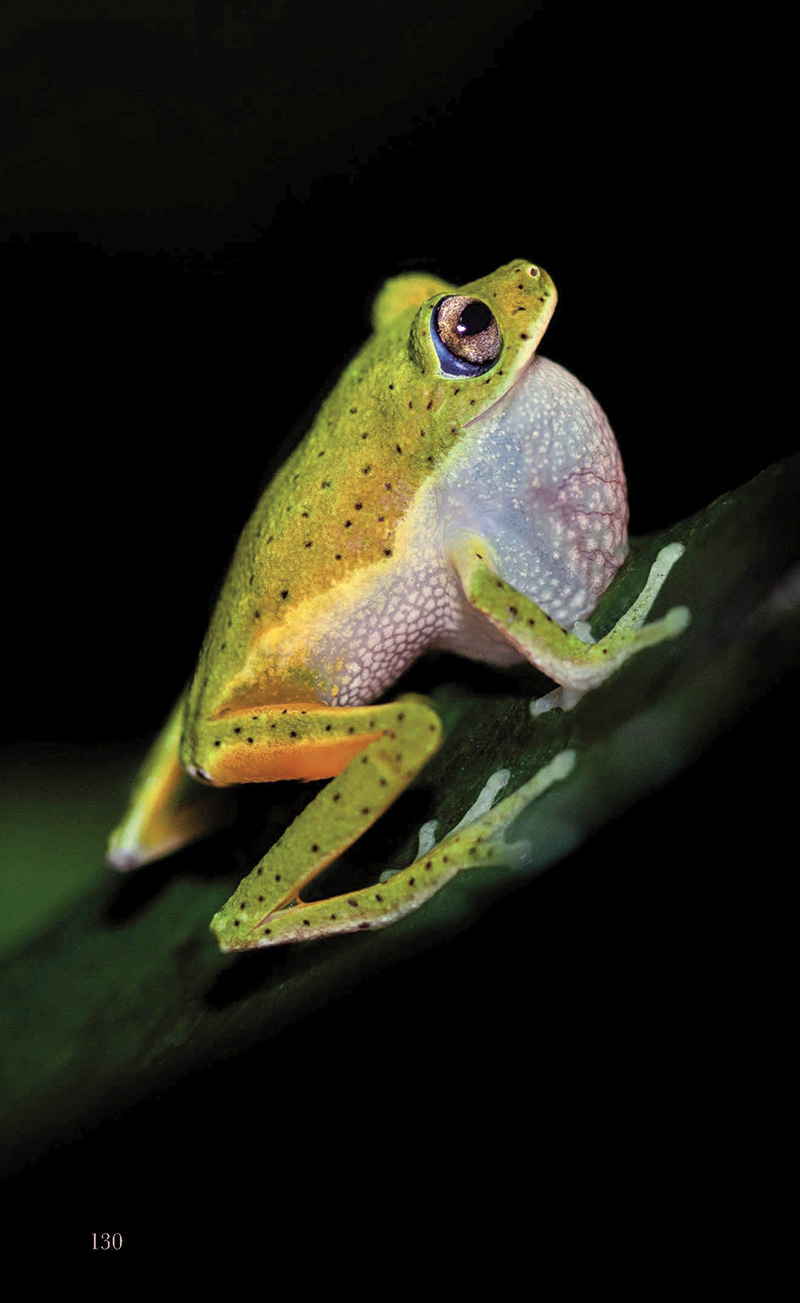
- Poppie’s shrub frog
-

- Endemic Scimitar babblers
-

- Blue Magpie
“But people knew instinctively this was a national treasure.”
The public responded with one of the greatest environmental uprisings in Sri Lankan history. Conservation icons Thilo Hoffmann and Neluwe Gunananda Thera led a national movement. After seven tense years, the new government of 1977 halted the project.
What followed was a scientific renaissance. Leading researchers—including Prof. Savithri Gunathilake and Prof. Nimal Gunathilaka, Prof. Sarath Kottagama, and others—descended into the depths of Sinharaja, documenting every possible facet of its biodiversity.

Thilak
“Those studies paved the way for Sinharaja to become Sri Lanka’s very first natural World Heritage Site,” Weeratunga noted proudly.
-

- Vimukthi
-

- Nadika
-

- Janaka
A Book Woven From 30 Years of Field Wisdom
For Weeratunga, Sinharaja is more than academic terrain—it is home. Since joining the Forest Department in 1985 as a young researcher, he has trekked, photographed, documented and celebrated its secrets.
Now, decades later, he joins Dr. Thilak Jayaratne, the late Dr. Janaka Gallangoda, and Nadika Hapuarachchi in producing, what he calls, the most comprehensive book ever written on Sinharaja.
“This will be the first major publication on Sinharaja since the early 1980s,” he said.
“It covers ecology, history, flora, fauna—and includes rare photographs taken over nearly 30 years.”
Some images were captured after weeks of waiting. Others after years—like the mysterious mass-flowering episodes where clusters of forest giants bloom in synchrony, or the delicate jewels of the understory: tiny jumping spiders, elusive amphibians, and canopy dwellers glimpsed only once in a lifetime.
The book even includes underwater photography from Sinharaja’s crystal-clear streams—worlds unseen by most visitors.
A Tribute to a Departed Friend
Halfway through the project, tragedy struck: co-author Dr. Janaka Gallangoda passed away.
“We stopped the project for a while,” Weeratunga said quietly.
“But Dr. Thilak Jayaratne reminded us that Janaka lived for this forest. So we completed the book in his memory. One of our authors now watches over Sinharaja from above.”

Jumping spide
An Invitation to the Public
A special exhibition, showcasing highlights from the book, will be held on 13–14 December, 2025, in Colombo.
“We cannot show Sinharaja in one gallery,” he laughed.
“But we can show a single drop of its beauty—enough to spark curiosity.”
A Forest That Must Endure
What makes the book special, he emphasises, is its accessibility.
“We wrote it in simple, clear language—no heavy jargon—so that everyone can understand why Sinharaja is irreplaceable,” Weeratunga said.
“If people know its value, they will protect it.”
To him, Sinharaja is more than a rainforest.
It is Sri Lanka’s living heritage.
A sanctuary of evolution.
A sacred, breathing cathedral that must endure for generations to come.
By Ifham Nizam

Leaked RTI Files Reveal Conflicting Approvals, Missing Assessments, and Silent Officials
“This Was Not Mismanagement — It Was a Structured Failure”— CEJ’s Dilena Pathragoda
An investigation, backed by newly released Right to Information (RTI) files, exposes a troubling sequence of events in which multiple state agencies appear to have enabled — or quietly tolerated — unauthorised road construction inside the Knuckles Conservation Forest, a UNESCO World Heritage site.
At the centre of the unfolding scandal is a trail of contradictory letters, unexplained delays, unsigned inspection reports, and sudden reversals by key government offices.
“What these documents show is not confusion or oversight. It is a structured failure,” said Dilena Pathragoda, Executive Director of the Centre for Environmental Justice (CEJ), who has been analysing the leaked records.
“Officials knew the legal requirements. They ignored them. They knew the ecological risks. They dismissed them. The evidence points to a deliberate weakening of safeguards meant to protect one of Sri Lanka’s most fragile ecosystems.”
A Paper Trail of Contradictions
RTI disclosures obtained by activists reveal:
Approvals issued before mandatory field inspections were carried out
Three departments claiming they “did not authorise” the same section of the road
A suspiciously backdated letter clearing a segment already under construction
Internal memos flagging “missing evaluation data” that were never addressed
“No-objection” notes do not hold any legal weight for work inside protected areas, experts say.
One senior officer’s signature appears on two letters with opposing conclusions, sent just three weeks apart — a discrepancy that has raised serious questions within the conservation community.
“This is the kind of documentation that usually surfaces only after damage is done,” Pathragoda said. “It shows a chain of administrative behaviour designed to delay scrutiny until the bulldozers moved in.”
The Silence of the Agencies
Perhaps, more alarming is the behaviour of the regulatory bodies.
Multiple departments — including those legally mandated to halt unauthorised work — acknowledged concerns in internal exchanges but issued no public warnings, took no enforcement action, and allowed machinery to continue operating.
“That silence is the real red flag,” Pathragoda noted.
“Silence is rarely accidental in cases like this. Silence protects someone.”
On the Ground: Damage Already Visible
Independent field teams report:
Fresh erosion scars on steep slopes
Sediment-laden water in downstream streams
Disturbed buffer zones
Workers claiming that they were instructed to “complete the section quickly”
Satellite images from the past two months show accelerated clearing around the contested route.
Environmental experts warn that once the hydrology of the Knuckles slopes is altered, the consequences could be irreversible.
CEJ: “Name Every Official Involved”
CEJ is preparing a formal complaint demanding a multi-agency investigation.
Pathragoda insists that responsibility must be traced along the entire chain — from field officers to approving authorities.
“Every signature, every omission, every backdated approval must be examined,” she said.
“If laws were violated, then prosecutions must follow. Not warnings. Not transfers. Prosecutions.”
A Scandal Still Unfolding
More RTI documents are expected to come out next week, including internal audits and communication logs that could deepen the crisis for several agencies.
As the paper trail widens, one thing is increasingly clear: what happened in Knuckles is not an isolated act — it is an institutional failure, executed quietly, and revealed only because citizens insisted on answers.
by Ifham Nizam
-
News5 days ago
Lunuwila tragedy not caused by those videoing Bell 212: SLAF
-

 News8 hours ago
Over 35,000 drug offenders nabbed in 36 days
-
 News4 days ago
Level III landslide early warning continue to be in force in the districts of Kandy, Kegalle, Kurunegala and Matale
-
 Latest News7 days ago
Level III landslide early warnings issued to the districts of Badulla, Kandy, Kegalle, Kurunegala, Matale and Nuwara-Eliya
-
 Features6 days ago
Ditwah: An unusual cyclone
-

 Business2 days ago
LOLC Finance Factoring powers business growth
-

 News2 days ago
CPC delegation meets JVP for talks on disaster response
-
 News2 days ago
A 6th Year Accolade: The Eternal Opulence of My Fair Lady