
Sports
Tryon and de Klerk’s 124-run stand scripts South Africa’s turnaround win

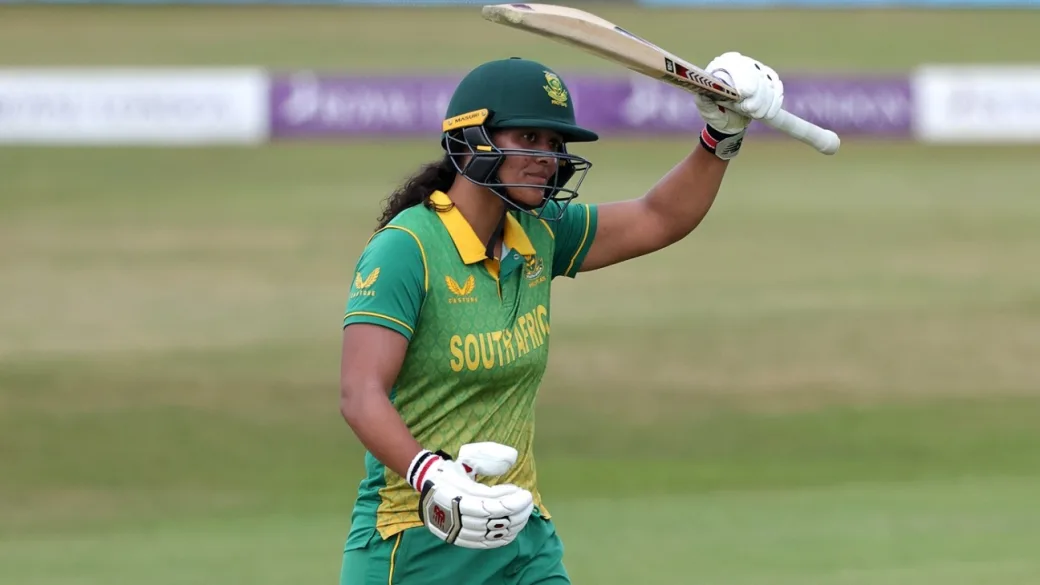
Nadine de Klerk and Chole Tyron’s 124-run sixth-wicket partnership helped South Africa stage a come-from-behind win in the first ODI against New Zealand in Potchefstroom.
Tryon joined de Klerk with South Africa struggling at 111 for 5 in the 28th over of the 236 chase. Captain Laura Wolvaardt had just been knocked over by Hannah Rowe for 50. The duo took their time to consolidate and, in the 34th over, the asking rate went above six runs an over for the first time in the innings. That was when Tryon smacked three fours off Sophie Devine to bring it down to 5.6 an over.
Five overs of ticking along later, de Klerk took Eden Carson down, hitting three fours in a 17-run over to begin the final powerplay. It took the required rate down from 5.8 to 4.55 an over.
De Klerk and Tryon brought up their respective fifties off consecutive balls in the 44th over and then continued to rotate the strike and find the gaps. Tryon fell to Devine for 71 off 58 balls in the 47th over with the scores level and de Klerk hit the winning runs in the next over to finish on 58 not out off 77 balls.
After being put in, New Zealand got off to a slow start and were left five down for 55 in 19.4 overs. Hannah Rowe and Brooke Halliday’s 117-run partnership for the fifth wicket then resurrected their innings.
Rowe and Halliday rebuilt the innings gradually and then accelerated, also getting the run rate up in the process. Halliday brought up her fifty off 70 balls in the 39th over, which Rowe got to hers in the 41st over off 67 balls.
Rowe fell in the 43rd over to Masabata Klass – who finished with 3 for 60 – and Halliday in the 48th to de Klerk – who picked up 2 for 34 – but Lea Tahuhu and Jess Kerr pushed the total to 235 by adding a total of 45 runs off 31 balls.
Brief scores:
South Africa 236 for 6 (Chole Tryon 71, Nadine de Klerk 58*, Lura Wolvaardt 50; Jess Kerr 2-47, Hannah Rowe 2-26) beat New Zealand 235 for 8 (Brooke Halliday 76, Hannah Rowe 52, Masabata Klaas 3-60, Nadine de Klerk 2-34) by four wickets
(Cricinfo)






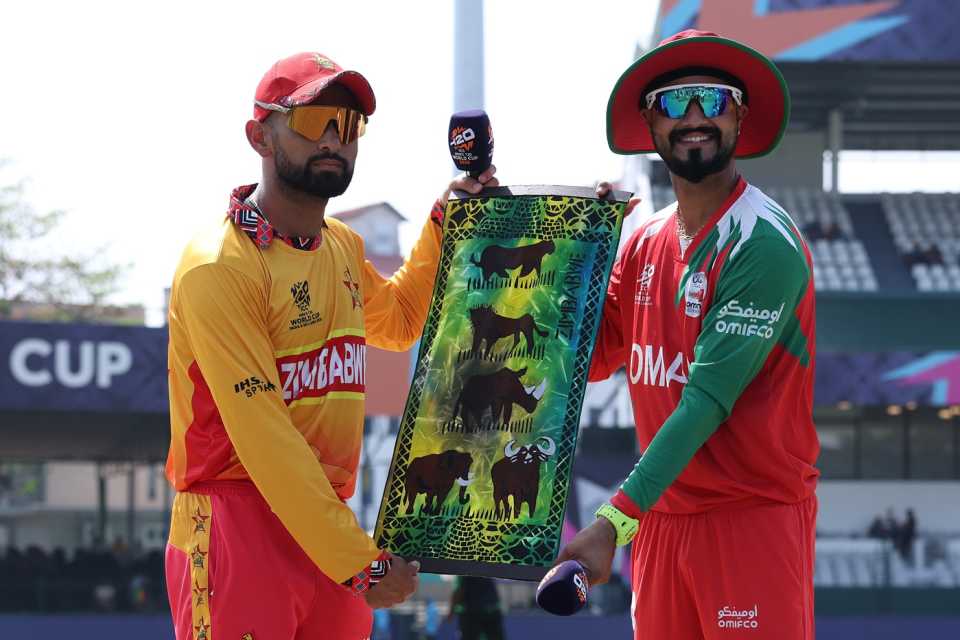
Zimbabwe captain Sikandar Raza decided to field first against Oman in the men’s T20 World Cup match at the SSC in Colombo. Both teams were pleased to arrive in Sri Lanka early to get themselves attuned to the conditions.
Zimbabwe have Blessing Muzarabani back in the squad after he missed the tri-series in Pakistan in November.
Oman, meanwhile, include 44-year-old Aaamir Kaleem the oldest player in the tournament – after he came into the side in place of Hasnain Shah, who was injured after the squad was named.
Zimbabwe return to the tournament after missing out on the previous edition in West Indies and the United States of America. They had made it to the Super 12s of the 2022 T20 World Cup but failed to progress through the qualifiers for the 2024 tournament. They completed qualification alongside Namibia; Brian Bennett was the tournament’s top run-scorer, while Brad Evans and Richard Ngarava were among the leading wicket-takers.
Zimbabwe are bolstered by the return of Graeme Cremer, whose November 2025 comeback marked the longest gap between T20I appearances.
Oman are one of three qualifiers from the Asia-Pacific region, alongside Nepal and the UAE. They have previously appeared in the 2016, 2021, and 2024 editions of the T20 World Cup.
Oman: Jatinder Singh (capt), Aamir Kaleem, Hammad Mirza, Wasim Ali, Karan Sonavale, Jiten Ramanandi, Vinayak Shukla (wk), Sufyan Mehmood, Nadeem Khan, Shah Faisal, Shakeel Ahmad
Zimbabwe: Brian Bennett, Tadiwanashe Marumani, Dion Myers, Brendan Taylor (wk), Sikandar Raza (capt), Ryan Burl, Tashinga Musekiwa, Brad Evans, Wellington Masakadza, Richard Ngarava, Blessing Muzarabani
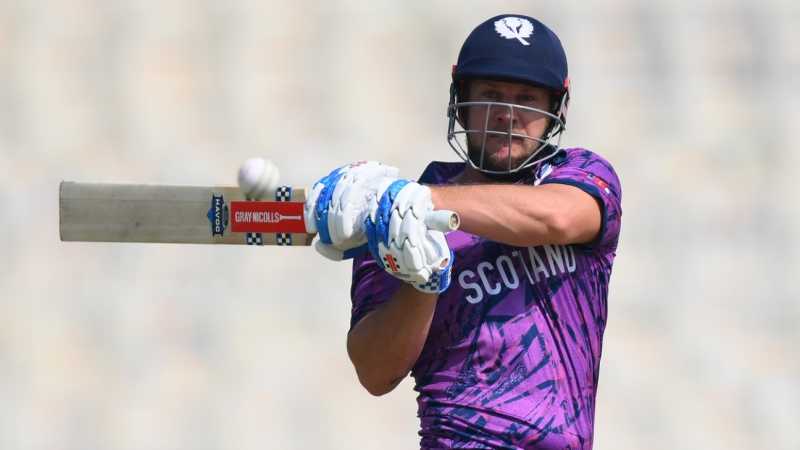
Scotland may have suffered a blip the last time they faced Italy in a T20I but ensured they picked up the first points of their 2026 T20 World Cup campaign after a dominant performance at Eden Gardens. George Munsey’s 54-ball 84, supported by cameos from Brandon McMullen and Michael Leask, followed by Leask’s four-wicket haul helped Scotland spoil Italy’s debut in the tournament. The 73-run win gave Scotland two points after their defeat to West Indies in Kolkata two days ago.
Brief scores:
Scotland 207 for 4 in 20 overs (George Munsey 84, Michael Jones 37, Brandon McMullen 41, Richie Berrington 15, Michael Leask 22*; Ali Hasan 1-21, Grant Stewart 1-44, Thomas Draca 1-37, JJ Smuts 1-38) beat Italy 134 in 16.4 overs (Anthony Mosca 13, JJ Smutts 22, Harry Manenti 52; Michael Leask 4-17, Brad Currie 1-12, Brad Wheal 1-29, Mark Watt 2-24, Oliver Davidson 1-33 ) by 73 runs
(Cricinfo)

In an inauspicious start to Italy’s maiden T20 World Cup campaign, their captain Wayne Madsen dislocated his shoulder in the fourth over of Scotland’s innings at #den Gardens. He was later ruled out of any further participation in the match.
Madsen was fielding at midwicket when he tried to stop a pull from George Munsey. He unsuccessfully dived to his left and rolled over on the practice pitches and immediately asked for medical attention. He soon left the ground using a towel as a sling for his left arm.
Madsen, by far Italy’s most experienced cricketer at age 42, is playing his maiden T20 World Cup and was taken for X-rays right away at the venue. A typical shoulder dislocation can take anywhere between seven to 21 days for full recovery while more serious cases can take three to four months.
In Madsen’s absence, Italy were captained by Harry Manenti for the remainder of Scotland’s innings. Scotland went on to score 207 for 4 after they were sent in to bat.
While serious injury replacements are being trialled by cricket boards in India and Australia in domestic cricket, there are no injury replacements in the playing XI allowed in international cricket. At the moment, replacements are allowed only if players suffer concussion.
Madsen was appointed Italy captain for the 2026 T20 World Cup after Joe Burns was not selected for the tournament. This World Cup is his second across sports; he also represented South Africa in the men’s hockey in the 2006 World Cup.
After the game against Scotland in Kolkata on February 9, Italy play Nepal in Mumbai on February 12, and then travel back to Kolkata to play England on February 16 and West Indies on February 19.
( Cricinfo)

Hong Kong court jails media tycoon and British citizen Jimmy Lai for 20 years

Muzarabani returns as Zimbabwe opt to bowl against Oman

Munsey and Leask spoil Italy’s T20 World Cup debut2

Italy captain Wayne Madsen injures shoulder in T20 World Cup opener

Canada look for early splash against favourites South Africa

Italy opt to bowl; Scotland play Brad Wheal

‘Dates have the highest sugar content to fight Coronavirus’

Sunday Island 27 December – Headlines

#SundayIsland 17th December – Headlines

Sunday Island – 28th March

Sunday Island Headlines – 21 March

Sunday Island – 21st February – Headlines
-

 Features2 days ago
My experience in turning around the Merchant Bank of Sri Lanka (MBSL) – Episode 3
-

 Business3 days ago
Zone24x7 enters 2026 with strong momentum, reinforcing its role as an enterprise AI and automation partner
-

 Business7 days ago
SLIM-Kantar People’s Awards 2026 to recognise Sri Lanka’s most trusted brands and personalities
-

 Business2 days ago
Remotely conducted Business Forum in Paris attracts reputed French companies
-
 Business2 days ago
Four runs, a thousand dreams: How a small-town school bowled its way into the record books
-

 Business2 days ago
ComBank and Hayleys Mobility redefine sustainable mobility with flexible leasing solutions
-

 Business7 days ago
API-first card issuing and processing platform for Pan Asia Bank
-

 Business3 days ago
HNB recognized among Top 10 Best Employers of 2025 at the EFC National Best Employer Awards