
Latest News
Athapaththu’s 195* trumps Wolvaardt’s 184* in epic Sri Lanka chase

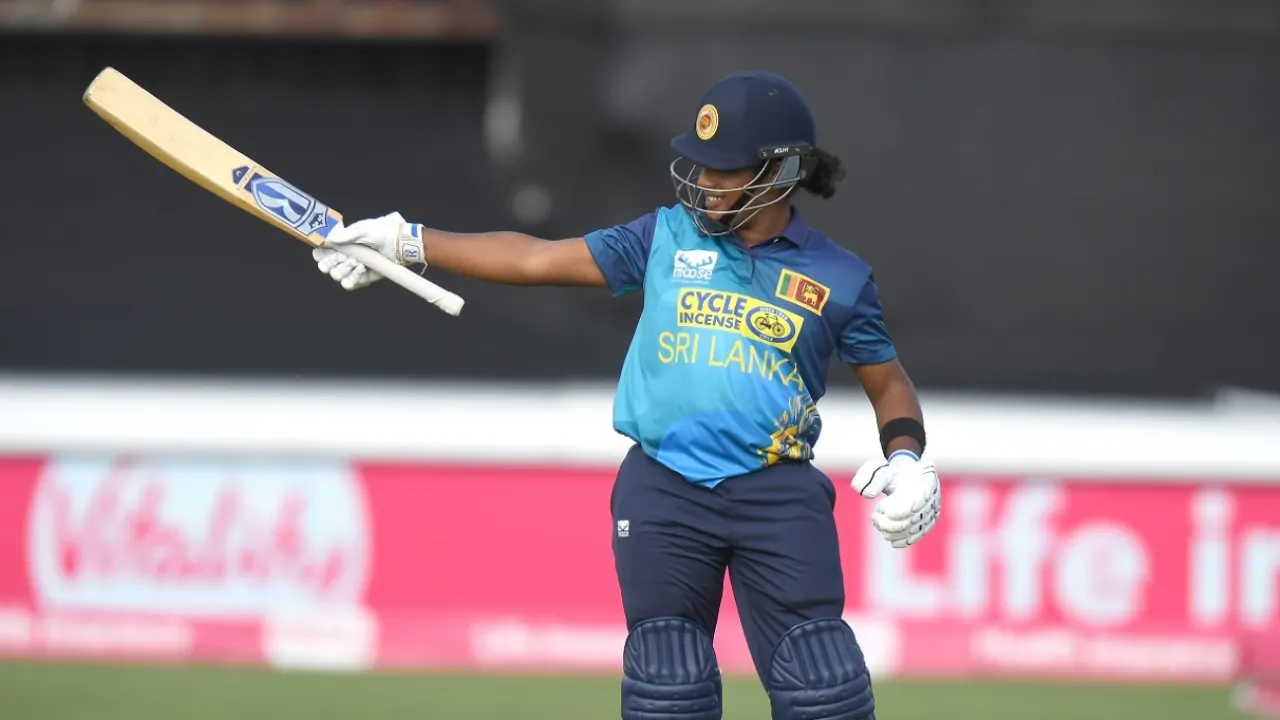
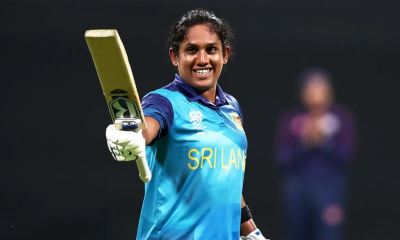
Sri Lanka completed the highest successful chase in women’s ODIs, against South Africa, and the only one over 300 thanks to a sensational 195* from their captain Chamari Athapaththu. She finished with her career-best ODI score and the third highest individual score by a batter in women’s ODIs to help Sri Lanka level the series 1-1.
In a battle of the captains, Athapaththu’s knock trumped Laura Wolvaardt’s 184* – the highest by a South African player and her fourth hundred since being named captain last September. She led South Africa to their fifth highest ODI score and highest against Sri Lanka but it was not enough.
Athapaththu and Nilakshika de Silva shared in a 179-run fifth-wicket partnership – the second-highest stand for the fifth-wicket or lower in the women’s game – and rescued Sri Lanka from 126 for 4 in the 21st over. Crucially, Sri Lanka gained two points on the ICC Womens Championship table, which determines qualification for the 2025 ODI World Cup. They move up to seventh spot and remain in the race for automatic entry to India next year – the top five teams along with the hosts will go through – with six matches left to play.
Sri Lanka leave South Africa after their most successful visit to these shores. Along with a squared ODI series, they won the T20I series 2-1 – their first series win over South Africa. In the immediate aftermath of that win, Athapaththu hinted international retirement but the form she displayed in the third ODI in Potchefstroom suggested she is nowhere near ready to put the bat down.
Sri Lanka had never scored 300 in an ODI before, much less chased that much but on a flat pitch with a fast outfield, Athapaththu fancied their chances. She hit the ball cleanly, was brutal straight down the ground and quick between the wickets and that was after opening the bowling and delivering a full quota of ten overs with a return of 1 for 59.
She was the senior partner in her opening stand with 18-year-old Vishmi Gunaratne and took the fight to South Africa. They put on 90 inside 16 overs before Gunaratne was given out lbw to Delmi Tucker, who was also involved in the second wicket. She took a good catch at backward point to dismiss Prasadani Weerakkody off Nadine de Klerk’s bowling and South Africa sensed an opportunity to make inroads into Sri Lanka’s middle order.
Wolvaardt brought back Ayabonga Khaka, playing in her 100th ODI, and she had immediate success. She had Hansima Karunaratne caught behind, chasing a wide one, off the first ball of her fourth over and Kavisha Dilhari caught behind down the leg side two balls later. Sinalo Jafta took both catches but the second one did her dirty as her shoulder hit the ground awkwardly and she had to leave the field. Uncapped 16-year-old Karabo Meso replaced her behind the stumps and thought she had wicket off De Silva’s first ball but umpire Jacqueline Williams was unmoved. Sri Lanka were 126 for 4 in the 21st over and Athapaththu was still there.
The Sri Lankan captain was unfazed by the mini-collapse and simply kept batting. She brought up a hundred off 78 balls in the 26th over and kept Sri Lanka on track as South Africa unraveled. Their fielding was sloppy; overthrows were offered aplenty and importantly, Athapaththu was dropped on 128 by Sune Luus at deep mid-wicket off Nonkululeko Mlaba in the 32nd over. At the time, Sri Lanka still needed 106 runs from 18.3 overs.
Athapaththu made the most of her let-off and continued to breeze her way through the chase with Silva providing strong support and South Africa losing their way. They sent down 19 wides and two no-balls in total and Sri Lanka cashed in. Athapaththu and de Silva combined boundary hitting with exceptional strike rotation and reached the target with five-and-half-overs – 33 balls – to spare to share the trophy
Earlier, South Africa would have been confident of claiming it after Wolvaardt scored her fastest – off 100 balls – and second successive hundred in the series against Sri Lanka. In the absence of Tazmin Brits – who underwent surgery on a meniscus tear in her left knee today – Wolvaardt has embraced the responsibility of both anchoring and accelerating the innings. She was the dominant partner in the opening partnership of 116 with Lara Goodall and scored 83 off 74 balls, while Goodall, playing in her 50th ODI, contributed 31 off 55.
South Africa’s innings stuttered through the middle period as the Sri Lankan spinners squeezed them. Goodall, Tucker and Luus were dismissed for eight runs in the space of 18 balls, but recovered thanks to their most reliable allrounder Marizanne Kapp. She and Wolvaardt shared a run-a-ball partnership of 63, and Kapp was at the other end when Wolvaardt reached her hundred before she was run-out at the end of the 35th over. South Africa were 187 for 4 at the time and the arrival of de Klerk brought an increased intensity.
De Klerk and Wolvaardt put on 92 in 80 balls for the sixth wicket, with de Klerk just establishing herself as a finisher, it was Wolvaardt who was aggressive in the stand. She hit her next 84 runs in 47 balls and South Africa scored 114 runs in their last 15 overs, at 7.6 runs an over, which seemed to set them up well until Athapaththu had the final say.
Scores:
Sri Lanka 305 for 4 in 44.3 overs (Vishmi gunarathne 26, Chamari Athapaththu 195*, Nilakshika de Silva 50*; Ayabonga Khaka 2-54, Nadine de Klerk 1-59, Delmi Tucker 1-42) beat South Africa 301 for 5 in 50 overs (Laura Wolvaardt 184*, Lara Goodall 31, Marizanne Kapp 36, Nadine de Klerk 35; Kavisha Dilhari 2-47, Chamari Athapaththu 1-59) by six wickets







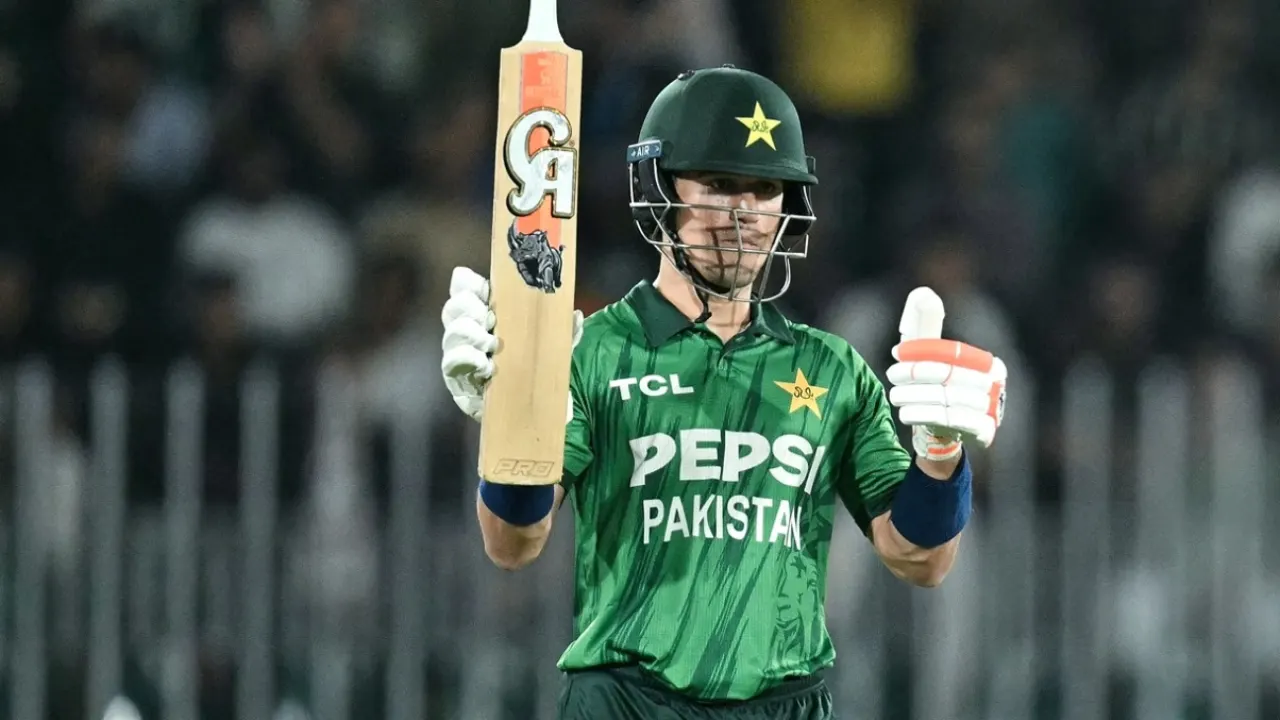
Maaz Sadaqat crashed 96 off 51,Sahibzada Farhan clobbered 73 off 44, and Pakistan scorched their way through the last 12 overs of their innings to mount a fearsome total of 215 for 3. Pakistan reaped 156 runs just in the last 12 overs of their innings, as a 73-run stand between Sadaqat and Farhan was followed by a manic 72-run partnership between Sadaqat and Hasan Nawaz.
Sri Lanka’s batting was woeful in response. They slumped to 64 for 5 by the 11th over, with none of their top seven managing to get to 30. They limped to 133 for 7, having had their hopes of leveling the series wrecked by quicks Mohammad Imran and Salman Mirza, who took five wickets between them.
Sadaqat propels Pakistan into the stratosphere
The openers had laid a decent platform with Pakistan having got to 55 for 1 by the end of the seventh over. But it was Sadaqat who injected the energy that truly set Pakistan on course to their mammoth total. Having gone at less than a run a ball in his first eight balls, Sadaqat unleashed a spectacular lofted square drive off Eshan Malinga to collect his first six, before pumping the same bowler down the ground later in the 10th over.
Sadaqat would go on to clobber six further sixes and five further fours. The big hits tended to come down the ground, while his fours were more square of the wicket. Of the 125 runs Pakistan plundered in the second half of their innings, 79 off 40 came from Sadaqat, who pummeled both pace and spin with equal relish. Off the sixteenth over, bowled by Maheesh Theekshana, Sadaqat thumped three sixes in the arc between long on and midwicket.
Sadaqat, whose previous top score in three T20Is had been 50, could have gone to triple figures off the last ball of the innings, but holed out to deep cover instead, unable to quite find the power to lift a Malinga slower ball over the ropes. He had utterly dominated the middle and late overs, however.
Farhan sets the tone
On another flat Rawalpindi deck, Farhan made the first big charge, although he waited until spin came on to really get into high gear. Theekshana was one of his main victims as well. Farhan’s first six came from a slog sweep off Theekshana in the seventh over, before he launched the same bowler over wide long on and cow corner off successive balls in the ninth over. Getting to his 12th T20I fifty off the 31st ball he faced, Farhan began to aim big blows off the seamers as well. He was caught at deep third off the bowling of Dasun Shanaka, in the 15th over.
Sri Lanka stumble in the powerplay
An excellent Salman Mirza bouncer took the glove of Lahiru Udara in the first over, ending the innings of one of Sri Lanka’s few form batters for a mere five runs. And although Sineth Jayawardena – playing his first international in a full-strength Sri Lanka side – hit three consecutive boundaries in the third over, Sri Lanka were unable to build up any momentum in the powerplay. By the end of the sixth over, they had laboured to 35 for 2.
Imran’s spell lights up the middle overs
A full house in Rawalpindi was treated to some excellent fast bowling by Imran, who finished with the game’s best figures of 3 for 11 from his four overs. Having got Jayawardena to top-edge a desperate pull shot at the end of his second over, Imran had Kusal Mendis caught behind off a slower delivery, before two balls later (a wide in between), he took Sahan Arachchige’s edge with a quick delivery angled across the left-hander. Wicketkeeper Khawaja Nafay made two diving grabs to convert these chances in the eighth over.
All through his unbroken spell, Sri Lanka’s batter struggled to so much as hit Imran off the square, despite the good batting conditions on offer. Imran mixed up his pace, frequently going to slower balls, but his line and length control were also excellent through the spell. When he finished his unbroken spell at the end of the 10th over, Sri Lanka’s required rate had climbed past 15.
Chamindu Wickramasinghe and Theekshana struck some late boundaries, but by the time they came to the crease, Sri Lanka did not have a realistic shot at levelling this series. They lost by 82 runs in the end.
Scores:
Pakistan 215 for 3 in 20 overs (Sahibzada Farhan 73, Fakhar Zaman 22, Maaz Sadaqat 96, Hasan Nawaz 19*; Maheesh Theekshana 1-55, Eshan Malinga 1-41,Dasun Shanaka 1-30) beat Sri Lanka 133 for 7 (Sineth Jayawardena 22, Kamnbdu Mendis 23, Chamindu Wickremasinghe 29, Maheesh Theekshana 32*; Salman Mirza 2=28, Mohammad Imran 3-11, Saim Ayub 1-19, Shadab Khan 1-19) by 82 runs
[Cricinfo]

At least 139 people, including 15 children, have died and 84 are missing after a boat capsized off the coast of Djibouti, according to the United Nations migration agency.
In a statement on Sunday, the International Organization for Migration (IOM) quoted survivors as saying that the incident happened near Guhere off Djibouti’s eastern coast in the Gulf of Aden near the Bab al-Mandeb strait from Thursday night to before dawn on Friday.
The boat was heading from Djibouti to Yemen with more than 300 people on board. More than 80 people – all Ethiopians – survived the shipwreck while Djiboutian search and rescue operations continued.
“Our teams are on the ground alongside local authorities to provide emergency assistance,” IOM Chief of Mission in Djibouti Alexandre Coissac said, lamenting the “devastating loss of life”.
That number only includes those buried by authorities in Djibouti. Others have been buried by the migrants themselves but they won’t be added to the official count until authorities can verify the bodies, Alexandre Coissac, IOM Chief of Mission in Djibouti, told the Associated Press.
“This tragedy is a stark reminder of the dangers faced by migrants along this migration corridor as they seek economic opportunities,” Coissac added.
[Aljazeera]
Foreign News
‘Time for Ukraine to get new president,’ says Trump after Zelensky condemns diesel deal

US President Donald Trump has said he thinks “it’s time for Ukraine to get a new president” as he responded to Volodymyr Zelensky’s criticism of the US diesel deal with Russia.
The Ukrainian president warned a new deal to release millions of tonnes of Russian diesel into the US would provide Moscow with money to continue its war against his nation, calling it a gift to Russian President Vladimir Putin.
Trump told reporters outside the White House on Saturday that Zelensky “wants to make problems for the world” by continuing to authorise attacks on Russian refineries.
“He’d better damn well stop,” Trump said, before suggesting Ukraine should “get a new leader who can make a deal”.
Global fuel supplies, including diesel, have been severely limited by the war against Iran launched by the US and Israel, which led to the effective closure of the Strait of Hormuz, through which roughly a fifth of the world’s oil products usually flows.
Russia – a major producer – and Ukraine have recently intensified their strikes on each other’s energy infrastructure and transport facilities, further straining energy markets.
“We said, ‘you can do whatever you want to Russia, don’t hit the refineries’, because that’s a world problem that’s caused,” Trump continued.
“He could have made many deals and for some reason, he never does.”
Putin’s envoy Kirill Dmitriev described Trump’s intervention as “iconic and historic”, saying that Ukraine “needs leadership actually focused on peace”.
The US president confirmed on Friday that an agreement had been reached with Moscow to suspend sanctions on Russian diesel exports until 7 April.
Zelensky reacted by saying it would allow Moscow to raise new funds to source new military equipment to continue the war.
He also accused Moscow of taking the deal “to mean they can keep fighting, to mean they keep dropping bombs on cities” following deadly new strikes on Zaporizhzhia.
The Ukrainian president spoke to several allies on Saturday to discuss the latest developments, calling for “real decisions to protect lives in Ukraine” and to protect European security.
A Downing Street spokesperson said UK Prime Minister Andy Burnham had spoken to Zelensky and offered his “complete solidarity”.
The pair had agreed Russia should acquiesce to “an immediate energy ceasefire” and end its attacks on shipping in the Black Sea, the spokesperson said, as “this would immediately release more energy and food supplies into the global market”.
News of the US-Russia diesel deal was also met with criticism by EU’s foreign affairs chief Kaja Kallas, who echoed Zelensky in saying that suspending sanctions “provides Moscow with more revenues to wage war”, adding: “This is not the time to ease pressure on Russia, and Europe won’t.”
She said European foreign ministers intended to approve the biggest set of sanctions on Russia since the start of its full-scale invasion on Monday.
The deal with Russia is the latest effort from Trump to lower fuel prices in the US ahead of the midterm elections, after months spent grappling with the political consequences of the Iran war.
That conflict, which began in February, has sent the cost of petrol and in particular diesel skyrocketing, which has soured his standing with the American public who have been stung by the higher pump prices and knock-on effects that led to across-the-board inflation.
The average price of diesel is currently $6.28 (£4.74) a gallon, according to the AAA – up from last month’s $5.94 average, and $3.68 last year.
Under the deal, Russia would release an initial 300,000 tonnes of diesel “to the American and global marketplace” followed by an additional 500,000 tonnes in November.
A further million would follow, Trump wrote on Truth Social, and then another 3m tonnes “within a short period of time” – but he noted that this delivery will be “based on the condition of their diesel refineries”.
In the past 10 months, Russia experienced two waves of severe fuel shortages across the country due to Ukrainian drones strikes on its oil refineries.
Diesel production in Russia dropped by an estimated 30%, according to the International Energy Agency.
Trump had already called for new elections in Ukraine last December, saying Ukrainian voters should have the choice to replace Zelensky.
Since the war broke out in 2022 Ukraine has been under martial law, meaning elections are suspended.
[BBC]

Farhan and Sadaqat help Pakistan seal series in style

At least 139 dead, 84 missing as migrant boat capsizes off Djibouti

Rahmat, Malik fifties lead Afghanistan’s strong reply

Showers above 75 mm are likely at some places in the Western, Sabaragamuwa, Central, Uva and North-Western provinces and in Galle, Matara, Anuradhapura and Mannar districts.

Iranian ships stranded, Lanka fears US sanctions

Sri Lanka CERT warns of overseas university admission scams

‘Dates have the highest sugar content to fight Coronavirus’

Sunday Island 27 December – Headlines

#SundayIsland 17th December – Headlines

Sunday Island – 28th March

Sunday Island Headlines – 21 March

Sunday Island – 21st February – Headlines
-

 News7 days ago
Geneva takes up Sallay’s case and govt. ignores opportunity to answer accusations
-

 Features6 days ago
Preventing grievances from becoming communal
-

 Features4 days ago
The Sri Lankan who made Scottish history
-

 Sports4 days ago
Nissanka absence opens door for Sri Lanka’s young guns
-

 News5 days ago
Gnansara Thera to be assigned to prison printing section: Officials
-

 News3 days ago
NDB fraud Rs 60mn more than reported
-

 Features7 days ago
Sri Lanka Cricket Bill: Governance reform is not yet a cricket strategy
-

 News3 days ago
Removing monk’s robes matter for Sangha to decide: Mahanayake Theras