
Latest News
Trump signs order banning transgender women from female sports

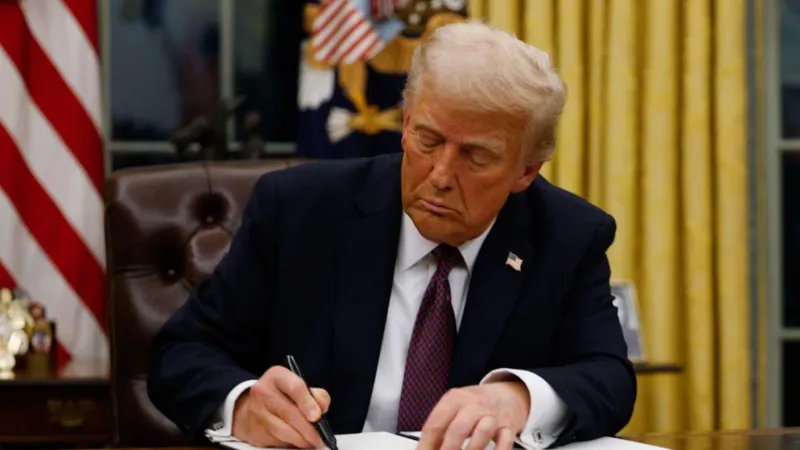
US President Donald Trump has signed an executive order that prevents transgender women from competing in female categories of sports.
The order provides guidance, regulations and legal interpretations, and it will enlist the Department of Education to investigate high schools thought to be non-compliant.
Republicans say it restores fairness to sports but LGBT advocacy and human rights organisations have described the move as discriminatory.
The order, which goes into effect immediately, largely covers high school, universities and grassroots sports.
A number of sporting governing bodies, including swimming, athletics and golf, have banned transgender women from competing in the female category at elite level if they have gone through male puberty.
According to White House officials who briefed reporters on Wednesday morning, this latest order empowers the Department of Education to investigate how schools implement Title IX, a US law that bans sex discrimination in federally funded education programmes.
An administration official said that the executive order will reverse the position of the Biden administration which in April last year said that LGBT students would be protected by federal law, although it did not give specific guidance on transgender athletes.
“If you let men take over women’s sports teams or invade your locker rooms, you will be investigated for violations of Title IX and risk your federal funding,” Trump explained.
Additionally, the White House plans to bring in sporting bodies – such as the National Collegiate Athletics Association, or NCAA – to come to the White House to meet female athletes and their parents to discuss concerns.
The official who discussed the order, said the US would do all it could to prevent transgender athletes from competing against females in International Olympic Committee competitions that take place on US soil.
President Trump specified that the order would include the 2028 Olympic Games in Los Angeles.
He has said he will deny visas for transgender Olympic athletes trying to visit the US to compete at the LA Games.
Ahead of signing the executive order, Trump declared that “the war on women’s sports is over”, saying that during the LA Games, “my administration will not stand by and watch men beat and batter female athletes.”
He said he would direct the secretary of homeland security “to deny any and all visa applications made by men attempting to fraudulently enter the United States while identifying themselves as women athletes…”
IOC has been approached for comment.
White House officials described the policies as being broadly popular with Americans, and critical to ensuring “fairness” for women in sports, as well as safety.
In a statement, Human Rights Campaign president Kelley Robinson said that the order “exposes young people to harassment and discrimination, emboldening people to question the gender of kids who don’t fit a narrow view of how they’re supposed to dress or look”.
“For so many students, sports are about finding somewhere to belong,” Ms Robinson added. “Not partisan policies that make life harder for them.”
Less than 1% of the population over the age of 13 in the US are transgender, according to a study by the UCLA Williams Institute, and the number playing sports is smaller.
On Trump’s first day in office on 20 January, he signed a separate order calling for the federal government to officially define sex as either being male or female.
[BBC]

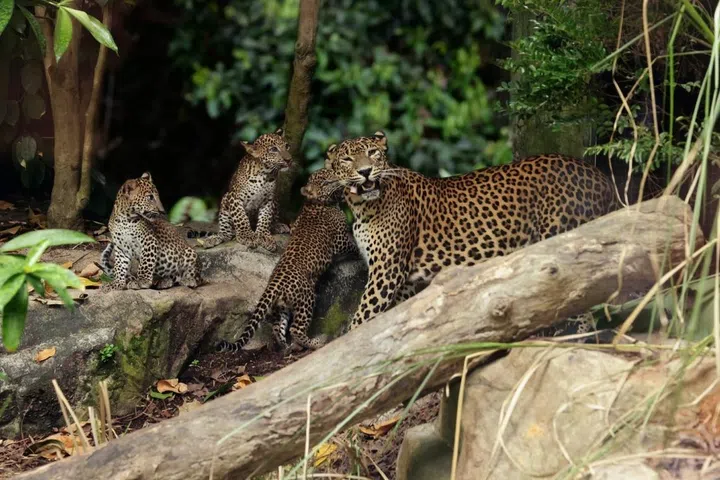
Three Sri Lankan leopard cubs that were born at the Singapore Zoo on Jan 1 have now made their public debut at the facility.
The two males and one female, born to mother Yala and father Asanka, are the first of their species yo be born at the Singapore Zoo. The last successful birth in Singapore was recorded at the Night Safari three decades ago.
The triplets, which are the pair’s first litter, are among around 80 Sri Lankan leopards in zoos worldwide.
The species is listed as vulnerable on the International Union for Conservation of Nature (IUCN) Red List, with fewer than 800 individuals estimated to remain in the wild.
Visitors can now see the triplets at the Wild Africa exhibit, said the Mandai Wildlife Group in a statement on April 16.
The cubs can be found in the exhibit with their mother daily until mid-May and, subsequently, every Wednesday, Saturday and Sunday.
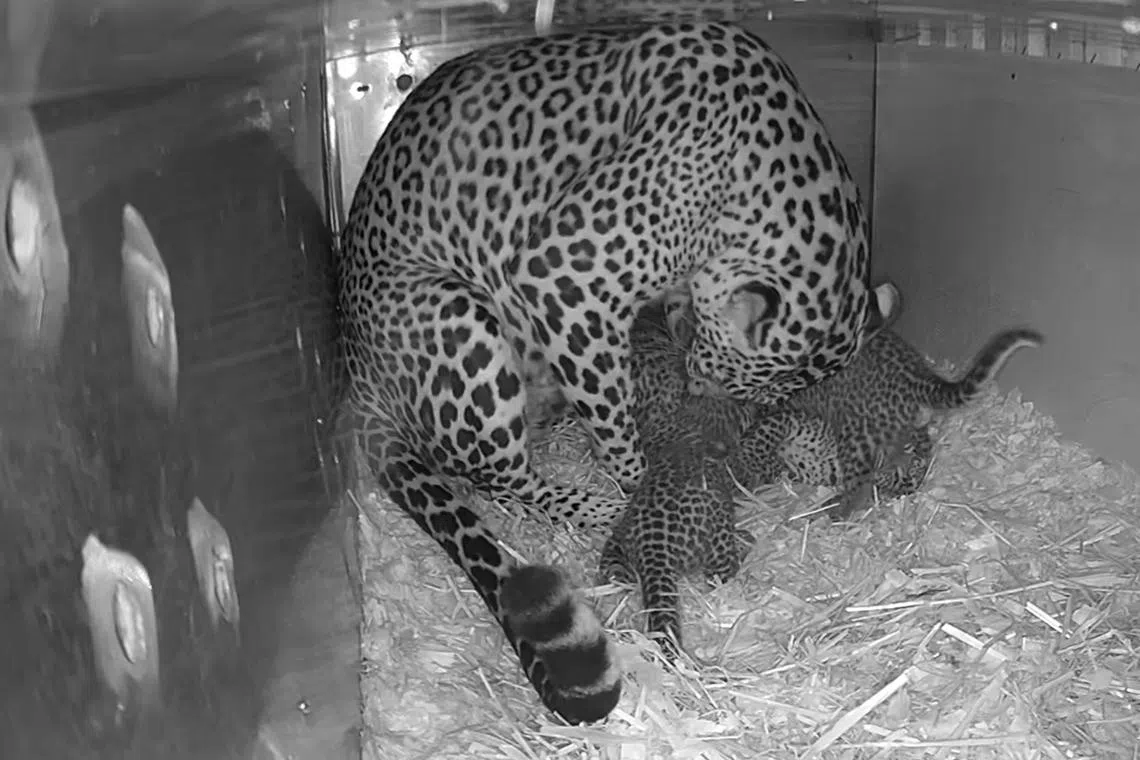
Yala with her cubs in their nest box, a month after their birth on Jan 1. (Straits Times)

A leopard cub investigating a piece of meat suspended from a tree – one of the several enrichment items in the Wild Africa exhibit designed to keep the cats mentally and physically stimulated. (Straits Times)
Mandai Wildlife Group curator Anand Kumar said it took nearly three years and close collaboration across continents to bring together a compatible pair of Sri Lankan leopards.
(Straits Times)
https://www.straitstimes.com/singapore/singapore-zoos-first-sri-lankan-leopard-cubs-make-their-public-debut?ref=top-stories

The Sri Lanka Navy has seized a local multi- day fishing trawler, it’s four man crew together with a consignment suspected to be narcotics off the Southern Coast of the island.
The vessel is presently being escorted to the Dikowita fisheries harbour for further investigations and legal proceedings.

US President Donald Trump has threatened to fire Federal Reserve Chair Jerome Powell if he does not step aside at the end of his term in May.
The two have been embroiled in a bitter spat over Powell’s reluctance to cut the central bank’s interest rate, despite Trump’s repeated calls.
Powell’s term expires on 15 May, but he is planning to remain in post until his successor, Kevin Warsh, is confirmed by the Senate.
“Then I’ll have to fire him,” Trump told Fox Business, when asked about Powell’s plans to stay on in the job.
“I’ve held back firing him. I’ve wanted to fire him, but I hate to be controversial,” Trump said.
Thom Tillis, an influential Republican senator on the committee which oversees nominations for the Federal Reserve chair, has threatened to block Warsh’s confirmation. If Warsh is not confirmed before Powell’s term expires, he plans to stay on temporarily in the post.
“That’s what the law calls for. That’s what we’ve done on several occasions,” Powell has said.
Tillis has warned Trump he will not let Warsh’s appointment go ahead unless a criminal investigation into Powell, linked to the renovation of the Federal Reserve building, is dropped.
[BBC]

Singapore Zoo’s first Sri Lankan leopard cubs make their public debut

Sri Lanka Navy seize multi day fishing craft suspected of smuggling narcotics

‘Sent to be killed’: How Russia forces migrants to fight in Ukraine

Babar Azam 71* helps Peshawar Zalmi extend lead at top

Trump threatens to fire Fed chair Jerome Powell if he doesn’t leave in May

Royal Challengers Bengaluru top the table after bowlers help thump Lucknow Super Giants

‘Dates have the highest sugar content to fight Coronavirus’

Sunday Island 27 December – Headlines

#SundayIsland 17th December – Headlines

Sunday Island – 28th March

Sunday Island Headlines – 21 March

Sunday Island – 21st February – Headlines
-

 News5 days ago
CEB orders temporary shutdown of large rooftop solar systems
-
 Features5 days ago
From Royal College Platoon to National Cadet Corps: 145 years of discipline, leadership, and modern challenges
-

 Business7 days ago
Israeli attack on Lebanon triggers local stock market volatility
-

 Business7 days ago
HNB Assurance marks 25 years with strategic transformation to ‘HNB Life’
-

 Latest News4 days ago
PNS TAIMUR & ASLAT arrive in Colombo
-

 News6 days ago
Anura Solomons passes away
-

 Features5 days ago
CIA’s hidden weapon in Iran
-

 Latest News4 days ago
Prasidh, Buttler set up comfortable win for Gujarat Titans