
Latest News
Trump pledges to lift Syria sanctions as he seals $142bn arms deal on Saudi visit


President Donald Trump has said the US has “no stronger partner” than Saudi Arabia during his first major foreign trip – a whirlwind visit of Gulf countries mainly focused on shoring up investment.
Speaking in Riyadh, the US president also pledged to lift all sanctions against Syria, saying it was now time for the country to move forward with “a chance at greatness”.
Day one of the tour saw the US and Saudi Arabia announce a $142bn (£107bn) arms deal, as well as other investments that the country’s crown prince said could eventually be worth $1tn.
Trump also made Saudi Arabia the first foreign stop during his first term, in 2017. The rest of his trip will include stops in Qatar and the UAE.
Trump’s arrival in Saudi Arabia on Tuesday was met with a grand reception, including a lavish lavender-coloured carpet rolled out to greet him. He had even chosen a purple tie to match it.
Riyadh swapped red carpets for lavender in 2021, saying that it was a symbol of the kingdom’s desert wildflowers and generosity.
Crown Prince Mohammed bin Salman met Trump on the tarmac and provided an honour guard of Arabian horses to accompany his presidential limo.
In his remarks at an investment forum, Trump lauded the US-Saudi relationship as “more powerful than ever before”.
“From the moment we started we’ve seen wealth that has poured – and is pouring – into America,” he said.
Trump is trying to woo foreign investors to the US to boost the American economy, a key focus of his administration in the nearly four months of his second term.
“I like him too much,” Trump said of Saudi Arabia’s crown prince and de-facto ruler, Mohammed bin Salman. “That’s why we give so much.”
The pomp and ceremony was a step up from the muted welcome for former US President Joe Biden, who travelled to the oil-rich kingdom in 2022 to seek their help in lowering petrol prices, fist-bumping the crown prince.
That visit came two years after he declared Saudi Arabia a “pariah” state following the 2018 murder of dissident journalist Jamal Khashoggi.
Trump flew to the Gulf to strike financial deals and argued in his speech that it is through this kind of commerce and economic development that the Middle East would transcend violence and division.
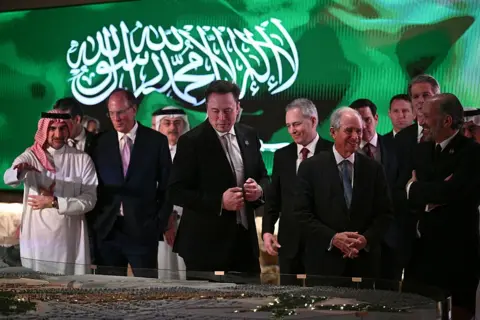
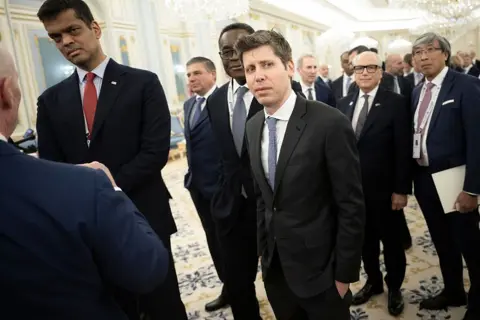
Underscoring his commitment to deal-making, Trump was joined by a number of business leaders including billionaire ally Elon Musk, OpenAI CEO Sam Altman, BlackRock CEO Larry Fink and Nvidia CEO Jensen Huang.
The high-profile executives are meeting a Saudi Arabia eager to diversify its oil-rich economy by increasing its artificial intelligence capabilities.
Mr Huang announced during the visit that Nvidia will sell more than 18,000 of its latest AI chips to Saudi company Humain.
During his address, Trump said it was his “dream” to have Saudi Arabia join the Abraham Accords, a deal brokered in his first administration that saw relations between Israel and some Gulf countries normalised for the first time.
But his good friend, Mohammed bin Salman, has made it clear that will not happen until there is a permanent end to the war in Gaza and a clear path to Palestinian statehood.
There is a limit to what this friendship can deliver.
Trump only briefly addressed the ongoing conflict between Israel and Hamas.
He told those in attendance that people in Gaza deserved a “better future”, which had been held back by Hamas choosing “to kidnap, torture and target” for “political ends” – a reference to the 7 October 2023 attack on Israel.
Trump also announced he was lifting sanctions on Syria to improve the country’s new government, a move he suggested was requested by Mohammed bin Salman.
“Oh, what I do for the crown prince,” the US leader said.
American sanctions on Syria had been in place for over a decade, meant to apply pressure and economic pain against the dictatorship of former President Bashar al-Assad, who was ousted in December.
Syria has since elected a new transitional president, creating an opening for renewed US diplomacy efforts.
The surprise announcement to lift the sanctions represents a sea change for Syria, described by its foreign minister Asaad Shibani as a “new start” in the country’s reconstruction path.
Robert Ford, who served as US ambassador to Syria under President Barack Obama, applauded the Trump administration’s move to lift sanctions.
“I visited Syria three months ago and the country is simply devastated after the 13-year civil war. It needs to rebuild, it needs reconstruction, it needs foreign financing to do that,” he told the BBC.
“So removing the sanctions, that will enable international capital flows to go into Syria from Gulf states, from other Arab states and from different aid agencies is absolutely vital.”
Trump was expected to meet Syrian President Ahmed al-Sharaa on Wednesday in Saudi Arabia.
From Riyadh, Trump will head to both Qatar and the UAE, which has already committed to investing $1.4tn in the US over the next decade.
[BBC]

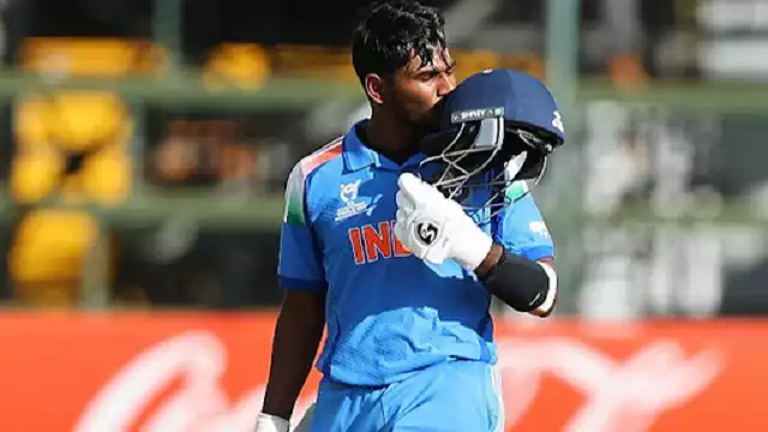
On a batting beauty at the Harare Sports Club, India’s assembly line of batting talent was out in full splendour in the Under-19 World Cup semifinal. There were two centurions in a statement innings from Afghanistan, but Uzairullah Niazai and Faisal Shinozada’s knocks – glorious as they were – were rendered footnotes by a superb century from Aaron George, who led India’s record chase of 311 with the kind of composure that belied his low scores from earlier in the tournament.
Afghanistan 310/4 in 50 overs (Faisal Shinozada 110, Uzairullah Niazai 101; Kanishk Chouhan 2-55, Deepesh Devendran 2-64) lost to India 311/3 in 41.1 overs (Aaron George 115, Vaibhav Sooryavanshi 68, Ayush Mhatre 62; Nooristani Omarzai 2-64) by 7 wickets.
Latest News
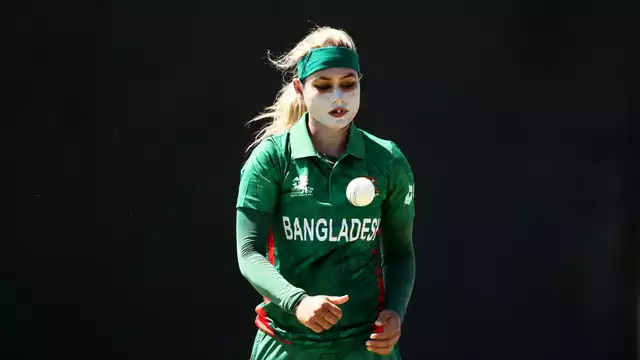
Pakistan PM Sharif on India boycott: ‘A very considered stance, and we should completely stand by Bangladesh’
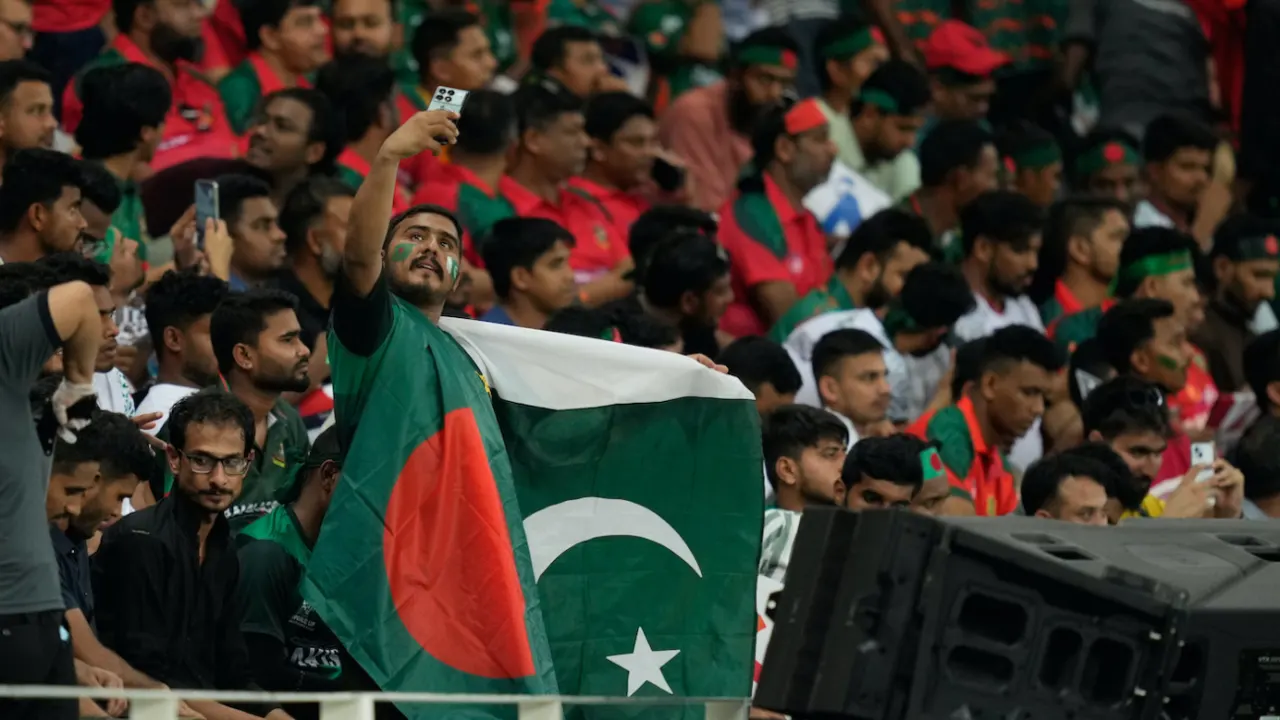
Shehbaz Sharif, the Pakistani Prime Minister, has said Pakistan’s decision to boycott the game against India at the men’s T20 World Cup 2026 was a show of solidarity with Bangladesh, after their removal from the tournament.. It is the first time any official from either the Pakistan state or the PCB has publicly touched upon the reasons for the boycott.
“We have taken a very clear stand on the T20 World Cup that we won’t play the match against India because there should be no politics on the sports field,” Sharif told members of his cabinet on Wednesday. “We have taken a very considered stance, and we should completely stand by Bangladesh, and I think this is a very appropriate decision.”
The Pakistan government put out a post on Sunday saying that while the team would participate in the T20 World Cup, it would not take the field in the February 15 group game against India. The post, which came after a week in which Pakistan’s participation in the tournament had become uncertain, did not give any reason for the decision.
The PCB has not spoken publicly on the matter, but the ICC issued a response a few hours after the X post, in which it said it hoped “that the PCB will consider the significant and long-term implications for cricket in its own country as this is likely to impact the global cricket ecosystem, which it is itself a member and beneficiary of.”
It is not known whether the PCB has officially notified the ICC, or whether there has been any contact between the two bodies. The ICC had said that it “expects the PCB to explore a mutually acceptable resolution, which protects the interests of all stakeholders.”
The Prime Minister’s comments confirm, however, that the boycott decision is linked to what the PCB chief Mohsin Naqvi – the interior minister in Sharif’s government – called the ICC’s double standards in excluding Bangladesh from the T20 World Cup.
Bangladesh were replaced in the world event after their government refused to let the team travel to India, where they were based for their games. The government, citing security concerns, wanted Bangladesh to play their games instead in Sri Lanka, the co-hosts for the event, and where Pakistan will play all their games.

Showers above 75 mm are likely at some places in the Uva province and in Batticaloa, Ampara, Hambantota and Nuwara-Eliya districts

Parliament: Govt. questioned on returned cheques, delayed payments for disaster victims

President urges shedding of petty differences to achieve an economically strong Sri Lanka

PM: No withdrawal of modules introduced for Grade 6 under proposed education reforms

Lion flags flutter in Vavuniya as black flags mark Independence Day in Kilinochchi

From Gut Feel to GPS: Why Sri Lankan brands must own their AI intelligence

‘Dates have the highest sugar content to fight Coronavirus’

Sunday Island 27 December – Headlines

#SundayIsland 17th December – Headlines

Sunday Island – 28th March

Sunday Island Headlines – 21 March

Sunday Island – 21st February – Headlines
-
 Opinion6 days ago
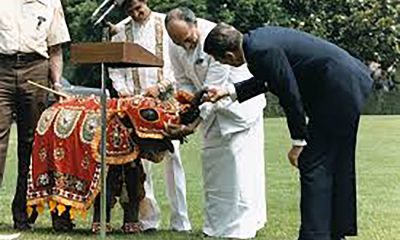
Sri Lanka, the Stars,and statesmen
-

 Business5 days ago
Hayleys Mobility ushering in a new era of premium sustainable mobility
-

 Business2 days ago
SLIM-Kantar People’s Awards 2026 to recognise Sri Lanka’s most trusted brands and personalities
-
 Business5 days ago
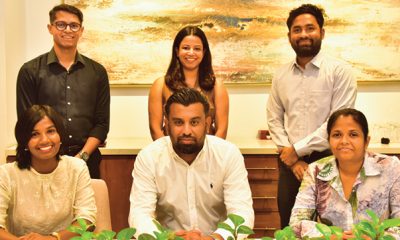
Advice Lab unveils new 13,000+ sqft office, marking major expansion in financial services BPO to Australia
-
 Business5 days ago
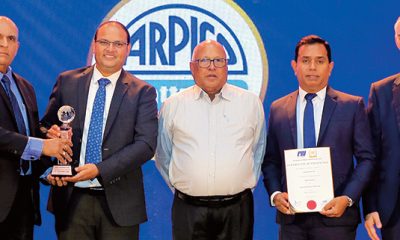
Arpico NextGen Mattress gains recognition for innovation
-
 Business4 days ago
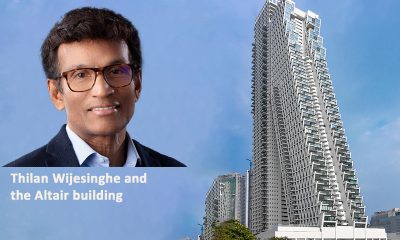
Altair issues over 100+ title deeds post ownership change
-
 Business4 days ago
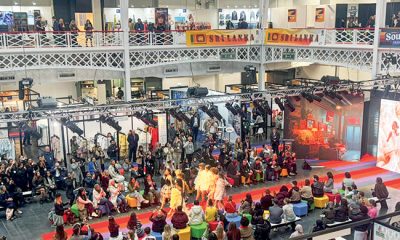
Sri Lanka opens first country pavilion at London exhibition
-

 Editorial5 days ago
Govt. provoking TUs