
Features
Trinity Rugby 1st XV 1984: The Guts and the Glory.

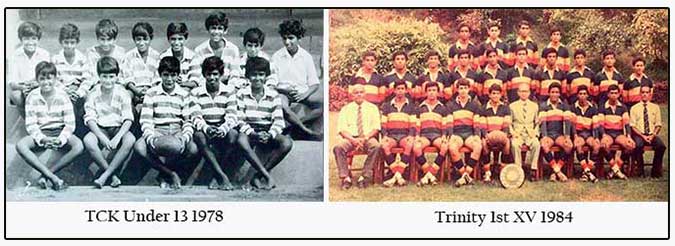
by Z. Kamil Mohamed
A global cricketing icon once said “At Trinity; Rugby players are special, and I… was only a cricketer”. Such is the pedestal upon which Rugby stands at Trinity that playing Rugby for the 1st XV becomes the ultimate dream for most young Trinitians. And this is the story of that dream shared by a group of young Trinitians, culminating in the Bradby Shield encounter against Royal College in 1984.
Early in 1974, C. Y Ching Snr’s Trinity were playing St Anthony’s. “Accompanied by two older brothers, a few Trinitians and Anthonians , I witnessed my first Rugby match at Nittawela” recalls 1984 Lock Kamil Mohamed. Trinity destroyed the Anthonians 64-3 in a scintillating display of open running Rugby. “I was enthralled and walked on air all the way home, hooked on Rugby for life” says Mohamed.
Playing fast open Rugby the sublime unbeaten Trinity team next destroyed St Thomas’ 70-8 and defeated all teams winning the Bradby. Trinity teams of 1975 and 1976 under Rohan Sourjah and S.V Ranasinghe respectively produced excellent seasons winning most of the games by record margins. Then Ravi Balasuriya’s exceptional Team of 1977 won all their games and undertook the first ever overseas schools Rugby trip to Thailand.
In this backdrop, in 1978, a few 12-year-olds namely Dilakshan Ratwatte, Senaka Alawattegama, SG Ekanayake, Dushyantha Wijesinghe, Ravi Pillai, Arjuna De Silva, Roger Halangoda, Asela Pilapitiya and Kamil Mohamed turned up at training with fervent Rugby dreams at the Trinity junior school grounds at the foot of the Udawattekale Rainforest. This core group were still together at the end of season 1984.
The season began with an intense training camp in Colombo. Dushyantha Wijesinghe, Ashan Ratwatte’s 1st XV understudy as the senior-most player was appointed Captain and Dilakshan Ratwatte Vice-Captain. Supported by Coloursmen Duraisamy Sivasubramaniam, Ravi Pillai, Arjuna De Silva, Jayanthasiri Perera and Manoj Jayatissa.
First up, Trinity faced Thurstan. Ravi Pillai relates how the game unfolded: ‘Arjuna De Silva and I had been a centres combination since junior days, so had a good understanding, however it was early in the season and were rusty yet managed to overcome Thurstan running in seven tries’. Score 38-7.
Back in Colombo to face St Joseph’s College, Sivasubramaniam remembers, ‘they held us to 3-4 in the first half, we were losing the ball in the scrums, hooker Jayatissa complained that Josephian prop Frank Bopearachchi was trying to gouge out his eyes. So, I took matters into my own hands or should I say teeth! Bopearachchi retaliated, only to be ordered off by referee Jagath Fernando. That opened the floodgates, we ran in several tries, defeating the Josephians 32-04. We lost centre Arjuna De Silva to injury in this game’.
Regrouping in Kandy, legendary Coach Colonel Bertie Dias unable to replace De Silva, decided, in consultation with Under 17 coach Alex Lazarus, to promote Senani Gunaratne from the Under 17 team, partly because the coaches felt he was better future captaincy material than the other option, the playful legend Shah Doole.
Next Trinity faced the formidable Isipatana led by Shabeen Sideek comprising several future national players. Dilakshan Ratwatte the scion of a Trinity Rugby dynasty recounts: ‘Trinity’s combinations were working, and the season was looking promising. Home advantage saw Isipatana race to an 8-0 lead. We fought back and scored and with two minutes to go were down 6-8. Ensconced deep in Isipatana territory we won the ball outnumbering them with the line staring at us, but over eagerness got the better of us and we dropped the ball. Our first loss 6-8. This game also exacerbated our injury woes losing Captain Wijesinghe’.
The next three games were scrappy affairs. We beat St Anthony’s 4-0. Their captain, Priyantha Ekanayake, in hospital with a bout of meningitis at the beginning of the week, fronted up and played the unaccustomed position of full back effectively, holding us to one try. Vice-captain Ratwatte also succumbed to injury with Sivasubramaniam now being handed over captaincy duties, which he carried out admirably for much of the season. Trinity then beat Anil Jayasinghe’s Vidyartha 28-0 and Nirmal Dharmaratne’s Dharmaraja 6-0.
Next up was Asanga Seneviratne’s St Thomas’s in Kandy. Ikram Odayar, a third generation Trinity Ruggerite recollects ‘unending rain in Kandy made conditions underfoot less than ideal and we were struggling with injuries. We scored quickly in the first half and led 6-0. After a dour forwards battle in the mud, we defended resolutely to win the Canon R. S De Saram Trophy at 6-4.’
In failing health, the legendary Col. Dias’s storied Trinity Rugby career was coming to an end. With three Bradby victories in previous years, he wanted to retire with another Bradby. Coach Dias, a student of the game preferred to focus on strategy and did not pay much attention to method or structure. Knowing this, he brought in former Trinity and Sri Lanka players Chandra Seneviratne, to work with the forwards and Irwin Howie, to train the backs.
Sampath Agalawatte’s Royalists were unbeaten and favourites to win the Bradby. Full back Jayanthasiri Perera recounts ‘it was a hot and humid day in Colombo, after weeks of playing in cool conditions up in Kandy, we were surprised by how quickly the heat sapped our energy. Both teams probed and prodded but could not breach the other’s line. In the end, all that separated the teams was Royal’s Two penalties against Trinity’s One penalty. 6-3’
Prop Senaka Alawattegama reminisces ‘we were smarting from the narrow loss to Royal, but with the Bradby within reach, training intensity went up another notch. At one stage the Coaches had the forward Eight playing against a full Under 17 team. I remember running endlessly and keeping them at bay for a full 30 minutes. We had practiced a forwards ploy over several weeks, with me swivel passing to Ratwatte, then Dissanayake, then Ranasinghe, then at the end Sivasubramaniam and Mohamed all in close quarters out of opponents view and we did attempt it at the first Bradby without success.
The excellent St Peters coached by Frank Hubert had lost to Trinity for 42 years running. They shocked us with an early try and kept attacking. Midway through the second half the team realised losing was not an option. The tide turned with a penalty but were still down 3-4. We set up camp in Peterite territory but couldn’t quite break through. Late in the game, Referee Tony Amith was glancing at his watch with his refereeing rival Hubert reportedly lying spreadeagled in ecstasy anticipating victory. Winning a free kick, we set in motion our practised ploy and it worked exactly as planned finally breaking through for a try on the stroke of full time. Peterite hearts were broken 9-4.
“Back at training, Col. Dias said in admiration ‘the way you played in the last twenty minutes, why can’t you play like that for the length of the game?’. Anticipating slippery conditions, his strategic Bradby plan was to let Royal win the ball in the set pieces, then attack at the breakdown before the gain line thus advancing field position. Winger S.G Ekanayake narrates ‘our plan worked wonders, Royal were winning the ball but struggled to gain traction with our players all over them in a flash. The score remained 0-0 at half time. After the turnaround, we were winning the ball back and ran our line. As one commentator articulated, – Trinity completely dominated the second half with wave after wave of attacks deep into Royal territory, the forwards winning the ball and working the ball right down the line. But the Royal dam was unbreachable, led by the crack Royal third row of Weeratunga, Lenaduwa and Ex Trinitian Navaratnam they held on for dear life to protect their unbeaten season for a Nil all draw. Thus, Royal won the Bradby on aggregate.”
At the end of the week Trinity comprising Duraisamy Sivasubramaniam, Manoj Jayatissa, Kamil Mohamed, Tony Wimaladasa, Jayanthasiri Perera, Ravi Pillai, Arjuna De Silva, S.G Ekanayake and Upul Herath played in rugby sevens tournament reaching the semi-finals.
At Season’s end Sivasubramanian was awarded the coveted Lion for his dominance while Alawattegama, Tyrone David, Manik Weerasinghe, Kamil Mohamed, Ikram Odayar, Anjana Dissanayake, Tony Wimaladasa, Senani Gunaratna, SG Ekanayake, Upul Herath and Roger Halangoda were awarded Colours.
Tragically Trinitians Arjuna De Silva, Anjana Dissanayake and Royalist Sanjaya Sigera passed away. More recently both captains Wijesinghe and Agalwatte passed on after protracted illnesses.
Over the next two weeks both teams of 1984 will meet again after four decades at the Bradby 2023 and will be felicitated. In the absence of the two captains, 1983 Trinity Captain Ashan Ratwatte, who missed his own opportunity due to the pandemic, has been invited to be the chief Guest at Kandy, and Royalist Feroze Suhayb will stand in for his Late Captain at the 2nd leg in Colombo. Long may this tradition of Bradby fellowship and camaraderie between the two teams continue!


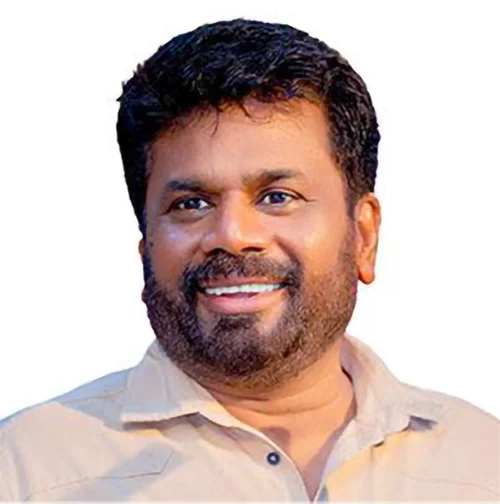
President Anura Kumara Dissanayake has been investing his political capital in going to the public to explain some of the most politically sensitive and controversial issues. At a time when easier political choices are available, the president is choosing the harder path of confronting ethnic suspicion and communal fears. There are three issues in particular on which the president’s words have generated strong reactions. These are first with regard to Buddhist pilgrims going to the north of the country with nationalist motivations. Second is the controversy relating to the expansion of the Tissa Raja Maha Viharaya, a recently constructed Buddhist temple in Kankesanturai which has become a flashpoint between local Tamil residents and Sinhala nationalist groups. Third is the decision not to give the war victory a central place in the Independence Day celebrations.
Even in the opposition, when his party held only three seats in parliament, Anura Kumara Dissanayake took his role as a public educator seriously. He used to deliver lengthy, well researched and easily digestible speeches in parliament. He continues this practice as president. It can be seen that his statements are primarily meant to elevate the thinking of the people and not to win votes the easy way. The easy way to win votes whether in Sri Lanka or elsewhere in the world is to rouse nationalist and racist sentiments and ride that wave. Sri Lanka’s post independence political history shows that narrow ethnic mobilisation has often produced short term electoral gains but long term national damage.
Sections of the opposition and segments of the general public have been critical of the president for taking these positions. They have claimed that the president is taking these positions in order to obtain more Tamil votes or to appease minority communities. The same may be said in reverse of those others who take contrary positions that they seek the Sinhala votes. These political actors who thrive on nationalist mobilisation have attempted to portray the president’s statements as an abandonment of the majority community. The president’s actions need to be understood within the larger framework of national reconciliation and long term national stability.
Reconciler’s Duty
When the president referred to Buddhist pilgrims from the south going to the north, he was not speaking about pilgrims visiting long established Buddhist heritage sites such as Nagadeepa or Kandarodai. His remarks were directed at a specific and highly contentious development, the recently built Buddhist temple in Kankesanturai and those built elsewhere in the recent past in the north and east. The temple in Kankesanturai did not emerge from the religious needs of a local Buddhist community as there is none in that area. It has been constructed on land that was formerly owned and used by Tamil civilians and which came under military occupation as a high security zone. What has made the issue of the temple particularly controversial is that it was established with the support of the security forces.
The controversy has deepened because the temple authorities have sought to expand the site from approximately one acre to nearly fourteen acres on the basis that there was a historic Buddhist temple in that area up to the colonial period. However, the Tamil residents of the area fear that expansion would further displace surrounding residents and consolidate a permanent Buddhist religious presence in the present period in an area where the local population is overwhelmingly Hindu. For many Tamils in Kankesanturai, the issue is not Buddhism as a religion but the use of religion as a vehicle for territorial assertion and demographic changes in a region that bore the brunt of the war. Likewise, there are other parts of the north and east where other temples or places of worship have been established by the military personnel in their camps during their war-time occupation and questions arise regarding the future when these camps are finally closed.
There are those who have actively organised large scale pilgrimages from the south to make the Tissa temple another important religious site. These pilgrimages are framed publicly as acts of devotion but are widely perceived locally as demonstrations of dominance. Each such visit heightens tension, provokes protest by Tamil residents, and risks confrontation. For communities that experienced mass displacement, military occupation and land loss, the symbolism of a state backed religious structure on contested land with the backing of the security forces is impossible to separate from memories of war and destruction. A president committed to reconciliation cannot remain silent in the face of such provocations, however uncomfortable it may be to challenge sections of the majority community.
High-minded leadership
The controversy regarding the president’s Independence Day speech has also generated strong debate. In that speech the president did not refer to the military victory over the LTTE and also did not use the term “war heroes” to describe soldiers. For many Sinhala nationalist groups, the absence of these references was seen as an attempt to diminish the sacrifices of the armed forces. The reality is that Independence Day means very different things to different communities. In the north and east the same day is marked by protest events and mourning and as a “Black Day”, symbolising the consolidation of a state they continue to experience as excluding them and not empathizing with the full extent of their losses.
By way of contrast, the president’s objective was to ensure that Independence Day could be observed as a day that belonged to all communities in the country. It is not correct to assume that the president takes these positions in order to appease minorities or secure electoral advantage. The president is only one year into his term and does not need to take politically risky positions for short term electoral gains. Indeed, the positions he has taken involve confronting powerful nationalist political forces that can mobilise significant opposition. He risks losing majority support for his statements. This itself indicates that the motivation is not electoral calculation.
President Dissanayake has recognized that Sri Lanka’s long term political stability and economic recovery depend on building trust among communities that once peacefully coexisted and then lived through decades of war. Political leadership is ultimately tested by the willingness to say what is necessary rather than what is politically expedient. The president’s recent interventions demonstrate rare national leadership and constitute an attempt to shift public discourse away from ethnic triumphalism and toward a more inclusive conception of nationhood. Reconciliation cannot take root if national ceremonies reinforce the perception of victory for one community and defeat for another especially in an internal conflict.
BY Jehan Perera
I have read a newspaper report that the Special Task Force of Sri Lanka Police, with help of Military Intelligence, recovered three buried yet well-preserved 84mm Carl Gustaf recoilless rocket launchers used by the LTTE, in the Kudumbimalai area, Batticaloa.
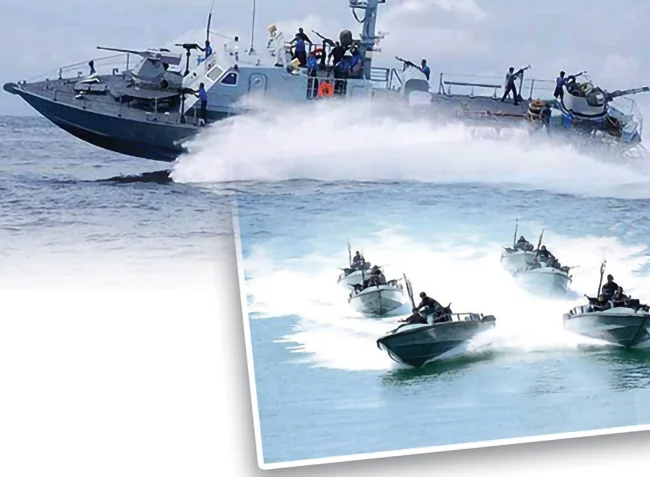
These deadly weapons were used by the LTTE SEA TIGER WING to attack the Sri Lanka Navy ships and craft in 1990s. The first incident was in February 1997, off Iranativu island, in the Gulf of Mannar.
Admiral Cecil Tissera took over as Commander of the Navy on 27 January, 1997, from Admiral Mohan Samarasekara.
The fight against the LTTE was intensified from 1996 and the SLN was using her Vanguard of the Navy, Fast Attack Craft Squadron, to destroy the LTTE’s littoral fighting capabilities. Frequent confrontations against the LTTE Sea Tiger boats were reported off Mullaitivu, Point Pedro and Velvetiturai areas, where SLN units became victorious in most of these sea battles, except in a few incidents where the SLN lost Fast Attack Craft.
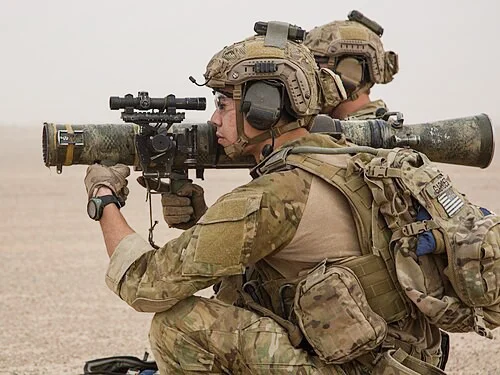
Carl Gustaf recoilless rocket launchers
The intelligence reports confirmed that the LTTE Sea Tigers was using new recoilless rocket launchers against aluminium-hull FACs, and they were deadly at close quarter sea battles, but the exact type of this weapon was not disclosed.
The following incident, which occurred in February 1997, helped confirm the weapon was Carl Gustaf 84 mm Recoilless gun!
DATE: 09TH FEBRUARY, 1997, morning 0600 hrs.
LOCATION: OFF IRANATHIVE.
FACs: P 460 ISRAEL BUILT, COMMANDED BY CDR MANOJ JAYESOORIYA
P 452 CDL BUILT, COMMANDED BY LCDR PM WICKRAMASINGHE (ON TEMPORARY COMMAND. PROPER OIC LCDR N HEENATIGALA)
OPERATED FROM KKS.
CONFRONTED WITH LTTE ATTACK CRAFT POWERED WITH FOUR 250 HP OUT BOARD MOTORS.
TARGET WAS DESTROYED AND ONE LTTE MEMBER WAS CAPTURED.
LEADING MARINE ENGINEERING MECHANIC OF THE FAC CAME UP TO THE BRIDGE CARRYING A PROJECTILE WHICH WAS FIRED BY THE LTTE BOAT, DURING CONFRONTATION, WHICH PENETRATED THROUGH THE FAC’s HULL, AND ENTERED THE OICs CABIN (BETWEEN THE TWO BUNKS) AND HIT THE AUXILIARY ENGINE ROOM DOOR AND HAD FALLEN DOWN WITHOUT EXPLODING. THE ENGINE ROOM DOOR WAS HEAVILY DAMAGED LOOSING THE WATER TIGHT INTEGRITY OF THE FAC.
THE PROJECTILE WAS LATER HANDED OVER TO THE NAVAL WEAPONS EXPERTS WHEN THE FACs RETURNED TO KKS. INVESTIGATIONS REVEALED THE WEAPON USED BY THE ENEMY WAS 84 mm CARL GUSTAF SHOULDER-FIRED RECOILLESS GUN AND THIS PROJECTILE WAS AN ILLUMINATER BOMB OF ONE MILLION CANDLE POWER. BUT THE ATTACKERS HAS FAILED TO REMOVE THE SAFETY PIN, THEREFORE THE BOMB WAS NOT ACTIVATED.
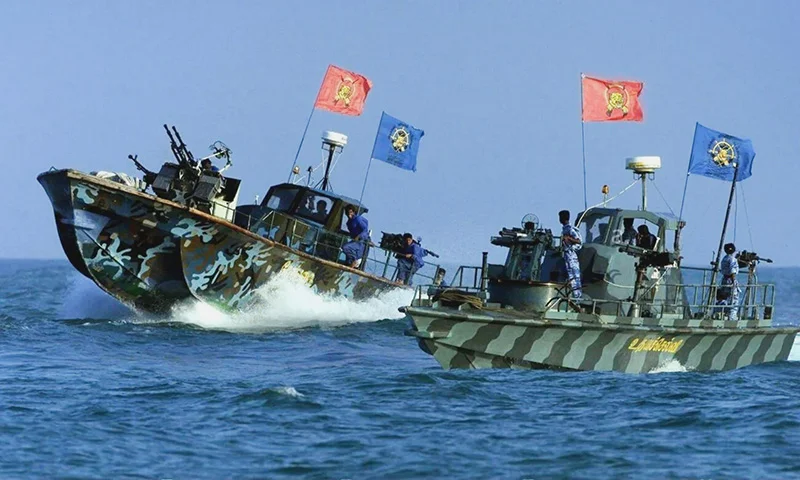
Sea Tigers
Carl Gustaf 84 mm recoilless gun was named after Carl Gustaf Stads Gevärsfaktori, which, initially, produced it. Sweden later developed the 84mm shoulder-fired recoilless gun by the Royal Swedish Army Materiel Administration during the second half of 1940s as a crew served man- portable infantry support gun for close range multi-role anti-armour, anti-personnel, battle field illumination, smoke screening and marking fire.
It is confirmed in Wikipedia that Carl Gustaf Recoilless shoulder-fired guns were used by the only non-state actor in the world – the LTTE – during the final Eelam War.
It is extremely important to check the batch numbers of the recently recovered three launchers to find out where they were produced and other details like how they ended up in Batticaloa, Sri Lanka?
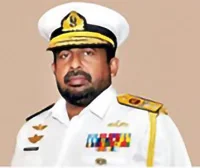 By Admiral Ravindra C. Wijegunaratne
WV, RWP and Bar, RSP, VSV, USP, NI (M) (Pakistan), ndc, psn, Bsc (Hons) (War Studies) (Karachi) MPhil (Madras)
Former Navy Commander and Former Chief of Defence Staff
Former Chairman, Trincomalee Petroleum Terminals Ltd
Former Managing Director Ceylon Petroleum Corporation
Former High Commissioner to Pakistan
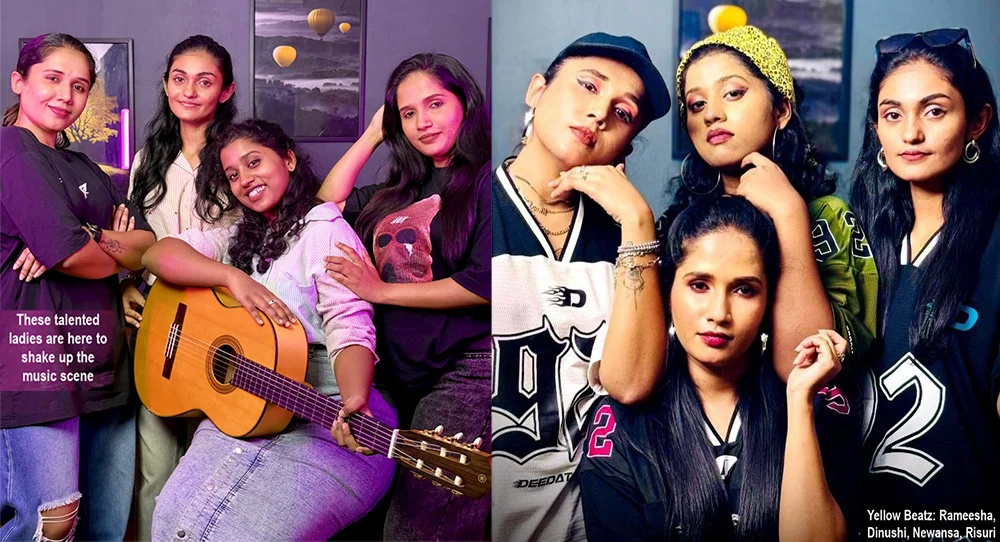
 Yes, get ready to vibe with Yellow Beatz, Sri Lanka’s awesome girl group, keen to take Sri Lankan music to the world with a style similar to K-pop!
With high-energy beats and infectious hooks, these talented ladies are here to shake up the music scene.
Think bold moves, catchy hooks, and, of course, spicy versions of old Sinhala hits, and Yellow Beatz is the package you won’t want to miss!
According to a spokesman for the group, Yellow Beatz became a reality during the Covid period … when everyone was stuck at home, in lockdown.
“First we interviewed girls, online, and selected a team that blended well, as four voices, and then started rehearsals. One of the cover songs we recorded, during those early rehearsals, unexpectedly went viral on Facebook. From that moment onward, we continued doing cover songs, and we received a huge response. Through that, we were able to bring back some beautiful Sri Lankan musical creations that were being forgotten, and introduce them to the new generation.”
The team members, I am told, have strong musical skills and with proper training their goal is to become a vocal group recognised around the world.
Believe me, their goal, they say, is not only to take Sri Lanka’s name forward, in the music scene, but to bring home a Grammy Award, as well.
“We truly believe we can achieve this with the love and support of everyone in Sri Lanka.”
The year 2026 is very special for Yellow Beatz as they have received an exceptional opportunity to represent Sri Lanka at the World Championships of Performing Arts in the USA.
Under the guidance of Chris Raththara, the Director for Sri Lanka, and with the blessings of all Sri Lankans, the girls have a great hope that they can win this milestone.
“We believe this will be a moment of great value for us as Yellow Beatz, and also for all Sri Lankans, and it will be an important inspiration for the future of our country.”
Along with all the preparation for the event in the USA, they went on to say they also need to manage their performances, original song recordings, and everything related.
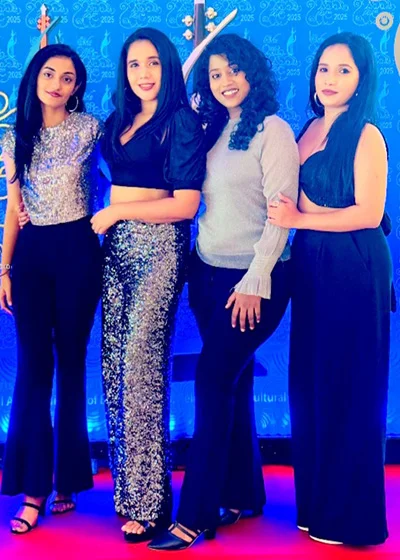
The year 2026 is very special for Yellow Beatz
“We have strong confidence in ourselves and in our sincere intentions, because we are a team that studies music deeply, researches within the field, and works to take the uniqueness of Sri Lankan identity to the world.”
At present, they gather at the Voices Lab Academy, twice a week, for new creations and concert rehearsals.
This project was created by Buddhika Dayarathne who is currently working as a Pop Vocal lecturer at SLTC Campus. Voice Lab Academy is also his own private music academy and Yellow Beatz was formed through that platform.
Buddhika is keen to take Sri Lankan music to the world with a style similar to K-Pop and Yellow Beatz began as a result of that vision. With that same aim, we all work together as one team.
“Although it was a little challenging for the four of us girls to work together at first, we have united for our goal and continue to work very flexibly and with dedication. Our parents and families also give their continuous blessings and support for this project,” Rameesha, Dinushi, Newansa and Risuri said.
Last year, Yellow Beatz released their first original song, ‘Ihirila’ , and with everything happening this year, they are also preparing for their first album.

Seifert, Allen fifties help New Zealand gallop to record-breaking win against UAE
All-round de Leede leads Netherlands to thumping win over Namibia

Wanindu Hasaranga ruled out of T20 World Cup with injury

Royal Navy of Oman Vessel “SADH” arrives at Port of Colombo

Spirited USA seek Pakistan scalp after opening day heartbreak

New Zealand brace for unfamiliar opponents UAE

‘Dates have the highest sugar content to fight Coronavirus’

Sunday Island 27 December – Headlines

#SundayIsland 17th December – Headlines

Sunday Island – 28th March

Sunday Island Headlines – 21 March

Sunday Island – 21st February – Headlines
-
 Features3 days ago
My experience in turning around the Merchant Bank of Sri Lanka (MBSL) – Episode 3
-
 Business4 days ago
Zone24x7 enters 2026 with strong momentum, reinforcing its role as an enterprise AI and automation partner
-
 Business3 days ago
Remotely conducted Business Forum in Paris attracts reputed French companies
-
 Business3 days ago
Four runs, a thousand dreams: How a small-town school bowled its way into the record books
-
 Business3 days ago
ComBank and Hayleys Mobility redefine sustainable mobility with flexible leasing solutions
-
 Business4 days ago
HNB recognized among Top 10 Best Employers of 2025 at the EFC National Best Employer Awards
-

 Business4 days ago
GREAT 2025–2030: Sri Lanka’s Green ambition meets a grid reality check
-

 Editorial6 days ago
All’s not well that ends well?