
News
Treatments for dengue: a Global Dengue Alliance to address unmet needs

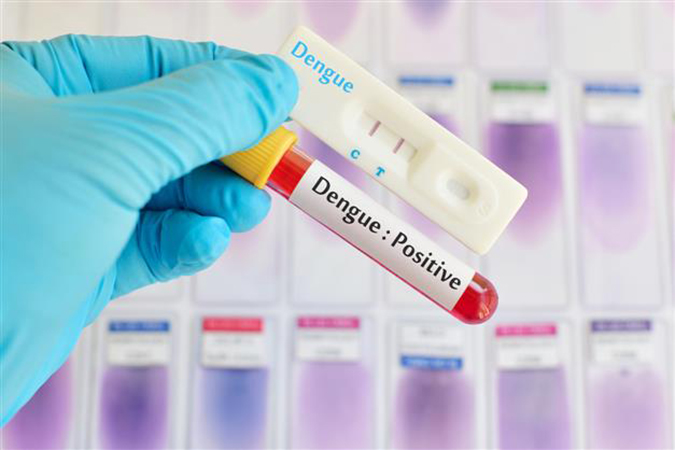
The importance of developing a treatment for dengue has largely been ignored, the Dengue Alliance said in a statement.However, a recently formed Global Dengue Alliance with several institutions in dengue-endemic countries, plans to accelerate research and development and deliver dengue therapeutics through an inclusive partnership.
Formation of this alliance is a major step towards developing a treatment for dengue, by aggregating resources from endemic countries, and ensuring engagement, scientific leadership, clinical guidance, and political interest in these countries.
Dengue is currently the most rapidly spreading mosquito-borne viral infection in the world, with half of the world’s population at risk of becoming infected. As a result of climate change, rapid urbanisation, and widespread international travel, the incidence of dengue is rapidly increasing, overwhelming healthcare systems in many lower-income countries. Climate change has increased the burden of dengue in endemic countries and has also led to expansion of this infection to new territories in Europe and North America.
Dengue is estimated to infect approximately 390 million individuals annually, with 96 million infections being symptomatic. So far, the only strategy adopted to reduce the burden of dengue is vector control. Although techniques such as using Wolbachia bacteria to reduce dengue transmission by Aedes mosquitoes look promising, it is evident that vector control alone is unlikely to be adequate to reduce the burden of dengue.
The currently available dengue vaccines (CYD-TDV and TAK-003) have been shown to reduce hospitalisations, especially in dengue-seropositive individuals, but lack efficacy against some dengue virus serotypes. Furthermore, CYD-TDV showed a higher incidence of severe dengue in dengue-naive vaccine recipients, and both vaccines show some degree of waning immunity with time, especially in seronegative individuals. Therefore, an integrated approach that comprises vector control, use of safe and effective vaccines, and an effective treatment is needed to face the growing challenges of dengue infection.
Efforts focused on finding a treatment have been scarce, with some investigator-led clinical trials conducted, and a few performed by pharmaceutical companies. The importance of developing a treatment for dengue has largely been ignored. The Drugs for Neglected Diseases initiative, which is focused on finding novel affordable treatment solutions for neglected tropical diseases since its inception in 2003, has recently formed a Global Dengue Alliance with several institutions in dengue-endemic countries, including the Faculty of Medicine at Siriraj Hospital, Mahidol University in Thailand; the Ministry of Health in Malaysia; the Translational Health Science and Technology Institute in India; the Oswaldo Cruz Foundation in Brazil; and the Federal University of Minas Gerais in Brazil. The mission of this alliance is to accelerate research and development and deliver dengue therapeutics through an inclusive partnership.
It aims to deliver a new treatment for dengue, within five years, from repurposed drugs and combinations (including novel antivirals from pharmaceutical companies). This alliance is co-created, co-owned, and co-funded by dengue-endemic countries, with a tiered governance mechanism allowing collaborative decision making at different levels. The organisations have formed a preclinical working group, a clinical working group, and a translational working group for effective communication and scientific planning.
All three working groups feed into the Joint Steering Committee, which is responsible for delivering on the vision and mission of the alliance. The partners of this alliance share knowledge, experience, technologies, and capabilities to jointly validate preclinical assays with the ambition in the initial phase to identify currently available drugs that can be repurposed for use as dengue therapeutics. In parallel, clinical trials for these drug candidates are being designed using the expertise of clinicians in these countries who have been treating patients with dengue for many years, with initiation planned by the end of 2023.
Formation of this alliance is a major step towards developing a treatment for dengue, by aggregating resources from endemic countries, and ensuring engagement, scientific leadership, clinical guidance, and political interest in these countries.
The different working groups and the steering committee coordinate efforts to address gaps in knowledge, such as epidemiology (specifically in Africa), biomarkers and diagnostics, clinical trials, and regulatory framework, while promoting open science. Although currently the alliance has a small number of partners, it is open to collaborations with new partners and key stakeholders in therapeutics and diagnostics.
Working with and aligning many partners and stakeholders to deliver objectives in a new model of collaboration is challenging, as is filling the existing knowledge gaps and need for integration, and leveraging information from different geographies and epidemiological settings. Furthermore, doing clinical trials aimed at treating dengue disease is challenging due to the seasonal nature of the disease, and with climate change, disease patterns could become more unpredictable.
Although this approach is likely to accelerate development of a treatment, funding remains a challenge. With climate change becoming more of a concern in high-income countries, there is an increasing possibility that many global funding organisations will acknowledge the true burden of dengue, the devastation it causes to health systems and patients in endemic countries, and, therefore, the importance of funding initiatives to accelerate the development of new treatments for dengue.








India are through to the semi-finals of the Asian Games men’s tournament, with persistent rain and a damp outfield in Nisshin forcing the abandonment of their quarter-final against Afghanistan 16 minutes before the scheduled toss. India’s higher seeding – determined by the ICC T20I team rankings – ensured they went through at Afghanistan’s expense.
India will next face the winners of Tuesday’s quarter-final between Nepal and Sri Lanka in Thursday’s second semi-final. As one of the four seeded teams – India, Pakistan and Bangladesh are the others – to qualify directly for the quarter-finals, Sri Lanka will progress to the semi-finals if their match against Nepal is washed out too.
By Shamindra Ferdinando
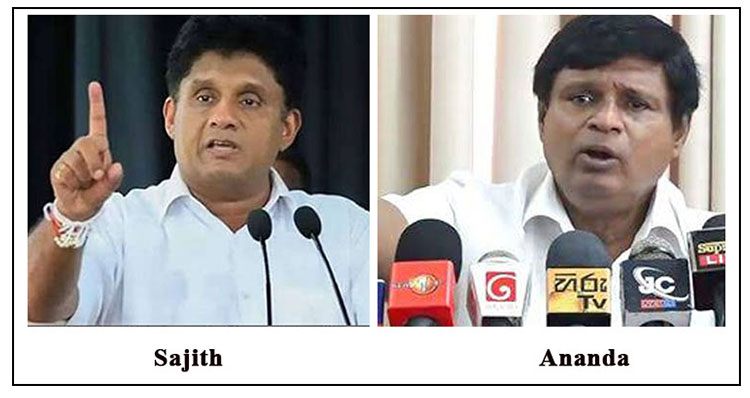
Alleging that the Samagi Jana Balawegaya (SJB) had betrayed the joint protest campaign, planned on 24 Sept., at Polduwa junction, against the enactment of the 22nd Amendment without securing public approval at a referendum, SJB trade union leader Ananda Palitha emphasised that SJB and Opposition Leader Sajith Premadasa should take remedial measures to restore the alliance against the NPP government.
Responding to The Island queries, the trade union activist said that he spoke on behalf of the vast majority of the SJBers who felt betrayed by the sudden declaration made by Colombo District SJB lawmaker S.M. Marikkar that they didn’t expect Opposition political parties’ participation, except that of the UNP.
Pointing out that at the behest of Premadasa, MP Marikkar belittled those who had pledged on 17 Sept. to join the SJB-led protest, Palitha emphasised the Opposition leader should be held responsible for restoring the shattered alliance. Palitha warned that the NPP, which was rapidly moving on a dictatorial path, would be the beneficiary of such treacherous actions.
When The Island raised the allegations pertaining to the 24 Sept. protest, Colombo District MP Premadasa said there was no basis for such claims. MP Premadasa called the accusations directed at him ‘rubbish.’
Palitha said that the pathetic failure on the part of the Opposition to genuinely challenge the authoritarian NPP should be examined, taking into consideration the government following an agenda almost 100 percent against the election pledges. Except the much touted anti-corruption campaign, the NPP reneged on all its election promises.
Recalling massive rice imports after having promised to stop the same in the run up to the national elections in 2024, Palitha alleged that the utterly corrupt NPP created an artificial shortage to enable import of large stocks of salt for their benefit. Massive earnings were made through commissions, Palitha said, urging the SJB to reiterate its commitment to the 17 Sept. pledge. According to him, the SJB’s irresponsible action sabotaged the joint Opposition agreement reached on the eve of President Anura Kumara Dissanayake completing two years in Office.
Palitha said that the disruption of a genuinely joint protest, at the last moment, caused irreparable harm to the Opposition. The unexpected eleventh hour declaration made by the SJB upset their efforts to organise a large scale two-day protest on 24 and 25 Sept. Palitha emphasised the responsibility on the part of the SJB leadership and its top management to spearhead an all-out campaign against the government. The former petroleum sector employee said that a strong and transparent campaign could undermine the NPP within as a section of its parliamentary group was deeply dismayed by the current policies and strategies.
Palitha, in his capacity as the trade union leader, invited the Bar Association of Sri Lanka (BASL) to join the trade unions’ protest on 25 Sept. to intensify pressure on the government. BASL President Rajeev Amarasuriya told The Island that they didn’t accept that invitation.
Former SLPP Kalutara District MP Sanjeewa Edirimanna said that the SJB was far more keen to organise a large-scale protest to counter the SLPP’s highly successful Anuradhapura rally held on 12 September than a genuine joint protest against the 22nd Amendment or the government. Edirimanna said that they realised that the SJB would probably join a joint protest campaign only after organising a gathering to counter the SLPP. According to him, the SJB hadn’t been honestly interested in a joint protest campaign. Instead, it sought to resist possible challenges from rival political parties, he said.
An aide to UNP leader and former President Ranil Wickremesinghe said that though the SJB announced they were welcome to join the 24 Sept. protest, the party never received an invitation. The official said that some UNPers joined the protest on their own though the party neither directed supporters to join or boycott the event. As the Janathawadi Joint Opposition decided against participating for want of formal invitations, the UNP, as part of that group, decided not to join the 24 Sept. protest.
By Norman Palihawadane
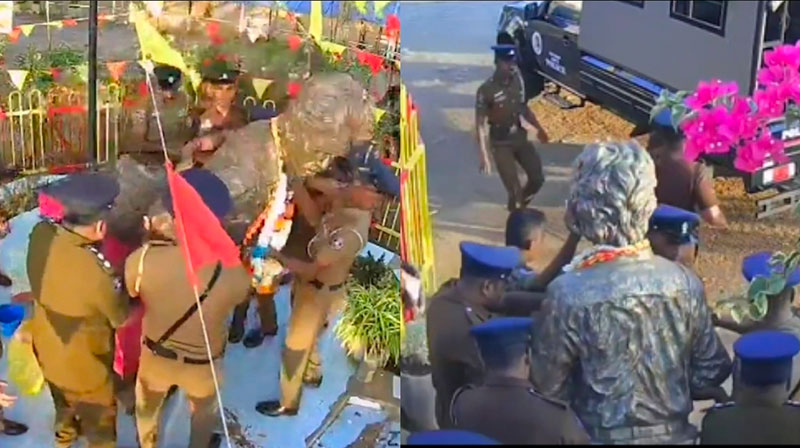
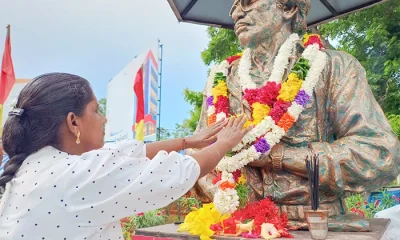
Police have removed a memorial statue of former LTTE member Rasaiah Parthipan, alias Thileepan, from the Thileepan Memorial Square in Nallur, Jaffna, following the conclusion of commemorative events, marking the 39th anniversary of his death.
The statue was removed in the early hours of yesterday (27), a day after the final day of the commemoration was held at the site.
CCTV footage from the memorial reportedly shows police officers removing the statue and taking it away in a vehicle.
Tamil National People’s Front (TNPF) Secretary and MP Selvarasa Gajendran alleged that more than 15 police officers arrived at the site, without prior notice, entered the premises wearing footwear, and forcibly removed the statue.
The reason for the removal and the legal basis for the police action had not been officially announced as of yesterday.
Thileepan, a former political wing leader of the LTTE, died in September 1987, after undertaking a hunger strike in Nallur, while making several demands of the Indian Government.
The memorial events, marking the 39th anniversary of his death, were held at the site on Saturday (26). A statue had been erected at the location in connection with the commemoration.

Mexico’s Pacific coast braces for Hurricane Polo

Washout against Afghanistan sends India into semi-finals

‘Still a lockdown’: Deadly floods hit Nepal tourism as peak season begins

Tharanga wins highly anticipated Asian Games gold

Tharanga on cusp of Asian Games Gold

Rain threat looms over lopsided India vs Afghanistan quarter-final

‘Dates have the highest sugar content to fight Coronavirus’

Sunday Island 27 December – Headlines

#SundayIsland 17th December – Headlines

Sunday Island – 28th March

Sunday Island Headlines – 21 March

Sunday Island – 21st February – Headlines
-
 News6 days ago
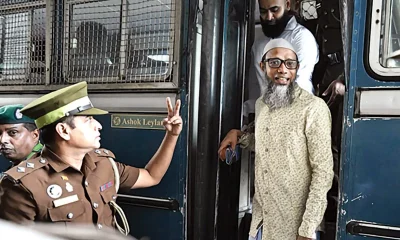
Mastermind Naufer Moulavi among 15 found guilty
-
 Midweek Review6 days ago
Thileepan’s fast unto death: An authentic narrative that many missed
-
 News7 days ago
Protest against setting up of cement factory in highly populated area near BIA
-

 Editorial7 days ago
Trouble beginning in earnest
-

 Latest News5 days ago
Showers above 100 mm are likely at some places in the Western, Sabaragamuwa, Central and North-western provinces and in Galle and Matara Districts
-
Editorial6 days ago
Big Bad Bills
-
 News7 days ago
Police may seek clarification from US
-
 News7 days ago
Govt. confident of 2/3 majority despite NPP split speculation