
News
TISL prepares brief for Personal Data Protection Bill


The government is planning to introduce a Bill on Personal Data Protection to regulate the processing of personal data, while identifying and strengthening the rights of data subjects in relation to the protection of personal data.
Transparency International Sri Lanka (TISL) says, in a statement, that it has taken steps to create a legislative brief on the proposed Personal Data Protection bill of 2021 and has highlighted a number of recommendations that law makers should take into consideration when enacting this Bill into law.
The creation of a legal framework on personal data protection was necessary to safeguard human rights, especially at a time when information has become both a tool to be used by the people and against them.
The TISL thanks all the stakeholders who were involved in the drafting of the Personal Data Protection bill of 2021. The legislative brief highlights TISL’s five key recommendations for the Bill to become an effective law.
The recommendations are as follows.
1. Include a specific exception to ensure that the Right to Information Act is not overridden in case of an inconsistency.
2. Establish an independent Data Protection Authority.
3. Harmonize the understanding of ‘personal data’ between the Personal Data Protection Bill and the Right to Information Act. Such an amendment would ensure that when a request is made to obtain information under the Right to Information Act, the possibility that the request clashes with the Personal Data Protection Bill is minimized.
4. Remove ‘Financial Data’ and ‘Personal Data Relating to Offences, Criminal Proceedings and Convictions’ from the list of special categories of personal data. This will ensure that people’s right to access information pertaining to corruption and malpractices is not infringed.
5. Recognize ‘Journalistic purpose’ as a legitimate condition to process data.
The main purpose of these recommendations was to prevent the possibility that this particular Bill could in effect infringe on the Right to Information of the citizens of this country.
TISL’s Executive Director Nadishani Perera commenting on the importance of the proposed recommendations stated that, “If the law relating to Personal Data Protection infringes on the law relating to the Right to Information, there is a possibility that the public could lose faith in both of these laws. This could also lead to confusion between the agencies tasked with upholding these laws. Therefore, it is of paramount importance that steps are taken to amend the proposed legislation in order to ensure that both pieces of legislation are able to accomplish their expected goals”
It must also be highlighted that the establishment of an independent Data Protection Authority is vital to ensuring that the new legislation would not be abused by individuals or groups who aim to use the legislation to the detriment of the public.
Copies of the legislative brief created by TISL have been sent to Legal Draftsman Dilrukshi Samaraweera as well as Jayantha Fernando who heads the committee that drafted the Bill on Personal Data Protection.
The drafting of the Personal Data Protection Bill commenced in 2018. By December 2019 the bill was submitted for Cabinet approval and subsequently Cabinet approval was granted in January 2020.The original Draft Bill was also reviewed by the Attorney General and the drafting committee was able to incorporate all recommendations made by the Attorney General by October 2020.
The right to information as well as the right to ensure the security of personal data are both vital in a democratic framework. In such a backdrop TISL calls on the lawmakers of Sri Lanka to ensure that enacted legislation does not infringe upon any one of these rights.

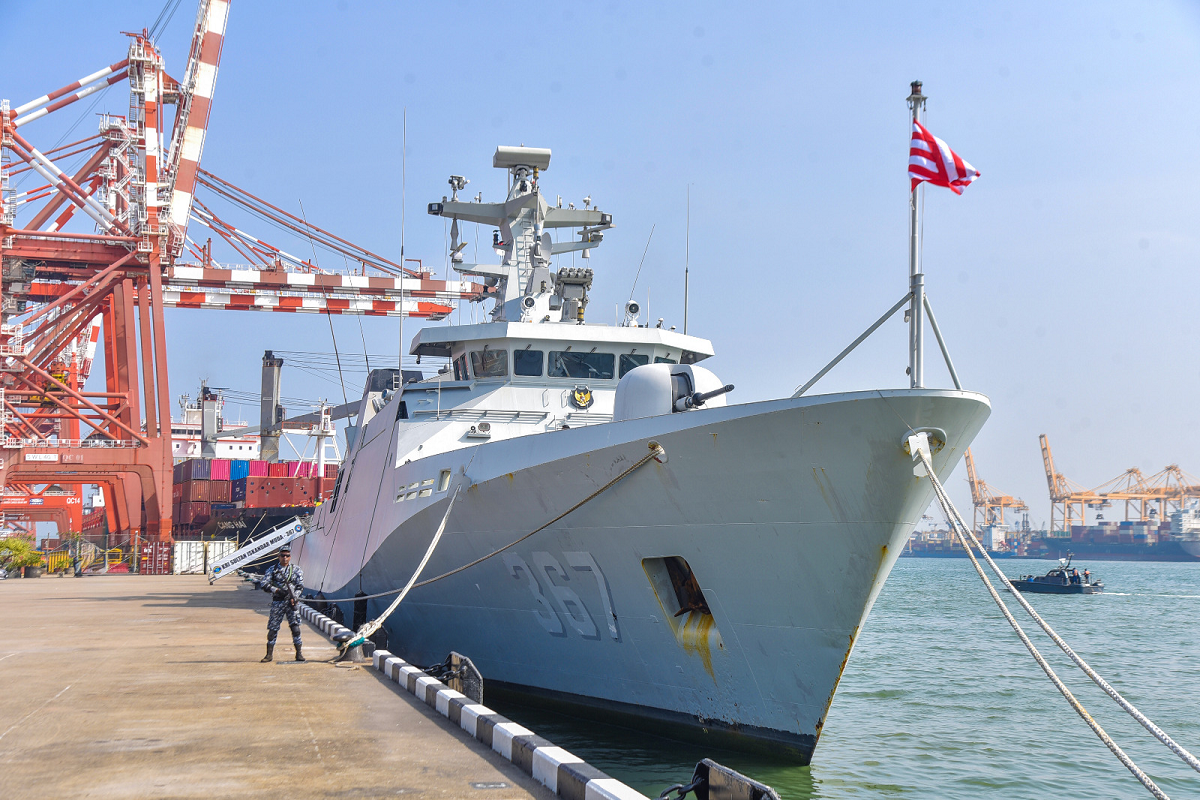
The Indonesian Naval Ship, ‘KRI SULTAN ISKANDAR MUDA – 367’, arrived at the port of Colombo today (22 Jan 26) on a scheduled port call for logistics replenishment and a goodwill mission.
In keeping with time-honored naval tradition the ship was accorded a ceremonial welcome upon arrival.
The 90.71m – long Sigma Corvette FS is commanded by Commander Annugerah Anurullah.
During the stay in Colombo, the crew members of the ship are expected to visit some tourist attractions in the city limits.
Further, this visit provides an avenue to enhance professional interaction and courtesy engagements among two navies.
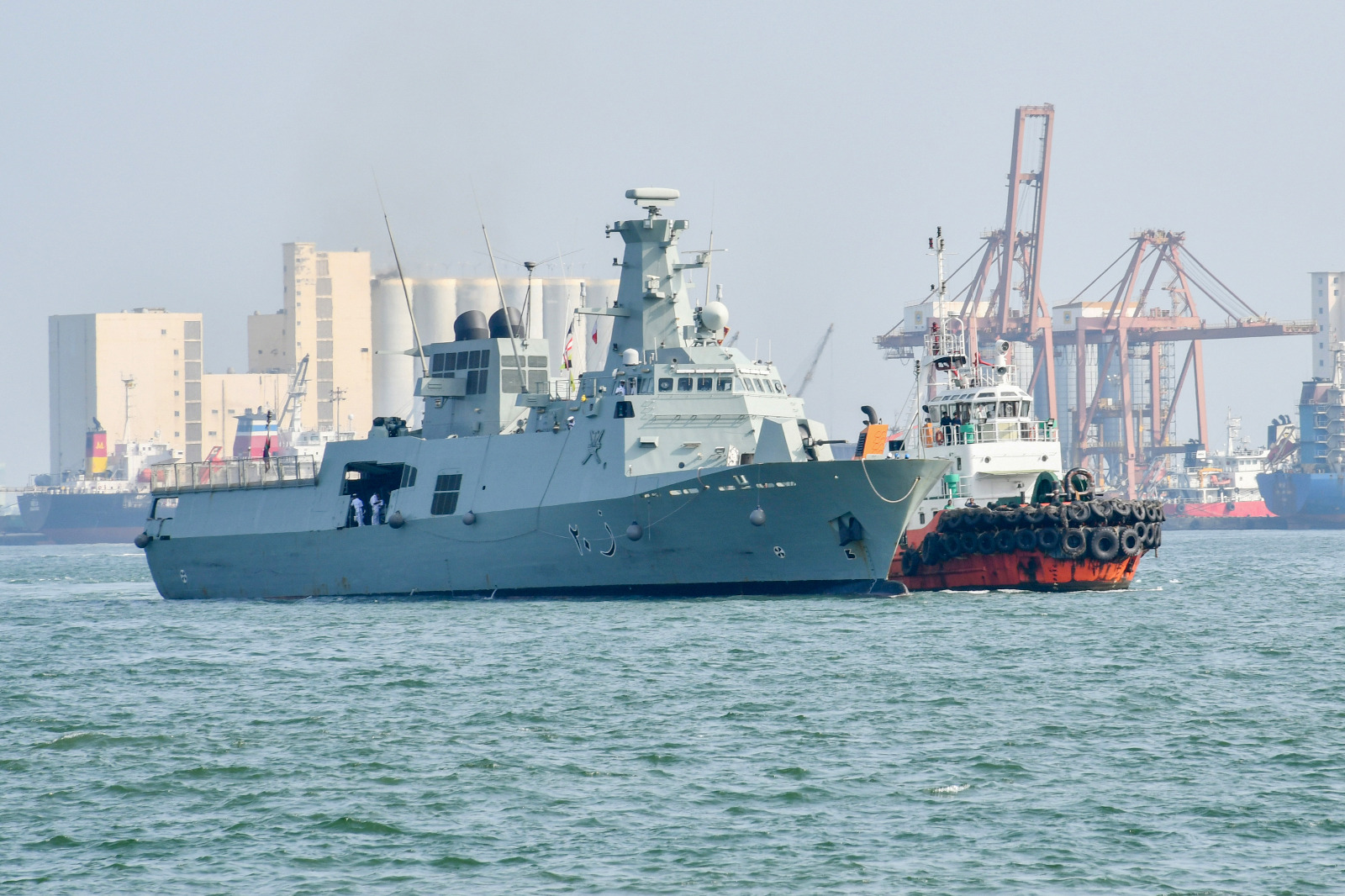
The Royal Navy of Oman Ship ‘AL SEEB’ arrived at the Port of Colombo on a logistics replenishment visit today (22 Jan 26).
The Sri Lanka Navy welcomed the visiting ship in compliance with naval traditions.
The 75m – long ship is commanded by Lieutenant Commander Hamad Bin Mohammed Aldarmaki. The port call will facilitate professional interaction and goodwill exchanges between the two navies.
During her stay in Colombo, crew members of the ship are expected to visit some tourist attractions in the city of Colombo.
News
Mechanism to be established involving university academics and experts for Education Reforms – President

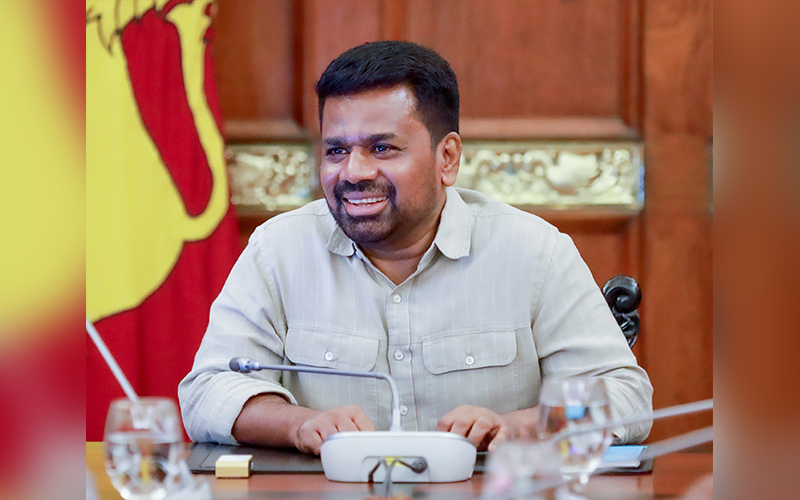
President Anura Kumara Dissanayake stated that the Government is taking steps to establish a comprehensive mechanism, supported by an appropriate legal framework, to bring together university academics, experts and all relevant parties in order to resolve issues arising during the implementation of education reforms.
The President made these remarks during a discussion with the Federation of University Teachers’ Associations (FUTA) held on Wednesday (21) morning at the Presidential Secretariat.
During the discussion, FUTA members emphasized the challenges encountered while trying to implement educational reforms through a framework established by the National Institute of Education, in line with the current laws and regulations.
They further emphasized that while their association acknowledges the need for new education reforms, the urgency of such reforms is greater for students in rural schools than for those in urban schools.
The Federation of University Teachers’ Associations further stated that they appreciate the decision taken by the Government, under the leadership of the President, to address the issues arising from education reforms and affirmed their readiness to contribute to this process.
As a continuation of the previous discussion, proposals addressing the challenges faced by academics within the university system, along with possible solutions, were presented to the President. In response, the President emphasized that the Government would take all possible measures to safeguard the university system and strengthen education.
The discussion also covered proposed amendments to the Universities Act.
President Anura Kumara Dissanayake noted that, in the aftermath of the recent disaster, the Government has been effectively implementing a nationwide rebuilding programme, addressing economic stability, development and all critical sectors. The President also called upon university academics to actively support these reconstruction efforts.
The meeting was attended by Minister of Ports and Civil Aviation, Anura Karunathilaka, as well as representatives of the Federation of University Teachers’ Associations, including its President, Prof. P. R. Weerathunga, Vice President M. A. M. Sameem and Secretary Charudaththe Ilangasinghe.

Mendis’ 93 not out lifts Sri Lanka to 271 for 6, despite Rashid three-for

We didn’t get justice from ICC: Bangladesh sports advisor

Indonesian Naval Ship ‘KRI SULTAN ISKANDAR MUDA – 367’ arrives in Colombo

Royal Navy of Oman Ship ‘AL SEEB’ calls at Port of Colombo

Jacks out with illness as Sri Lanka bat against England

Mechanism to be established involving university academics and experts for Education Reforms – President

‘Dates have the highest sugar content to fight Coronavirus’

Sunday Island 27 December – Headlines

#SundayIsland 17th December – Headlines

Sunday Island – 28th March

Sunday Island Headlines – 21 March

Sunday Island – 21st February – Headlines
-

 Editorial5 days ago
Illusory rule of law
-
 News6 days ago
UNDP’s assessment confirms widespread economic fallout from Cyclone Ditwah
-

 Editorial6 days ago
Crime and cops
-
 Features5 days ago
Daydreams on a winter’s day
-

 Editorial7 days ago
The Chakka Clash
-
 Features5 days ago
Surprise move of both the Minister and myself from Agriculture to Education
-

 Features4 days ago
Extended mind thesis:A Buddhist perspective
-

 Features5 days ago
The Story of Furniture in Sri Lanka